
Olympian Water Testing™
- On Site Laboratory Testing
- PWTA Well Water Testing for Real Estate Transactions
- DOH / DEP / EPA / NELAP Standards
- Residential & Commercial
- E. coli and Total Coliform
- Heterotrophic Plate Count
- Heavy Metals
- Chemicals
- Microplastics
- Iron
- Lead
- Copper
- PFAS / PFOS
- VOCs
- HAA5
- All Contaminants
Celebrating New Jersey's #1 Consumer Choice for 35 Consecutive Years
Olympian Water Testing delivers expert water testing and analysis, targeting contaminants like microplastics, PFAS, VOCs, heavy metals, E. coli, total coliform, Legionella, and more. As the trusted choice for on-site laboratory testing, we adhere to top DOH, DEP, EPA, and NELAP standards. Our dedicated Client Services Team is available around the clock, every day of the year, ensuring reliable support whenever you need it.
We Test in Full Compliance with The Private Well Water Testing Act for Real Estate Transactions
Newark Water Testing
Consulting & Lab Analysis
Well Testing • City / Municipal Water
✓ Well Testing ✓ City / Municipal Water
Mobile Laboratory
Sampling

Well Water
State-mandated Private Well Testing Act (PWTA) panels for home sales. We perform all required testing—including bacteria, arsenic, lead, VOCs, and nitrates—with fast turnaround and full compliance reporting.

Laboratory
Certified laboratory water testing services designed for professional, medical, and commercial applications. Full-spectrum analysis ensures precision, compliance, and scientifically valid results.

Potability
Precise potability analysis, verifying essential safety benchmarks—from coliforms to chemical residues—using laboratory-grade instrumentation to ensure water meets or exceeds national drinking standards.

Pools and Spas
Certified weekly and monthly testing for Spas, hotels and commercial pools. Focused on E. coli and total coliform detection, our lab ensures water safety compliance with NJ recreational bathing code requirements.

Lead and Copper
High-precision assays targeting lead and copper levels in water systems. Utilizing EPA-approved methodologies, data-driven reporting ensures regulatory compliance and safeguards public health.

Schools
Dedicated school water safety testing includes multi-point sampling and pathogen screening. Laboratory-level analysis ensures student and staff environments remain free from dangerous contaminants.

Bacteria
Advanced bacteriological screening checks for E. coli, coliforms, Legionella, and other pathogens. Laboratory-controlled procedures provide definitive results, enhancing health protection.
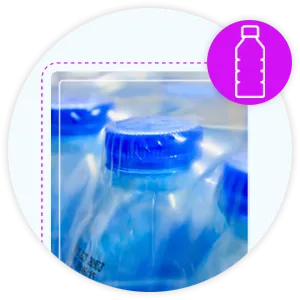
Microplastics
State‑of‑the‑art microplastic detection using spectrometry and filtration techniques. Identifies and quantifies microscopic particles, delivering laboratory-grade data on plastic contamination.
Why Choose Olympian Water Testing?
Choose Olympian Water Testing for expert, on-site analysis and trusted results that meet the highest regulatory standards for water safety.
Latest Technology
Accurate
Cost-Effective
Fast Results
Our Standards
What Our Clients Say
Contact Client Services
- ONLINE NOW
Trusted Partners
At Olympian Water Testing™, we’re dedicated to a cleaner, healthier planet, making a positive impact through every service we provide. Thank you for choosing us as your trusted sustainability partner.
Newark’s Water Management History
Newark New Jersey water supply history originates with its 1666 founding in Essex County, where early colonists relied on private wells and the Passaic River for drinking water, as noted on Newark’s Wikipedia page. This system sufficed amid initial growth, but industrialization polluted the river, leading to health crises like the 1866 cholera epidemic.
Well water systems in Newark NJ faced limitations as population surged, prompting a search for purer sources. In 1889, the city contracted with the East Jersey Water Company to develop the Pequannock Watershed, constructing reservoirs and aqueducts, per historical details on Myles Zhang’s site. The system opened in 1892, delivering 50 million gallons daily from upland reservoirs like Clinton and Oak Ridge, marking a shift from contaminated wells and river intake.
Municipal water development in Newark, NJ, expanded in 1930 with the Wanaque Reservoir addition via the North Jersey District Water Supply Commission, enhancing capacity amid urban demands. Today, the Newark Water Department sources primarily from the Pequannock Watershed’s five reservoirs, treated at the Pequannock Plant with processes like ozonation and filtration, serving 300,000 residents across 500 miles of mains, as outlined on the city’s water history page.
Regulated by the New Jersey Department of Environmental Protection, the system monitors contaminants like lead and PFAS following a 2016 crisis, with data from the Environmental Working Group showing ongoing improvements since the era of private well dependence.
Paterson: 07501, 07502, 07503, 07504, 07505, 07513, 07514, 07522, Newark: 07102, 07103, 07104, 07105, 07106, 07107, 07108, 07112, 07114, Kearny: 07032, West New York: 07093, Elizabeth: 07201, 07202, 07206, 07208, Union: 07083, Plainfield: 07060, 07062, 07063, Jersey City: 07302, 07304, 07305, 07306, 07307, 07310, Hoboken: 07030, North Bergen: 07047, Secaucus: 07094, Bayonne: 07002, New Brunswick: 08901, 08902, Edison: 08817, 08820, 08837, Woodbridge: 07095