

Arsenic as a Contamination in Water
Prepared by:
R & D Department of Olympian Water Testing™
Fact Checked by
Dr. Yasir A. Rehman PhD

Table of Contents

Introduction
Arsenic contamination in drinking water is a critical and enduring public health issue that has spanned centuries. Known for its toxic properties, arsenic can lead to severe health consequences, including cancer, skin lesions, and cardiovascular diseases. Its historical use and pervasive presence in the environment have made it a significant concern for communities worldwide.
The origins of arsenic contamination are deeply rooted in human activities and natural processes. Historically, arsenic was used in various applications, from medicine to agriculture, without a full understanding of its health risks. As industrialization progressed, the scale of arsenic pollution grew, leading to widespread contamination of water sources.
In modern times, the recognition of arsenic’s harmful effects has led to the establishment of regulatory standards and technological advancements aimed at detecting and removing arsenic from drinking water. Despite these efforts, arsenic contamination remains a challenge, particularly in regions where industrial and agricultural practices contribute to environmental pollution.
Understanding the history of arsenic contamination provides valuable context for addressing current challenges and developing effective strategies for mitigating its impact. This exploration of historical practices, scientific discoveries, and regulatory developments highlights the ongoing need for vigilance and innovation in managing arsenic contamination to ensure safe drinking water for all.

History of Arsenic Contamination in Drinking Water
Arsenic contamination in drinking water has been a persistent issue throughout history, with its roots tracing back to ancient civilizations. The impacts of arsenic on health and its sources have evolved, influenced by changing industrial practices, scientific discoveries, and regulatory developments.

Ancient and Early History
Ancient Civilizations: Arsenic has been known since antiquity, and its toxic properties were recognized by early civilizations. Ancient Egyptians, Greeks, and Romans used arsenic in various forms, including as a poison and in medicinal treatments. Historical texts and medical writings from these civilizations often describe symptoms of arsenic poisoning, though the understanding of its source and effects was rudimentary.
Medieval Period: During the medieval period, arsenic continued to be used in medicine and as a poison. The understanding of its health effects remained limited, and the contamination of drinking water was not well documented. Arsenic was commonly used in metallurgy and agriculture, which occasionally led to localized contamination of water sources.
Industrial Revolution and Early 20th Century
Industrial Revolution: The Industrial Revolution marked a significant turning point in arsenic contamination. With the rise of industries such as mining, smelting, and agriculture, arsenic began to enter the environment in larger quantities. The use of arsenic-based pesticides and herbicides became widespread, contributing to the contamination of soil and water sources.
Early 20th Century: In the early 20th century, the public health implications of arsenic exposure began to gain more attention. The development of analytical chemistry techniques allowed scientists to detect arsenic in drinking water, though widespread awareness and regulatory measures were still limited.
Mid to Late 20th Century
Increased Awareness: The mid-20th century saw increased awareness of the health risks associated with arsenic. In the 1960s and 1970s, studies began to link arsenic exposure to various health issues, including cancer and skin diseases. This period marked the beginning of more systematic research into arsenic contamination and its effects on public health.
Regulatory Developments: By the 1980s, regulatory agencies such as the U.S. Environmental Protection Agency (EPA) started to set standards for arsenic in drinking water. The EPA established a maximum contaminant level (MCL) of 0.05 mg/L (50 µg/L) in 1975, which was later revised to 0.01 mg/L (10 µg/L) in 2001 to better protect public health. The World Health Organization (WHO) also recommended a guideline of 0.01 mg/L (10 µg/L) in 1993, which has since become a widely accepted standard.

A 2007 study found that over 137 million people in more than 70 countries are probably affected by arsenic poisoning of drinking water. (21)
21st Century
Global Awareness and Action: In the 21st century, arsenic contamination has become a prominent global health issue. Major arsenic crises, such as those in Bangladesh and West Bengal, India, have highlighted the severity of the problem and spurred international efforts to address it. Advances in detection and treatment technologies have improved the ability to manage arsenic contamination, though challenges remain in many parts of the world.
Global effected area of arsenic contamination

These are highly contaminated areas around the globe (22)
Arsenic contaminated Areas:
1. Hungary and Romania
2. Mongolia
3. Nepal
4. Bangladesh
5. Taiwan
6. Vietnam
7. Thailand
8. Western USA
9. Mexico
10. Chile
11. Argentina
Arsenic contamination in USA

Arsenic was detected more frequently and at higher concentrations in wells in the West than in the East. Symbols represent median concentration in networks of 20-30 wells. Figure from USGS Circular 1360, Water Quality in Principal Aquifers of the United States. (23)
Sources of Arsenic Contamination in Water
Arsenic contamination in water is a significant environmental health issue, and understanding its sources is crucial for developing effective mitigation strategies. The contamination can originate from both natural geological processes and human activities.

1
Natural Sources
- Geological Formation
Arsenic is naturally present in certain geological formations. When groundwater interacts with arsenic-rich minerals and rocks, it can dissolve and carry arsenic into water supplies. This natural process is particularly problematic in regions with high arsenic concentrations in their geology, such as parts of Bangladesh, India, and the United States, including areas in New England and the Southwest. (1)
- Volcanic Activity
Volcanic eruptions can emit significant amounts of arsenic into the atmosphere. The arsenic can settle into water bodies through ash deposition and runoff, leading to elevated levels of arsenic in groundwater and surface water. Regions with active or recent volcanic activity can experience higher arsenic concentrations in their water supplies. (2)
2
Infrastructure Upgrades
- Mining and Smelting
Mining activities, especially those involving metals like gold, copper, and lead, can release arsenic into the surrounding environment. During the extraction and processing of these metals, arsenic can be released into the air, water, and soil. Smelting operations further contribute to arsenic contamination by emitting it as a byproduct, which can then deposit into nearby water bodies. (3)
- Agricultural Practices
The historical use of arsenic-containing pesticides and herbicides in agriculture has resulted in widespread soil and water contamination. These chemicals can leach into groundwater or be carried into surface water through runoff, leading to arsenic accumulation in water sources used for drinking and irrigation. (4)
- Industrial Processes
Industries such as glass manufacturing, semiconductor production, and wood preservation use arsenic in their processes. Wastewater from these industries can contain high levels of arsenic, which can enter local water sources if not properly treated. Industrial discharge and improper waste management are significant contributors to arsenic pollution in water. (5)
Mechanisms of Arsenic Contamination in Water Systems
Understanding the mechanisms of arsenic contamination in water systems is essential for addressing and mitigating its impact on public health. These mechanisms involve both natural processes and human activities that introduce arsenic into water sources.
3
Natural Mechanisms
- Geochemical Processes
Arsenic is released into water through natural geochemical processes. When water flows through arsenic-rich rocks and sediments, chemical reactions cause arsenic to dissolve and enter the water. This is particularly common in aquifers with high concentrations of arsenic-bearing minerals.
- Volcanic Activity
Volcanic eruptions release arsenic into the atmosphere, which can then settle onto the ground and leach into groundwater or run off into surface water. Volcanic ash and lava flows are rich in arsenic and can significantly contribute to contamination.
- Weathering of Rocks
The weathering of arsenic-containing minerals, such as arsenopyrite, can release arsenic into soil and water. Over time, weathering processes break down rocks and minerals, allowing arsenic to leach into groundwater or be transported by surface runoff.
4
Human-Induced Mechanisms
- Mining Activities
Mining activities, especially those involving arsenic-rich ores, can expose and release arsenic into the environment. During mining, arsenic can be mobilized from rocks and transported into nearby water bodies through surface runoff or leaching into groundwater.
- Industrial Processes
Industries such as glass manufacturing, semiconductor production, and the use of arsenic in wood preservatives can release arsenic into water systems through wastewater discharge. If not properly treated, industrial effluents containing arsenic can contaminate local water sources.
- Agricultural Practices
The use of arsenic-containing pesticides and herbicides in agriculture has historically contributed to arsenic contamination. These chemicals can leach into groundwater or run off into surface water, leading to elevated arsenic levels in water sources used for drinking and irrigation. (6)
- Coal Combustion
Burning coal can release arsenic into the atmosphere, which can then settle onto land and water bodies. Fly ash from coal combustion is another source of arsenic, which can be deposited in water through atmospheric deposition or direct discharge from coal plants. (7)
- Waste Disposal
Improper disposal of arsenic-containing waste can lead to contamination. For example, waste from industrial processes, mining, or agricultural practices can introduce arsenic into soil and water if not managed correctly. (8)
Arsenic contamination in drinking water is a major public health concern due to its wide range of adverse health effects. Both acute and chronic exposure to arsenic can have significant impacts on human health, affecting various organ systems and increasing the risk of multiple diseases.
1. Acute Health Effects
Short-term exposure to high levels of arsenic can cause severe gastrointestinal symptoms, including nausea, vomiting, diarrhea, and abdominal pain. These symptoms are typically the body’s immediate response to arsenic ingestion. (9)
2. Chronic Health Effects:
Chronic exposure to arsenic in drinking water is strongly associated with an increased risk of various cancers. The most commonly affected organs are the skin, lungs, bladder, and kidneys. The International Agency for Research on Cancer (IARC) has classified arsenic as a Group 1 carcinogen, indicating sufficient evidence of carcinogenicity in humans. (10)
Long-term exposure to arsenic can cause skin changes such as hyperpigmentation (darkening of the skin) and keratosis (thickening of the skin). These skin lesions are considered early markers of arsenic exposure and toxicity. (11)
Chronic arsenic exposure is linked to an increased risk of cardiovascular diseases, including hypertension (high blood pressure), atherosclerosis (hardening of the arteries), and ischemic heart disease. Arsenic can damage blood vessels and contribute to the development of these conditions. (12)
Studies have suggested a connection between chronic arsenic exposure and an increased risk of type 2 diabetes. Arsenic may interfere with insulin production and regulation, contributing to the development of diabetes. (13)
Long-term exposure to arsenic can lead to neurological effects, including peripheral neuropathy (nerve damage), which can cause symptoms such as numbness, tingling, and pain in the hands and feet. Cognitive impairments and developmental delays have also been observed in children exposed to arsenic. (14)
Inhalation of arsenic, particularly in occupational settings, can cause respiratory problems such as chronic bronchitis and reduced lung function. Long-term exposure through inhalation is also associated with an increased risk of lung cancer. (15)
Arsenic exposure during pregnancy can adversely affect fetal development, leading to low birth weight, preterm birth, and an increased risk of infant mortality. Additionally, children exposed to arsenic in early life may experience cognitive and developmental impairments. (16)
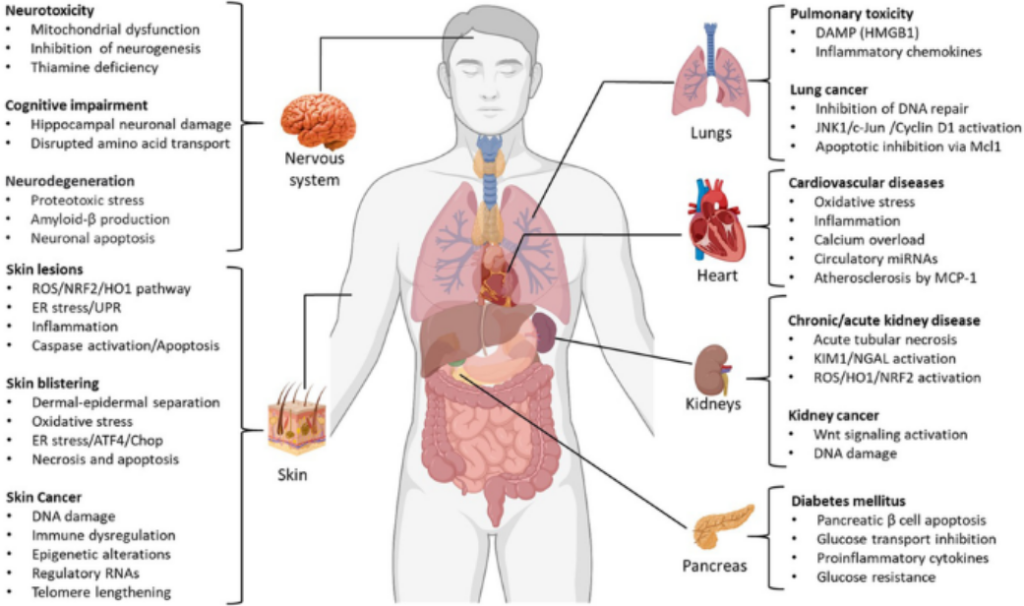
Arsenic cause alot of chronic diseases which includes several cardiovascular, neurological and developmental diseases in children. Here are list of disease caused by iron contamination in drinking water:
Detection & Monitoring of Arsenic Contamination in Drinking Water
Detecting and monitoring arsenic contamination in drinking water is crucial for ensuring public health and safety. Various methods and technologies are employed to detect arsenic levels, ranging from field test kits to sophisticated laboratory techniques. Regular monitoring and compliance with regulatory standards are essential for effective management of arsenic contamination.
Laboratory Techniques
Atomic Absorption Spectrometry (AAS)
AAS is a common laboratory method used to detect arsenic in water. It involves vaporizing the water sample and measuring the absorbance of light, which is proportional to the arsenic concentration. This method is highly sensitive and accurate.
Inductively Coupled Plasma Mass Spectrometry (ICP-MS)
ICP-MS is a highly sensitive and precise technique that can detect low levels of arsenic in water. It involves ionizing the water sample with a plasma torch and measuring the mass-to-charge ratio of the ions. This method can detect multiple elements simultaneously.
High-Performance Liquid Chromatography (HPLC) with Hydride Generation
HPLC combined with hydride generation is used to separate different forms of arsenic (speciation) in water samples. This method is useful for identifying and quantifying organic and inorganic arsenic compounds.
Field Test Kits
Colorimetric Test Kits
These kits are designed for on-site testing and provide a quick and relatively accurate measurement of arsenic levels in water. The test involves adding reagents to a water sample, which causes a color change proportional to the arsenic concentration.
Digital Arsenic Test Kits
Digital test kits provide a more precise measurement compared to colorimetric kits. They use electronic sensors to detect arsenic concentrations and often come with digital readouts, making them user-friendly and reliable for field testing.
Monitoring and Regulatory Standards:
Regular Monitoring
Routine monitoring of drinking water sources is essential to ensure arsenic levels remain within safe limits. This involves periodic sampling and analysis of water from wells, reservoirs, and distribution systems. Monitoring helps in early detection and timely intervention to prevent exposure.
Regulatory Standards
Various regulatory agencies have established maximum allowable concentrations of arsenic in drinking water. The World Health Organization (WHO) recommends a limit of 10 micrograms per liter (µg/L). Similarly, the U.S. Environmental Protection Agency (EPA) has set the Maximum Contaminant Level (MCL) for arsenic at 10 µg/L.
Challenges in Detection and Monitoring:
Spatial Variability
Arsenic levels can vary significantly within a geographic area, making it challenging to assess and manage contamination uniformly. Multiple sampling points and frequent monitoring are necessary to capture this variability.
Detection Limits
The sensitivity of detection methods is crucial for accurately measuring low levels of arsenic. Advanced laboratory techniques like ICP-MS are preferred for their low detection limits, while field kits may struggle with detecting very low concentrations.
Cost and Accessibility
Mitigation and Prevention of Arsenic Contamination in Drinking Water
Mitigating and preventing arsenic contamination in drinking water involves a combination of immediate interventions and long-term strategies. These approaches include using alternative water sources, implementing water treatment technologies, and promoting public awareness and education.
Mitigation Strategies
Alternative Water Sources
- Surface Water and Rainwater Harvesting
One immediate solution is to use surface water (rivers, lakes) or collect rainwater as alternative sources. These sources are typically less likely to contain high levels of arsenic compared to groundwater in affected areas.
- Deep Tubewells
Installing deep tubewells that tap into deeper aquifers can help access water with lower arsenic concentrations. Deep aquifers are often less affected by arsenic contamination than shallow ones.
Water Treatment Technologies
- Adsorption
Adsorption techniques use materials such as activated alumina, iron oxide, and other adsorbents to bind arsenic and remove it from water. These materials are effective in reducing arsenic levels to safe limits.
- Ion Exchange
Ion exchange processes replace arsenic ions in water with other harmless ions using ion exchange resins. This method is effective for both arsenic (III) and arsenic (V).
- Reverse Osmosis
Reverse osmosis (RO) systems force water through a semipermeable membrane, effectively removing arsenic along with other contaminants. RO is widely used for its high efficiency in reducing arsenic concentrations.
- Coagulation and Filtration
This method involves adding coagulants such as ferric chloride or alum to water, which binds with arsenic to form larger particles that can be filtered out. Coagulation followed by filtration is a cost-effective approach for large-scale water treatment.
Prevention Strategies:
Source Control
- Regulating Industrial Discharges
Implementing strict regulations on industrial discharge can prevent arsenic from entering water sources. Industries must treat wastewater to remove arsenic before releasing it into the environment.
- Phasing Out Arsenic-Based Pesticides
Banning or restricting the use of arsenic-based pesticides and herbicides can significantly reduce the amount of arsenic entering soil and water.
Public Awareness and Education
- Community Education Programs
Educating communities about the risks of arsenic contamination and safe water practices is essential. Programs should focus on identifying contaminated sources and promoting the use of safe water.
- Training for Local Health Workers
Training local health workers to recognize symptoms of arsenic poisoning and to advise on mitigation measures can help protect public health in affected areas.

Impact of Climate Change on Arsenic Contamination in Drinking Water
Climate change is a critical factor that can influence the distribution and concentration of arsenic in drinking water. Various climatic phenomena, such as changes in precipitation patterns, temperature fluctuations, and rising sea levels, can exacerbate the problem of arsenic contamination. Understanding these impacts is essential for developing adaptive strategies to protect water quality and public health.
1. Impact on Water Management and Infrastructure
Strain on Water Resources
Climate change can place additional strain on water resources, making it more challenging to manage and treat arsenic-contaminated water. Increased demand for water during periods of heatwaves and droughts can lead to over-extraction of groundwater, potentially exacerbating arsenic contamination.
Damage to Water Infrastructure
Extreme weather events, such as hurricanes and floods, can damage water infrastructure, including wells and treatment facilities. This can disrupt the supply of clean water and increase the risk of arsenic contamination. (17)
2.Changes in Precipitation Patterns
Increased Rainfall and Flooding
Climate change is expected to increase the frequency and intensity of rainfall and flooding in many regions. Increased rainfall can lead to the leaching of arsenic from soil into groundwater. Flooding can also disturb sediments in rivers and lakes, releasing arsenic that was previously bound to sediment particles into the water column.
Drought Conditions
Prolonged droughts can lower the water table, causing groundwater levels to drop. As water levels decrease, the concentration of arsenic in the remaining groundwater can increase due to reduced dilution. Additionally, the oxidation of arsenic-bearing minerals in exposed soils can release arsenic into the groundwater when rehydrated.
3.Temperature Fluctuations
Enhanced Geochemical Reactions
Higher temperatures can accelerate geochemical reactions in soil and water. Increased temperatures can enhance the microbial activity that converts arsenic to more mobile and toxic forms, increasing the risk of groundwater contamination.
Evaporation and Concentration
Rising temperatures can increase the rate of evaporation from surface water bodies, leading to higher concentrations of arsenic in the remaining water. This process is particularly concerning for regions that rely on surface water for drinking purposes.
4.Sea Level Rise
Saltwater Intrusion
Higher temperatures can accelerate geochemical reactions in soil and water. Increased temperatures can enhance the microbial activity that converts arsenic to more mobile and toxic forms, increasing the risk of groundwater contamination.
Evaporation and Concentration
Rising temperatures can increase the rate of evaporation from surface water bodies, leading to higher concentrations of arsenic in the remaining water. This process is particularly concerning for regions that rely on surface water for drinking purposes.
Economic and Social Impacts of Arsenic Contamination
Arsenic contamination in drinking water has profound economic and social impacts, affecting communities, individuals, and governments. The ramifications extend beyond health issues, influencing economic productivity, social dynamics, and public policy. Understanding these impacts is critical for designing effective interventions and support systems.
Economic Impacts

Healthcare Costs
The treatment of diseases associated with arsenic exposure, such as cancer, cardiovascular diseases, and neurological disorders, imposes significant costs on healthcare systems. These expenses include medical treatments, hospitalizations, medications, and long-term care. (18)
Loss of Productivity
Illnesses caused by arsenic exposure can lead to a loss of productivity due to absenteeism, reduced work capacity, and premature deaths. This impacts not only the affected individuals but also the broader economy, especially in regions where the workforce is heavily dependent on agriculture and manual labor.
Water Treatment and Infrastructure Costs
Mitigating arsenic contamination requires significant investment in water treatment technologies and infrastructure upgrades. This includes the installation and maintenance of filtration systems, deep tube wells, and other remediation measures. The financial burden can be substantial for both governments and local communities.
Impact on Agriculture
Arsenic-contaminated water used for irrigation can affect crop yields and soil health. This can lead to economic losses for farmers and impact food security. Contaminated crops can also pose health risks, further compounding the economic burden. (19)
Social Impacts
Public Health and Well-being
The health impacts of arsenic exposure can lead to decreased quality of life and increased mortality rates, causing distress and anxiety among affected populations. The fear of contamination can also lead to social unrest and reduced community cohesion.
Access to Safe Drinking Water
In regions with high arsenic contamination, access to safe drinking water becomes a critical issue. This can lead to social inequalities, as marginalized and low-income communities may struggle to afford alternative water sources or treatment solutions.
Migration and Displacement
Severe arsenic contamination can force communities to relocate in search of safer water sources. This displacement can disrupt social networks, economic activities, and educational opportunities, leading to long-term social challenges.
Educational Impacts
Children exposed to arsenic may suffer from cognitive impairments, impacting their educational performance and future prospects. This can perpetuate cycles of poverty and limit opportunities for social mobility.
Cultural and Social Practices
In some cultures, the use of contaminated water sources is deeply ingrained due to traditional practices. Efforts to change these practices can face resistance, and failure to address these cultural dimensions can hinder mitigation efforts.
Role of Non-Governmental Organizations (NGOs)
Non-Governmental Organizations (NGOs) play a crucial role in addressing the complex issue of arsenic contamination in drinking water. Their efforts encompass a wide range of activities, from raising awareness and providing education to implementing water treatment projects and advocating for policy changes. NGOs often operate in areas where governmental reach is limited, making them vital players in the fight against arsenic contamination.
1. Implementation of Water Treatment Solutions
1
Installation of Water Filters
NGOs often spearhead projects to install water filters in households and communities affected by arsenic contamination. These filters can range from simple, low-cost options to more advanced filtration systems that effectively remove arsenic from drinking water.
2
Development of Safe Water Sources
In regions where existing water sources are heavily contaminated, NGOs work to develop alternative safe water sources. This includes drilling deep tube wells, constructing rainwater harvesting systems, and tapping into safer surface water sources.
3
Research and Innovation
NGOs often collaborate with research institutions to develop and test new technologies for arsenic removal. By fostering innovation, they contribute to the development of more effective and affordable water treatment solutions.
2. Awareness and Education
1
Public Awareness Campaigns
NGOs are instrumental in raising awareness about the dangers of arsenic contamination. Through public awareness campaigns, they inform communities about the sources of arsenic, the health risks associated with exposure, and ways to mitigate these risks.
2
Community Education Programs
Educational initiatives by NGOs help communities understand the importance of using safe water sources. These programs often include training on how to test water for arsenic, recognize symptoms of arsenic poisoning, and implement household-level water treatment solutions. (20)
3. Advocacy and Policy Influence
1
Advocating for Regulatory Changes
NGOs play a critical role in advocating for stricter regulatory standards and enforcement mechanisms to control arsenic contamination. They work with governments and international organizations to ensure that water quality standards are met and maintained.
2
Promoting Policy Development
By providing evidence-based research and case studies, NGOs help shape policies that address the root causes of arsenic contamination. They promote the inclusion of arsenic mitigation in national and international water management strategies.
4. Capacity Building and Training
1
Training Local Health Workers
NGOs provide training for local health workers on how to identify and manage arsenic poisoning. This capacity-building effort ensures that health professionals are equipped to address the health impacts of arsenic contamination effectively.
2
Empowering Community Leaders
By training and empowering local leaders, NGOs help communities to take ownership of arsenic mitigation efforts. These leaders become advocates for safe water practices and play a vital role in sustaining long-term solutions.
5. Monitoring and Evaluation
1
Water Quality Monitoring
NGOs often establish community-based water quality monitoring programs to regularly test and report on arsenic levels. This data is crucial for tracking progress, identifying emerging hotspots, and ensuring the effectiveness of mitigation measures.
2
Impact Assessment
Through rigorous impact assessment, NGOs evaluate the outcomes of their interventions. These assessments help in understanding the effectiveness of different strategies and guide future efforts in arsenic mitigation.
Emerging Technologies for Arsenic Detection and Removal
Advancements in technology are providing new and improved methods for detecting and removing arsenic from drinking water. These emerging technologies are crucial for addressing the challenges of arsenic contamination, particularly in regions with limited resources. Innovations in detection and treatment are making it possible to manage arsenic more effectively and ensure safer drinking water.
Emerging Detection Technologies
1. Nanotechnology-Based Sensors
Nanotechnology offers highly sensitive and specific detection methods for arsenic. Nanoparticles and nanosensors can detect arsenic at very low concentrations, providing real-time monitoring capabilities.
Technology:
1
Gold Nanoparticles
These are used in colorimetric assays where a color change indicates the presence of arsenic. This method is simple, cost-effective, and suitable for field testing.
2
Carbon Nanotubes
Integrated into electrochemical sensors, they provide high sensitivity and fast response times for arsenic detection.
2. Advanced Spectroscopy Techniques
Spectroscopy methods offer precise arsenic detection through detailed analysis of water samples. These techniques are capable of detecting arsenic at trace levels and can distinguish between different arsenic species.
Technology:
1
Inductively Coupled Plasma Mass Spectrometry (ICP-MS)
Provides highly accurate quantification of arsenic and its species in water samples.
2
Laser-Induced Breakdown Spectroscopy (LIBS)
Allows for rapid and direct detection of arsenic in water with minimal sample preparation.
3. Microfluidic Devices
Microfluidic devices integrate multiple detection and analysis functions into a compact, portable system. They offer real-time, on-site arsenic detection with high sensitivity and low detection limits.
Technology:
1
Lab-on-a-Chip
These devices use microchannels and functionalized surfaces to detect arsenic through colorimetric or electrochemical reactions.
Emerging Removal Technologies
1. Advanced Oxidation Processes (AOPs)
AOPs use reactive oxygen species to oxidize arsenic to less toxic forms, facilitating its removal from water. These processes are effective for treating arsenic at low concentrations.
Technology:
1
Ozone Oxidation
Uses ozone gas to oxidize arsenic (III) to arsenic (V), which is more easily removed through conventional filtration.
2
Photocatalysis
Employs UV light and photocatalysts (such as titanium dioxide) to generate hydroxyl radicals that oxidize arsenic.
2. Bio-based Arsenic Removal
Bio-based technologies leverage biological processes to remove arsenic from water. These methods are eco-friendly and can be effective at low concentrations.
Technology:
1
Bioreactors
Utilize microorganisms that can accumulate or transform arsenic. For example, certain bacteria can reduce arsenic (V) to arsenic (III), which can then be removed using adsorption or precipitation.
2
Phytoremediation
Involves using plants that can absorb arsenic from contaminated water. This method is suitable for large-scale applications.
3. Adsorption Technologies
Adsorption remains a widely used method for arsenic removal, but emerging materials are improving its efficiency and cost-effectiveness.
Technology:
1
Graphene Oxide
Offers high surface area and selectivity for arsenic ions, providing effective adsorption even at low concentrations.
2
Modified Zeolites
These are natural or synthetic minerals that have been treated to enhance their arsenic removal capacity.
4. Membrane Technologies
Membrane filtration technologies are being refined to improve their effectiveness in removing arsenic and other contaminants.
Technology:
1
Nanofiltration (NF)
Provides high rejection rates for arsenic, particularly useful for treating water with moderate contamination levels.
2
Reverse Osmosis (RO)
Advanced RO membranes are being developed to enhance arsenic removal efficiency and reduce operational costs.
Regulatory Standards and Guidelines for Arsenic
Arsenic in drinking water is a significant public health concern, and various national and international regulatory bodies have established standards and guidelines to limit its concentration and protect human health. These regulations are designed to mitigate the risks associated with arsenic exposure and ensure safe drinking water for populations worldwide.

1. World Health Organization (WHO)
Arsenic Concentration Limit: The WHO recommends a maximum concentration of 0.01 mg/L (10 µg/L) for arsenic in drinking water.
Basis: This guideline is based on the carcinogenic nature of arsenic and its various adverse health effects, including cancer and skin lesions.
Guideline Development: WHO’s guidelines are based on extensive reviews of scientific evidence and aim to provide recommendations for safe drinking water quality.

2. United Nations Environment Programme (UNEP)
Arsenic Concentration Limit: UNEP follows WHO’s guideline of 0.01 mg/L (10 µg/L) for arsenic in drinking water.
Focus: UNEP emphasizes the need for monitoring and managing water quality to protect public health and supports countries in implementing appropriate water safety measures.
United States

1. Environmental Protection Agency (EPA)
Arsenic Concentration Limit: The EPA enforces a maximum contaminant level (MCL) of 0.01 mg/L (10 µg/L) for arsenic in public drinking water systems.
Regulation Details: This standard is enforced under the Safe Drinking Water Act (SDWA) and is designed to protect public health by reducing the risk of cancer and other health effects from long-term exposure to arsenic.

2. Food and Drug Administration (FDA)
Arsenic in Bottled Water: The FDA has established a similar standard to the EPA’s, with a maximum allowable concentration of 0.01 mg/L (10 µg/L) for arsenic in bottled water.
European Union

1. European Commission
Arsenic Concentration Limit: The European Union has set a maximum concentration of 0.01 mg/L (10 µg/L) for arsenic in drinking water.
Directive: This standard is enforced under the EU Drinking Water Directive (98/83/EC) and aims to protect human health by ensuring that water quality meets stringent safety standards.
Australia

1. National Health and Medical Research Council (NHMRC)
Arsenic Concentration Limit: The NHMRC recommends a maximum concentration of 0.01 mg/L (10 µg/L) for arsenic in drinking water.
Basis: This guideline is based on extensive risk assessments and aims to protect public health by reducing exposure to arsenic through drinking water.
| Organization | Region | Arsenic Concentration Limit (mg/L) | Basis |
| World Health Organization (WHO) | International | 0.01 | Carcinogenic nature and adverse health effects |
| United Nations Environment Programme (UNEP) | International | 0.01 | Follow WHO guideline |
| Environmental Protection Agency (EPA) | United States | 0.01 | Safe Drinking Water Act (SDWA) |
| Food and Drug Administration (FDA) | United States | 0.01 | Standard for bottled water |
| European Commission | European Union | 0.01 | EU Drinking Water Directive (98/83/EC) |
| National Health and Medical Research Council (NHMRC) | Australia | 0.01 | Extensive risk assessments |
- Various organizations have established regulatory standards to limit arsenic concentration in drinking water to 0.01 mg/L to protect public health.
- This includes the World Health Organization (WHO), United Nations Environment Programme (UNEP), Environmental Protection Agency (EPA) in the United States, Food and Drug Administration (FDA) for bottled water, European Commission within the EU, and the National Health and Medical Research Council (NHMRC) in Australia.
- These guidelines are based on the carcinogenic nature and adverse health effects of arsenic, ensuring safe drinking water globally.
Case Studies and Real-World Examples
Arsenic contamination in drinking water is a global issue with significant health, economic, and social impacts. Several case studies from different parts of the world illustrate the challenges and responses to arsenic contamination. These real-world examples highlight the diverse contexts in which arsenic contamination occurs and the strategies employed to address it.

Bangladesh
Background: Bangladesh has one of the most severe arsenic contamination crises in the world. Millions of people in rural areas rely on groundwater, which has been found to contain high levels of arsenic due to natural geological processes.
Key Issues:
Health Impact: Chronic arsenic exposure has led to widespread health problems, including skin lesions, cancer, and cardiovascular diseases. Over 20 million people are estimated to be at risk.
Efforts to mitigate the crisis include installing arsenic removal filters, switching to surface water sources, and providing medical treatment for affected individuals. The government, along with NGOs such as UNICEF and WaterAid, has been actively involved in these efforts.

USA
Background: In the United States, arsenic contamination is less widespread but still a concern, particularly in rural areas with private wells. The contamination is often due to natural sources or historical use of arsenic-based pesticides.
Key Issues:
Health Impact: Ingestion of arsenic can lead to various health issues, including cancer and developmental problems. The U.S. Environmental Protection Agency (EPA) has set a maximum contaminant level (MCL) of 10 µg/L for arsenic in drinking water.
The U.S. has stringent regulations and treatment standards to address arsenic contamination. This includes mandatory testing of water supplies and implementation of treatment technologies to reduce arsenic levels.

West Bengal, India
Background: West Bengal, a state in India, faces severe arsenic contamination in groundwater, particularly in the southern regions. The problem is similar to that in Bangladesh, with high arsenic levels affecting millions of people.
Key Issues:
Health Impact: Long-term exposure has resulted in arsenic poisoning, including skin disorders, internal cancers, and developmental issues in children.
The Indian government has implemented various measures, including the distribution of arsenic removal units, installation of new tube wells, and the promotion of alternative water sources. NGOs and research institutions have played a significant role in monitoring and providing support.

Taiwan
Background: In Taiwan, arsenic contamination in drinking water is primarily due to industrial activities and natural geological sources. The problem has been particularly acute in the southwestern part of the island.
Key Issues:
Health Impact: The contamination has led to various health issues, including skin cancer and bladder cancer, among the exposed population.
Taiwan has implemented stringent regulations and treatment technologies to reduce arsenic levels. This includes switching to alternative water sources and using advanced treatment methods to remove arsenic from drinking water.
conclusion
- Arsenic contamination in drinking water represents a significant global health challenge with profound implications for human well-being. As a highly toxic element, arsenic can cause severe health problems, including cancer, skin lesions, and cardiovascular diseases. The problem is exacerbated by its natural occurrence in geological formations and its introduction through industrial and agricultural activities. Addressing arsenic contamination requires a comprehensive understanding of its sources, mechanisms, and the health risks it poses.
- The impact of climate change further complicates the issue by affecting water availability and quality. Extreme weather events and fluctuating water tables can mobilize arsenic from natural sources, increasing contamination risks. This underscores the need for adaptive water management strategies that consider the potential effects of climate change on arsenic levels.
- Economic and social consequences of arsenic contamination are significant, with healthcare costs, loss of productivity, and social challenges arising from affected communities. Addressing these impacts involves not only implementing effective treatment solutions but also investing in public education and infrastructure. Non-Governmental Organizations (NGOs) play a vital role in these efforts, working alongside governments and communities to promote awareness, provide treatment solutions, and advocate for policy changes.
- Combating arsenic contamination requires a multi-faceted approach that combines technological innovation, regulatory enforcement, climate adaptation, and community engagement. By leveraging advancements in technology and adhering to stringent standards, we can effectively manage and mitigate the risks associated with arsenic in drinking water, ultimately protecting public health and ensuring safer drinking water for all.
References
1- https://www.foodandwaterwatch.org/2023/11/07/pfas-the-chemistry-of-concealment/
2- https://www.ncbi.nlm.nih.gov/pmc/articles/PMC6380916/
3- https://www.epa.gov/pfas/pfas-explained
4- https://cleanwater.org/pfas-containing-firefighting-foams#:~:text=AFFF%20are%20synthetic%20PFAS%2Dcontaining,California%20and%20around%20the%20world.
5- https://pubs.acs.org/doi/abs/10.1021/es1036173
6..https://www.ncbi.nlm.nih.gov/pmc/articles/PMC7784706/#:~:text=The%20vast%20majority%20of%20PFAS,very%20persistent%20substances%20(vP).
7- https://www.ncbi.nlm.nih.gov/pmc/articles/PMC9384792/
8..https://www.health.state.mn.us/communities/environment/hazardous/docs/pfashealth.pdf
9..https://www.health.state.mn.us/communities/environment/hazardous/docs/pfashealth.pdf
10- https://www.mondaq.com/unitedstates/water/1168584/pfas-update-state-by-state-regulation-of-pfas-substances-in-drinking-water
11- https://www.researchgate.net/publication/353822791_Destruction_of_Per-_and_Polyfluoroalkyl_Substances_PFAS_via_Lacasse_Enzymatic_Degradation_and_Electrochemical_Advanced_Oxidation?_tp=eyJjb250ZXh0Ijp7ImZpcnN0UGFnZSI6Il9kaXJlY3QiLCJwYWdlIjoiX2RpcmVjdCJ9fQ
12- https://cfpub.epa.gov/si/si_public_record_report.cfm?Lab=NERL&direntryid=198984
13- https://www.canva.com/design/DAGGf-05ToM/JpASz-DdIPGV3Rf_hN4g_w/edit
14-https://pubmed.ncbi.nlm.nih.gov/18791652/
15-https://www.researchgate.net/publication/47754982_Determination_of_perfluorochemicals_in_biological_environmental_and_food_samples_by_an_automated_on-line_solid_phase_extraction_ultra_high_performance_liquid_chromatography_tandem_mass_spectrometry_me
16-https://pubmed.ncbi.nlm.nih.gov/28478297/
17-https://pubmed.ncbi.nlm.nih.gov/25108894/
18- https://www.epa.gov/pfas/epa-pfas-drinking-water-laboratory-methods
19-https://pubmed.ncbi.nlm.nih.gov/24216232/
20-https://www.researchgate.net/publication/349059642_PFAS_removal_by_ion_exchange_resins_A_review
21-https://onlinelibrary.wiley.com/doi/abs/10.1002/rem.21553
22-https://www.tennesseeriverkeeper.org/
23-https://www.deq.nc.gov/news/press-releases/2022/09/15/deq-approves-permit-reduce-pfas-contamination-cape-fear-river
24-https://academic.oup.com/eurpub/article/28/1/180/3852033
25-https://enveurope.springeropen.com/articles/10.1186/s12302-018-0134-4
26-https://onlinelibrary.wiley.com/doi/abs/10.1002/rem.21553
27-https://pubmed.ncbi.nlm.nih.gov/30622333/
28-https://www.epa.gov/sites/default/files/2020-01/documents/pfas_action_plan_feb2020.pdf