New York City’s Renowned Tap Water Quality
New York City has the largest unfiltered drinking water system in the U.S., providing about 1 billion gallons daily. Its tap water is not only safe but also celebrated for its exceptional taste. The water’s unique mineral content and low hardness levels contribute to its distinct flavor. This flavor significantly impacts the local cuisine. The commitment to new york tap water safety ensures that residents can enjoy their water without concern. This rigorous oversight not only guarantees the water’s purity but also supports various food businesses that rely on it for cooking and brewing. As a result, the flavor of the local dishes is intricately linked to the quality of the city’s tap water. Many visitors often ask, "can you drink new york water?" The answer is a resounding yes, as the city’s stringent water quality standards ensure that residents and tourists alike can enjoy their hydrational source confidently. This has made New York an attractive destination for food enthusiasts who appreciate the role of high-quality water in culinary excellence.
The Envy of the World
New York City’s tap water is famous for its quality and taste, thanks to natural filtration from upstate watersheds. Classified as "soft water," it has low calcium and magnesium levels, ideal for making pizza and bagels. The Department of Environmental Protection tests the water over 100,000 times a year. This ensures its safety and taste, making it a reliable and affordable choice at just a penny per gallon.
Impact on Local Cuisine

The unique characteristics of New York City’s tap water deeply influence the local cuisine. Many believe the superior taste and texture of the city’s pizza and bagels come from the water’s mineral content and low hardness. Below is a comparison of water hardness and mineral content in New York City’s tap water with other major U.S. cities:
City | Water Hardness (mg/L) | Calcium (mg/L) | Magnesium (mg/L) |
New York City | 1-3 | 6-16 | 1-4 |
Los Angeles | 80-120 | 24-36 | 8-12 |
Chicago | 120-180 | 36-54 | 12-18 |
Houston | 50-70 | 15-21 | 5-7 |
The low mineral content and hardness of New York City’s tap water are perfect for dough fermentation. This results in the city’s signature crispy crust and chewy texture in pizza and bagels. The water’s unique composition is a key part of the city’s culinary identity, distinguishing it from other regions.
Temporary Changes to NYC’s Drinking Water Supply
As the Delaware Aqueduct undergoes critical repairs, New York City will temporarily adjust its drinking water supply. This ensures uninterrupted service to its residents. The Delaware Aqueduct, spanning 85 miles and operational for 78 years, supplies about 50% of the city’s daily water. It delivers around 550 million gallons daily. Yet, it leaks up to 35 million gallons daily, prompting a $2 billion repair initiative.
Delaware Aqueduct Repairs
The repair project will shut down over 40 miles of the Delaware Aqueduct for up to eight months. During this time, the city will use alternative water sources. This will maintain its daily supply of 1.1 billion gallons of drinking water. The repairs are scheduled to avoid the summer months, when demand is higher.
Increased Reliance on Croton Watershed
New York City will rely more on the Croton Watershed and other reservoirs during the repairs. The Croton Watershed, with its dozen reservoirs and three lakes, will be key in keeping the water supply steady.

The water treatment process and water filtration systems will ensure the water meets all quality standards. Yet, due to the Croton system’s higher mineral and algae levels, some may notice a taste or aroma change. Most, though, will not notice any difference.
Water Source | Daily Supply (Million Gallons) | Percentage of Total Supply |
Delaware Aqueduct | 550 | 50% |
Croton Watershed (During Repairs) | 400 | 36% |
Other Reservoirs (During Repairs) | 150 | 14% |
The Department of Environmental Protection (DEP) has been preparing for the leak repair project for over 20 years. This ensures a smooth transition and minimal impact on the city’s water supply. The repairs are expected to take six months, after which the Delaware Aqueduct will resume its vital role in providing drinking water to over 8 million New York City residents.
The Delaware Aqueduct: A Critical Component of NYC’s Water Infrastructure
The Delaware Aqueduct stands as a testament to engineering prowess, forming the core of New York City’s water network. Spanning an 85-mile-long tunnel, it connects four Catskill region reservoirs to the city, a feat achieved in 1944. It supplies around 1.1 billion gallons of water daily, meeting the demands of over 8 million New Yorkers and several upstate towns. In addition to its impressive scale, the aqueduct plays a crucial role in the efficiency and reliability of the New York City water supply system. Its engineering design minimizes water loss and ensures that the flow remains consistent, even during dry spells. As a vital resource, the Delaware Aqueduct not only sustains urban life but also supports local ecosystems by maintaining the natural water balance in the region.

Despite its vast capacity and enduring service, the aqueduct faces a major challenge: leaks. These have resulted in the loss of up to 35 million gallons of water each day. A $2 billion project aims to rectify this, involving the creation of a 2.5-mile bypass tunnel under the Hudson River. This project necessitates a temporary closure of over 40 miles of the aqueduct for up to eight months.
Delaware Aqueduct Facts | Data |
Length | 85 miles (137 kilometers) |
Daily Water Supply | 1.1 billion gallons (4.2 billion liters) |
Population Served | Over 8 million NYC residents, plus upstate municipalities |
Daily Water Leaks | Up to 35 million gallons (132 million liters) |
Leak Repair Project Cost | $2 billion |
Shutdown Duration | Up to 8 months |
Length of Aqueduct Out of Service During Shutdown | More than 40 miles (64 kilometers) |
During the shutdown, New York City will draw more from the Catskill Aqueduct and the Croton Watershed. The Catskill Aqueduct’s capacity has been boosted, while the Croton system, with its dozen reservoirs and three lakes, will also contribute to the water supply. This shift may alter the taste or aroma of tap water, potentially making it NYC tap water taste different due to the Croton’s mineral and algae content.
Addressing the Delaware Aqueduct’s Leaks
The Delaware Aqueduct, spanning 85 miles, supplies up to 600 million gallons of water daily to nearly 10 million people. This includes 8.3 million in New York City. It has been losing up to 35 million gallons a day, mainly from a section under the Hudson River. This section is part of a vast system with 19 reservoirs, three controlled lakes, and 7,000 miles of water mains and tunnels.
To tackle this issue, the New York City Department of Environmental Protection (DEP) is undertaking its largest repair project. The project, costing $2 billion, includes building a 2.5-mile bypass tunnel. This tunnel, constructed over 11 years at 600 feet beneath the Hudson River, is the first under the Hudson in over 60 years.
Constructing a Bypass Tunnel
The bypass tunnel is essential for the repair, allowing water to bypass the leaking section. Its construction has been a complex, 11-year endeavor. It required advanced engineering and specialized equipment. Workers excavated through solid rock, facing challenging conditions far beneath the earth.
Connecting the New Tunnel During Shutdown
Once the bypass tunnel is ready, connecting it to the existing aqueduct will be the next step. This will require shutting down the Delaware Aqueduct in 2023 for eight months. During this time, the leaking section will be sealed, and the new tunnel will be integrated. This process involves complex calculations and precise timing to ensure a smooth transition and minimal disruption.
Project Component | Key Facts |
Bypass Tunnel Length | 2.5 miles |
Bypass Tunnel Depth | 600 feet beneath the Hudson River |
Bypass Tunnel Construction Duration | 11 years |
Scheduled Aqueduct Shutdown | 8 months in 2023 |
Additional Leak Repairs
The repair project also targets leaks farther north in the Delaware Aqueduct. These leaks, while smaller, contribute to water loss and need attention. The DEP will use various water treatment process techniques and technologies to seal these leaks effectively. This will ensure the aqueduct’s long-term integrity and efficiency.
Ensuring Water Quality and Safety During Repairs
As New York City undertakes critical repairs to the Delaware Aqueduct, the Department of Environmental Protection (DEP) remains steadfast in its commitment to maintaining the highest standards of drinking water safety. Throughout the repair process, the city is dedicated to ensuring that the entire water supply meets every state, EPA, and health requirement.

The DEP has implemented a set of measures to safeguard water quality and safety during the temporary shift in water sources. These measures include:
- Regular testing of tap water throughout the five boroughs to monitor treatment effectiveness
- Adjusting pH levels and adding orthophosphate to form a protective barrier on plumbing
- Encouraging residents to flush tap water for 1 to 2 minutes in the morning before use
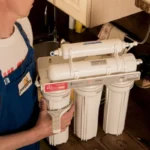
- Recommending the use of water filtration systems certified by NSF or UL for lead removal
It is important to note that while New York City’s water is virtually lead-free when delivered from the upstate reservoir system, older homes, including 1-to-4-family homes, may have lead pipes and fixtures. Homeowners are responsible for their entire water service line, which connects their plumbing to the City’s water main.
"Exposure to lead in drinking water can cause serious health effects across all age groups, including decreased IQ and attention span in infants and children." – NYC Department of Health
To further protect public health, New York State Law mandates that primary health care providers test the blood of every child for lead at ages one and two as part of routine well-child care. Primary providers must also assess children aged six months to six years for lead exposure and test those identified as at risk during each well-child visit.
Meeting State, EPA, and Health Requirements
The DEP’s proactive approach to ensuring drinking water safety during the Delaware Aqueduct repairs is a testament to the city’s unwavering commitment to meeting and exceeding all state, EPA, and health requirements. By implementing a multi-faceted strategy that includes regular testing, corrosion control treatments, and public education, the DEP is working diligently to maintain the high quality of New York City’s tap water throughout the repair process.
Timing the Repairs to Minimize Impact
The New York City Department of Environmental Protection (DEP) has meticulously planned the Delaware Aqueduct repairs. They aim to minimize disruption to the city’s water supply. The work is scheduled for non-summer months, when water demand is lower. This ensures residents and businesses have uninterrupted access to water during peak times.
Before the shutdown, the city has been upgrading its water system for years. Some parts are over a century old. These efforts are designed to enhance the system’s strength and dependability. They prepare it to handle the temporary loss of the Delaware Aqueduct during repairs.
Water System Component | Age | Improvements |
Croton Aqueduct | Over 175 years old | Capacity enhancements |
Catskill Aqueduct | Over 100 years old | Structural reinforcements |
Croton Watershed | Over 100 years old | Increased supply capabilities |
The DEP’s investment in these upgrades ensures the city’s water supply remains stable during repairs. These enhancements will not only reduce the shutdown’s impact but also boost the water infrastructure’s long-term resilience.
Boosting Capacity from Other Water Sources
As New York City temporarily shuts down a portion of the Delaware Aqueduct for critical repairs, officials are implementing measures to ensure an uninterrupted supply of safe drinking water. The water treatment process involves boosting capacity from alternative sources, such as the Catskill Aqueduct and the Croton Watershed, to compensate for the reduced flow from the Delaware system.
The Catskill Aqueduct, which historically provided about 40% of the city’s water, is undergoing improvements to increase its capacity during the repair period. As of the last report, the Ashokan Reservoir, a key component of the Catskill system, was at 73.6% capacity, while the Schoharie Reservoir stood at 32.1%.
Increasing Supply from the Croton Watershed
To further supplement the city’s water supply, officials are turning to the Croton Watershed in the northern suburbs. The regional water mineral content in the Croton system differs from that of the Delaware Aqueduct, which may lead to subtle changes in taste for some residents.
The Croton Watershed has been facing its own challenges, with precipitation levels falling below historical averages. In October, the watershed received only 0.81 inches of rain, compared to the usual 3.81 inches. As a result, the Croton system’s capacity dropped from 83% on November 1 to 81.2% by November 5.
"We are closely monitoring the water levels in all our reservoirs and making necessary adjustments to ensure an adequate supply of safe, high-quality drinking water for all New Yorkers during this critical repair period." We encourage residents to stay informed about the situation by checking our official channels for timely NYC water reservoir status updates. Our dedicated team is committed to maintaining transparency and will provide regular information on water quality and availability. Together, we can navigate this period while ensuring that every community has access to the essential resource of water. As we address the repairs, we are reminded of the importance of water management in sustaining our vital infrastructure. It is essential that we all understand our role in conserving water and supporting initiatives that promote sustainability. By working together, we can ensure a resilient future for our water supply and safeguard this precious resource for generations to come. As we reflect on the importance of proper water management, it’s crucial that we all engage in responsible consumption practices. Simple actions like fixing leaks, using water-efficient fixtures, and being mindful of water usage can make a significant difference. By promoting these values within our communities, we not only contribute to a reliable water supply but also foster a culture of stewardship towards our environment.
Despite these challenges, city officials remain confident in their ability to maintain a reliable water supply throughout the Delaware Aqueduct repairs. By leveraging the Catskill Aqueduct’s increased capacity and the Croton Watershed’s resources, New York City is working to minimize any disruptions to its residents’ access to clean, safe drinking water.
Potential Changes in Taste Due to Alternate Water Sources
As New York City shifts its water supply to the Croton Watershed and other suburban reservoirs, residents might detect subtle changes in their tap water’s taste. These city water taste variations stem from the unique mineral content and characteristics of the new water sources.
Water hardness, a measure of dissolved minerals like calcium and magnesium, significantly impacts taste. The Croton System generally has higher water hardness than the Catskill/Delaware System. This difference may alter the water’s flavor. New York State Department of Health assures that water hardness, while affecting taste, does not pose health risks.
Naturally occurring organic matter, such as algae and plant-based materials, also influences taste. The Croton Watershed, being smaller and closer to urban areas, might contain more of these substances than the Catskill/Delaware System. Despite thorough treatment, trace amounts of organic matter can affect the water’s taste and aroma.
It’s vital to remember that New York City’s tap water will adhere to all Environmental Protection Agency (EPA) and New York State Department of Health safety standards. The NYC Department of Environmental Protection (DEP) will vigilantly monitor water quality during the repairs. This ensures the water remains safe for consumption.
While some may be more aware of these taste variations, others might not notice them. Personal taste preferences, cooking methods, and the use of water filtration systems can influence how one perceives tap water taste.
Minerals and Algae in the Croton System
As New York City prepares for the temporary shutdown of the Delaware Aqueduct, the Croton Watershed will play a larger role. This system, with 12 reservoirs and three lakes in the northern suburbs, usually supplies about 10% of the city’s water. With the Delaware Aqueduct repairs, the Croton system’s contribution is expected to increase significantly.
The increased reliance on the Croton Watershed may lead to subtle changes in the taste of New York City’s tap water. This is due to the regional water mineral content and the presence of algae in the Croton system. These factors can be influenced by various environmental factors affecting taste.
Impact on Water Taste
The Croton Watershed is known to have higher levels of minerals compared to the Catskill-Delaware watershed. This can result in a slightly different taste profile. Mineral content varies based on geology, soil composition, and human activities in the surrounding area.
Also, the presence of algae in the Croton system can affect the taste and aroma of the water. Algal growth is influenced by factors such as nutrient availability, temperature, and sunlight. While the water remains safe to drink, some consumers may notice a slight difference in taste during the repair period.
Water Source | Mineral Content | Algae Presence |
Croton Watershed | Higher | More common |
Catskill-Delaware Watershed | Lower | Less common |
Despite these changes in taste, New York City’s water will continue to meet all safety and quality standards. The city’s water treatment processes ensure that the water remains safe for consumption, regardless of its source.
NYC Tap Water Taste Different: What to Expect
As the Delaware Aqueduct undergoes necessary repairs, New York City’s Department of Environmental Protection has advised residents. They may notice subtle changes in the taste and aroma of their tap water. These temporary variations are due to the city’s increased reliance on water from the Croton Watershed during the repair period. Despite the minor differences in taste, officials emphasize that the city’s tap water quality remains high and safe for drinking.
Subtle Differences in Taste and Aroma
While the majority of New York City’s tap water typically comes from the Catskill and Delaware Watersheds, the temporary shift to the Croton Watershed may result in slight changes. The Croton System’s water contains higher levels of minerals and is more susceptible to the presence of algae. This can contribute to these subtle variations. It’s important to note that these differences are comparable to the variations one might experience between different brands of bottled water.
Water Remains Safe to Drink
Despite the minor changes in taste and aroma, New York City’s tap water quality remains consistently high and safe for consumption. The Department of Environmental Protection Commissioner, Rohit T. Aggarwala, has reassured residents that the water continues to meet all state, EPA, and health requirements. The city’s rigorous testing and monitoring protocols ensure that the tap water supply adheres to strict safety standards. This prioritizes the health and well-being of its over eight million residents throughout the Delaware Aqueduct repair process.
FAQ
Why is New York City’s tap water taste changing?
The taste of New York City’s tap water is temporarily changing due to repairs on the Delaware Aqueduct. This aqueduct supplies about half of the city’s drinking water. As repairs are underway, the city will use more water from the Croton Watershed and other reservoirs. This shift may cause slight changes in the taste and aroma of the tap water.
Is New York City’s tap water safe to drink during the repairs?
Yes, New York City’s tap water is safe to drink during the repairs. The Department of Environmental Protection ensures the water meets all state, EPA, and health standards. They implement measures to maintain water quality and safety, even with a temporary shift in water sources.
How long will the Delaware Aqueduct be shut down for repairs?
The Delaware Aqueduct will be shut down for up to eight months for repairs. A new parallel bypass tunnel will be connected, and the leaking portion will be sealed. Additional leaks farther north will also be repaired during this time.
Why is the Delaware Aqueduct important to New York City’s water supply?
The Delaware Aqueduct, operational for over 70 years, is the longest tunnel in the world. It carries water for 85 miles from the Catskill region to New York City. It supplies roughly half of the 1.1 billion gallons of water used daily by over 8 million residents and some upstate municipalities.
What measures have been taken to minimize the impact of the Delaware Aqueduct shutdown?
The repair work on the Delaware Aqueduct is scheduled to avoid summer months when demand is higher. The city has also made improvements to other parts of the water system, some over 100 years old. The capacity of the Catskill Aqueduct has been increased, and more water will be sourced from the Croton Watershed during the repair.
Why might the taste of New York City’s tap water change during the repairs?
The reliance on the Croton Watershed and other suburban reservoirs may change the taste of New York City’s tap water. These changes can be due to differences in mineral content and other characteristics of the alternate water sources. The Croton Watershed, which usually provides about 10% of the city’s water, may have a higher mineral and algae content. This could result in slight differences in the taste of the water during the repair period.