The Debate Surrounding Tap Water Safety in Mexico City
The safety of tap water in Mexico City is a contentious issue, with differing views on its quality. Some areas have reliable public water systems, while others face inconsistent water quality and supply. This has led to a reliance on bottled or filtered water, mainly in areas where tap water is deemed unsafe.
Contaminants in tap water are a major concern. Research shows that some homes receive water that’s not safe to use due to high pollutant levels. Others may experience irregular water supply or no water at all. The city’s old infrastructure and leaky pipes contribute to water loss and contamination, with up to 40% of water lost.
The government has launched various initiatives to address water contaminants in Mexico City. These efforts aim to enhance tap water quality and ensure it’s safe for drinking. Yet, the success of these measures varies across the city, fueling ongoing doubts among residents.
Water Source | Percentage of Supply | Challenges |
Cutzamala System | 30% | Drought, distant location, pumping requirements |
Groundwater Aquifers | 60% | Unsustainable extraction, ground subsidence |
Rainwater Catchment | Increasing | Implementation progress, capitalization on rainfall |
The debate over tap water safety in Mexico City is complicated by its diverse water sources. About 30% of the water comes from the distant Cutzamala system, facing challenges like climate change and high pumping costs. Also, 60% of the water is from groundwater aquifers, being depleted at an alarming rate, causing the ground to sink nearly five inches annually.
As Mexico City tackles the challenge of providing safe tap water for its 22 million residents, the debate continues. Improving water infrastructure, implementing effective treatment methods, and promoting conservation and sustainability are key to resolving the tap water safety concerns in the city.
Understanding the Water Source in Mexico City
Mexico City, with a population of about 22 million in the metropolitan area, faces significant water supply challenges. It relies on aquifers and geological formations for 60% to 70% of its water. Over the past decade, 5 million Olympic-sized pools of groundwater have been extracted yearly. This excessive extraction has caused subsidence of 15 to 20 inches per year in some areas, highlighting unsustainable water management practices.
The ongoing historic drought has worsened the situation, leading to decreased rainfall and groundwater levels. There’s no guarantee of a long rainy season. The Cutzamala reservoir system, which supplies about one-third of Mexico City’s water, is currently at less than 40% of its capacity. Last year was one of Mexico City’s hottest and driest, exacerbated by El Niño conditions linked to climate change.
The Importance of Knowing Where Your Water Comes From
Knowing your water source is key for safe and reliable drinking water. In Mexico City, socio-hydrological resilience varies across areas. The central and western parts are more resilient, while the eastern, northern, and southern areas are less so. Residents in water-needy neighborhoods, like Iztapalapa with nearly 2 million people, often face intermittent water service, sometimes as little as one hour per week.
Developing constructed wetlands could decrease water poverty by 32%, benefiting six million people. Constructed wetlands can also reduce the number of highly vulnerable people by 500,000. Without water sustainability improvements, four million people in Mexico City are projected to move from low to moderate vulnerability by 2050. Approximately 70% of the population is highly vulnerable, indicating a high likelihood of not having a secure water supply.
Different Water Delivery Methods in Mexico City
Mexico City uses various water delivery methods to meet its residents’ needs. These include:
- Mains-feed systems
- Communal feeds from official local water springs and wells
- Private wells
- A combination of rain collection and local water delivery by truck
In urban areas, properties usually have mains-feed water. Rural properties rely on communal systems or a mix of rainwater and truck-delivered water. Yet, 30% to 40% of the water pumped into Mexico City’s 8,000-mile-long pipeline grid is lost due to leaks and illicit connections, exacerbating water supply challenges.
Water Delivery Method | Urban Areas | Rural Areas |
Mains-feed systems | Common | Less common |
Communal feeds from springs and wells | Less common | Common |
Private wells | Less common | Common |
Rain collection and water delivery by truck | Less common | Common |
As Mexico City’s population grows, the strain on natural water reserves will increase. Addressing water supply challenges requires a multifaceted approach. This includes investing in infrastructure, promoting water conservation, and exploring alternative sources and delivery methods. Ensuring a sustainable and resilient water supply for all residents is essential.
The Process of Water Purification in Mexico City
In Mexico City, water purification is a complex process aimed at ensuring its safety for drinking. The city’s water supply faces significant challenges like leakage, overexploitation of aquifers, and contamination. To combat these issues, effective water purification in Mexico City is essential. This involves various filtration methods, including reverse osmosis in Mexico City, to remove contaminants and provide clean drinking water.
Reverse Osmosis and Other Filtration Methods
Water filtration in Mexico City heavily relies on reverse osmosis. This method forces water through a semipermeable membrane to remove impurities. It is highly effective in eliminating contaminants like bacteria, viruses, and dissolved solids. Other techniques, such as activated carbon filters and UV disinfection, are also used to ensure water purity and safety.
Filtration Method | Contaminants Removed |
Reverse Osmosis | Bacteria, viruses, dissolved solids, fluoride, arsenic |
Activated Carbon Filters | Chlorine, pesticides, herbicides, organic compounds |
UV Disinfection | Bacteria, viruses, protozoa |
The Downside of Purification: Removal of Beneficial Minerals
The extensive water purification in Mexico City is necessary for safe drinking water. Yet, it also removes beneficial minerals like calcium and magnesium, which are vital for health. To counter this, some facilities in Mexico City are adding remineralization steps to restore these nutrients to the purified water.
Despite the challenges, the implementation of advanced water filtration in Mexico City, including reverse osmosis in Mexico City, is critical. It ensures safe and clean drinking water for residents. As the city tackles infrastructure, contamination, and water scarcity issues, the purification process remains essential for public health and well-being.
Water Delivery Options in Mexico City Homes
In Mexico City, residents have various options for obtaining water in their homes. The most common method is through the city’s mains-feed system, which supplies water to most urban households. Yet, the reliability and quality of this water can vary greatly. It depends on the location and the infrastructure.
For those seeking alternative water delivery services in Mexico City, several options are available. Some communities rely on communal feeds from local water springs and wells. Others have private wells on their properties. In areas where the mains-feed system is unreliable or unavailable, residents may use a combination of rainwater collection and truck-delivered water. This combination meets their home water supply needs.
The following table provides an overview of the different water delivery methods used in Mexico City homes:
Water Delivery Method | Percentage of Households | Primary Areas Served |
Mains-feed system | 60% | Urban areas |
Communal feeds (springs and wells) | 15% | Rural communities |
Private wells | 10% | Suburban and rural properties |
Rainwater collection and truck-delivered water | 15% | Areas with unreliable or no mains-feed |
Even in homes connected to the mains-feed system, the water quality may not be suitable for drinking without additional filtration or treatment. Many residents opt for bottled water or in-home filtration systems. This ensures a safe and reliable drinking water supply. As water delivery services in Mexico City evolve, it is essential for homeowners to explore available options. They should invest in solutions that guarantee a clean and consistent home water supply.
The Popularity of Bottled Water in Mexico City
In Mexico City, where only 7 percent trust their tap water, bottled water is a must-have. Its convenience and wide availability have made it a favorite. You can find everything from small bottles to large 20-liter garrafones.
Bottled water is readily available in many places across the city. You can buy it from:
- Street traders
- Convenience stores
- Supermarkets
- Pharmacies
- Specialized water delivery companies
Convenience and Accessibility of Bottled Water
Bottled water’s widespread availability in Mexico City makes it a go-to choice. Femsa, a major player, extracts over 300,000 gallons daily from the Huitepec volcano. This ensures a steady supply. Yet, this convenience is costly, with over a third in rural Chiapas lacking running water.
Choosing Between Big Brand and Local Purified Water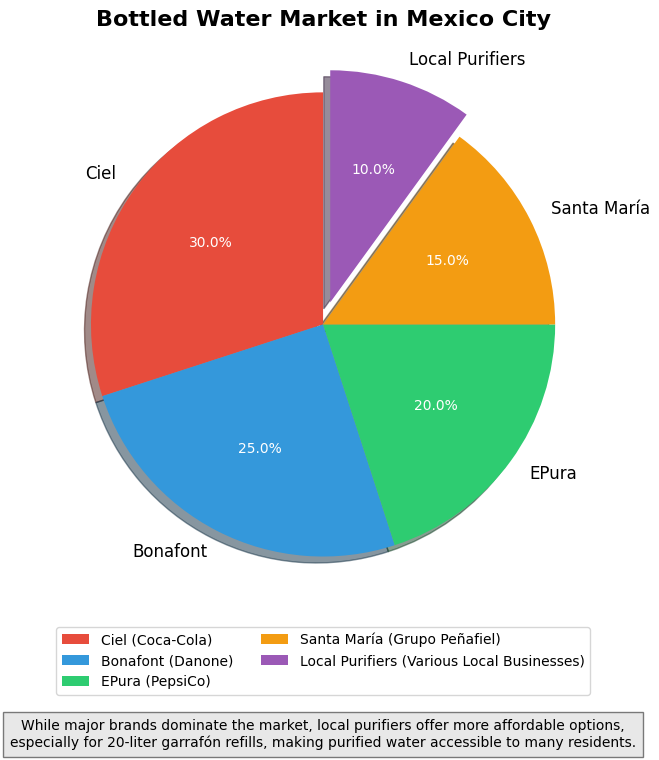
Choosing bottled water in Mexico City means picking between well-known brands and local options. Popular brands include:
Brand | Parent Company |
Ciel | Coca-Cola |
Bonafont | Danone |
EPura | PepsiCo |
Santa María | Grupo Peñafiel |
Big brands lead the market, but local purifiers offer a cheaper option, ideal for 20-liter garrafón refills. These local businesses are key in making purified water accessible to many in Mexico City.
Water Filtration Systems for Home Use in Mexico City
Residents of Mexico City looking for a reliable way to access safe drinking water at home might consider water filtration systems. These systems are available in two main types: plumbed-in water filters and stand-alone water filter systems. Each type has its own benefits and considerations.
Plumbed-In Water Filters: A Permanent Solution
Plumbed-in water filters, also known as under-sink filters or point-of-use filters, are connected directly to the home’s water supply. They provide a separate tap for filtered drinking water. These systems can range from single-stage active carbon filters to multi-stage systems with additional purification methods, like UV light treatment. By choosing a plumbed-in water filter, homeowners in Mexico City can have a permanent source of clean drinking water. This eliminates the need to constantly buy and store bottled water.
When selecting a plumbed-in water filtration system, it’s important to pick a reputable brand and a model that effectively removes contaminants. Mexico City’s water supply often contains bacteria, viruses, and heavy metals. Reverse osmosis systems are a popular choice for home water filtration in Mexico City. They can remove a wide range of impurities. Professional installation is recommended to ensure optimal performance and to protect the home’s plumbing system.
Stand-Alone Water Filter Systems: Portable and Convenient
Stand-alone water filter systems are a flexible and portable option for those who prefer not to install a permanent system. These systems come in various forms, such as pitchers, countertop units, or gravity-fed filters. They can be easily moved from one location to another within the home.
When selecting a stand-alone water filter for use in Mexico City, it’s important to consider its ability to remove specific contaminants. Activated carbon filters can improve taste and odor while reducing chlorine and other chemicals. Ceramic filters can effectively remove bacteria and protozoa. Higher-end stand-alone water filters may include multiple filtration stages or advanced technologies like UV light treatment for enhanced purification.
The choice between plumbed-in water filters and stand-alone water filter systems depends on individual preferences, budget, and household needs. Investing in a reliable home water filtration system provides peace of mind. It ensures access to safe, clean drinking water without the environmental impact and ongoing costs of bottled water.
Buying Bottled Water for Home Use in Mexico City
In Mexico City, about 80% of residents opt for bottled water due to tap water safety issues. The 20-liter bottle, or garrafón, is a staple, weighing around 20 kg (44 pounds) when full. These large bottles are often placed upside-down on water dispensers. Dispensers range from simple plastic to elegant Talavera ceramic designs.
Major brands like Ciel (Coca-Cola), Bonafont (Danone), EPura (Pepsi), and Santa María (Nestlé) dominate the market. They offer home water delivery mexico city services, ensuring garrafones mexico city reach residents’ doors. Yet, local purifying companies provide more budget-friendly refill options, costing roughly one-third of what the big brands charge.
It’s critical to clean water dispensers mexico city regularly to avoid bacterial or fungal growth. This step is vital to keep the purified water safe for drinking. While smaller sizes like 500 ml, 1 liter, and 2 liters are available, the 20-liter garrafón is the most economical and eco-friendly choice for home use.
Bottled Water Brand | Parent Company |
Ciel | Coca-Cola |
Bonafont | Danone |
EPura | Pepsi |
Santa María | Nestlé |
Staying Hydrated While Eating Out in Mexico City
When dining in Mexico City, it’s vital to stay hydrated. This ensures you enjoy your meal and maintain health. Knowing the water options and making safe choices is key.
Bottled water is common in restaurants, but it’s pricey. Many places offer free water upon request. This water might be bottled or filtered, depending on the restaurant.
Opting for Bottled Water in Restaurants
Choosing bottled water in Mexico City is wise if unsure about tap water. Reputable restaurants use well-known brands. This way, you can dine without health worries.
About 70% of Mexicans avoid tap water, opting for bottled. This shows the importance of informed choices when eating out.
Complimentary Glasses of Water: Filtered or Bottled?
When offered free water, ask about its source. Often, it’s from a bottle for safety. But, some places use on-site filtration systems.
Upscale hotels and some smaller ones have their own water systems. These systems purify the water, making it safe for guests. So, the free water in these places is usually reliable.
Water Source | Pros | Cons |
Bottled Water | Convenient, safe, and widely available | Higher cost compared to other options |
Filtered Water | Complimentary, safe when properly filtered | Quality depends on the establishment’s filtration system |
In Mexico City hotels, you’ll find purified water in your room. The staff replenishes it daily, ensuring safe drinking water.
Being aware of water options and making smart choices helps you stay hydrated. This way, you can enjoy dining in Mexico City without health risks.
Accessing Safe Drinking Water During Travels in Mexico City
Traveling through Mexico City requires prioritizing access to safe drinking water. The city has improved its water infrastructure, yet many opt for bottled or purified water to avoid waterborne illnesses. Approximately 70% of travelers to Mexico City experience gastrointestinal issues, often due to unsafe drinking water.
Ensuring water safety while traveling Mexico City is achievable through various means. Ambulant traders offer bottled water and sodas at various locations, including archaeological parks and traffic lights. This widespread availability ensures travelers can stay hydrated without health risks.
In larger hotels and upscale accommodations, on-site water purification systems provide safe water. These places offer at least one complimentary bottle of purified water daily. It’s wise to confirm the water source and purification methods to ensure safe drinking water in Mexico City.
When dining out, look for the Distintivo H seal. This seal indicates a restaurant’s commitment to food and water safety. These establishments have been trained by food safety consultants to meet high standards.
Water Safety Tip | Explanation |
Boil tap water | Boiling tap water for at least 1 minute (or 3 minutes at higher altitudes) kills harmful pathogens |
Use water filters | Portable water filters can remove bacteria, protozoa, and some viruses, making tap water safer to drink |
Opt for bottled water | Short-term visitors may find it easier to rely entirely on bottled water, which typically costs about $1 per bottle |
Check ice sources | Ice in beverages can often be made from tap water, posing a contamination risk; confirm with the establishment |
By being informed and proactive about water safety while traveling Mexico City, visitors can reduce the risk of waterborne illnesses. Whether using bottled water, portable filters, or establishments with verified water purification systems, travelers have options to stay hydrated and healthy.
Water Quality in Mexico City: A Closer Look
Mexico City faces a severe water crisis, with its water supply quality under intense scrutiny. The city, home to over 21 million people, is on the brink of a "day zero" scenario, signaling a critical water shortage. Recent groundwater analyses have uncovered various water contamination issues in Mexico City. These findings raise serious concerns about the safety of tap water for drinking.
Common Contaminants Found in Mexico City’s Water Supply
The geological and hydrological conditions in Mexico City significantly affect its water quality. The city’s intensive groundwater pumping and porous clay soil have caused land subsidence. This has increased the risk of contamination. Common contaminants in the water supply include:
- High levels of ammonia
- Fecal coliforms
- Heavy metals, such as lead and arsenic
- Pesticides and other chemical pollutants
Health Risks Associated with Consuming Untreated Tap Water
Drinking untreated tap water in Mexico City poses various health risks, mainly related to waterborne illnesses. The health issues linked to water quality problems in Mexico City include:
- Gastrointestinal infections, such as diarrhea and dysentery
- Hepatitis A
- Typhoid fever
- Long-term exposure to heavy metals, which can lead to neurological and developmental disorders
To mitigate the health risks of untreated water in Mexico City, it is essential for residents and visitors to use safe drinking water alternatives. This includes bottled water or water filtration systems. By ensuring access to clean, potable water, individuals can safeguard themselves against the dangers of water contamination in Mexico City.
Efforts to Improve Water Infrastructure and Management in Mexico City
Mexico City, with over 22.5 million residents, faces significant water infrastructure challenges. The city’s water supply heavily depends on the Cutzamala System, which currently operates at 65% capacity. To tackle these issues, the government is working to enhance water infrastructure and management.
The Agua Bienestar purification plant program is a key initiative. It aims to provide affordable, purified water to underserved neighborhoods. The government plans to invest 15 billion pesos (US $718.5 million) in water projects from a proposed 291.5 billion pesos (US $13.98 billion) budget for 2025. The goal is to build at least one purification plant in each of the city’s 16 boroughs, with some areas possibly getting up to four plants.
Initiative | Investment (in pesos) | Investment (in USD) |
Agua Bienestar purification plant program | 15 billion | $718.5 million |
Overall Mexico City budget for 2025 | 291.5 billion | $13.98 billion |
The Agua Bienestar purification plants will sell 19-liter garrafones of purified water for 5 pesos (US $0.24) each. An additional 80 pesos (US $3.83) will be charged for the reusable jug. This is much more affordable than the retail prices for filled 19- or 20-liter garrafones, which range from 48 to 60 pesos (US $2.30 to $2.87). By the end of 2025, the expansion aims to produce 200,000 jugs of purified water per month.
Mayor Clara Brugada aims to halve the city’s reliance on the Cutzamala reservoir system within two years. The government’s long-term goal is to resolve water shortages citywide by 2027. These efforts demonstrate Mexico City’s dedication to improving water infrastructure and management, ensuring a reliable and accessible water supply for its growing population.
Promoting Water Conservation and Sustainability in Mexico City
Mexico City faces severe water scarcity, making water conservation and sustainability critical. About 70% of its water comes from underground aquifers. Sustainable management is essential for a reliable water supply for its people.
Government Initiatives to Encourage Water-Saving Practices
The Mexico City government is actively promoting water conservation. It offers incentives for installing water-efficient appliances. This includes low-flow toilets and showerheads to reduce water use without lowering living standards.
Rainwater harvesting is also encouraged. This method captures and stores rainwater, reducing reliance on the municipal system. Households can contribute to water sustainability by using rainwater for non-potable purposes.
The government values green spaces in water management. Parks and gardens can cut stormwater runoff by up to 60%. The city aims to increase green areas, reversing a 40% decline from the 1970s. This will enhance water sustainability and improve residents’ quality of life.
Individual Responsibility in Reducing Water Waste
Individuals must also play a part in water conservation. Simple actions like fixing leaks, taking shorter showers, and using efficient appliances can significantly reduce waste. Being mindful of water use helps residents contribute to sustainability goals.
Installing water-saving devices is another effective way to reduce waste. For instance, an ecological toilet can save over 15,000 liters of water per person annually. Companies like WC Eco have saved over 15 million liters of water through dry toilet installations.
Water-Saving Practice | Potential Water Savings |
Installing low-flow toilets | Up to 60% reduction in toilet water usage |
Using water-efficient showerheads | Up to 50% reduction in shower water usage |
Fixing leaky faucets | Up to 20,000 liters per year per household |
Collecting rainwater for non-potable uses | Up to 50% reduction in municipal water usage |
By adopting these practices and supporting conservation efforts, residents can ensure a sustainable water future. The collective efforts of government and individuals are key to overcoming water scarcity and securing a reliable supply for future generations.
Alternatives to Drinking Tap Water in Mexico City
In Mexico City, tap water is not safe for drinking directly. Yet, there are many ways to stay hydrated. Aguas frescas, a mix of water, fruit juice, and sugar, is a favorite. Flavors like jamaica, horchata, sandia, and melon offer a refreshing way to enjoy local tastes.
Aguas Frescas: A Refreshing and Popular Choice
Aguas frescas are a common sight in Mexico City. Street vendors and restaurants offer a variety of flavors. These drinks are not only refreshing but also a healthier choice than sugary sodas. With water, fresh fruit juices, and a bit of sugar, aguas frescas are a great way to stay hydrated.
Other Beverages to Stay Hydrated in Mexico City
Beyond aguas frescas, Mexico City has many other hydration options. Fresh fruit juices like orange, grapefruit, and carrot are full of nutrients. Coconut water, rich in electrolytes, is also popular, more so in the heat. Traditional drinks like tepache and pulque add unique flavors and help with hydration.
At restaurants, asking for "un vaso de agua" or "una botella de agua" ensures safe drinking water. Exploring the variety of drinks available in Mexico City allows for a fun and healthy way to stay hydrated. This way, you can fully enjoy the city’s rich culinary scene.
FAQ
Is it safe to drink tap water in Mexico City?
The safety of tap water in Mexico City is a topic of debate. The water is treated at the source but may be contaminated before reaching the tap. It’s best to avoid tap water and opt for bottled or filtered water instead.
What are the different water delivery methods in Mexico City?
Mexico City’s water delivery varies by location. Urban areas rely on mains-feed systems, while rural areas use communal systems or a mix of rainwater and truck-delivered water. This diversity in delivery methods affects the water quality.
How is water purified in Mexico City?
Water purification in Mexico City involves reverse osmosis. This process removes beneficial minerals, making the water safe but lacking in essential nutrients. Remineralizing purified water can restore these minerals for better health.
What are the options for buying bottled water in Mexico City?
Bottled water is widely available in Mexico City. Consumers can choose from big brands or local companies that offer affordable refills for 20-liter garrafón bottles. Sizes range from small to 20 liters.
Can I use a water filtration system at home in Mexico City?
Yes, homeowners in Mexico City can use their own filtration systems. These range from single-stage filters to multi-stage systems with UV light treatment. Stand-alone systems like pitchers or countertop units are also available for convenience.
How can I access safe drinking water while traveling in Mexico City?
Safe drinking water is easily accessible in Mexico City. Ambulant traders offer water and sodas at various locations. Hotels, even smaller ones, often have on-site purification systems for guests.
What are the common contaminants found in Mexico City’s water supply?
Mexico City’s water may contain bacteria, viruses, parasites, heavy metals, and chemicals. These contaminants can cause health issues, from mild discomfort to severe illnesses. It’s important to avoid untreated tap water.
What efforts are being made to improve water infrastructure and management in Mexico City?
Mexico City is working to improve its water infrastructure and management. Efforts include upgrading treatment facilities, replacing old pipelines, and implementing efficient systems. Progress is slow, but improvements are being made.
How can I contribute to water conservation in Mexico City?
Reducing water waste is key to conservation. Fixing leaks, taking shorter showers, and using efficient appliances help. Supporting government initiatives and community projects also promotes sustainable water management.
What are some alternatives to drinking tap water in Mexico City?
Alternatives to tap water include bottled water, aguas frescas, and other hydrating beverages. Fresh fruit juices, coconut water, and traditional Mexican drinks like tepache and pulque are popular choices.