Overview of Water Main Replacement
This water main replacement overview illuminates the primary pipeline that delivers fresh water to every faucet. Service lines typically last between 30–70 years, depending on their material. When they deteriorate, leaks and pressure drops signal serious risks to the residential water supply.
Ignoring these signs can lead to increased plumbing expenses due to hidden damage. A detailed cost estimate guide is available at this resource. It helps homeowners understand repair costs and their financial implications. Replacing an old line ensures consistent water flow and prevents messy floods.
Homeowners can monitor their pipes by looking for discolored water or soggy spots in the yard. Early detection of corrosion prevents major disruptions. Replacing a failing system keeps households safe and ensures steady water for cooking, hygiene, and household chores.
Primary Factors that Affect the Cost to Replace Water Main
Complex features on a property can significantly increase costs during a project. The age and condition of existing lines, along with choices regarding pipe diameter, are key factors in final estimates. Specialized equipment or deeper excavation can also impact total spending.
Material and Pipe Size
Material selection greatly influences both durability and cost. Non-metallic PVC, priced around $0.90 to $1.50 per linear foot, is on the lower end. Copper (Type K), with a price range of $6.00 to $11.00 per linear foot, has a higher cost. A 4-inch PVC pipe can cost between $1.30 to $3.00 per linear foot. These differences highlight the impact of pipe diameter on expenses.
Location and Accessibility
Properties with rocky soil or boulders often require specialized excavation. Removing large obstructions can cost $50 to $250 per cubic foot. Trenching costs range from $5 to $12 per linear foot, with a 100-foot stretch costing $500 to $1,200. The complexity of depth and terrain can extend labor hours.
Local Regulations and Permits
Cities have local plumbing codes that dictate materials and trenching requirements. Permit fees can range from $500 to $2,000, depending on the project’s scope. Adhering to these regulations helps avoid fines and delays.
Material | Diameter | Approx. Cost/Linear Foot |
PVC (Non-Metallic) | ½ inch | $0.90 – $1.50 |
Copper (Type K) | ½ inch | $6.00 – $11.00 |
PVC | 4 inch | $1.30 – $3.00 |
Common Replacement Techniques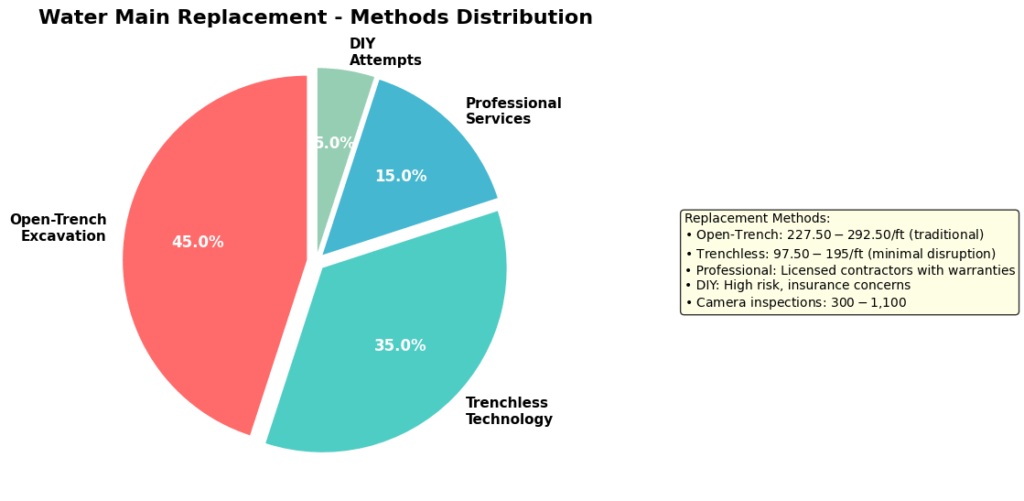
Property owners often look into different solutions for installing a new main water line. They weigh modern methods against traditional digging techniques. Both aim to ensure reliable service for homes or businesses.
Trenchless Technology
Trenchless water line replacement is a favored choice for its minimal disruption to the surface. It can cost between $97.50 and $195 per linear foot. This method saves money in the long run by avoiding damage to lawns, driveways, or sidewalks. For more information, check out methods for underground water line replacement. It highlights the use of specialized equipment and the need for professional guidance.
- Reduced impact on landscaping
- Lower restoration expenses
- Fewer disruptions to daily activities
Homeowners typically turn to a plumbing contractor for this advanced technique. It helps protect property features over time.
Open-Trench Excavation
The open-trench method involves digging along the entire pipeline route. Costs range from $227.50 to $292.50 per linear foot. While it may seem simple, it requires additional work for landscaping or paving after installation. Proper budgeting and consultation are key to a successful project that adheres to local regulations.
Assessing the Condition of Your Existing Water Line
Unusual rust, damp patches, or sudden drops in water flow often mean there is a deeper issue lurking below. A thorough water line inspection should begin with a simple visual check for stains or puddles around plumbing fixtures. Aging components may show small fissures or corrosion, signaling that action may be needed soon.
Professional evaluations add peace of mind and can prevent major damage. A licensed plumber will perform an underground plumbing check to locate hidden leaks and structural flaws. They use tools like cameras to navigate pipes and display cracks on a monitor. These camera inspections may cost from $300 to $1,100, yet they can save major expense by targeting precise trouble spots in your piping condition.
- Persistent discoloration in tap water
- Soft soil or unexplained wet spots outside
- Low pressure across multiple fixtures
Inspection Method | Key Findings | Approximate Cost |
Visual Survey | Identifies surface leaks or rust | $0–$200 |
Camera Inspection | Reveals hidden cracks or blockages | $300–$1,100 |
Pressure Test | Pinpoints weak points or minor leaks | $100–$400 |
Cost Ranges in Different Regions
Across the nation, water line installation costs vary significantly. This is due to factors like street layouts and excavation rules. The population density and local labor rates also play a role in determining the most suitable installation method for a site. In densely populated areas, building authorities often demand permits to minimize disruptions.
Urban Areas
In cities, projects can be more expensive due to sidewalks, tight spaces, and older piping networks. Contractors must exercise caution to avoid damaging underground utilities. Road closures, which are often necessary, require approval. Retailers like Home Depot offer specialized parts to streamline these complex tasks.
Suburban and Rural Communities
Outside city limits, longer pipe runs are common. Larger lots mean more trenching but less congestion, potentially lowering costs. When comparing urban vs. rural plumbing, consider land size, terrain, and excavation challenges. Researching local labor rates is essential to find the best value for each setting.
Region | Permit Fees (Approx.) | Labor Cost (Hr.) | Overall Range |
Major Cities | $50 – $200 | $80 – $120 | $2,500 – $5,000+ |
Suburban/Rural | $25 – $100 | $60 – $90 | $1,500 – $4,000 |
Professional Insights from Plumbers and Contractors
When seeking a water line consultation, it’s essential to scrutinize a specialist’s credentials. Look for official state license numbers in advertisements. In Texas, check the Texas State Board of Plumbing Examiners website for the Responsible Master Plumber’s license. Also, verify a valid Certificate of Insurance. In Illinois, check the plumber’s license number on official state or local directories.
Understanding the cost breakdown is critical in a contractor estimate. Request written guarantees and confirm the plumber’s insurance certificate. This ensures coverage for important liabilities like commercial general coverage and workers’ compensation. If a plumber hesitates to show a valid license, it’s wise to seek another service.
Key Questions to Ask
- Which warranties apply to replaced components?
- How do you handle past complaints or client feedback?
- What is included in your labor and materials breakdown?
Preparing for an On-Site Estimate
- Collect property details, such as pipe age and recurring issues.
- Provide past service records for accurate cost figures.
- Ask about permits, inspections, and any necessary documentation.
Verification Step | Where to Check |
License Number | State Board Websites |
Insurance Coverage | Insurance Agent Confirmation |
Local Regulations | Municipal Inspection Department |
Why Timely Replacement Matters
Delaying the replacement of an outdated water line can lead to severe consequences. Hidden leaks can grow, causing higher utility bills. Moisture can seep into walls and floors, risking mold and structural damage. Quick action is essential to keep homes safe and prevent water damage from worsening.
Old pipes often have weak spots that can cause plumbing emergencies. Early intervention can prevent sudden disruptions and costly repairs. Assessing pipe condition promptly is vital for the health and safety of household members.
Investing in timely water line repair can prevent contamination and structural damage. Even small leaks can harm foundation elements if ignored. Taking action now can save on repair costs and ensure a reliable water supply, protecting the building’s integrity.
Potential Additional Expenses to Keep in Mind
Excavating a water line can uncover hidden plumbing costs beyond the pipe itself. Steps to protect the property often emerge unexpectedly during the project.
Landscaping and Restoration Costs
Ground disturbance may necessitate substantial landscaping repair. Regrading a lawn can cost between $0.40 to $2.00 per square foot. This translates to $400 to $2,000 for a 1,000-square-foot yard. For a 5,000-square-foot area, reseeding could reach $5,000 to $15,000, while resodding might cost between $7,500 and $20,000.
Flowers and shrubs also require attention. Restoring a flower bed can cost up to $3,175, considering labor and materials. Driveway repairs, often needed due to heavy machinery, can significantly increase costs.
Temporary Water Supply Arrangements
Having an alternative water supply ensures uninterrupted routines during the main water line work. The cost of a water truck varies based on local fees. Installing essential features like a sprinkler system can add $4,000 to $7,000 to the total cost.
Setting aside funds for these services helps avoid unexpected expenses when the project starts.
Budgeting and Financing Options
When it comes to funding a new water line, homeowners must consider practical steps. Some set aside an emergency fund, while others opt for payment plans from contractors. Private lenders offer flexible deals to keep monthly payments low. A portion of the project cost might even qualify for local grants.
Financing options include home equity loans or lines of credit, leveraging property value for lower interest rates. Personal loans are also available from various financial institutions. Each option has its own terms, making it essential to seek professional advice.
Option | Key Features | Best For |
Payment Plans | Set installments | Predictable monthly costs |
Home Equity Loan | Lower interest rates | Owners with built-up equity |
Local Grants | Regional support funds | Eligible homeowners |
Comparing DIY vs. Professional Services
Some individuals consider tackling a DIY water line replacement to reduce out-of-pocket costs. There is an appeal in learning new skills, yet results can vary when unexpected complications arise.
Industry data from groups like the American Water Works Association shows that small errors can turn into bigger problems if pipes are not installed correctly. This raises concerns about safety, extra expenses, and resale complications when local permits are overlooked.
Required Skills and Tools
- Pipe-cutting machinery with proper calibration
- Detailed knowledge of local building codes
- Leak detection methods for unseen problems
These specialized tools are typically used by professional plumbing services to ensure accuracy from start to finish. Enthused do-it-yourselfers may find it daunting to master these instruments without formal training.
Risks and Insurance Concerns
Incorrect fittings or code violations may jeopardize homeowner insurance coverage. Damages caused by failed repairs often fall back on the property owner, leading to out-of-pocket payments. Professional plumbing services offer warranties and expertise that minimize long-term risk. This proves beneficial when safeguarding the household budget and property value.
Roundup of Expert Tips and Advice
Keeping up with basic pipe care can prevent sudden leaks and avoid high repair costs. Homeowners find value in simple steps that protect their systems before issues arise. A well-thought-out maintenance plan offers peace of mind and extends the life of pipes under normal conditions.
Routine Maintenance Recommendations
Experts emphasize the importance of preventive maintenance for catching minor defects early. Ignoring small pipe issues can lead to significant expenses. Changes in water pressure or discoloration during inspections may signal a problem.
“Frequent checks reduce the risk of major line breaks,” states the American Water Works Association.
Performing basic tasks, like tightening loose connections or fixing minor drips, helps maintain system stability over time.
Early Warning Signs
Unusual yard puddles or unexpectedly high water bills suggest hidden problems. Slow drains and odd gurgling sounds also indicate issues. Early leak detection helps avoid costly replacements. Staying proactive with main water line tips prevents small cracks from becoming major disasters.
Practical Steps to Plan Your Replacement Timeline
Organizing each task helps keep surprises at bay. Many choose a digital route with tools like Magicplan and Beams to create a clear roadmap. Estimating accurate dates is key, as minor fixes might take 4–8 hours, while major upgrades could span multiple days.
An itemized list of goals is vital for planning water line projects or scheduling plumbing work. Some regions require filings before any digging begins. Gathering permit forms early saves time. Local offices, such as San Diego’s Development Services Department, share weekly updates on processing times.
Skilled teams advise homeowners to anticipate inspectors with little notice. Coordinated communication reduces downtime and keeps essential services running. A structured checklist of tasks, including water shutoff procedures, prevents last-minute hassles. Over half of home renovations surpass initial budgets, so setting aside extra funds is wise.
“Clients should confirm local codes and prepare for possible inspection delays before committing to major work.” – Roto-Rooter Team
Staying mindful of timelines can reduce stress. Clear scheduling, along with a buffer for unexpected hurdles, fosters a smoother process from permit application to project completion.
Final Remarks on Ensuring a Reliable Water Supply
Investing in long-term plumbing solutions is key to a dependable water supply in any property. A proactive approach helps avoid unexpected shutdowns and keeps daily routines running smoothly. Regular water utility maintenance, such as scheduled inspections and targeted repairs, minimizes the risk of corrosion or sudden pipe fractures.
Homeowners who plan their replacement projects protect their budgets and reduce stress. A reliable water line should meet both current and future needs without frequent repairs. Licensed contractors can help identify the best pipe materials and excavation methods for local conditions. This analysis allows property owners to set realistic estimates and timelines, preventing cost overruns.
Practical steps include understanding permit requirements, scheduling timely maintenance visits, and consulting trusted professionals. Joining a community forum or seeking advice from well-regarded plumbers can demystify the process. Each proactive measure strengthens the line’s resilience and preserves water quality for years to come.