

Content
Sulfur
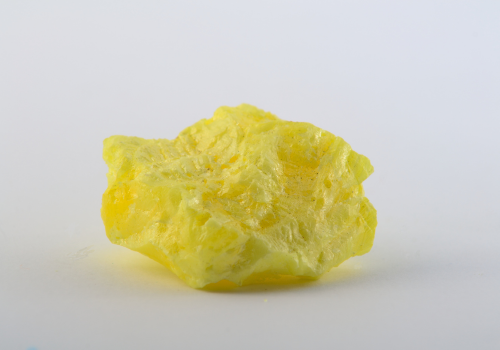
Sulfur is a chemical element with the symbol S and atomic number 16. It is abundant, multivalent, and nonmetallic. Sulfur is primarily known for its bright yellow crystalline solid form in nature, though it also appears in several other allotropes. This element is essential for life, playing a crucial role in various biochemical processes. It is commonly found in volcanic emissions and minerals such as pyrite and galena. Sulfur is widely used in industry, particularly in the production of sulfuric acid, which is a key industrial chemical.
Definition and Structure
Sulfur exists as a diatomic molecule (S₈) under standard conditions, forming a puckered ring structure. This ring structure allows sulfur to exist in several allotropes, including rhombic and monoclinic sulfur. It can also form a variety of compounds with different elements, often exhibiting oxidation states ranging from -2 to +6. Sulfur atoms bond covalently with other nonmetals and form ionic compounds with metals. This versatility in bonding and structure underlies sulfur’s wide range of chemical behaviors and its extensive industrial and biological roles.
Historical Background
Sulfur has been known since ancient times, often referred to in historical texts as brimstone. Its use dates back to ancient Egypt, Greece, and Rome, where it was utilized for fumigation and medicine. The element played a pivotal role in alchemy and early chemistry, with its properties being explored extensively. In the 19th century, the development of the Frasch process revolutionized sulfur extraction from underground deposits, significantly boosting its availability for industrial uses. This historical journey highlights sulfur’s enduring importance across various eras and civilizations.
Chemical Properties
Sulfur is a reactive element with several oxidation states, most commonly -2, +4, and +6. It forms compounds such as hydrogen sulfide (H₂S), sulfur dioxide (SO₂), and sulfuric acid (H₂SO₄). Sulfur burns with a blue flame, producing sulfur dioxide, a gas with a sharp, suffocating odor. It readily forms sulfides and sulfates with metals and nonmetals, displaying high reactivity with halogens and oxygen. The element’s ability to form diverse compounds underpins its wide application in chemical synthesis and industrial processes.
Synthesis and Production
Sulfur is primarily obtained through the Frasch process, which involves extracting sulfur from underground deposits by melting it with superheated water and bringing it to the surface. It is also produced as a byproduct of refining natural gas and petroleum, where sulfur-containing compounds are removed. Additionally, sulfur can be mined directly from volcanic deposits. Industrial production of sulfuric acid, the most significant sulfur compound, involves the contact process, where sulfur dioxide is converted to sulfur trioxide and then to sulfuric acid.
Applications
Sulfur has extensive applications in various industries. It is essential in producing sulfuric acid, one of the most widely used industrial chemicals. Sulfur is also utilized in the vulcanization of rubber, improving its strength and elasticity. In the chemical industry, it serves as a reactant in synthesizing numerous compounds, including fertilizers, pesticides, and pharmaceuticals. Moreover, sulfur is used in the production of batteries, detergents, and explosives, showcasing its versatility and importance in modern industrial processes.
Agricultural Uses
In agriculture, sulfur is vital as a plant nutrient, playing a crucial role in forming amino acids, proteins, and enzymes. Sulfur fertilizers are commonly used to correct sulfur deficiencies in soils, enhancing crop yields and quality. Elemental sulfur and sulfate-containing compounds are applied to adjust soil pH, improve nutrient availability, and control fungal diseases. Its role in promoting healthy plant growth and protecting crops from pests and diseases underscores sulfur’s importance in sustainable agriculture practices.
Non-Agricultural Uses
Beyond agriculture, sulfur finds applications in several non-agricultural fields. It is a key component in the manufacturing of gunpowder and explosives. In the construction industry, sulfur is used in producing concrete and asphalt modifiers, enhancing durability and performance. Sulfur compounds are also employed in water treatment processes to remove contaminants. Additionally, sulfur serves as a bleaching agent in the pulp and paper industry and is used in producing various household products, including detergents and disinfectants.
Health Effects
Sulfur is an essential element for life, playing a role in synthesizing amino acids and vitamins. However, exposure to sulfur compounds can pose health risks. Inhalation of sulfur dioxide can irritate the respiratory system, causing coughing, shortness of breath, and aggravated asthma symptoms. Long-term exposure may lead to respiratory diseases. Contact with sulfuric acid can result in severe skin burns and eye damage. Understanding sulfur’s health effects is crucial for ensuring safe handling and minimizing exposure risks.
Human Health Effects
Sulfur’s presence in the human body is vital for metabolic functions, including the synthesis of essential amino acids like cysteine and methionine. However, excessive exposure to sulfur compounds, particularly sulfur dioxide and hydrogen sulfide, can have adverse health effects. Inhalation can cause respiratory issues, while long-term exposure may lead to chronic conditions such as bronchitis or pulmonary edema. Direct contact with sulfuric acid can cause severe skin and eye injuries, emphasizing the need for proper safety measures in handling sulfur compounds.
Environmental Impact
Sulfur compounds, particularly sulfur dioxide, significantly impact the environment. When released into the atmosphere, sulfur dioxide can form acid rain, which damages ecosystems, soils, and water bodies. It can also contribute to air pollution, reducing air quality and harming plant and animal life. Sulfur emissions from industrial processes and fossil fuel combustion are major sources of environmental contamination. Effective regulation and emission control technologies are essential to mitigate the environmental impact of sulfur compounds.
Regulation and Guidelines
Governments and environmental agencies have established regulations and guidelines to control sulfur emissions and exposure. These include limits on sulfur dioxide emissions from industrial sources, fuel standards to reduce sulfur content in diesel and gasoline, and workplace safety guidelines for handling sulfuric acid and other sulfur compounds. Monitoring and enforcement of these regulations aim to protect public health and the environment. Adhering to these guidelines is crucial for industries to minimize their sulfur-related environmental footprint.
Controversies and Issues
Sulfur extraction and usage have been associated with several controversies and issues. Environmental concerns about acid rain and air pollution have sparked debates over the regulation of sulfur emissions. The Frasch process and other extraction methods can impact local ecosystems and groundwater quality. Additionally, the health risks of sulfur exposure for workers in industries using sulfur compounds remain a contentious issue. Balancing economic benefits with environmental and health considerations continues to challenge policymakers and industry stakeholders.
Treatment Methods
Treating sulfur emissions involves several methods to reduce environmental and health impacts. Flue gas desulfurization (FGD) is commonly used in power plants to remove sulfur dioxide from exhaust gases. Scrubbing systems using limestone or other absorbents can effectively capture sulfur compounds. Additionally, catalytic converters in vehicles reduce sulfur emissions from exhaust. Wastewater treatment processes also address sulfur contaminants. These treatment methods are vital for minimizing the adverse effects of sulfur emissions and ensuring compliance with environmental regulations.
Monitoring and Testing
Monitoring and testing sulfur levels in the environment and industrial processes are essential for regulatory compliance and environmental protection. Various analytical techniques, including gas chromatography and spectroscopy, are used to measure sulfur compounds in air, water, and soil. Continuous emission monitoring systems (CEMS) track sulfur dioxide levels in industrial emissions in real-time. Regular testing helps detect and address potential pollution sources, ensuring adherence to environmental standards and safeguarding public health and ecosystems.
References
- “Sulfur in Drinking Water.” World Health Organization, World Health Organization, www.who.int/
- “Hydrogen Sulfide in Drinking Water.” World Health Organization, World Health Organization,www.who.int/
- “Sulfates in Drinking Water.” World Health Organization, World Health Organization,www.who.int/
- “Sulfate-Reducing Bacteria.” Encyclopedia Britannica, Encyclopedia Britannica, Inc., www.britannica.com/
- “Sulfur in Drinking Water.” Environmental Protection Agency, US Environmental Protection Agency, www.epa.gov/
Sulfur
( Sulfur, 16S )
| Parameter | Details |
|---|---|
| Source | Natural deposits, industrial processes, agricultural runoff |
| MCL | No specific MCL (US EPA advisory level for sulfate: 250 mg/L) |
| Health Effects | Laxative effect, dehydration in infants and sensitive individuals |
| Detection | Ion chromatography, gravimetric methods |
| Treatment | Reverse osmosis, ion exchange, distillation |
| Regulations | US EPA, WHO guidelines |
| Monitoring | Regular testing in areas with high sulfur concentrations |
| Environmental Impact | Can contribute to the formation of acid rain |
| Prevention | Proper waste management, minimize industrial discharges |
| Case Studies | Contamination incidents near mining sites |
| Research | Health impacts, improved detection and treatment methods |
Other Chemicals in Water
Sulfur In Drinking Water
| Property | Value |
|---|---|
| Preferred IUPAC Name | Sulfur |
| Other Names | Sulphur |
| CAS Number | 7704-34-9 |
| Chemical Formula | S |
| Molar Mass | 32.06 g/mol |
| Appearance | Yellow solid |
| Melting Point | 115.21 °C (239.38 °F) |
| Boiling Point | 444.6 °C (832.3 °F) |
| Solubility in Water | Insoluble |
Videos

