
What are PFOS and PFAS?
PFOS (perfluorooctanesulfonic acid) and PFAS (per- and polyfluoroalkyl substances) are synthetic chemicals introduced in the 1950s. They are used in various products and applications. With over 14,000 types, these compounds have raised concerns about their environmental and health impacts.
Understanding the Chemical Structure of PFOS and PFAS
PFOS and PFAS are known for their unique chemical structure. It consists of carbon atoms bonded to fluorine atoms. This structure makes them heat-resistant, grease-resistant, and water-resistant. Yet, it also makes them persist in the environment, as they don’t break down easily.
Common Uses of PFOS and PFAS in Everyday Products
PFOS and PFAS are used in many products and applications. They are found in:
- Non-stick cookware
- Stain-resistant fabrics and carpets
- Water-resistant clothing
- Food packaging materials
- Firefighting foams
- Personal care products (e.g., cosmetics, dental floss)
- Paints and coatings
- Medical devices

Their widespread use has led to environmental presence and human and wildlife exposure. The Department of Homeland Security has set health advisory levels for PFAS compounds in drinking water:
| PFAS Compound | Health Advisory Level (ng/L) |
|---|---|
| PFOA | 4 |
| PFOS | 4 |
| FOSA | 4 |
| NEtFOSA | 4 |
| NEtFOSAA | 4 |
| NetFOSE | 4 |
| PFNA | 10 |
| PFHxS | 10 |
| GenX (HPFO-DA) | 10 |
The Widespread Presence of PFOS and PFAS in the Environment
PFOS and PFAS have permeated the environment over decades, contaminating soil and water. This poses significant risks to human health and ecosystems. Their widespread presence stems from industrial discharges, landfill leachate, and firefighting foams.
PFOS and PFAS Contamination in Soil and Water
Soil contamination by PFOS and PFAS is a growing concern. These chemicals accumulate in the ground, entering the food chain through crops and livestock. Studies show PFAS concentrations exceeding limits in 14,906 out of 17,212 surface water samples.
Groundwater and surface water are highly susceptible to PFOS and PFAS contamination. These chemicals migrate through soil, entering aquifers. The most detected PFAS compounds include PFOS, PFOA, and PFHxS. Seafood and biota samples show high concentrations, highlighting bioaccumulation.
The Persistence of PFOS and PFAS in the Environment
PFOS and PFAS persist in the environment due to their stability and resistance to degradation. They remain in the environment for extended periods. Their environmental fate involves migration into soil, water, and air, with most compounds not degrading naturally.
The persistence of PFOS and PFAS poses significant risks to human health and ecosystems. They accumulate in the food chain, leading to long-term exposure risks. The National Toxicology Program has found evidence of suppressed antibody response in animals and humans, highlighting health risks from chronic exposure.
Sources of PFOS and PFAS Contamination
PFOS and PFAS contamination comes from industrial discharges, manufacturing, firefighting foams, and consumer products. These chemicals are everywhere, threatening human health and ecosystems.
Industrial and Manufacturing Processes
Facilities that use PFOS and PFAS can release them into the environment. This includes wastewater and air emissions. Industries like textiles, electronics, and automotive use these chemicals, leading to widespread pollution.
Recent data shows over 8,865 sites contaminated with PFAS across 50 states, the District of Columbia, and four territories. This data highlights the widespread pollution from industrial sources.
Firefighting Foams and Their Role in PFOS and PFAS Pollution
Firefighting foams, like aqueous film-forming foam (AFFF), are a major source of PFOS and PFAS pollution. They are used at military bases and airports. These foams contain high levels of PFAS, which can contaminate soil and groundwater.
Earthjustice reached a settlement with the Department of Defense to terminate contracts for burning PFAS-containing firefighting foam. This shows growing awareness of the environmental risks of these products.
Everyday Consumer Products as a Source of PFOS and PFAS
Consumer products like non-stick cookware, food packaging, and stain-resistant fabrics contain PFOS and PFAS. When these products degrade or are disposed of, the chemicals can contaminate the environment.
| Product Category | Potential PFAS Content |
|---|---|
| Non-stick cookware | PTFE (polytetrafluoroethylene) |
| Food packaging | Grease-resistant coatings |
| Stain-resistant fabrics | Fluoropolymer treatments |
| Cosmetics | Perfluorooctanoic acid (PFOA) |
The FDA has banned the sale of PFAS in food packaging as of February 2024. Yet, the widespread use of these chemicals in consumer products remains a concern.
The Impact of PFOS and PFAS on Human Health
Human exposure to PFOS and PFAS is a growing concern due to their health risks. These chemicals have been linked to various health issues. This includes cancer, immune system dysfunction, thyroid problems, reproductive health concerns, and developmental issues in children.
Studies have shown that high levels of PFAS exposure may impact the immune system, as recognized by the CDC/ATSDR. The National Toxicology Program (NTP) review indicates a high level of evidence that PFOA and PFOS suppress the antibody response in animals and moderate evidence in humans. Epidemiological evidence suggests associations between PFAS exposure and various health effects. This includes increases in cholesterol levels, lower antibody response to vaccines, changes in liver enzymes, pregnancy-induced hypertension, preeclampsia, and small decreases in birth weight.
The risk of health effects from PFAS exposure is influenced by several factors. These include dose, frequency, route, duration, individual sensitivity, disease burden, and access to safe water and quality healthcare. Animal studies indicate that PFAS can cause liver damage and immune system issues. Some studies show low birth weight, birth defects, delayed development, and newborn deaths in lab animals exposed to PFAS. Yet, most animal studies have tested PFAS levels higher than those typically experienced by humans from environmental exposure.
| Health Effect | Associated PFAS Compounds |
|---|---|
| Increases in cholesterol levels | PFOA, PFOS, PFNA, PFDA |
| Lower antibody response to vaccines | PFOA, PFOS, PFHxS, PFDA |
| Changes in liver enzymes | PFOA, PFOS, PFHxS |
| Pregnancy-induced hypertension and preeclampsia | PFOA, PFOS |
| Small decreases in birth weight | PFOA, PFOS |
| Kidney and testicular cancer risk | PFOA |
Research suggests that high levels of some PFAS may increase cholesterol levels, decrease vaccine response, increase thyroid disease risk, elevate cancer risk, and raise the likelihood of serious pregnancy conditions like high blood pressure or pre-eclampsia. PFAS exposure may also lower infant birth weights, though the decrease is small and may not significantly affect health. Scientists are continuing to research the health effects of PFAS mixtures. This may alter our understanding of PFAS-related health impacts.
PFOS and PFAS in Drinking Water: A Growing Concern
The presence of PFOS and PFAS in drinking water is a growing concern in the United States. Many public water systems have detected these chemicals. Exposure to PFOS and PFAS through contaminated drinking water poses health risks. It is essential to address this issue to protect public health.

The Prevalence of PFOS and PFAS in Public Water Systems
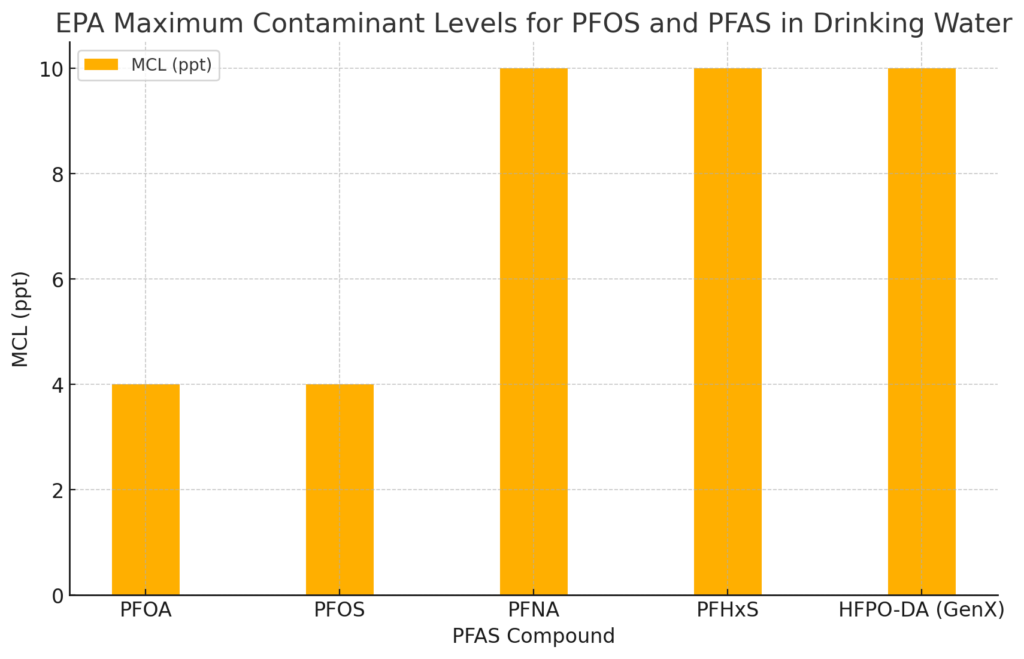
As of April 2024, the EPA has set Maximum Contaminant Levels (MCLs) for six PFAS in drinking water. The levels are 4.0 parts per trillion (ppt) for PFOA and PFOS, and 10 ppt for PFHxS, PFNA, and HFPO-DA. The EPA estimates that 6% to 10% of public drinking water systems may need to take action to comply with these standards. This could affect approximately 100 million people.
Public water systems must implement solutions to reduce PFAS levels by April 26, 2029. The EPA reports over 1,600 community and nontransient noncommunity waterworks in Virginia are subject to the PFAS drinking water rule.
Health Risks Associated with PFOS and PFAS in Drinking Water
Exposure to PFOS and PFAS through contaminated drinking water has been linked to various health risks. These include:
- Increased cholesterol levels
- Decreased vaccine response
- Pregnancy-induced hypertension
- Developmental effects in infants and children
- Interference with natural hormones
- Changes in liver, thyroid, and pancreatic function (observed in laboratory animals exposed to high doses)
Certain populations, such as babies, developing children, and pregnant individuals, are more sensitive to PFOA and PFOS. Studies suggest that certain PFAS may affect growth, learning, and behavior in infants and children. It is essential to minimize exposure through drinking water.
| PFAS Compound | Maximum Contaminant Level (MCL) |
|---|---|
| PFOA | 4.0 parts per trillion (ppt) |
| PFOS | 4.0 ppt |
| PFNA | 10 ppt |
| PFHxS | 10 ppt |
| HFPO-DA (GenX) | 10 ppt |
Addressing PFOS and PFAS contamination in drinking water is essential to protect public health. Water treatment technologies, such as activated carbon filters, can help reduce PFAS levels. It is vital to continue monitoring and testing public water systems. This ensures compliance with EPA standards and safeguards the health of communities across the United States.
Bioaccumulation and Biomagnification of PFOS and PFAS in the Food Chain
PFOS and PFAS can build up in the food chain, mainly in water ecosystems. They accumulate in fish and other aquatic life, increasing in concentration as you move up the food chain. Their persistence in water is due to a strong carbon-fluorine bond, making them resistant to breakdown.
PFOS and PFAS Accumulation in Aquatic Ecosystems
PFOS is a major PFAS found in water worldwide, including the U.S. Most studies on PFOS in water focus on areas with known contamination, mainly in the East. Sediment sorption of PFOS ranges from -1.4 to 6.2 log(Kd) values. Its Henry’s law constant is less than 2.0 × 10^-6, showing little volatility.
In the Yellow Sea mudflat, PFAS levels varied from 9.42 ng/g in shrimp to 593.72 ng/g in gull chest muscle. The highest PFAS levels were found in gulls, followed by clamworms, bivalves, and shrimp. PFOA, PFBA, and PFOS were the most common PFAS detected, with concentrations ranging from 0.47 to 677.44 ng/g.
The Impact of PFOS and PFAS on Wildlife and Ecosystems
The accumulation of PFOS and PFAS in wildlife can harm both species and ecosystems. Exposure to these chemicals has been linked to reproductive and developmental problems in various animals. In a study on gulls, juvenile gulls had significantly higher PFAS levels in their chest muscles than adults.
| PFAS | Juvenile Gull Concentration (ng/g ww) | Adult Gull Concentration (ng/g ww) |
|---|---|---|
| PFUnDA | 41.47–134.75 | not detected–6.31 |
| PFDA | 23.62–82.32 | not detected–8.07 |
| PFDoDA | 10.59–31.60 | not detected–13.18 |
| PFOS | 187.49–732.05 | 0.62–57.78 |
Research indicates that PFAS, including PFOS, can have harmful health effects on humans. The EPA’s draft criteria reflect the latest scientific findings on PFOS exposure. Collaboration among researchers, policymakers, and the public is critical to address PFOS and PFAS contamination and protect wildlife and ecosystems.
Current Regulations and Guidelines for PFOS and PFAS
The United States Environmental Protection Agency (EPA) and various state and local governments are taking action against PFOS and PFAS contamination. They have developed regulations, guidelines, and initiatives to protect public health and the environment. These efforts aim to mitigate the harmful effects of PFOS and PFAS.
EPA’s PFAS Strategic Roadmap and Regulatory Actions
The EPA has outlined a PFAS Strategic Roadmap to address PFOS and PFAS contamination. This roadmap includes plans for nationwide drinking water standards, increased monitoring, and research support. On April 10, 2024, the EPA announced a final National Primary Drinking Water Regulation for six PFAS. This regulation is expected to protect approximately 100 million people and prevent thousands of deaths and illnesses.
The EPA has set Maximum Contaminant Levels (MCLs) and Maximum Contaminant Level Goals (MCLGs) for six PFAS:
| PFAS | MCL (ppt) | MCLG (ppt) |
|---|---|---|
| PFOA | 4.0 | 0 |
| PFOS | 4.0 | 0 |
| PFHxS | 10 | 10 |
| PFNA | 10 | 10 |
| HFPO-DA | 10 | 10 |
| Mixtures (PFHxS, PFNA, HFPO-DA, PFBS) | Hazard Index (unitless) | – |
Public water systems must complete initial PFAS monitoring by 2027 and implement solutions by 2029 if MCLs are exceeded. The EPA has also announced $1 billion in funding for PFAS testing and treatment through the Infrastructure Investment and Jobs Act.
State and Local Initiatives to Address PFOS and PFAS Contamination
States and local governments have also taken action against PFOS and PFAS contamination. They have set stricter drinking water standards, funded remediation projects, and raised public awareness. These efforts, in collaboration with the EPA and other stakeholders, are essential in protecting communities from PFOS and PFAS contamination.
Monitoring and Testing for PFOS and PFAS in the Environment
Understanding the extent of PFOS and PFAS contamination requires effective monitoring and testing. Various detection methods have been developed to quantify these chemicals in environmental samples. The EPA has established analytical methods for testing drinking water and groundwater for PFOS and PFAS. Other agencies and organizations have developed methods for testing other environmental matrices.
Precise sampling protocols are essential to avoid cross-contamination during PFAS sampling. This highlights the complexity of monitoring efforts. Testing methods for PFAS can vary by region. Options include target and non-target screenings, Organic Fluorine measurements, and specific assays like the Top Assay and Ultra Short Chains. Common testing methods referenced include EPA 1633, DIN 38407-42, and HJ 1334-2023, which are dependent on the sample matrix and local legislation.
PFAS can be measured in various environmental matrices such as:
- Drinking water
- Surface water
- Stormwater
- Wastewater
- Groundwater
- Soil and sediment
- Biosolids
- Air (including stack emissions and indoor air)
- Waste
- Blood, tissue, and biofluids
- Plants, leaves, and vegetables
- Firefighting foams
The FDA has been actively involved in monitoring and testing for PFAS in food products. They have been refining analytical methods to test food for PFAS, focusing on specific groups of food and areas associated with environmental PFAS contamination. The FDA’s Total Diet Study (TDS) has been testing foods for PFAS, utilizing a market basket consisting of 24 regional and two national collections.
| Year | FDA Action |
|---|---|
| 2022 | Tested 81 seafood samples for PFAS, with results showing a greater percentage of samples with detectable levels compared to previous TDS data |
| 2023 | Survey of nine domestically acquired clam samples showed that eight had PFOA concentrations under the method detection limit |
| 2024-2025 | Pursuing additional sampling of bivalve mollusks (including clams) to better understand PFAS levels in commercially available seafood |
The growing awareness of PFAS-related health risks and environmental impacts is leading to increased demand for testing services. Access to a wide range of solutions and validated sample handling procedures is emphasized. This suggests a systematic approach to PFAS testing. Rapid turnaround times for testing and monitoring programs are highlighted as a competitive advantage in the market. As regulatory pressures mount and public concern escalates, businesses and municipalities are actively seeking reliable PFAS testing services available to ensure compliance and safeguard public health. This heightened demand is spurring innovation in testing methodologies and enhancing the capabilities of laboratories tasked with PFAS detection. Ultimately, the emphasis on thorough testing and quick results not only supports informed decision-making but also fosters trust within communities regarding their environmental safety.
Remediation and Cleanup Strategies for PFOS and PFAS Contamination
The widespread presence of PFOS and PFAS in the environment has prompted the development of various remediation and cleanup strategies. These chemicals, known for their persistence and unique properties, pose significant challenges when it comes to removing them from contaminated sites. The U.S. Environmental Protection Agency (EPA) has set nationwide limits for five individual PFAS and a mixture of four PFAS contaminants in drinking water through the National Primary Drinking Water Regulation (NPDWR).
Innovative Technologies for PFOS and PFAS Removal
Several technologies have emerged as effective methods for removing PFOS and PFAS from environmental media, including:
- Granular activated carbon
- Anion exchange
- Reverse osmosis
- Nanofiltration
These technologies, identified as the "Best Available Technologies" (BATs) by the EPA, vary in their affordability and suitability for different system sizes. While anion exchange is affordable for all system size categories, granular activated carbon is cost-effective for systems serving between 25-500 people and larger systems. Reverse osmosis and nanofiltration are affordable for systems serving 3,301 – 10,000 people but have significantly higher capital and operational costs compared to other treatment processes.
| Treatment Technology | Affordability | System Size |
|---|---|---|
| Anion Exchange | Affordable for all system sizes | All |
| Granular Activated Carbon | Affordable | 25-500 people and larger systems |
| Reverse Osmosis and Nanofiltration | Affordable | 3,301 – 10,000 people |
Challenges in Remediating PFOS and PFAS-Contaminated Sites
Despite the availability of innovative treatment technologies, remediating PFOS and PFAS-contaminated sites remains a complex and challenging process. Some of the key challenges include:
- Potential for recontamination
- Presence of complex mixtures of contaminants
- Need for long-term monitoring and maintenance
- High costs associated with certain treatment methods
- Ineffectiveness of standard remediation approaches due to the stability of PFAS
The EPA has designated PFOA and PFOS as "hazardous substances" under the CERCLA, which has significant implications for reporting obligations and cleanup strategies. This designation is expected to increase the number of contaminated sites requiring remediation and potentially reopen existing Superfund sites if previous remedial actions are no longer protective of human health and the environment.
The toxicity assessments indicate that PFOA and PFOS may cause significant health risks, influencing regulatory actions and remediation strategies.
As research continues to explore new treatment options and technologies, such as novel sorbents, destructive technologies, and foam fractionation, it is essential to prioritize approaches that minimize the environmental release of PFAS and protect human health.
Alternatives to PFOS and PFAS: Safer and More Sustainable Options
The dangers of PFOS and PFAS are becoming clearer, sparking a search for safer alternatives. With over 9,000 PFAS chemicals and contamination in all 50 states and two U.S. territories, the urgency for alternatives is critical.
Experts and industry leaders are turning to green chemistry to create new substances. These alternatives aim to match the performance of PFOS and PFAS without the health and environmental hazards. Companies are reformulating products to remove these harmful chemicals. They are also investing in research to find safer chemicals and sustainable options.
The Environmental Protection Agency (EPA) has proposed new drinking water standards for six PFAS. This is the first time these chemicals will have legally enforceable regulations. Over 32 U.S. states are considering bills to ban or restrict PFAS in various products, showing a legislative push to address the issue.
While the Montreal Protocol phased out 98% of ozone-depleting substances by 2019, there’s no global agreement for PFAS. Yet, states and organizations are acting. Washington State has banned PFAS in nine types of food packaging by September 2024. Congress has also mandated the Department of Defense to use PFAS-free firefighting foam by October 2024.
As research reveals more about PFAS contamination and its health risks, finding safer alternatives is essential. By adopting green chemistry and investing in reformulation, we can aim for a future without PFOS and PFAS’s negative effects.

The Role of Public Awareness and Education in Addressing PFOS and PFAS
Public awareness and education are key in addressing PFOS and PFAS contamination. These chemicals pose significant risks to human health and the environment. It’s vital to equip communities with the knowledge to protect themselves and advocate for change. A recent study emphasizes the need for better risk communication and public engagement. This is to bridge the gap in understanding PFAS sources and health implications.
Increasing Public Understanding of the Risks Associated with PFOS and PFAS
Effective education campaigns are essential in raising awareness about PFOS and PFAS dangers. Clear, accessible information on these chemicals’ sources, health effects, and exposure minimization is critical. This empowers communities to make informed decisions and take proactive steps for their well-being. Consider these alarming statistics:
- More than 2,800 U.S. locations have some level of PFAS contamination.
- In 2019, the EPA documented 180 PFAS-contaminated Superfund sites.
- A 2020 study identified over 200 uses for more than 1,400 individual PFAS.
- PFAS were detected in 1.6% of nearly 37,000 drinking water samples analyzed from almost 5,000 different public water supplies over a two-year period.
Increasing public understanding of these risks is critical in driving change and encouraging individuals to take action. Through targeted outreach, community workshops, and educational resources, citizens can become empowered advocates. They can push for stricter regulations and improved monitoring and remediation efforts.
Empowering Communities to Take Action Against PFOS and PFAS Contamination
Effective risk communication and community engagement are vital in mobilizing the public against PFOS and PFAS contamination. By fostering a sense of shared responsibility and providing platforms for advocacy and participation, communities can actively shape policies and drive change. Consider the following initiatives:
| Initiative | Description |
|---|---|
| EPA’s PFAS Strategic Roadmap | The EPA’s final rule, announced in April 2024, sets legally enforceable levels for five individual PFAS in drinking water. |
| Bipartisan Infrastructure Law | The law provides $1 billion in funding for PFAS testing and treatment in public water systems and private wells. |
| NGWA Educational Resources | The National Ground Water Association has published resources, including a position paper and fact sheet, for private well owners regarding PFAS. |
By actively engaging in these initiatives and advocating for their implementation, communities can hold polluters accountable. They can push for stronger regulations and ensure their voices are heard in the fight against PFOS and PFAS contamination.
Collaborative Efforts to Tackle the PFOS and PFAS Problem
PFOS and PFAS contamination poses significant challenges that require a unified approach. Multi-stakeholder initiatives unite government, industry, academia, and NGOs. They share knowledge, coordinate actions, and develop solutions. The PFAS Action Act Alliance is a prime example, aiming to tackle the PFAS problem through collective efforts.
Industry partnerships are key in promoting safer alternatives to PFOS and PFAS. Companies can leverage resources, expertise, and accelerate sustainable transitions by collaborating. The PFAS Project Lab, tracking over 850 contaminated sites and more than 600 water systems, is critical for scientific advancement and policy guidance.
International cooperation is essential for addressing PFOS and PFAS globally. Governments, organizations, and stakeholders must collaborate across borders. The EPA’s PFAS Strategic Roadmap highlights the need for international collaboration in addressing this issue.
Collaborative efforts have led to notable progress. For instance, three manufacturers have initiated a voluntary phase-out of certain PFAS by December 31, 2023. The FDA has also banned the sale of PFAS-containing grease-proofing agents in the U.S. as of February 2024. These milestones underscore the effectiveness of multi-stakeholder initiatives and industry partnerships in driving change.
FAQ
What are PFOS and PFAS, and why are they a concern?
PFOS and PFAS are synthetic chemicals known for their resistance to heat, grease, and water. Dubbed "forever chemicals," they persist in the environment and pose health risks. These include increased cancer risk, immune system problems, and developmental issues in children.
How do PFOS and PFAS enter the environment?
PFOS and PFAS enter the environment through industrial discharges, landfill leachate, and firefighting foams. Consumer products containing these chemicals also contribute to environmental contamination when disposed of improperly.
What are the health risks associated with PFOS and PFAS exposure?
Exposure to PFOS and PFAS may increase the risk of certain cancers and affect the immune system. It can also impact thyroid hormone levels and reproductive health. Children may experience reduced birth weight and delayed puberty due to these chemicals.
How do PFOS and PFAS contaminate drinking water?
PFOS and PFAS contaminate drinking water through industrial discharges, firefighting foam runoff, and soil leaching. The EPA estimates over 200 million Americans may have PFAS in their drinking water. Exposure to these chemicals through contaminated water poses health risks.
What is bioaccumulation, and how does it relate to PFOS and PFAS?
Bioaccumulation is the process where contaminants like PFOS and PFAS build up in living organisms over time. These chemicals accumulate in the food chain, affecting wildlife and ecosystem health. This is a significant concern in aquatic ecosystems.
What is being done to address PFOS and PFAS contamination?
The EPA has a PFAS Strategic Roadmap to address these chemicals. It includes setting nationwide drinking water standards, increasing monitoring, and supporting research. States and local governments also have their own initiatives to manage PFOS and PFAS contamination.
How can PFOS and PFAS-contaminated sites be remediated?
Cleaning up PFOS and PFAS-contaminated sites is complex due to their persistence and unique properties. Various technologies, like adsorption and filtration, have been developed. Yet, these methods often have limitations and are costly.
Are there safer alternatives to PFOS and PFAS?
As PFOS and PFAS risks become clearer, finding safer alternatives is a growing focus. Researchers and industry are exploring green chemistry to develop substances with similar performance without health and environmental risks.
What can I do to protect myself and my family from PFOS and PFAS exposure?
To reduce PFOS and PFAS exposure, use a water filter certified to remove these chemicals. Avoid non-stick cookware and stain-resistant fabrics. Support regulations and initiatives to phase out these substances. Staying informed and advocating for safer alternatives can protect your health and the environment.