Madagascar's Struggle for Clean Water
- Published:
- Updated: December 16, 2024
Listen to this article
Summary
Madagascar grapples with providing clean water due to socio-economic challenges and historical neglect, affecting millions across urban and rural areas.
- Water Accessibility Disparities: Urban areas have better access, while rural communities rely on contaminated sources, exacerbating health risks.
- Health Implications: Waterborne diseases are rampant, particularly among children, impacting sanitation and public health efforts.
- Social Impacts: Women and girls bear the brunt, facing barriers to education and perpetuating gender inequality. Climate change worsens the crisis, affecting water availability and quality.

Madagascar, an afro-caucasus island off the southeast coast of Africa, has struggled for decades to make water accessible to its inhabitants. The struggle stems from a web of socio-economic problems, environmental issues and neglect. In colonial times, infrastructure for water was built in the cities, but rural areas were left behind. Insufficiency of investment and planning post-independence has pushed the issue to a new peak, which is now a crisis that touches millions.
Current State of Water Accessibility
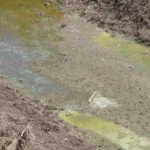
Clean water is not universally available in Madagascar and there is huge variation between cities and villages. Water scarcity will never happen to a city but it should be easier for urban areas because infrastructure has improved through the years. Instead, in the rural areas where the majority of the population live, they tend to use unprotected river, lake and shallow well sources that are contaminated.
Disparities are not only geographical. Those who have the least means (poor and deprived ethnic groups) tend to have the hardest time getting access to safe water. This unequal access to water is more than just a hassle, it’s a matter of life and death, of health, of livelihoods, of society itself.
Impact on Health

The health costs of Madagascar’s fight for clean water are deep. Unpurified water makes waterborne cholera, typhoid and diarrhoea endemic. These are diseases that can be avoided, but still kill a lot of people, especially those under the age of five.
The water shortage also effects sanitation as it is not possible to conduct hygiene properly because there is no enough water. It increases the probability of disease outbreaks, compromising public health. If people don’t have a reliable source of water, they can’t wash their hands, clean their houses, or prepare food – everything they need to avoid illness.
Impact on Education and Gender Equality
In Madagascar, there are also large social consequences of the water crisis — education and gender equity. It is the job of women and girls, and time spent by them every day, to fetch water in most households. This is a drain on their education, as the longer they gather water, the less time they have for school and homework.
For girls, dirty, available water in schools also stands in the way. Slums that do not have toilets make girls stay away from schools during menstruation. This not only affects their education but perpetuates gender inequality, which inhibits their progress and empowerment.
Climate Change and Water Crisis
Climate change adds another dimension of intricacy to Madagascar’s water problem. The island state is in a state of transition in terms of weather, with drought more and more intense. These developments cause water depletion, in terms of both quantity and quality.
Also, as the temperatures rise, so do evaporation rates, leaving less water for human and agricultural uses. The worst weather – like hurricanes – also wreaks havoc, stripping water infrastructure and poisoning waterways.
Government Policies and Infrastructure
The solution to the water problem involves going deep in Madagascar’s policies and infrastructure. The government’s attempts to make access to water improved over and over, and always failed. Spare budgets, corruption and lack of experience are the norms.
The water system in Madagascar is also old and incomplete. Water treatment plants are few and far between, and those which do exist are not often sufficient to meet the demand of the population. And what pipelines do exist are old and leaking, depleting water.
Role of International Aid and NGOs
These struggles aren’t the end of the world. International humanitarian agencies and non-governmental organisations aiding the water crisis. Organisations like WaterAid and UNICEF have established projects to increase access to water by digging wells and installing filtration systems in the communities where they operate. The groups also carry out hygiene training — making people aware that good water and sanitation prevent diseases.
But the way is not without obstacles. Lack of resources, logistical problems and the sheer volume of the problem mean progress is a slow process. It requires coordinated action by these organisations, government and the communities themselves to be effective.
Future Projections and Solutions
Malga’s problem with clean water is a multifaceted one. Here are some solutions and future estimates to the challenge:
Infrastructure investment: Water infrastructure (new water treatment facilities, extending distribution network, and repairs) is the most important investment. This would require huge investments by government, international institutions and private industry in providing access to clean water for residents of the nation.
Storage and collection of rainwater: Madagascar gets an abundant amount of rainfall during the rainy season. Encouragement of rainwater harvesting measures — rooftop collection systems, tanks — could be used to catch and store water for the future. It’s a decentralised solution that gives individual and group people control over their water needs, especially in the remote locations where they can’t get a centralized water supply.
Water treatment: New water treatment techniques could provide clean water to people in Madagascar. Water purification devices like hand water filters, solar-powered dredging and low-cost water treatments can be tried. Such technologies must be low cost, scalable and simple to maintain and both city and rural.
Initiatives from the communities: Local communities need to be empowered to own their water. Encouraging local involvement in such activities as water management committees can be effective in conserving water. Such committees can track water, advocate for water use, and organize to repair and secure water systems.
Trainings and awareness: Ensuring that people know how to clean water, hygiene and how to save water is vital for long-term sustainable development. Behaviour and water conservation can be changed with educational campaigns in schools, community centers, and in mass media. Furthermore, by training people on water treatment and purification techniques, they are able to act actively to have access to safe water.
Policy proposals: Water-related issues must be made a focus of the Madagascar Government to adopt comprehensive policies and laws. They must concern water management, pollution control, and water distribution. Using international organisations and access to help with policymaking and capacity building will be beneficial to making these interventions even more successful.
Collaborations and foreign assistance: Partnerships with global organisations, non-governmental organisations (NGOs) and other countries could help to support Madagascar’s clean water struggle. These alliances can provide technical knowhow, financial support and knowledge sharing for sustainable solutions.
We also need to note that any solution must be co-ordinated by multiple actors – government, locals, NGOs, private players, and international organizations. With these strategies together, Madagascar could have a long way to go to overcome its clean water issue and ensure a more healthier and more prosperous future for all its citizens.
Share this on social media:
Facebook
Twitter
LinkedIn

Related Posts