Ongoing Struggle for Clean Water in Belize
- Published:
- Updated: December 16, 2024
Listen to this article
Summary
Access to clean water in Belize faces challenges due to environmental, social, and economic factors.
- Geographical Challenges: Unique geography complicates water distribution, especially in remote areas.
- Climate Change Impact: Rising sea levels and extreme weather events exacerbate water scarcity and contamination.
- Government Efforts and NGO Support: While the government initiates policies, NGOs play a vital role in providing solutions and community engagement.

Water is one of the most essential resources in the world, an indispensable source of health, income and subsistence. But Belize is one place where this necessity is a luxury. The fight for clean water in Belize is a complex and environmental, social, political and economic one.
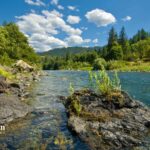
The water situation in Belize is worrying. Despite Belize’s abundance of rivers, creeks and water reservoirs, getting all Belizeans safe, good water is no easy feat. As much as one-quarter of Belizeans lack access to clean water, the Statistical Institute of Belize estimates.
The water-security fight is heightened in the villages and rural remote areas where water supply is still not fully established. Water is mostly stable in Belize City and other big cities, while water in the more remote rural areas is erratic and unpredictable.
Geographical Challenges to Clean Water Access
With its very particular topography, there are big issues when it comes to providing safe water. It is an island-heap of mangroves and peninsulas, making it difficult to provide water to all the villages. Then there’s the fact that Belize is often very rocky and tradable, making transporting and distributing clean water especially difficult.
Adding to that the contamination issue. There are plenty of sources of water that are polluted by untreated garbage and agricultural drainage. It’s a big problem on the islands where disposal facilities are not usually well managed, and ground and surface water is polluted.
Impact of Climate Change on Belize's Water Supply

The impact of climate change on Belize’s water can not be overstated. Belize is especially sensitive to global warming which results in sea level rise and higher rates and strength of tropical storms and hurricanes. These storms are usually accompanied by flooding, saline water, and a higher risk of water-borne illness.
But moreover, rearranging the rain-season due to climate change has led to extreme drought, which has exacerbated the water shortage. Such drought-flood cycles are also significant issues for the sustainability of water supplies and quality.
Government Initiatives and Policies for Clean Water
The Belizean government has been working to reduce the water crisis through policies and programmes designed to ensure more people have access to fresh water. These are new water infrastructure, upgrades of existing water treatment plants and awareness of water conservation by citizens.
But these policies have been unevenly realised and their effects have been uneven. Still, it is difficult to see these policies going to the poorest people, often those who live in far-off areas.
Role of Non-Governmental Organizations
While the government’s efforts are crucial, Non-Governmental Organizations (NGOs) also play a significant role in addressing Belize’s water crisis. NGOs, both local and international, have been involved in various projects to provide clean water, such as:
- Implementing rainwater harvesting systems
- Providing filtration devices to communities
- Educating locals about water conservation and hygiene
These NGOs fill critical gaps in services and often work directly within communities to address their unique needs.
Community Responses to the Water Crisis
Communities in Belize are not tamely living through their water crisis. Rather, many societies have come up with solutions and co-ordinated public initiatives to provide access to clean water. Rural populations, for example, have devised systems of collective management and maintenance of boreholes with remarkable persistence and creativity.
Such community stories remind us that the most affected by the water crisis are also those most liable to devise real, bottom-up answers. It’s such grassroots activities, often fought against minimal funding, that can provide us with some useful information on how Belize can be more broadly water secure.
What are the Health and Socio-Economic Consequences of Water Insecurity?
This fight for clean water in Belize isn’t merely an environmental or logistical one: it has medical and socio-economic ramifications. Waterborne diseases like cholera and dysentery can spread if there is not enough clean water. It is also a major health problem in the diet, especially among children, and can be a chronic health condition.
S.O.E.P. Water scarcity can worsen poverty and inequality. The time and money spent to find water is diverted from other productive activities – work, education. Women and children – who usually get the brunt of water collection – suffer most. So, the water scarcity is much bigger than just access to clean water.
Possible Solutions and The Road Ahead
In imagining the fight for water in Belize, there is also much to look at in addition to the problems, the future and the solutions. But new technologies and new solutions offer at least some hope for Belize’s water future. These include:
Powerful water treatment devices available at the community level.
Desalination plants for island and coastal communities powered by renewable energy Sourced from the Pacific.
Cleaner waste collection system to mitigate water contamination from the water supply.
Implementation of these measures will require the combined work of government, NGOs and communities. Not to mention the political will, and the resources and money to do so.
It involves, perhaps most importantly, acknowledgment of the basic human right to clean water. We can imagine in the future a Belize where clean, safe and easily accessible water is not a dream, but a reality for all citizens. The struggle is still here, but so is the promise.
Technological Innovations for Water Security in Belize
By using advanced technologies water security in Belize will be a lot better. Water purification systems based on sunlight, generators that generate water from the air, and smart water monitoring can be revolutionaries. Such systems could offer safe drinking water at a distance, minimise reliance on legacy infrastructure, and provide real-time water quality data. These technologies can also help protect Belize’s water supply from environmental and climate change.
Conclusion: Securing Clean Water for Belize's Future
And in Belize, the quest for safe water is a nexus of geography, climate and economics. Though the government and NGOs are trying, water security is going to take multidisciplinary technology, community and sustainable measures together. To have clean water for everyone in Belize is not only a necessity but a right. With the right amount of focus and creative efforts, Belize will be able to conquer water problems and create a better life for all.
Share this on social media:
Facebook
Twitter
LinkedIn

Related Posts