

Overview of Kentucky’s Tap Water Quality
Kentucky’s tap water quality is generally safe, thanks to strict regulations by the Environmental Protection Agency (EPA) and the Kentucky Division of Water. These agencies ensure the water meets safety standards. Yet, some contaminants may exceed recommended levels, and water quality can differ across the state.
From 2021 to 2023, Kentucky’s tap water contained various contaminants, including HAA5 and HAA9 acids. Annual averages for some contaminants exceeded health guidelines set by federal or state authorities. The state monitors a broad range of chemicals, including Chlorite, Chromium (hexavalent), Nitrate, Perfluorooctanoic acid (PFOA), and Total trihalomethanes (TTHMs).
Kentucky tests for over 100 chemicals, such as 1,1-Dichloroethane, 1,2,3-Trichloropropane, and 1,3-Butadiene, which were not found in the water. The state uses health guidelines from the Environmental Working Group (EWG) to assess water quality and ensure compliance with drinking water standards.
In 2023, 114 violations were issued to 58 public water systems in Kentucky. These included 50 monitoring and reporting violations and 64 health-based violations. Disinfection byproducts (DBPs) caused 52 health-based violations, while 12 were due to the Revised Total Coliform Rule and Surface Water Treatment Rules. By the end of 2023, 84 of these violations were resolved.
The Bipartisan Infrastructure Law of 2021 provided over $50 billion to the U.S. Environmental Protection Agency (EPA) for drinking water and wastewater improvements. This funding aims to support states like Kentucky in maintaining and improving their water testing and treatment capabilities. It ensures a safe and reliable water supply for residents.
Kentucky’s Water Sources and Treatment Processes
Kentucky’s tap water comes from various sources, including the Ohio River, Kentucky River, lakes, reservoirs, and groundwater aquifers. The Ohio River is a major source for many communities, like Louisville. There, the Crescent Hill Water Treatment Plant treats the river water for about one million people.

Ohio River as a Primary Water Source
The Ohio River has faced pollution from industrial activities and agricultural runoff. Yet, water treatment plants along the river use advanced methods to ensure safe drinking water. Louisville Water, for instance, performs 200 water tests daily to check the water quality.
Louisville Aquifer and Riverbank Filtration
Louisville also taps into the Louisville Aquifer, holding about 7 billion gallons of groundwater. The city uses riverbank filtration, drawing water from wells near the river. This natural process filters the water, removing contaminants.

Water Treatment Methods in Kentucky
Kentucky’s water treatment plants use several methods to purify drinking water. These include:
- Coagulation: Adding chemicals to make particles stick together and settle.
- Sedimentation: Allowing these particles to settle at the bottom of basins.
- Filtration: Passing water through filters to remove remaining particles and contaminants.
- Disinfection: Using chlorine or other disinfectants to kill harmful microorganisms.
Even with these processes, some contaminants might exceed health guidelines in Kentucky’s tap water. Regular testing and monitoring are essential to ensure safe drinking water for residents.
Contaminants Detected in Kentucky’s Tap Water
Kentucky’s tap water generally meets safety standards, but certain contaminants have been found. These include chromium-6, haloacetic acids, nitrate, nitrite, perfluorooctanoic acid (PFOA), and total trihalomethanes (TTHMs). It’s vital for residents to know about these contaminants and their health impacts.
Chromium-6 (Hexavalent) Levels
Chromium-6, also known as hexavalent chromium, is a carcinogenic found in some Kentucky water systems. It has been linked to an increased risk of stomach and intestinal cancers with long-term exposure.
Haloacetic Acids (HAA5 and HAA9)
Haloacetic acids, including HAA5 and HAA9, form when chlorine reacts with organic matter. Studies suggest they may increase cancer and reproductive risks. In Louisville, the average level was 21.1 ppb, below the 60 ppb MCL.
Nitrate and Nitrite Concentrations
Nitrate and nitrite can enter water from agricultural runoff and sewage. High levels are harmful to infants and pregnant women, causing methemoglobinemia. In Louisville, nitrate levels averaged 0.99 ppm, well below the 10 ppm MCL. Nitrite levels were also below the 1 ppm MCL.
Perfluorooctanoic Acid (PFOA) Presence
Perfluorooctanoic acid (PFOA) has been used in products for decades. It’s linked to kidney cancer and low birth weights. The EPA has set a maximum allowable concentration of 4.0 ppt for PFOA. Two Kentucky water systems have reported levels exceeding this limit.
Total Trihalomethanes (TTHMs) Levels
Total trihalomethanes (TTHMs) form when chlorine reacts with organic matter. Long-term exposure to high levels increases bladder cancer risk. In Louisville, the average level was 28.7 ppb, well below the 80 ppb MCL.
While contaminants have been found in Kentucky’s tap water, water systems must monitor and report levels. Many, like Louisville Water, meet or exceed quality standards. Residents should stay informed and consider using home water filters to reduce contaminant levels further.

Kentucky’s Tap Water Regulations and Monitoring
Kentucky’s tap water is governed by the Safe Drinking Water Act (SDWA), which mandates standards for contaminants and regular testing. The state also enforces its own Kentucky water regulations and water quality monitoring programs. These efforts ensure the safety and purity of drinking water for all residents.
Public water systems in Kentucky must test for a broad range of contaminants at a set water testing frequency. They must also report any violations to the Environmental Protection Agency (EPA) and the public. These tests cover microbiological, chemical, and radiological parameters of water quality.
Under new federal regulations to reduce exposure to per- and polyfluoroalkyl substances (PFAS), two Kentucky municipal water systems have been found to exceed legal limits. Georgetown Municipal Water and Cynthiana Municipal have three years to identify locations with PFAS levels above the limits and inform the public.
| Water System | PFAS Levels | Assessment Timeline | Implementation Timeline |
|---|---|---|---|
| Georgetown Municipal Water | Exceeds legal limits | 3 years for initial monitoring | 5 years to implement solutions |
| Cynthiana Municipal | 1 out of 7 samples exceeded limits | 3 years for initial monitoring | 5 years to implement solutions |
The Environmental Protection Agency (EPA) has announced nearly $1 billion in funding to address PFAS contamination. After initial monitoring, water systems will have five years to implement solutions. This is to reduce PFAS levels and meet the Safe Drinking Water Act standards.
Kentucky’s dedication to water quality monitoring and adherence to state and federal water regulations ensures the safety and reliability of tap water. Regular water testing and timely reporting of violations are key. They ensure any issues are addressed promptly, protecting public health and building trust in the state’s drinking water supply.

Lead Concerns in Kentucky’s Tap Water
Kentucky’s tap water is mostly lead-free when it leaves treatment plants. Yet, it can pick up lead from old service lines and plumbing in older homes. The EPA sets a maximum threshold for lead in drinking water at 0.015 mg/L. If this level is exceeded, utilities must notify customers and the EPA within 24 hours. The EPA aims for zero lead in drinking water, highlighting the need to reduce exposure.
Lead was widely used in water service lines until the 1960s. Despite replacements, many lead service lines are yet to be replaced. Lead pipes, faucets, and fixtures, common in older homes and cities, are major sources of lead in drinking water. Exposure to lead can harm infants and children’s IQ and attention span. It also increases heart disease and kidney problems in adults.
Lead Service Lines and Older Homes
The 2021 Lead and Copper Rule Revisions require water systems to publish an initial inventory of water service lines by October 16, 2024. Systems must notify customers of known or suspected lead service lines within 30 days of completing the inventory. This notification must be repeated annually until the service line is replaced or its material is confirmed.
Most lead and galvanized lines are found in older neighborhoods of Louisville, mainly in homes built before 1950. Louisville Water started in 1860, indicating a long history of service line installations. Many Kentucky residents will soon receive notifications about their service line material.
Louisville Water’s Efforts to Address Lead Issues
Louisville Water has replaced about 74,000 known lead service lines installed decades ago. The utility has over 300,000 service lines, with 48,000 classified as "unknown." An estimated 5,000 of these "unknown" lines could be lead.

Louisville Water offers free replacement of lead service lines for affected homes. It also provides free lead testing kits to residents. The utility’s analysis shows no lead service lines in homes built after 1950. The EPA aims to replace all lead service lines within the next 10 years.
| Louisville Water Service Line Inventory | Number of Service Lines |
|---|---|
| Total Service Lines | 300,000+ |
| Replaced Lead Service Lines | 74,000 |
| "Unknown" Service Line Material | 48,000 |
| Estimated Potentia Lead Lines in "Unknown" Category | 5,000 |
Is tap water good in Kentucky?
The quality and safety of tap water in Kentucky can vary by location and contaminants. While generally safe, some areas may have higher levels of substances. These can impact taste, odor, and overall drinking water safety.
Recent data shows Louisville’s tap water, sourced mainly from the Ohio River, exceeds health guidelines for several contaminants. These include:
- Chromium-6 at 0.0806 parts per billion (ppb), 4 times higher than the Environmental Working Group (EWG) recommended maximum
- Haloacetic acids (HAA9) at 27.5 ppb, 459 times higher than the EWG recommended maximum
- Nitrate and nitrite at 0.714 parts per million (ppm), 5.1 times higher than the EWG recommended maximum
- Perfluorooctanoic acid (PFOA) at 4.71 parts per trillion (ppt), 672 times higher than the EWG recommended maximum
- Total trihalomethanes (TTHMs) at 21.9 ppb, 146 times higher than the EWG recommended maximum
Despite these findings, Louisville conducts 200 water quality tests daily. The water’s pH is 8.7, hardness is 7.9 grains per gallon, and TDS is 228 ppm.
Older homes in Kentucky may have lead service lines or fixtures. This can lead to lead in tap water. Using home water filters can enhance the taste and odor of tap water. It also removes additional contaminants for better drinking water safety.
Comparing Kentucky’s Tap Water Quality to Other States
In the realm of state water quality comparison, Kentucky stands out with a low number of Safe Drinking Water Act violations. This indicates a strong adherence to federal standards. In 2023, Kentucky reported just 139 violations, a stark contrast to states like Pennsylvania and Texas, which saw tens of thousands. This positions Kentucky favorably in the Kentucky water ranking against other states.

Yet, it’s critical to acknowledge that contaminant levels can differ within Kentucky. For instance, Louisville’s tap water contains chromium-6 at a level of 0.0806 parts per billion (ppb). This exceeds the Environmental Working Group’s (EWG) recommended maximum of 0.02 ppb by four times. Louisville’s water also has haloacetic acids (HAA9) at 27.5 ppb, a staggering 459 times above the EWG’s recommended maximum of 0.06 ppb.
When evaluating Kentucky against the cleanest drinking water states, several factors come into play. These include contaminant levels, adherence to regulations, and treatment processes. States like Hawaii, Rhode Island, and Minnesota lead in clean drinking water. They achieve this through stringent regulations and advanced treatment methods.
| State | Safe Drinking Water Act Violations (2023) |
|---|---|
| Kentucky | 139 |
| Pennsylvania | 10,000+ |
| Texas | 10,000+ |
| Hawaii | Low |
| Rhode Island | Low |
| Minnesota | Low |
Conversely, some states face challenges with higher contaminant levels and more frequent violations. These states are among the worst drinking water states. Texas, Pennsylvania, and California struggle with maintaining consistent water quality. This is due to aging infrastructure, industrial pollution, and rapid population growth.
Using Home Water Filters to Improve Tap Water Quality
In Kentucky, tap water is generally safe, yet many residents choose home water filters for better taste and to remove more contaminants. These filters add an extra layer of protection, ensuring the water you drink is of the highest quality.
Activated Carbon Filters for Taste and Disinfection Byproducts
Activated carbon filters are a top choice in Kentucky for home use. They effectively remove disinfection byproducts like haloacetic acids and total trihalomethanes, which can exceed safe levels in some areas. These filters also enhance tap water’s taste and odor by eliminating chlorine and other compounds.
Reverse Osmosis Filters for PFOA and Other Contaminants
For Kentucky residents, reverse osmosis filters are a great option to remove a variety of contaminants from tap water. These filters use a semipermeable membrane and high pressure to remove chemicals, minerals, and bacteria. They are ideal for removing PFOA, found in Louisville’s tap water at levels 672 times higher than safe levels.
| Contaminant | Louisville Tap Water Level | EWG Recommended Maximum | Times Exceeding EWG Maximum |
|---|---|---|---|
| Chromium-6 | 0.0806 ppb | 0.02 ppb | 4x |
| Haloacetic Acids (HAA9) | 27.5 ppb | 0.06 ppb | 459x |
| Nitrate and Nitrite | 0.714 ppm | 0.14 ppm | 5.1x |
| Perfluorooctanoic Acid (PFOA) | 4.71 ppt | 0.007 ppt | 672x |
| Total Trihalomethanes (TTHMs) | 21.9 ppb | 0.15 ppb | 146x |
Under-Counter and Whole Home Water Filtration Options
Kentucky residents have several options for home water filters. Under-counter filters can be installed at specific taps, like the kitchen, for filtered water for drinking and cooking. Whole home filtration systems, installed at the main water line’s entry point, filter all water entering the home. These systems often include sediment filters, carbon filters, and water softeners to remove a wide range of contaminants and improve water quality throughout the home.
Fluoride Levels in Kentucky’s Tap Water
Kentucky leads the nation with a 99.73% water fluoridation rate. This ensures over 95% of its population benefits from this practice, which has been deemed safe and effective for 75 years. The fluoride in drinking water in Kentucky is kept at safe levels to combat tooth decay and enhance dental health.
Excessive fluoride can be harmful, but Kentucky’s tap water levels are deemed safe and beneficial. The cost to maintain this is about $0.50 per person annually. Communities with fluoridated water save an average of $32 per person yearly by avoiding cavity treatments. The Louisville Water Company has been adding fluoride to its water supply for over 70 years. Major health organizations, including the CDC and American Dental Association, endorse fluoride in drinking water for dental health benefits.
Benefits of Fluoride in Drinking Water
Tooth decay is a major issue in Kentucky, affecting those with lower incomes, children, and seniors more. Fluoride in drinking water helps reduce tooth decay and improves oral health. Pediatric dentist Cristina Perez notes that without fluoride, about 90% of children would suffer from tooth decay.
The Kentucky Department for Medicaid Services estimates a $20 million annual increase in Medicaid spending if 10% of the population loses access to fluoride. Steve Robertson from the Kentucky Dental Association suggests a $19.1 million Medicaid expense increase for every 10% removed from water fluoridation. Without fluoridated water, school absenteeism due to tooth pain among children could also rise.

Kentucky’s High Rate of Water Fluoridation
Kentucky requires water utilities serving over 3,000 customers to add fluoride to drinking water. This makes it one of 13 states mandating water fluoridation, according to the Fluoride Action Network. House Bill 16, which would make fluoridation optional, has gained support with 31 sponsors and passed the Kentucky House with a 68-29 vote. It also passed the House Health Services Committee with an 11-4 vote.
| State | Water Fluoridation Rate |
|---|---|
| Kentucky | 99.73% |
| Illinois | 98.5% |
| Minnesota | 98.8% |
| North Dakota | 96.7% |
| Maryland | 93.8% |
While Utah recently banned fluoride in public water systems, Kentucky’s high water fluoridation rate shows its dedication to dental health. The ongoing debate on proposed legislation highlights the need to consider public health and Medicaid expenses when deciding on water fluoridation’s future in Kentucky.
The Importance of Regular Tap Water Testing
Regular tap water testing in Kentucky is vital for ensuring the safety and quality of drinking water. Public water systems must conduct contaminant monitoring and provide yearly water quality reports. This keeps consumers aware of any harmful substances in their tap water.
Recent data shows that contaminants in Kentucky tap water have exceeded federal guidelines. These include chemicals, radiological substances, and specific groups like Haloacetic acids (HAA5 and HAA9) and Total Trihalomethanes (TTHMs).
Homeowners can also take steps to assess their tap water quality. Home water test kits are available for purchase. They allow residents to check for common contaminants. Homeowners can also request testing from their local water utility for a detailed analysis.
Regular testing is essential because contaminants in tap water can be harmful. They pose serious health risks, mainly to vulnerable populations like children, pregnant women, and those with weakened immune systems. By staying informed through water quality reports and conducting their own testing, Kentucky residents can protect their health. They may choose to use water filters or seek alternative water sources if necessary.
Kentucky’s Efforts to Improve Tap Water Quality
Kentucky has been making significant strides in improving tap water quality through various Kentucky water quality initiatives. The state understands the importance of providing safe, clean drinking water to its residents. It has implemented several measures to achieve this goal.
One key focus is source water protection. Kentucky has developed plans to safeguard its water sources, like the Ohio River and the Louisville Aquifer, from contamination. These plans involve collaboration between water utilities, local governments, and environmental agencies. They aim to identify and prevent threats.
Another critical aspect is infrastructure upgrades. Kentucky has been investing in modernizing its water treatment and distribution systems. This ensures tap water meets the highest quality standards. For instance, in 2021, the Kentucky Senate passed Senate Bill 89 with a vote of 30-5, showing a strong commitment to improving water infrastructure.
| Initiative | Description |
|---|---|
| Source Water Protection | Developing plans to safeguard water sources from contamination |
| Infrastructure Upgrades | Investing in modernizing water treatment and distribution systems |
| Contaminant Reduction | Implementing strategies to minimize the presence of harmful substances |
Kentucky is also focusing on contaminant reduction. The state is working with water utilities to implement strategies to reduce harmful substances like lead, chromium-6, and PFOA in tap water. This includes regular monitoring, testing, and adopting advanced treatment technologies.
Kentucky’s commitment to improving tap water quality is evident in its high rate of water fluoridation. Over 99% of Kentuckians were serviced by a fluoridated water system in 2023. The state law mandates fluoridation for systems serving at least 3,000 people. While fluoride benefits oral health, it’s important to maintain the recommended concentration range of 0.6 to 1.2 ppm for safety.
As Kentucky continues to prioritize water quality initiatives, residents can have greater confidence in their tap water’s safety and cleanliness. Regular testing, infrastructure maintenance, and adherence to regulations are essential. These efforts ensure all Kentuckians have access to high-quality drinking water.
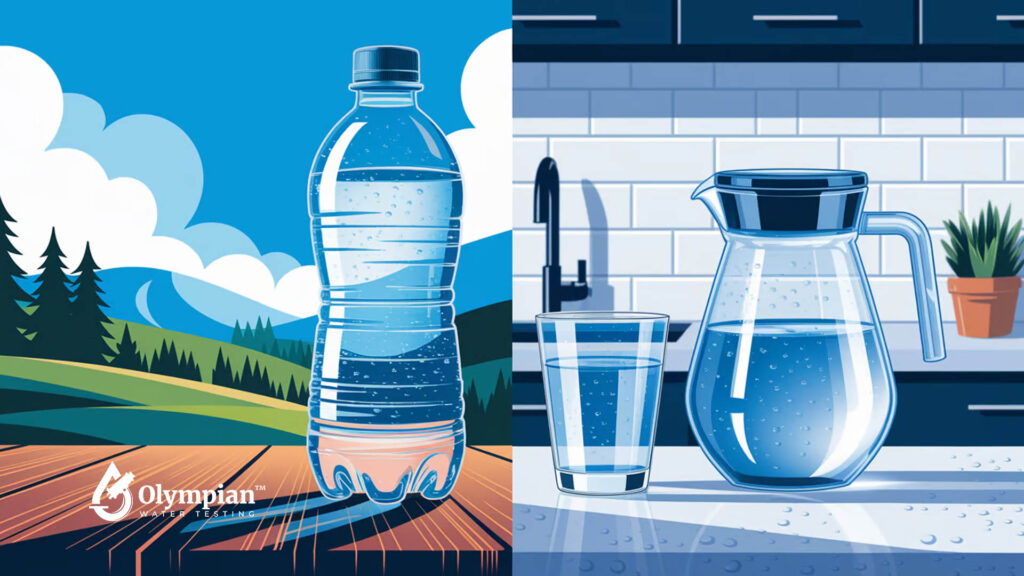
Bottled Water vs. Filtered Tap Water in Kentucky
Choosing between bottled water and filtered tap water in Kentucky involves several key factors. These include cost, environmental impact, and safety. Many believe bottled water is safer than tap water. Yet, Kentucky’s tap water is generally safe and well-regulated.
Filtered tap water offers a significant cost advantage over bottled water. A study shows bottled water can be 2,000 times pricier than tap water. By installing a quality home filtration system, residents can enjoy clean, tasty water at a much lower cost.
The environmental impact of bottled water is another critical factor. The production and disposal of plastic bottles contribute to pollution and waste. In contrast, using a reusable water bottle filled with filtered tap water is more eco-friendly. This choice helps reduce plastic waste and environmental impact.
| Factor | Bottled Water | Filtered Tap Water |
|---|---|---|
| Cost | Up to 2,000 times more expensive than tap water | Significantly lower cost, with a home filtration system |
| Environmental Impact | Contributes to plastic pollution and landfill waste | Eco-friendly alternative, reduces plastic waste |
| Safety | Perceived as safer, but not always the case | Kentucky’s tap water is well-regulated and generally safe to drink |
Both bottled water and Kentucky’s tap water are subject to strict regulations. Yet, a home water filter adds an extra layer of protection. It removes contaminants that could affect taste or odor. Activated carbon filters improve taste and reduce byproducts, while reverse osmosis filters remove a wide range of contaminants, including PFOA.
In summary, while bottled water may be convenient, choosing filtered tap water in Kentucky is more cost-effective, environmentally friendly, and safe. By investing in a reliable home water filtration system, residents can enjoy high-quality drinking water. This choice minimizes environmental impact and saves money in the long run.
Ensuring Safe and Clean Tap Water for Kentucky Residents
Ensuring safe drinking water for Kentucky’s residents is a priority for water utilities and government agencies. They focus on water quality protection and public health through monitoring, testing, and treating water sources. These efforts are vital for maintaining Kentucky’s tap water supply’s safety and reliability.
The Kentucky Division of Water oversees the state’s source water protection program. It aims to protect raw, untreated water from surface and groundwater sources. This is critical, as utilities face contamination risks from human activities like septic discharges and agricultural chemicals. The state’s focus on source water protection offers a simpler, less expensive, and more reliable solution for safe drinking water in Kentucky.
The Kentucky Rural Water Association (KRWA) is key in assisting communities with source water protection. It receives grants from the USDA Farm Service Agency for technical assistance. This includes developing and updating Source Water Assessments and Protection Plans using GIS. The KRWA also identifies contamination sources and develops risk assessments and management strategies. This program is free for drinking water utilities across Kentucky.

Despite these efforts, some Kentucky communities struggle with tap water quality. For instance, Wolfe County residents have complained about brown and discolored water. The City of Campton is working with engineers to fix this issue. Manganese, a naturally occurring mineral, has been found in drinking water sources in the area. While levels are safe, the city is addressing aesthetic concerns by cleaning water tanks and flushing the system.
To boost consumer awareness and confidence in Kentucky’s tap water, educating the public is essential. Water utilities, government agencies, and informed residents must collaborate. Together, they can ensure Kentucky continues to provide safe and clean tap water for all its communities.
Conclusion
Kentucky’s tap water safety is a complex issue that demands constant monitoring, testing, and treatment to protect public health. While the state’s drinking water quality generally meets federal standards, some areas face challenges with contaminants like total trihalomethanes (TTHMs) and haloacetic acids (HAA5). These contaminants can fluctuate, peaking in mid-summer and early fall, influenced by water temperature and conductivity.
To tackle these concerns, Kentucky’s water utilities are upgrading aging infrastructure and refining treatment processes. Home water filtration systems, such as activated carbon and reverse osmosis filters, can also minimize contaminants and enhance tap water taste. The state’s high rate of water fluoridation has been linked to reduced tooth decay in children and adults. Yet, recent studies have questioned the effects of high fluoride levels on cognitive development, prompting a reevaluation of recommended concentrations.
Ensuring safe and clean tap water for Kentucky residents necessitates a joint effort from water utilities, regulators, and the public. By focusing on regular testing, investing in infrastructure upgrades, and encouraging home water filter use, Kentucky can maintain reliable and healthy drinking water for its communities. As new research emerges on contaminants and treatment methods, it’s critical to adapt and refine strategies to protect public health and uphold the highest water quality standards.