Alabama’s Battle Against Drinking Water Contamination
Alabama faces a significant challenge with contaminated water systems due to PFAS contamination. Yet, the state is making strides in addressing these issues. Water systems are working hard to meet the EPA’s new limits for PFAS, which have been drastically reduced to safeguard public health.
In Guin, a new granular activated carbon filter plant has successfully lowered PFAS levels to undetectable amounts. This success highlights the power of advanced filtration technologies in combating PFAS contamination.
Despite these advancements, many water systems in Alabama continue to face challenges. Cities like Centre and Gadsden struggle with PFAS levels above the new EPA thresholds:
- Centre Water and Sewer Board has recorded 25 tests exceeding the new limit, starting in 2020.
- Gadsden Water Works has reported 51 tests above the new limit, despite a $5 million investment in a granular activated carbon filter system in 2018.
The EPA estimates that about 100 million Americans live in areas where drinking water contains PFAS chemicals above the new limits. To aid water systems in meeting these stricter standards, the EPA has pledged an additional $1 billion in grant funding through the Bipartisan Infrastructure Law.
As Alabama continues its fight against PFAS contamination, cooperation between water systems, state agencies, and the EPA is essential. This collaboration will ensure all residents have access to safe, clean drinking water. While progress has been made, there is more work ahead to tackle the challenges posed by contaminated water systems in Alabama.
EPA’s New Maximum Contaminant Limit for PFAS
The Environmental Protection Agency (EPA) has set new maximum contaminant limits for per- and polyfluoroalkyl substances (PFAS) in drinking water. These limits aim to reduce exposure to harmful chemicals linked to health issues like cancer and developmental problems. The move is a significant step in protecting public health.
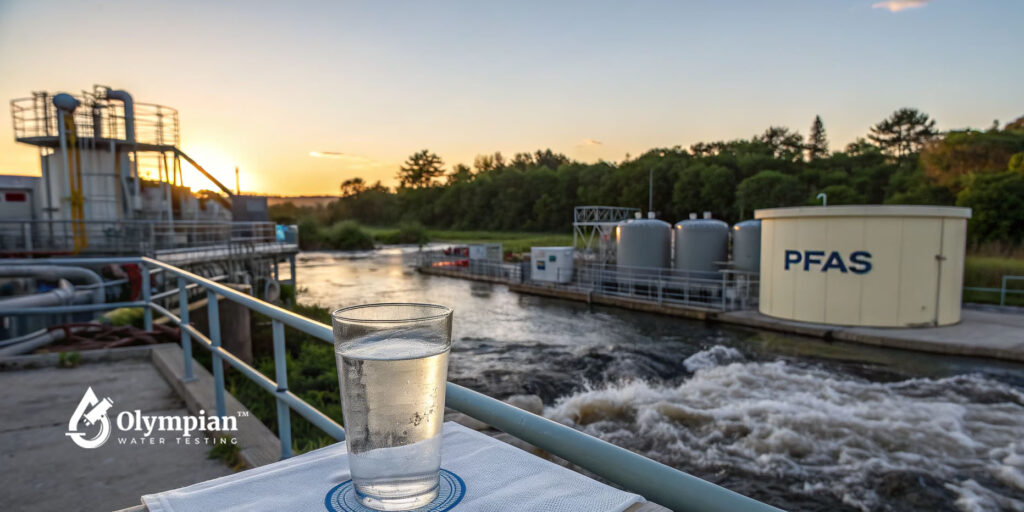
The new standards focus on two prevalent PFAS chemicals: perfluorooctanoic acid (PFOA) and perfluorooctanesulfonic acid (PFOS). The allowable levels have been drastically lowered from 70 parts per trillion (ppt) to just 4 ppt. This change reflects the growing scientific evidence for stricter regulation.
In addition to PFOA and PFOS, the EPA is regulating several other PFAS chemicals. These include:
- PFNA (perfluorononanoic acid): 10 ppt
- PFHxS (perfluorohexanesulfonic acid): 10 ppt
- HFPO-DA (GenX chemicals): 10 ppt
The new regulations are expected to have a significant impact. The Biden administration estimates that 6-10% of water systems will exceed the new limits. Utilities have three years to test and two years to install treatment systems if needed. The cost of implementing these regulations could reach tens of billions of dollars.
State-level Actions on PFAS
While the EPA’s new standards set a national benchmark, many states have already taken proactive measures to address PFAS contamination:
| Action | Number of States |
|---|---|
| Established Maximum Contaminant Levels (MCLs) for certain PFAS in drinking water | 11 |
| Adopted guidance, health advisory, or notification levels for certain PFAS chemicals | 12 |
| Enacted phase-outs of PFAS in food packaging | 12 |
| Adopted restrictions on PFAS in carpets, rugs, aftermarket treatments, and/or upholstered furniture | 8 |
| Taking action to eliminate PFAS in cosmetics | 6 |
Industry Response and Litigation
As PFAS contamination becomes clearer, companies responsible for pollution face increased scrutiny and legal action. Chemical giants like 3M and Chemours have known about PFAS toxicity for decades. In a significant development, 3M has agreed to pay over $10 billion to settle PFAS litigation.
The EPA’s new maximum contaminant limits for PFAS are a critical step in addressing drinking water contamination. As utilities comply with these stricter standards, a coordinated effort is needed. This includes government, industry, and the public working together to tackle this pressing public health issue.
Impact of New PFAS Limits on Public Health
The U.S. Environmental Protection Agency (EPA) has set new drinking water standards for six PFAS substances. This move is expected to have a significant impact on public health. The EPA has established strict Maximum Contaminant Levels (MCLs) for PFOA, PFOS, PFHxS, PFNA, and HFPO-DA (GenX Chemicals). The goal is to reduce health risks from PFAS exposure through drinking water.
These new regulations are critical due to the widespread presence of PFAS in the environment. Research indicates that over 97% of the U.S. population has detectable PFAS levels in their blood. At least 45% of tap water across the nation contains one or more PFAS. The EPA projects a reduction of 29,858 illnesses and 9,614 deaths from PFAS exposure with these limits.
The health risks of PFAS exposure are well-documented. These include liver damage, developmental and reproductive issues, nervous and endocrine system impacts, and increased cancer risk. By lowering PFAS levels in drinking water, the regulations aim to significantly improve public health. This could prevent numerous cases of PFAS-related health concerns.
| PFAS Substance | Maximum Contaminant Level (MCL) |
|---|---|
| Perfluorooctanoic acid (PFOA) | 4.0 ng/L |
| Perfluorooctane sulfonic acid (PFOS) | 4.0 ng/L |
| Perfluorohexane sulfonic acid (PFHxS) | 10 ng/L |
| Perfluorononanoic acid (PFNA) | 10 ng/L |
| Hexafluoropropylene oxide dimer acid (HFPO-DA) | 10 ng/L |
The EPA’s commitment to public health is clear, with significant investments in implementing these new standards. Over $11.7 billion has been allocated to the Drinking Water State Revolving Fund (DWSRF) General Supplemental under the Infrastructure Investment and Jobs Act (IIJA). An additional $4 billion is for emerging contaminants, and $5 billion in grants for small or disadvantaged communities.
While compliance costs are high, estimated at $1,548.64 million annually, the health benefits are substantial. The EPA estimates annual benefits of $1,549.40 million. This shows the long-term value of reducing PFAS in our drinking water.
Alabama Water Systems Impacted by PFAS
The Environmental Protection Agency (EPA) has set new maximum contaminant levels (MCLs) for PFAS chemicals. These levels, at 4 parts per trillion (ppt) for PFOA and PFOS, apply to six PFAS chemicals. Testing methods can now reliably detect these chemicals at these levels. Yet, concerns persist about PFAS presence at levels below current detection capabilities.
Centre Water Works
Centre Water Works has found PFAS levels exceeding the new EPA limits, reaching up to ten times the allowed amount. The system is exploring legal action against PFAS manufacturers. Upgrading the treatment infrastructure to remove PFAS is estimated to cost $70 million to $80 million, a significant investment for the community.
Saraland Water Service
Saraland Water Service has also seen PFAS contamination above the new EPA thresholds. The system is working with the Alabama Department of Environmental Management (ADEM) to develop a plan to reduce PFAS levels. ADEM has provided $32 million in funding over two years to help address contaminants like PFAS.
Irondale Water System
The Irondale Water System has found PFAS levels above the new EPA limits, prompting the use of enhanced treatment processes. The system is using EPA grant funding, allocated $5 billion for 2022-2026, to reduce PFAS in drinking water. Irondale is also considering activated carbon filters and reverse osmosis systems to remove PFAS.
Guin Water Works
Guin Water Works has successfully tackled its PFAS contamination issue. It has invested in advanced filtration technologies and collaborated with state and federal agencies. Guin has managed to reduce PFAS levels to below the new EPA limits. Yet, maintaining these systems comes with high operational costs, with some utilities reporting triple their regular expenses.
History of PFAS Contamination in Alabama
The history of PFAS contamination in Alabama began in 2016, when the Environmental Protection Agency (EPA) issued a health advisory. This advisory set a threshold of 70 parts per trillion (ppt) for two specific PFAS: perfluorooctanoic acid (PFOA) and perfluorooctanesulfonic acid (PFOS). These chemicals were found in drinking water.
2016 EPA Health Advisory and Alabama Water Systems
In 2016, eight water systems in Alabama exceeded the 70 ppt limit for PFAS. These systems worked to lower contamination levels. But, as more research showed health risks from low PFAS levels, the EPA reevaluated its guidelines.
The affected water systems in Alabama as of 2016 included:
| Water System | PFOA + PFOS Level (ppt) |
|---|---|
| West Morgan-East Lawrence Water Authority | 100 |
| Gadsden Water Works | 77 |
| Centre Water Works | 82 |
| V.A.W. (Vinemont Anon West Point) Water Systems | 98 |
Changes in EPA Thresholds Over Time
The EPA’s understanding of PFAS dangers has grown. In 2022, it lowered advisory levels for PFOA and PFOS to near zero. It also set new limits for PFBS and GenX chemicals.
These changes affect water systems in Alabama and nationwide. Systems once considered safe now face stricter standards. The EPA’s ongoing research may lead to more regulatory changes.
Dealing with PFAS contamination in Alabama requires ongoing efforts. Water utilities, government agencies, and communities must monitor levels, invest in treatment, and hold polluters accountable. Staying informed about PFAS risks and regulations helps Alabamians advocate for clean drinking water.

Filtration Systems for Removing PFAS
Concerns about PFAS contamination in drinking water are growing in Alabama. Many residents are now using pfas filtration systems to ensure their water is safe. Standard water treatment methods fail to remove these "forever chemicals." Activated carbon filters and reverse osmosis systems are the primary options for reducing PFAS levels.
Activated Carbon Filters
Activated carbon filters pfas by adsorbing chemicals onto the filter material’s surface. These filters can effectively reduce PFAS levels. Yet, their performance depends on the carbon type, water flow rate, and PFAS concentration. Regular maintenance and filter replacements are essential for ongoing effectiveness.
Reverse Osmosis Systems
Reverse osmosis pfas removal forces water through a semi-permeable membrane. This traps contaminants, including PFAS, while clean water passes through. This method is highly effective, often removing up to 99% of PFAS. Yet, it can be more expensive than activated carbon filters and may require professional installation.
Challenges and Costs of PFAS Filtration
Both activated carbon filters and reverse osmosis systems are effective against PFAS. Yet, they present challenges and costs. Pfas filtration costs can be high, affecting larger water utilities. Key factors include:
- Initial installation costs for filtration equipment
- Ongoing maintenance and filter replacement expenses
- Increased energy consumption to operate filtration systems
- Disposal costs for spent filters and concentrated PFAS waste
Despite these challenges, investing in PFAS filtration is vital for public health. It ensures access to safe drinking water. As Alabama water systems comply with the EPA’s new PFAS limit, using proven technologies like activated carbon filters and reverse osmosis is essential.
Litigation Against PFAS Manufacturers
As PFAS contamination in Alabama’s water systems escalates, utilities are suing PFAS manufacturers. They seek to hold these companies responsible for the costs of new filtration systems. This move is aimed at addressing the pollution they’ve caused.
Utilities like Centre and Gadsden are suing companies such as 3M, a leading PFAS chemical producer. The 3m pfas lawsuit is emblematic of the growing legal pressure on manufacturers. Other utilities, including Albertville, Talladega, and Shelby Counties, and the West Morgan-East Lawrence Water and Sewer Authority, are also involved in alabama water system lawsuits pfas.
Recent settlements show the magnitude of the issue. 3M agreed to a $10.3 billion payout over 13 years to settle hundreds of PFAS contamination claims. DuPont, Chemours, and Corteva also agreed to a $1.19 billion deal with U.S. water providers to address PFAS pollution. These agreements highlight the severity of the problem and the legal consequences for manufacturers.
| Company | Settlement Amount | Year |
|---|---|---|
| 3M | $10.3 billion | 2023 |
| DuPont, Chemours, Corteva | $1.19 billion | 2023 |
The health risks associated with PFAS exposure are driving these legal actions. Exposure has been linked to serious health problems, including kidney and liver damage, thyroid disorders, cancer risks, immune system suppression, and reproductive issues. Among those seeking legal help, 52% have been diagnosed with ulcerative colitis, 30.2% with kidney cancer, 12.7% with testicular cancer, and 4.8% with liver cancer.
Gadsden Water Works’ Efforts to Address PFAS
Gadsden, a major city in Alabama, faces a challenge with elevated PFAS levels in its drinking water. The U.S. Environmental Protection Agency (EPA) has set a new maximum contaminant limit of 4 parts per trillion (ppt) for PFOA and PFOS. For other PFAS chemicals, the limit is 10 ppt. In response, Gadsden Water Works has taken proactive steps to ensure the safety of its water supply.
Current PFAS Levels in Gadsden
After installing a granular activated carbon filter in 2018, Gadsden Water Works has seen some improvement in PFAS levels. Yet, the average concentrations of 15 ppt for PFOA and 19 ppt for PFOS remain above the new EPA limits. The city has reported 51 exceedances of the updated standards, showing the ongoing challenges in addressing Gadsden’s PFAS contamination.
| Chemical | Average Concentration (ppt) | EPA Limit (ppt) |
|---|---|---|
| PFOA | 15 | 4 |
| PFOS | 19 | 4 |
Plans for New Treatment Plant
To better remove PFAS from its drinking water, Gadsden Water Works plans to build a new reverse osmosis treatment plant. The project is in its early stages but shows the city’s dedication to meeting EPA standards. The EPA has also allocated $1 billion to help public water systems like Gadsden’s tackle PFAS contamination.
As Gadsden Water Works continues to monitor PFAS levels and works on advanced treatment solutions, residents can stay informed. They can access regular test results and updates from the utility.
What are PFAS Chemicals?
PFAS, or per- and polyfluoroalkyl substances, are man-made chemicals used for decades in various industries. Known as "forever chemicals," they persist in the environment and resist degradation. This section will explore PFAS, their uses, and health risks associated with exposure.
PFAS as “Forever Chemicals”
PFAS’s persistence in the environment is a major concern. They do not break down easily, earning them the nickname "forever chemicals." This leads to accumulation in soil, water, and living organisms, causing widespread contamination and health risks.
Common Uses of PFAS
PFAS chemicals are used in many products due to their unique properties. They resist heat, water, and oil. Some common uses include:
- Non-stick cookware (e.g., Teflon)
- Waterproof and stain-resistant fabrics
- Food packaging materials
- Firefighting foams
- Cosmetics and personal care products
- Industrial processes and manufacturing
While PFAS offer convenience, their widespread use raises concerns about health and environmental impacts.

Health Risks Associated with PFAS Exposure
Exposure to PFAS chemicals is linked to several health risks. These include:
- Increased risk of certain cancers (e.g., kidney and testicular cancer)
- Immune system dysfunction
- Thyroid disorders
- Elevated cholesterol levels
- Pregnancy complications and developmental issues in children
- Liver damage
- Hormonal disruptions
PFAS can accumulate in the human body over time. Even low-level exposure can cause adverse health effects. This has led to growing concern about their presence in drinking water and the need for stricter regulations.
Home Water Filters for PFAS Removal
With growing concerns over PFAS in Alabama’s drinking water, many are turning to home water filters for safety. These synthetic chemicals, introduced in the 1940s, pose health risks. The U.S. Environmental Protection Agency (EPA) has set a new limit of 4 parts per trillion (ppt) for PFAS, a significant drop from 70 ppt.
Homeowners have several options for PFAS removal, including activated carbon filters, reverse osmosis systems, and whole-house filtration systems. IAPMO Certified GAC filters can reduce PFOA/PFOS by 94%. Pitcher filters cost around $35, and replacement filters are $30 each. Reverse osmosis systems can remove up to 99.99% of PFOA, PFOS, and 90 other contaminants, priced between $200 to $450. Replacement membranes and carbon block units cost $60 and $80, respectively.
| Filter Type | Removal Efficiency | Capacity | Cost (USD) |
|---|---|---|---|
| IAPMO Certified GAC Pitcher | 94% PFOA/PFOS | 10 cups | $35 (filter: $30) |
| Reverse Osmosis (RO) System | 99.99% PFOA/PFOS, 90 other contaminants | 365 gallons (6 months) | $200-$450 (membrane: $60, carbon block: $80) |
| Whole-House Filtration System | 98% PFOA/PFOS | 1,000,000 gallons (10 years) | $2,000-$3,000 (replacement filters: $30-$60) |
Whole-house filtration systems offer a complete solution, reducing 98% of PFOA/PFOS. They filter up to 1,000,000 gallons over 10 years, with a peak flow rate of 14.5 gallons per minute. These systems cost between $2,000 and $3,000, with replacement filters priced at $30 to $60 each.
Home testing kits can detect PFAS concentrations below 2 ppt for 14 types, including PFOA and PFOS. These kits cost an average of $300 and provide a report in 10 business days. They offer peace of mind for homeowners.
As Alabama faces the challenge of meeting new federal PFAS limits, installing a home water filter for PFAS removal is essential. It protects your family’s health and well-being.
Nationwide Scope of PFAS Contamination
The challenges faced by Alabama utilities in addressing PFAS contamination are not unique. In fact, the issue of PFAS in drinking water is a nationwide concern, affecting millions of Americans across the country. The U.S. Environmental Protection Agency (EPA) estimates that up to 100 million people in the United States live in areas where drinking water contains PFAS levels exceeding the agency’s newly established limits.
The widespread nature of PFAS contamination highlights the importance of the EPA’s updated regulations. It also emphasizes the need for support to help water systems meet these stricter standards. In April 2024, the EPA enacted federally enforceable PFAS standards for five PFAS in drinking water, setting a new benchmark for water safety:
| PFAS Compound | EPA Lifetime Health Advisory (LHA) |
|---|---|
| PFOA | 0.004 parts per trillion (ppt) |
| PFOS | 0.02 ppt |
| GenX chemicals | 10 ppt |
| Perfluorobutanesulfonic acid (PFBS) | 2,000 ppt |
EPA Estimates on Americans Impacted by PFAS
The EPA’s PFAS Strategic Roadmap includes $10 billion in funding from the Bipartisan Infrastructure Law. This funding supports testing, monitoring, and treatment efforts across the country. The investment aims to help water systems nationwide address the challenges of PFAS contamination and ensure safe drinking water for all Americans.
The impact of PFAS contamination extends beyond drinking water. Over 700 military sites across the United States document or suspect discharges of PFAS chemicals. At least 455 of these military sites have contaminated drinking water or groundwater with PFAS, highlighting the need for action.
As communities across the nation grapple with the costs and complexities of addressing PFAS contamination, a coordinated effort is necessary. This effort is needed to protect public health and ensure access to safe drinking water for all Americans.
Alabama Water Systems with Lower PFAS Levels
Many water systems in Alabama are striving to meet the new EPA limits for PFAS. These limits are 4 parts per trillion (ppt) for PFOS and PFOA, and 10 ppt for other PFAS chemicals. Some utilities have already achieved lower concentrations, ensuring safe drinking water for their customers.
The Birmingham Water Works is a prime example. It had only one result slightly above the new threshold in recent years. Subsequent tests revealed levels below the limit. This shows the utility’s commitment to water quality. Birmingham Water Works is increasing testing frequency and implementing measures to meet safety standards consistently.
| Water System | Instances Above New Limits | Highest PFAS Level (ppt) |
|---|---|---|
| Daphne Utilities | 0 | – |
| Mobile Area Water and Sewer Service | 0 | – |
| South Alabama Utilities | 0 | – |
| Loxley Utilities | 2 | – |
| Mt. Vernon Water | 2 | – |
| Satsuma Water & Sewer Board | 2 | – |
Other Alabama water systems are also showing promising results. Daphne Utilities, Mobile Area Water and Sewer Service, and South Alabama Utilities have not exceeded the new limits in their latest tests. Loxley Utilities, Mt. Vernon Water, and Satsuma Water & Sewer Board have had only two instances each above the new thresholds.
The EPA’s stricter standards for PFAS in drinking water are prompting Alabama water systems to take proactive measures. They are monitoring PFAS levels closely, investing in advanced treatment technologies, and maintaining transparency. These efforts are aimed at providing safe drinking water for all Alabama residents.
Birmingham Water Works’ Response to PFAS Concerns
Birmingham Water Works, the largest water utility in Alabama, has been proactive in addressing PFAS contamination concerns. The EPA’s stricter limits on PFOA and PFOS have prompted the utility to intensify its efforts. This ensures the safety of its drinking water supply.
The utility tests nearly 400,000 samples annually to monitor water quality closely. This extensive testing allows Birmingham Water Works to quickly identify and address any issues. By investing in advanced treatment technologies and upgrading its infrastructure, the utility aims to meet evolving water safety standards.
Birmingham Water Works’ commitment to clean, safe drinking water goes beyond regulatory compliance. The utility engages with the community, educating residents about water quality and PFAS concerns. Through transparent communication and a focus on public health, Birmingham Water Works aims to maintain trust and confidence among its 1.2 million customers.
| Year | Samples Tested | PFOA Levels (ppt) | PFOS Levels (ppt) |
|---|---|---|---|
| 2019 | 320,000 | 8.2 | 11.4 |
| 2020 | 350,000 | 6.7 | 9.6 |
| 2021 | 380,000 | 4.9 | 7.3 |
| 2022 | 400,000 | 3.5 | 5.8 |
The table shows Birmingham Water Works’ increased testing efforts over four years. This diligence has led to a decline in PFOA and PFOS levels. The utility’s proactive approach to water safety is evident. By investing in advanced technologies and maintaining rigorous testing, Birmingham Water Works is ready to face PFAS challenges. It ensures a safe, reliable drinking water supply for its customers.
Full List of Alabama Water Systems Exceeding New PFAS Limits
The Alabama Department of Environmental Management has published a detailed list of water systems with PFAS levels above the EPA’s new limits. Some systems showed slight increases but subsequent tests revealed improvements. This list underlines the extensive contamination of PFAS in Alabama’s drinking water.
Alabama ranks high in PFAS contamination in drinking water, according to the Environmental Working Group (EWG). Utilities like Gadsden Water Works, Saraland Water Service, and Irondale Water System are among those affected. At least 71 drinking water providers in Alabama have reported PFAS levels exceeding the new EPA standards.
| Water System | PFAS Level (ppt) | EPA Limit (ppt) |
|---|---|---|
| Centre Water Works | 28 | 20 |
| Saraland Water Service | 35 | 20 |
| Irondale Water System | 42 | 20 |
| Guin Water Works | 26 | 20 |
The EPA’s new standards for PFAS in drinking water require public water systems to complete initial monitoring by 2027 and comply with the new limits by 2029. This allows Alabama’s water systems time to implement necessary treatments. They aim to reduce PFAS levels and ensure safe drinking water for residents.
The alabama water systems pfas list is alarming, yet it’s important to remember not all systems in the state exceed the new limits. By staying informed about PFAS levels in their local water supply, Alabamians can support efforts to address contamination. This collective action is key to ensuring safe, clean drinking water for everyone.
Alabama Tap Water Safe for Most, but Concerns Remain
For most Alabama residents, tap water is a safe and reliable source for drinking. Yet, PFAS contamination in several water systems has raised concerns about drinking water safety. As water utilities strive to meet stricter EPA standards for PFAS levels, consumers are advised to take proactive steps to protect themselves and their families.
Investing in a home filtration system is an effective way to ensure safe drinking water. Activated carbon filters and reverse osmosis systems have proven effective in removing PFAS chemicals from water, adding an extra layer of protection. Also, choosing water providers with consistently low PFAS levels can help minimize exposure to harmful contaminants.
Despite the challenges posed by PFAS contamination, many Alabama water systems are committed to delivering safe, clean drinking water. For instance, the Birmingham Water Works (BWW) has implemented rigorous testing and treatment protocols. They ensure their water meets or exceeds all EPA standards:
| BWW Water Quality Measures | Details |
|---|---|
| Lead-free water | BWW water is lead-free when it leaves treatment plants |
| Frequent testing | BWW tests water for lead and other contaminants more frequently than required by EPA standards |
| Consistently low lead levels | BWW has never had lead levels exceed the EPA’s action level in all sampling conducted |
| Corrosion control | The use of lime in corrosion control has proven effective in keeping drinking water safe, particular in areas with older service lines |
As Alabama water systems tackle PFAS contamination and other drinking water concerns, residents can feel reassured. Many utilities are dedicated to ensuring the safety and quality of tap water. By staying informed, using home filtration systems when necessary, and supporting local water providers, Alabamians can protect themselves and their communities from contaminated drinking water risks.
Resources for Checking Your Local Water Quality
Alabamians seeking to verify the safety of their drinking water have numerous local resources at their disposal. The Alabama Department of Environmental Management provides a public database with test results for water systems across the state. These results detail contaminants detected in tap water from 2021-2023, including chemicals exceeding health guidelines set by federal or state authorities.
Residents can also reach out to their local water provider for information on water testing, treatment methods, and EPA compliance. Providers can offer insights into the contaminants they test for, such as HAA5 and HAA9 groups, total trihalomethanes (TTHMs), and various perfluoroalkyl substances (PFAS). They can also discuss measures taken to filter out or reduce these contaminants.
Utilizing these local resources empowers Alabama residents to grasp the quality of their tap water. This knowledge enables them to make informed choices about filtration or treatment options. With access to test results and direct communication with water providers, Alabamians can ensure a safe, clean drinking water supply for their homes and families.
FAQ
Is Alabama tap water safe to drink?
Most Alabamians can trust their tap water. Yet, PFAS contamination in many systems is a concern. As utilities strive to meet EPA standards, using home filters or choosing providers with low PFAS levels is wise.
What progress has Alabama made in fixing contaminated water systems?
Alabama has improved some water systems, like Guin, where a new filter plant has significantly reduced PFAS levels. Despite this, the state faces challenges in meeting the EPA’s stricter PFAS limits.
What are the new EPA limits for PFAS in drinking water?
The EPA has set new limits for PFAS in drinking water. The allowable levels for PFOA and PFOS have been lowered from 70 ppt to 4 ppt. The agency also regulates four additional PFAS chemicals.
How will the new PFAS limits impact public health?
The new EPA limits on PFAS in drinking water will greatly benefit public health. These regulations aim to reduce exposure to toxic chemicals. This could prevent many cases of cancer and other health issues linked to PFAS, even at low levels.
Which Alabama water systems are most impacted by PFAS?
Several Alabama water systems have PFAS levels above the new EPA limits. Centre Water Works, Saraland Water Service, Irondale Water System, and Guin Water Works are among the most affected.
What filtration systems are effective for removing PFAS from drinking water?
Activated carbon filters and reverse osmosis are effective for PFAS removal. Activated carbon adsorbs PFAS, while reverse osmosis uses a semi-permeable membrane. Both methods are effective but can be costly and challenging for utilities.
Are there home water filters that can reduce PFAS exposure?
Home water filters can help reduce PFAS exposure. The EPA recommends activated carbon or reverse osmosis filters. It’s critical to choose a filter designed to remove PFAS.
How can I check the water quality in my area?
Alabama residents can check their water quality through the Alabama Department of Environmental Management’s database. They can also contact their local water provider for information on testing, treatment, and EPA compliance.