Iron in Drinking Water: How to Test and Treat It for Safe Consumption
- Published:
- Updated: December 16, 2024
Listen to this article
Summary
Iron in drinking water is a common concern, affecting taste and quality. Understanding its impact is crucial:
- Sources: Natural leaching, corroded pipes, and industrial waste contribute.
- Safe Levels: WHO and EPA recommend ≤0.3 mg/L. Excess can cause health issues.
- Testing: Home kits or labs can determine iron levels. Interpret results for appropriate action.

Drinking water is a common issue for most homes because iron can cause the water to be sour and not so sweet. You must know how to check and clean the iron contamination to make it safe for consumption. It is by proactively taking care of this problem that one gets pure iron-free water for daily use.
Understanding Iron and Its Impact on Water Quality
Iron is an element present in the crust of the earth. Though vital in the human body, where it is used to make hemoglobin, there are several issues when it is present in water. It’s not just the iron that makes the water taste, smell and colour rusty or red-brown and taste metallic. Also it will leave stain on pipes and laundry. In terms of health, iron in a controlled dose is needed by humans, but more can result in conditions such as iron overload.
We may take the issue of water quality for granted in our day-to-day life, and fail to notice it when we do. There are some health and cosmetic issues related to iron in our drinking water. We should know why there is iron in our water, what the effects of iron can be on our water, and what we can do to prevent it.
What are the sources of iron in drinking water?

There are many routes for iron to end up in our drinking water. One is natural leaching of iron-rich rocks and soils into our groundwater. That happens when water – whether from rain or from other water sources – seeps through the soil, smelting iron and dumping it into underground aquifers.
The most frequent reason that water might be contaminated with iron is because of the corrosion in the iron or steel pipes. Corroded old pipes leach iron into the water supply, especially if the water is acidic. Iron pollution can be caused by industrial residue in some places, too. Understanding these sources can enable you to take proactive, targeted action to clean your drinking water of iron contamination.
The Safe and Unsafe Levels of Iron in Drinking Water
The World Health Organization (WHO) and the Environmental Protection Agency (EPA) have recommendations for maximum levels of iron in a drinking water supply. Under these instructions, the level cannot be higher than 0.3 milligrams per liter (mg/L).
If the iron level in your water is above this level, the above-mentioned problems are caused. Don’t forget that these are also dependent on your own health. A patient with hemochromatosis, for example, who absorbs iron too much must take special care.
What are the methods available for testing iron levels in drinking water?
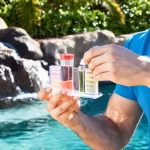
There are several ways to check iron in water. You can go for test kits that are sent to your home and it will take immediate action. These kits usually include test strips that light up depending on the level of iron in your water. This color can then be matched to a color graph to calculate the amount of iron.
Send a sample of water to a licensed water test lab for a more precise measure. This is the more costly one, but can give you a detailed breakdown of your water composition (iron content included).
Interpreting Test Results for Iron in Drinking Water
The key is to know what you test shows. The amount of iron in it is usually stated in mg/L or parts per million (ppm). You can safely measure at 0.3 mg/L or less.
If your tests show a greater concentration, then it is time to look at treatment. Remember that there are 2 kinds of iron in water: soluble (ferrous) iron and insoluble (ferric). What kind of iron your water has will have an impact on your treatment.
Treatment Options for Iron-Contaminated Drinking Water
There are several ways to dilute or remove iron from water:
Oxidation/filtration: This is done by adding an oxidant (chlorine, air, etc.) which converts the soluble iron to insoluble iron, and filter out.
Ion Exchange: This is the common method of ion exchange in water softeners and it substitutes iron ions with sodium ions.
Reverse Osmosis: Flows of water through a membrane, which pulls out iron and other impurities, through pressure.
Remember each method has its pros and cons and is more or less effective based on the type and amount of iron in your water.
Maintenance and Effectiveness of Iron Removal Systems
Once installed, your iron debridement machine should be regularly maintained so it does not fail. You could have to clean the filters regularly, or add oxidants, or replace your ion exchange system.
Test the efficiency of your system on a regular basis by testing your water for iron. Notice if your water is getting any weirder or darker in color or smells as that could be a sign that your system needs to be fixed.
Share this on social media:
Facebook
Twitter
LinkedIn

Related Posts