Disturbing Water Pollution Issues in Antigua and Barbuda
- Published:
- Updated: February 6, 2025
Listen to this article
Summary
Antigua and Barbuda faces significant water pollution challenges despite its stunning natural beauty. Pollution from industrial waste, sewage, agriculture, and tourism impacts water quality and marine ecosystems. This pollution threatens human health, livelihoods, and the vital tourism industry. Government regulations and community initiatives are crucial for addressing these issues, along with investments in water treatment and sustainable practices.

Antigua and Barbuda is a twin-island nation in the Eastern Caribbean that is bursting with biodiversity and natural splendour. It has an attractive sandy shoreline and the waters are clean which is the reason it is the most popular among the tourists from all around the world. Yet behind this beautiful facade Antigua and Barbuda has real problems with water contamination.
Water supplies, mainly in the form of surface water, groundwater and rainwater harvesting, are perpetually under stress in this country. Antigua and Barbuda is tiny, dense and geographically exposed to environmental hazards such as pollution.
What is the importance of water resources in Antigua and Barbuda?
Water is very, very significant for Antigua and Barbuda. They’re fundamental for the daily life of the inhabitants, for agriculture and industry. Especially in terms of tourism which is the economic foundation of the country. Straight, crystal-clear waters are the engine of the island’s tourism.
But there is more to this health of these waters than appearance or tourism. And it’s about the safety and health of the people who inhabit it, the health of the businesses that work in it, and the health of all the species that live there.
- According to the Caribbean Development Bank, water pollution is estimated to cost Antigua and Barbuda over $15 million annually due to reduced tourism, fishing industry losses, and healthcare costs.
- A report by the World Bank (2022) highlights that water pollution in Antigua and Barbuda could cause a 25% decline in tourism revenues over the next decade if not addressed.
Major Sources of Water Pollution in Antigua and Barbuda
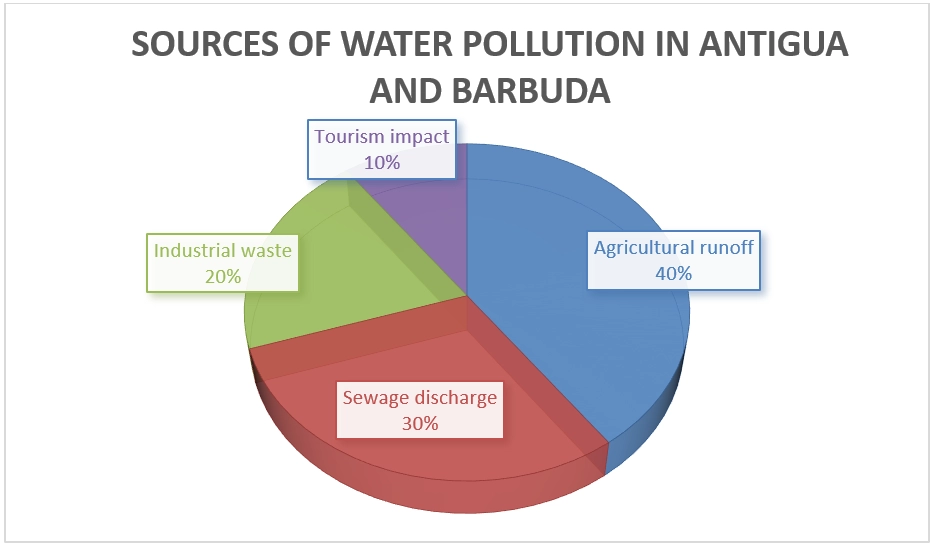
- Agricultural runoff: Agricultural runoff contributes to about 40% of the nation’s total water pollution, with fertilizers and pesticides leaching into the water.
- Sewage discharge: Approximately 30% of water pollution in Antigua and Barbuda is caused by untreated or partially treated sewage being released into water bodies.
- Industrial waste: Industrial waste contributes to 20% of the total pollution, with manufacturing facilities discharging chemicals into nearby rivers and coastal areas.
- Tourism impact: Tourism activities, such as boats and littering, account for around 10% of water pollution.
Impact on Marine Ecosystems
Water pollution in Antigua and Barbuda has a profound impact on marine ecosystems. Nutrient overloads from agricultural runoff can cause algal blooms, which harm marine life by depleting oxygen levels in the water and blocking sunlight.
Moreover, pollution can lead to the destruction of coral reefs, an essential part of the marine ecosystem. Coral reefs are not only biodiversity hotspots but also provide natural protection against coastal erosion. The degradation of these reefs threatens the stability of the entire marine ecosystem and the island’s natural defenses against the sea.
- Coral reef degradation: Coral reefs around Antigua have declined by 30% over the past two decades, with water pollution being a key contributor, particularly from agricultural runoff and untreated sewage.
- Fish population decline: A study from the Caribbean Marine Research Institute (2023) found a 15% reduction in fish populations in areas severely impacted by water pollution, further threatening local fisheries.
Effects on Human Health and Livelihoods
It’s a matter of what water contamination has in store for human health and livelihoods in Antigua and Barbuda. It isn’t just the water, though: polluted water can cause everything from rashes to stomach infections and deadly diseases such as cholera.
And water pollution is also endangering economic life. It can affect fishing, one of the main livelihoods for locals. Also, since the islands’ visitor attraction depends very much on the natural landscape, constant water pollution will discourage tourists, causing harm to the tourism sector.
- Waterborne diseases: A 20% increase in waterborne diseases such as gastroenteritis and cholera has been recorded in Antigua and Barbuda over the past five years, primarily caused by contaminated water sources.
- Economic costs: The Pan American Health Organization (PAHO) estimates that waterborne diseases cost Antigua and Barbuda over $3 million annually in healthcare expenses and lost productivity.
Is Tap Water Safe to Drink in Antigua?
Tap water in Antigua is generally not considered safe to drink without treatment. While the government has made efforts to improve water quality, issues like contamination from sewage and agricultural runoff persist. Most locals and visitors opt for bottled or filtered water to avoid health risks associated with consuming untreated tap water.
Is It Safe to Drink Tap Water in Barbuda?
In Barbuda, tap water is also not recommended for drinking without filtration. Due to limited water treatment facilities and environmental pollution, the water supply often contains contaminants. Visitors and residents typically rely on bottled or purified water to ensure their safety and avoid waterborne illnesses.
Community Initiatives and Responses
However, despite these obstacles, there is a good indication of local actions and action. Local societies, NGOs, and even companies are getting actively involved in the fight against water pollution. Beach clean-ups, for example, are becoming more common, and education programmes to educate people on water use and proper waste disposal are taking off.
On top of this, there have been efforts to support sustainable tourism like environmentally friendly hotels and travel agents to reduce the tourism industry’s environmental footprint. These projects demonstrate that we are all in agreement about the issue and willing to seek solutions.
Future Implications and Solutions
And if the water pollution problems in Antigua and Barbuda are not addressed quickly, the consequences will be severe. The country may face another decline of marine life, an ill health, and a loss of economic output.
But it isn’t fatalistic, and there are realistic remedies to these problems:
Improve water treatment plant: With an investment in better sewage and industrial wastewater treatment, water pollution can be reduced dramatically.
Setting tough rules: Instilling tough environmental rules on industries and farms helps reduce pollution.
Encouraging green tourism: Sustainable farming and eco-tourism can also be supported to mitigate their ecological footprints.
Education of the public: Continued training on clean water and the people’s role to play will do a lot towards reducing pollution.
- Coral reef loss: According to the Caribbean Environmental Outlook Report (2024), if water pollution levels remain unchecked, 50% of the nation’s coral reefs could be lost by 2030.
- Economic loss: The United Nations Environment Programme estimates that continued water pollution could result in an annual economic loss of $8 million from tourism and fisheries by 2030.
Conclusion: Addressing Water Pollution in Antigua and Barbuda
Bottom line: The water contamination issues in Antigua and Barbuda arise from industrial sewage, agriculture and tourism. They’re damaging to marine life, health and the economy. These issues will have to be dealt with on multiple fronts – more regulation, water treatment investment, environmental education, and local engagement. And with joint efforts of the government, communities and international stakeholders, Antigua and Barbuda can save its precious water resources and enjoy a cleaner, greener future.
Share this on social media:
Facebook
Twitter
LinkedIn

Related Posts