Deserts' Solution: The Benefits of Water Conservation and Management
- Published:
- Updated: May 4, 2025
Listen to this article
Summary
Water conservation and management in deserts offer solutions to scarcity with multiple benefits. Key points include:
- Deserts’ arid climates necessitate effective water conservation to prevent droughts and resource conflicts.
- Innovative solutions include desalination, rainwater harvesting, drought-resistant crops, and water-efficient irrigation.
- Technology plays a vital role in improving water management, enabling remote monitoring and real-time data analysis.
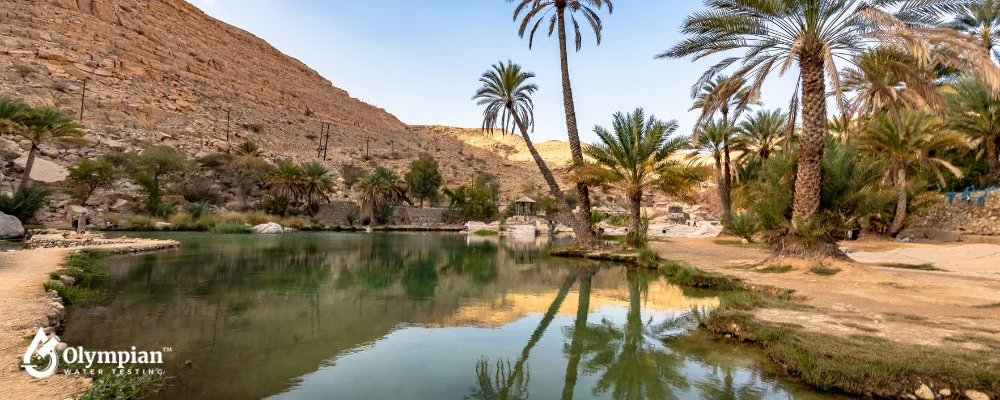
A world without enough water, deserts are some of the most vulnerable places on earth. When it’s sweltering and there’s not much rain, it’s hard for local populations to gain access and keep it. But what if we were to show you that this is all fixed? Through efficient water conservation and management, not only can we address desert water scarcity, but we can also have a host of benefits for the environment and people.
The Importance of Water Conservation in Desert Areas
Deserts are dry regions that get almost no rainfall, making water a precious resource. As the United Nations projects the global population to reach 9.7 billion by 2050, the demand for water will increase, particularly in arid regions like deserts. Currently, over 2 billion people live in areas experiencing high water stress, including many desert regions. Without effective water conservation, these areas can face severe droughts, resource conflicts, and the potential for widespread starvation.
Innovative Solutions for Managing Water Resources in the Desert

There are several innovative solutions for water management in desert regions, including:
1. Desalination

Desalination is a process of removing salt and other minerals from seawater to make it drinkable. This technology is especially crucial in the Middle East, where desalination accounts for 50% of the drinking water in some countries like Saudi Arabia and the UAE. Globally, desalination provides around 70 million cubic meters of water per day.
2. Recycling and Reuse

Water recycling can help reduce the demand for fresh water in desert regions. According to the Environmental Protection Agency (EPA), water reuse rates in arid regions have increased by 30% over the last decade.
3. Rainwater Harvesting

Rainwater harvesting can provide up to 30% of household water needs in desert regions, such as in the United Arab Emirates, where rainwater storage solutions help combat scarcity. A well-designed system can capture 80% of annual rainfall.
4. Groundwater Management

Groundwater is a crucial source of water in deserts. However, the International Water Management Institute (IWMI) reports that over-extraction of groundwater has led to a 10-20% decline in groundwater levels globally over the past 50 years.
5. Drought-Resistant Crops

The introduction of drought-resistant crops can reduce water use by up to 60%, improving food security and reducing pressure on water resources.
6. Water-Efficient Irrigation

Drip irrigation systems, commonly used in desert farming, reduce water loss by up to 50%, making them a highly efficient way to irrigate crops.
7. Water Metering and Pricing

In desert regions, water metering and pricing can encourage conservation by charging customers based on their usage, with higher rates for excessive consumption.
The Role of Technology in Improving Water Conservation and Management in Deserts
Technology has a crucial role to play in improving water conservation and management in deserts. Innovative technologies like desalination plants and water recycling systems can help provide communities with clean and safe drinking water, even in the harshest of environments. Remote monitoring systems and real-time data of water analysis can also help communities manage water resources more efficiently, reducing waste and maximizing their impact.

What are the Benefits of Sustainable Water Use in Arid and Semi-Arid Regions?
Sustainable water use is not just about conserving resources, but also about ensuring that communities have access to clean and safe drinking water. By using water more efficiently, communities can reduce waste and improve their overall well-being. Furthermore, sustainable water use can also lead to increased food security, as it allows for more efficient agriculture practices. This, in turn, can improve the economic well-being of communities in desert regions.
Challenges and Obstacles in Implementing Effective Water Conservation Measures in Deserts
It is hard to apply good water conservation practices in deserts for several reasons, some of which are:
Temperature fluctuation: Deserts have extreme weather patterns ranging from high temperature to low rainfall. This fluctuation can make accurate predictions on water use and storage difficult.
Lack of infrastructure: Deserts don’t normally have the infrastructure to underpin large-scale water management. It can be pipes, tanks and water treatment plants.
Lack of Water: As deserts have finite water supply, efforts involving the use of a lot of water are not possible. That may limit the kinds of conservation interventions that can be conducted.
Cost: Creating water savings measures in deserts can be expensive especially if they require new infrastructure. It can make it difficult for societies and states to commit to such measures.
Education and awareness: It is possible that there is an edginess and ignorance among some desert people about water conservation and how they can be educated and aware about how water can be conserved.
Unwillingness to adapt: There are communities and individuals who may object to change in how we use water based on historical practices and thus make new conservation practices difficult.
Water constraints by political and legal means: Water conservation efforts may be constrained by political or legal limitations, for example, by water rights and ownership issues.
And yet, even with such challenges, there are a number of ways in which they can be navigated and taken to water conservation in deserts. These include investment in education and outreach programmes, collaboration with communities to mobilize for conservation efforts, and collaboration with governments and institutions to access funding and endorsement for infrastructure.

The Future of Water Conservation and Management in Deserts and Its Impact on Global Sustainability
Water storage and desert management are going in the right direction, but there is still plenty of work to do. As the world population expands, demand for water will only increase, so water management becomes even more important. Professional water testing will be essential to ensuring safe water quality. In fact, by investing in new technologies and methods, we can be certain that the people living in deserts have safe, clean water. And, if we reduce waste and use water wisely, we can contribute to the global sustainability agenda and preserve the planet for future generations.
Water Resources in the Desert
In deserts, water is a scarce and precious resource, yet there are various sources of water in the desert that sustain life. One of the primary sources is underground aquifers, which store water from rainfall that has seeped deep into the ground. These underground reservoirs can be tapped into using wells or pumps. Another important source of water in the desert is natural springs, where groundwater rises to the surface due to pressure. Springs are often found in areas where underground water is forced through cracks in the earth, providing a reliable, though limited, source of fresh water.
Deserts also rely on ephemeral rivers or seasonal streams that only flow after rainfall. These temporary water sources can support vegetation and wildlife during wetter periods but may dry up in times of drought. Additionally, some desert areas collect rainwater through surface runoff, which can be stored in ponds, reservoirs, or cisterns for later use. Innovations such as desalination and the use of fog nets to capture moisture from the air are also becoming more common to provide fresh water in arid regions. While water is limited in deserts, these natural and human-engineered solutions help sustain life.
Desert Irrigation Water
Irrigating crops in the desert is a challenging yet crucial part of agriculture in desert regions, where water is scarce and temperatures are extreme. One of the primary methods of obtaining water for desert irrigation is through the use of underground aquifers, which store water that can be accessed through wells and pumps. This groundwater can be used to irrigate crops, though it is often limited and must be managed carefully to avoid depletion. In some desert areas, water from natural springs or seasonal rivers is also tapped for irrigation, though these sources can be unpredictable and seasonal.
Agriculture in the desert often relies on efficient water management techniques to make the most of the limited resources available. Drip irrigation is a common practice, as it delivers water directly to the roots of plants, minimizing water waste and evaporation. In addition, advanced technologies such as desalination, which converts seawater into freshwater, are being used in coastal desert regions to provide a consistent source of water for farming. The use of treated wastewater for irrigation is another sustainable solution being explored in some desert regions to support agriculture while conserving fresh water. With careful management and innovative practices, agriculture can thrive in desert environments, despite the challenges of limited water.
Share this on social media:
Facebook
Twitter
LinkedIn