Key Differences Between Chlorine and Salt Water Pools
Chlorine and salt water pools offer distinct approaches to keeping water clean and comfortable. Homeowners often compare these options to find the best fit for their lifestyle and maintenance habits.
Composition and Water Chemistry
Chlorine-based systems require direct addition of chlorine to the water. In contrast, salt water pools generate chlorine naturally through an electrolysis cell. This process is central to the pool’s chemistry, necessitating regular checks of salinity and pH levels. Understanding swimming pool basics, such as testing procedures and maintenance, is essential for beginners. It helps ensure the longevity of the equipment.
Impact on Swimmers’ Skin
Salt water pools tend to reduce chemical odors. They also lead to fewer skin irritation complaints, despite the presence of chlorine. The milder chlorine byproducts result in less dryness and a more comfortable post-swim feeling. This gentler option offers a soothing experience without compromising on disinfection effectiveness.
chlorine vs salt water pools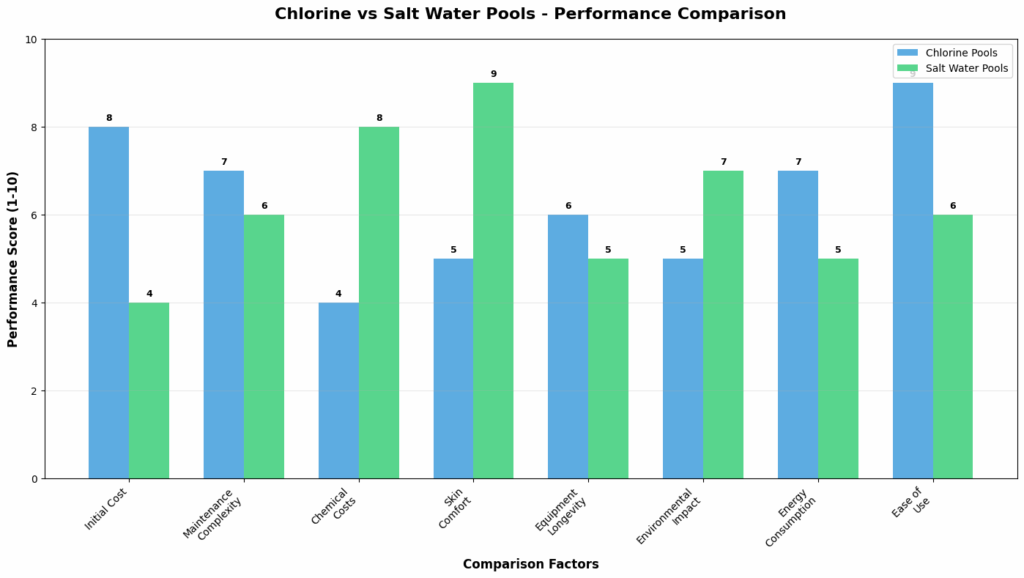
Pool owners often compare these two systems to find the right balance of cost, comfort, and upkeep. Installation fees for a saltwater setup can begin around $29,000, while chlorine units may start near $25,000. Each choice delivers unique water qualities and expenses over time.
When weighing pros and cons salt water pools, many people appreciate the softer, silky sensation against their skin. Lower chemical levels can protect swimsuits from rapid fading. In contrast, chlorine pool pros cons center on simpler fixes and modest upfront bills, but regular chemical purchases can drive up yearly maintenance.
Some find the gentle nature of a salt-based approach more pleasant for sensitive skin or eyes. Others lean toward chlorine due to its long-standing reputation and easy availability of supplies. Learning about the kind of water feel, equipment wear, and basic financial commitments helps homeowners select the best system for their lifestyle.
Health and Safety Considerations
Many pool owners seek ways to safeguard swimmers and ensure a clean environment. Sensitivity to chlorine can manifest as skin rashes or recurring sneezing. Monitoring chemical exposure helps address concerns while maintaining water balance.
Potential Irritations or Allergies
Not everyone reacts the same, but chlorine allergies may cause eye redness or nasal discomfort. Salt-based systems soften water, yet testing is wise for those with known sensitivities. An allergy test can pinpoint the root cause and guide the right solution.
Disinfection Levels Compared
Disinfection methods differ by pool type. Chlorine granules or tablets combat microbes, while salt chlorinators generate sanitizing agents. Regular checks with test strips confirm safety levels, boosting peace of mind for families and guests.
Safety Equipment Tips
Pool safety tips stress proper handling. Securing chemicals in locked cabinets keeps them out of children’s reach. Gloves and goggles reduce exposure when mixing agents. It’s wise to follow trusted brands for protective gear and always read labels before use.
Equipment | Purpose |
Protective Gloves | Prevents skin contact with chemicals |
Goggles | Shields eyes during mixing or testing |
Secure Storage Bins | Keeps products away from children or pets |
Maintenance Routines to Keep in Mind
Every pool owner must have a solid plan for water quality and cleanliness. A well-thought-out strategy avoids unexpected issues and keeps the swimming area inviting. Tasks differ by pool type but aim to maintain healthy water.
Chlorine Pool Upkeep
Regular chemical balancing is key to fight algae and bacteria. Vacuuming and skimming remove debris, while a structured maintenance schedule keeps water pristine. Testing kits alert when shock treatments are needed, ensuring water stays clean.
Salt Water Pool Upkeep
Saltwater pools need special care for salt cell cleaning. Monitoring salt levels and gentle cell rinsing are essential for performance. Regular debris removal and quality test kits are also critical for maintaining water balance.
Initial Installation Costs
Initial costs play a significant role in any pool budget. Traditional chlorine systems are often more affordable, thanks to their widespread availability. In contrast, salt systems come with a higher price tag due to the specialized generators required. This disparity is a key consideration for those deciding between the two. Pool comparisons can provide insight into typical price ranges.
- Chlorine startup kits: Usually less expensive initially
- Salt water kit: Pricier machinery needed
- Possible discounts when purchasing equipment in bundles
When planning a pool budget, these factors are essential. For those with larger pools, the higher cost of a salt system might be offset by fewer chemical purchases. On the other hand, smaller pools might find the simplicity of a chlorine system more appealing. Careful evaluation of these aspects can help avoid unexpected expenses early on.
Long-Term Expenses for Each System
When considering a pool budget, the overall cost of ownership is a critical factor. Some initial costs may seem low but can balloon over time. Owners often weigh the costs of chlorine vs salt water systems to estimate future expenses.
Chlorine pools require regular chlorine purchases, which can add up, even with moderate use. In contrast, salt water pools need occasional salt replenishment but may face higher costs for salt cell replacements. These expenses can be significant over the years.
Both systems benefit from regular maintenance and balanced chemistry. This approach helps owners budget more effectively, reducing unexpected expenses. Planning ahead ensures a swimming experience that aligns with the household’s long-term financial goals.
Impact on Pool Equipment and Surfaces
Pool owners frequently inquire about the effects of different treatments on their pools. Certain chemicals can impact ladders, lights, and seals in unique ways. Regular inspections can help avoid unexpected repair costs.
Corrosion Concerns
Salt-based systems can cause corrosion on metal parts like railings and screws. Brands like Pentair design pumps and filters to withstand harsh conditions. Yet, it’s vital to monitor salt levels to prevent equipment damage. Using specialized coatings or choosing stainless-steel fixtures can mitigate these risks.
Longevity of Pool Fixtures
Chlorine use can lead to faster wear on pool liners. It can also lighten certain materials over time. Simple measures like balancing pH levels and installing quality covers can prevent cracks. If issues persist, professional water testing is recommended. Making minor adjustments to chemical levels can significantly reduce the risk of long-term damage.
Environmental Considerations
Healthy water practices significantly influence how pools impact the environment. Some pool designs focus on eco-friendly methods, reducing resource use. Owners looking to minimize their environmental footprint often consider the balance between chemical usage and electricity consumption.
Chemical Usage
Reducing harmful substances is essential for environmental safety. Those opting for eco-friendly pools might select systems that minimize additives and manual treatments. By focusing on sustainable pool care, the need for chlorine or other sanitizers decreases. This approach leads to cleaner runoff and less chemical handling, benefiting all involved.
Energy Consumption
Pumps and filters consume electricity, making mindful operation critical. Systems using salt generators might run longer to produce sanitizer. Implementing strategic scheduling and efficient equipment can lower power grid strain and costs. Responsible pool care combines a reduced environmental impact with effective water maintenance.
Who Benefits from Chlorine Pools
Chlorine systems are a preferred choice for those looking for a swift pool setup. They use well-known tests and chemicals, making them easy for homeowners to manage. This method has been around for decades, ensuring parts and cleaning supplies are readily available at stores like Home Depot or Lowe’s. Maintenance teams from major companies also specialize in these pools.
First-time owners benefit from the lower initial cost of chlorine pools. A standard inground model starts around $25,000, with above-ground options even more affordable. The lack of need for specialized gear like salt generators helps keep costs down.
Chlorine pools offer predictable disinfection, a key benefit for many. Experts from companies like Pentair or Hayward provide a wide range of reliable systems. This leads to established support networks and practical resources for pool owners.
Who Benefits from Salt Water Pools
Those who prefer a more self-maintaining system will find salt water beneficial. It is a perfect choice for households envisioning a relaxing environment with a softer sensation on the skin. The water remains stable thanks to a salt generator, which helps maintain a clean environment with less manual effort.
Sensitivity to Harsh Chemicals
Swimmers prone to irritation may find relief in the gentle pool water found in these systems. The lower concentration of traditional chlorine often reduces dryness and discomfort. Families with young children or those who experience strong reactions to chemical fumes frequently discover a more pleasant experience.
Desire for Lower Ongoing Costs
A major appeal is the reduced chemical cost over time. While the initial outlay can be higher, minimal handling of constant chlorine refills results in fewer expenses in the long run. This balanced approach supports a clean pool while easing monthly commitments.
Common Misconceptions
Many people believe salt systems are completely free from chlorine, a misconception known as the chlorine-free myth. In reality, saltwater solutions do produce chlorine through an electrolytic process. This process reduces the risk of skin irritation but does not eliminate chlorine completely. Such misunderstandings contribute to salt pool myths, deterring individuals from exploring alternative options.
It’s important to understand that "less chemical contact" is not the same as "no chemicals." This distinction is critical for those concerned about harsh treatments. Recognizing this difference can help alleviate concerns and encourage exploration of viable alternatives.
Some individuals fear that saltwater systems require more maintenance due to equipment wear. This fear is not always justified when proper water chemistry is maintained. With proper care, both chlorine and salt pools can last longer. For detailed information on managing each type, refer to this resource from River Pools and Spas. It provides insights into preventing corrosion or buildup, dispelling common fears associated with salt pool myths.
By debunking each myth, individuals can make informed decisions based on their preferences. They can choose between reduced chlorine levels or simpler upkeep without relying on misconceptions.
Tips for Making the Right Choice
Choosing a pool setup is more than just personal taste. It’s influenced by your site and lifestyle, affecting both cost and maintenance routine. Homeowners must consider their comfort with ongoing upkeep and water quality concerns.
Assessing Budget and Maintenance Preferences
Understanding your expenses is essential for success. Some prefer simpler systems due to limited spare time. Others opt for high-end designs for premium features. Regardless, budgeting for both initial work and ongoing upkeep is critical.
Each plan should account for both immediate and long-term costs. Maintenance preferences should include regular water chemistry checks and labor time. This ensures the pool remains in top condition.
Consulting with Local Experts
Local professionals offer tailored advice based on the region’s climate. They can recommend the best system for managing temperature or salt content changes. These experts consider your landscape features to provide optimal solutions.
For those seeking guidance on filtration choices or financing strategies, local expertise is invaluable. It helps in making informed decisions for your pool.
Finding the Perfect Fit for Your Lifestyle
Every person has their own preferences when it comes to choosing a lifestyle pool. Some prefer saltwater systems for their gentler water and reduced chemical use. Others opt for traditional chlorine for its simplicity and lower startup costs.
When deciding on a pool, consider how each option aligns with your daily life. Saltwater systems require a higher initial investment but offer softer water that’s gentle on skin. On the other hand, chlorine setups use familiar chemicals and are easier to maintain for those who enjoy regular upkeep.
Seeking advice from trusted pool experts, like those from Hayward or Pentair, can be invaluable. They understand local conditions and can guide you on equipment compatibility. This advice helps balance long-term costs with comfort, ensuring your pool meets your family’s needs and provides a great swimming experience.
FAQ
Are there any unique maintenance schedules for salt water pools compared to chlorine pools?
Yes, salt water pools need regular salt cell cleaning and salt level monitoring. They also require standard water chemistry checks. On the other hand, chlorine pools focus more on chemical additions like tablets or shock treatments. Both systems benefit from a regular pool cleaning schedule and consistent pH testing.
Is there a significant difference in overall chemical cost between chlorine and salt water systems?
A: Chemical cost varies, but salt water systems often use fewer chemicals over time. This is because chlorine is generated on-site. Chlorine pools, though, require periodic purchases of tablets, shock, and treatments, adding up costs. Salt water pools have higher upfront equipment expenses, including the salt chlorination system.
How can pool owners prevent algae in both types of pools?
Preventing algae involves consistent filtration system operation and correct sanitizer levels. Routine shock treatments also play a key role. Proper free chlorine and Cyanuric acid levels are essential for both pool types. Thorough brushing and vacuuming help keep surfaces clean.
Do salt water pools completely eliminate the need for chlorine?
No, this is a common misconception. Salt water pools use chlorine as a sanitizer, but it’s produced from salt through an on-site chlorination generator. While there may be less direct “chemical contact,” chlorine remains vital for disinfection.
Which system is gentler on swimwear and pool liners?
Salt water pools may cause less fabric fading and liner wear due to lower chloramine levels. Yet, chlorine pools can be managed effectively with consistent proper water chemistry. Using a pool cover and avoiding chemical imbalances also extends the lifespan of swimwear and liners.
Does salt water corrode metal fixtures more than a chlorine-based system?
Salt can be corrosive if salt levels or pH levels are not properly regulated. Owners can reduce corrosion on ladders, rails, and lighting fixtures by using materials designed for salt environments. Regular rinsing of equipment and proper pool chemistry management also help mitigate corrosion.
How does energy consumption differ between these two pool systems?
Salt systems use a chlorine generator that runs on electricity to produce chlorine from salt, leading to slightly higher energy usage. Traditional chlorine pools rely less on electrical equipment for sanitation but often require more chemical adjustments. An efficient pool pump schedule can optimize either system’s energy use.
What should homeowners consider before choosing their pool type?
Homeowners should consider upfront installation expenses versus long-term maintenance costs. They should also estimate the time available for upkeep routines and assess any skin sensitivities or chemical allergies. Consulting with local pool professionals helps clarify water conditions and ensures the chosen system meets the property’s needs.