Tap Water Safety in California
California is renowned for its strict water quality testing protocols, ensuring residents have access to safe drinking water. The state’s public water systems undergo annual testing, with results shared through Consumer Confidence Reports (CCRs). These reports detail the water sources, treatment methods, and any contaminants found.
In California, most communities rely on public water systems for their drinking water. The water is treated extensively before being distributed to homes and businesses. This treatment includes chlorination to kill harmful bacteria and testing for various contaminants, including lead levels in water.

To uphold water quality standards, California has a network of about 300 monitoring locations. These sites are used for daily water sampling and analysis. The water is tested for over 200 different substances. This thorough testing helps identify and address any water quality issues promptly.
Region | Average Water Hardness (grains per gallon) | Range (grains per gallon) |
San Fernando Valley and Western Los Angeles | 8.6 (147 mg/L as CaCO3) | 5.4 to 16.1 (93 to 275 mg/L as CaCO3) |
Silver Lake, Downtown, and South Los Angeles | 9.8 (168 mg/L as CaCO3) | 5.4 to 17.0 (93 to 291 mg/L as CaCO3) |
Eastern Los Angeles and the Harbor | 16.3 (279 mg/L as CaCO3) | 16.1 to 16.4 (275 to 281 mg/L as CaCO3) |
California also regulates beneficial substances in drinking water. For instance, fluoride levels are set at 0.7 ppm to support dental health. Naturally occurring fluoride levels range from 0.3 to 0.6 ppm.
Despite California’s efforts to maintain water quality, residents must stay informed. Regular testing for lead levels in water and other contaminants is essential. It helps ensure the water is safe and identifies any issues caused by aging infrastructure or contamination.
California’s Rigorous Water Quality Standards
California sets some of the toughest water quality standards in the country, ensuring tap water quality in California is top-notch. These standards are shaped by both federal and state laws. California often goes beyond federal guidelines to safeguard public health.
The Safe Drinking Water Act (SDWA) is the cornerstone for drinking water regulations nationwide. It empowers the U.S. Environmental Protection Agency (EPA) to set maximum contaminant levels (MCLs) for water contaminants. States must enforce these MCLs at a minimum. Yet, California’s MCLs can be stricter, providing consumers with an extra layer of safety.
Federal Safe Drinking Water Act
The SDWA, passed in 1974 and updated in 1986 and 1996, gives the EPA the authority to set national drinking water standards. These standards apply to all public water systems. They establish MCLs for a broad spectrum of contaminants, including:
- Microorganisms
- Disinfectants and disinfection byproducts
- Inorganic chemicals
- Organic chemicals
- Radionuclides
California’s Stricter Regulations
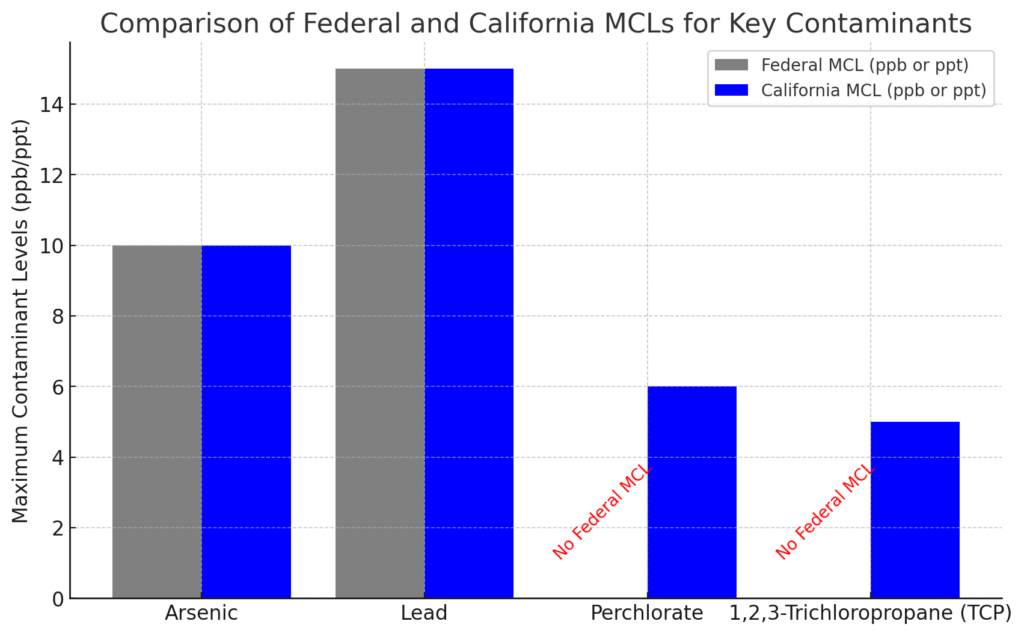
The Office of Environmental Health Hazard Assessment (OEHHA) in California sets Public Health Goals (PHGs) for contaminants. For carcinogens, OEHHA uses a one-in-a-million risk level. This means exposure over 70 years would cause cancer in one person out of a million. The California State Water Resources Control Board (Water Board) then sets MCLs as close to the PHGs as feasible. They consider factors like monitoring and treatment costs, detection ability, and treatment effectiveness.
Contaminant | Federal MCL | California MCL |
Arsenic | 10 ppb | 10 ppb |
Lead | 15 ppb (action level) | 15 ppb (action level) |
Perchlorate | No federal MCL | 6 ppb |
1,2,3-Trichloropropane (TCP) | No federal MCL | 5 ppt |
The table shows California has set MCLs for contaminants like perchlorate and TCP, which have no federal MCLs. Public water systems in California must test for these and other regulated contaminants. This ensures tap water quality meets or exceeds the state’s strict standards, protecting public health effectively.
Public Water Systems in California
In California, public water systems are vital for ensuring millions of residents have access to safe drinking water. These systems collect, store, and treat water from various water sources. They ensure the water meets strict quality standards before it reaches homes and businesses.
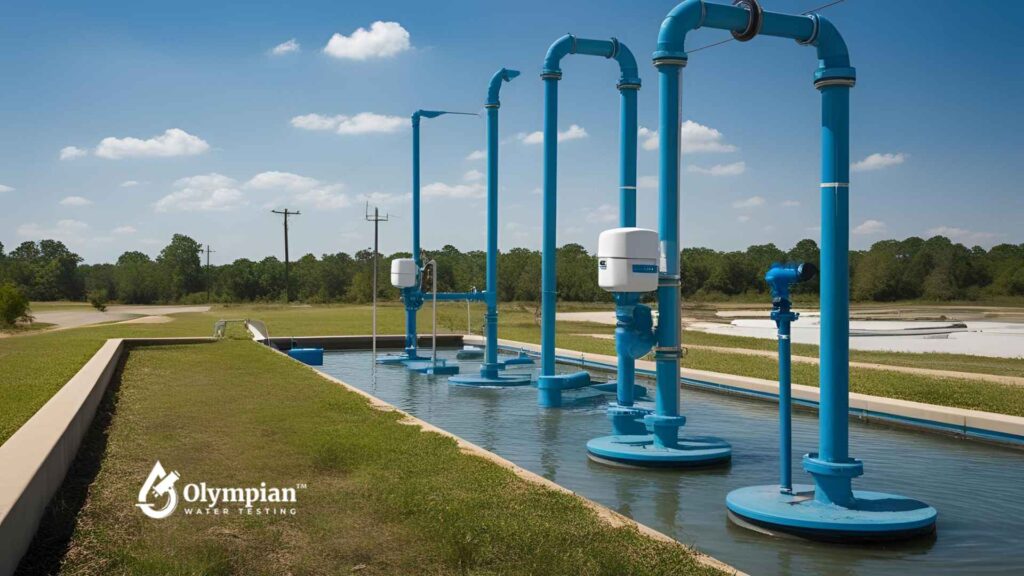
The journey to deliver clean water includes several key steps. Water is first collected from groundwater resources like the San Bernardino, Bunker Hill, and Riverside Basins. Then, it undergoes thorough water treatment processes to remove contaminants and reduce corrosion. This process often includes chlorination, which purifies the water and prevents harmful bacteria and viruses.
Water Collection, Storage, and Treatment
Nearly 400 water systems in California fail to meet state standards for safe drinking water. As of January 1, about 913,000 people were served by these failing systems. This number decreased to around 771,000 by the report date. Also, over 1.54 million Californians received water from systems at risk of failing, increasing to over 1.8 million by the report date.
The cost to fix these failing systems is estimated at $16 billion over five years. Yet, about $13.9 billion of this cost may fall on local communities and well owners without state or federal funding. The number of failing systems has remained between 380 and 400, with more added than removed each year.
Distribution through Mains and Service Lines
After treatment, the water is distributed through large pipes (mains) and service lines to buildings. Plumbing pipes then carry the water to faucets inside. Riverside Public Utilities (RPU) conducts over 22,000 water quality tests annually. They test for more than 200 regulated and unregulated contaminants.
RPU’s water meets or exceeds all standards set by the State Water Resources Control Board and U.S. Environmental Protection Agency. Despite these efforts, an estimated 15,500 cancer cases in California could be linked to contaminants in public water systems over a lifetime. Nearly 500 community water systems are in the highest risk category for cancer, with an estimated 4,860 cancer diagnoses from drinking water in these systems. Arsenic pollution, disinfection byproducts, and hexavalent chromium exposure are among the top contributors to these cancer cases.
Consumer Confidence Reports (CCRs)
Consumer Confidence Reports (CCRs) are annual documents that shed light on the safety and quality of drinking water in California. These reports are distributed to every customer of a public water system. They detail the results of thorough water quality testing. Residents can find these reports on the websites of local public water systems, keeping them informed about the tap water quality in California.
Public water systems in California with over 10,000 service connections must provide public health goal (PHG) exceedance reports every three years. This is if contaminants are found above their PHGs. The 2024 CCR will cover data from January 1, 2024, to December 31, 2024. It must be distributed to consumers by July 1, 2025. By October 1, 2025, the completed 2024 CCR must be certified and submitted to the Division of Drinking Water (DDW) or Local Primacy Agency (LPA).
Drinking water regulations mandate that CCRs inform residents about where to find translations or assistance in Spanish and other languages. This is if non-English speaking groups exceed 1,000 residents or 10% of the community population. Many CCRs for California water systems are available on the US EPA’s website. This indicates a wide dissemination of water quality information. The CCR Reference Manual for Water Suppliers was updated in February 2025. It now includes service line inventories and lead-specific health language.
Language | Template Availability |
English | Yes |
Spanish | Yes |
Simplified Chinese | Yes |
Hmong | Yes |
Templates for the 2024 CCR are available in English, Spanish, Simplified Chinese, and Hmong. This caters to diverse populations. It ensures that all residents, regardless of their primary language, can access and understand the critical information. This information pertains to the safety and quality of their drinking water.
Private Water Sources in California
In California, while most people get their drinking water from public systems, some rely on private sources. These include groundwater wells, springs, or surface water. Unlike public systems, private sources are not as strictly tested or regulated. This can lead to exposure to harmful contaminants.

Groundwater Wells, Springs, and Surface Water
About 1.3 million Californians, or nearly 3.5%, use domestic wells for their water sources. Over 150,000 of these individuals face potentially unsafe drinking water. Groundwater contamination is often worsened by agricultural activities, mainly in rural areas with many domestic wells.
A Drinking Water Tool developed by researchers helps map contamination levels in groundwater. It focuses on arsenic, nitrate, hexavalent chromium, and 1,2,3-Trichloropropane. The tool highlights the urgent need to address water inequality, exacerbated by climate change and drought.
Inspection and Testing Requirements
California Community Care Licensing (CCL) mandates on-site inspections and lab reports for private water sources. This ensures the water is safe to drink. Yet, the limited scope of contaminants tested might hide the true extent of unsafe drinking water in California.

The Environmental Working Group (EWG) studied over 2,700 California water systems from 2011 to 2015. They found alarming numbers of lifetime cancer cases linked to contaminants:
- Arsenic: 7,251 cases
- Hexavalent chromium: 2,448 cases
- Group of 9 disinfection byproducts: 5,244 cases
- Radioactive elements group (uranium and radium): 345 cases
- Group of 5 carcinogenic volatile organic compounds: 161 cases
Ensuring the safety of private water sources in California is critical. Child care providers and residents must regularly test their water and follow drinking water regulations. This vigilance is essential for safeguarding public health.
Potential Sources of Water Contamination
California boasts some of the strictest water quality standards in the country. Yet, water contaminants can find their way into the supply. These contaminants can enter at various stages, from the source to your tap, impacting the tap water quality in California.
Contaminants at the Source
Water sources like reservoirs, groundwater, and rivers can be contaminated. In California, up to 25.4 million residents face water sources tainted with per- and polyfluoroalkyl substances (PFAS). This number has grown from 16 million previously reported. Approximately 8.9 million Californians in disadvantaged communities are at risk due to PFAS pollution. The Ending Forever Chemicals Act, Senate Bill 903, aims to eliminate unnecessary PFAS use by January 1, 2030.
Other contaminants of concern include arsenic, nitrates, and 1,2,3-Trichloropropane (1,2,3-TCP). In the last three years, 81 water providers have reported levels above the maximum contaminant level (MCL) for these substances:
- Arsenic MCL: 10 parts per billion (ppb); Public Health Goal (PHG): 0.004 ppb
- Nitrate MCL and PHG: 10 parts per million (ppm)
- 1,2,3-TCP MCL: 5 parts per trillion (ppt); PHG: 0.07 ppt
Contamination in Older Plumbing Systems
Even treated water can become contaminated in older plumbing systems. Lead levels in water can rise when lead flakes off or leaches into standing water. This is a major concern for the approximately 1 million Californians living in areas with failing water systems.
Contaminant | Health Effects |
1,2,3-TCP | Short-term: Eye, throat, and skin irritation; memory, concentration, and muscle coordination issues |
Arsenic | Long-term: Various cancers and cognitive development issues in children |
Nitrate | High concentrations can lead to methemoglobinemia, potentially life-threatening for infants and pregnant individuals |
The Human Right to Water Act ensures all Californians have access to safe, affordable, and accessible water. Yet, many labs in California lack the technology to detect certain contaminants at the lower public health goal levels due to cost and technological limitations.
Health Risks of Contaminated Water
Exposure to water contaminants in California’s drinking water poses severe health risks, mainly to children. With 371 water systems failing safety standards, over 920,000 people are affected. This situation is alarming, as nearly a million Californians face long-term health issues due to contaminants like arsenic and nitrate.

The persistent contamination issues are alarming. 240 water systems have failed for three years or more, and 155 for five years. While there’s been a slight improvement from 418 contaminated systems in 2021 to 371 in 2022, the number remains high. Disadvantaged communities bear the brunt, with two-thirds of contaminated systems located there.
Contaminant | Estimated Lifetime Cancer Cases | Percentage of Total Cases |
Arsenic | 7,285 | 47% |
Disinfection Byproducts | 5,115 | 33% |
Hexavalent Chromium | 2,480 | 16% |
Other Contaminants | 620 | 4% |
Total | 15,500 | 100% |
Research indicates that 15,500 cancer cases could be linked to contaminants in California’s public water systems over a lifetime. Among the 2,737 public water systems evaluated, 500 community water systems are at the highest risk for cancer. These systems alone could lead to an estimated 4,860 cancer diagnoses over a lifetime, with a cancer risk of more than 1 in 1,000 people.
The drought in California, one of the worst in nearly 1,200 years, worsens the situation by increasing groundwater reliance. As groundwater levels decrease, the risk of toxic pollutants contaminating drinking water increases. Small water systems, serving 10,000 residents or less, are most vulnerable due to their reliance on groundwater.
Arsenic is a major concern, accounting for 47% of estimated lifetime cancer cases. Even low levels of arsenic are highly carcinogenic, with no safe level considered acceptable. Arsenic contamination can come from natural geological sources, as well as industrial and agricultural exposure. Other contaminants, like disinfection byproducts and hexavalent chromium, also contribute to the overall cancer risk from drinking water.
Lead Testing for Tap Water
Ensuring tap water safety is critical, with a focus on protecting children from lead. In California, child care centers built before 2010 must test their tap water for lead every five years. This proactive step helps identify lead contamination early, safeguarding young children from its harmful effects.
California has made significant strides in reducing water lead levels. It amended about 1,200 community water systems to aid K-12 schools in lead testing. Assembly Bill 746 mandated lead testing in all public K-12 schools built before 2010 by July 1, 2019. The Division of Drinking Water required systems to collect and analyze up to five water samples from each school within 90 days.
The importance of lead testing is immense. Even low levels of lead can impact cognitive abilities, including IQ and academic achievement, as the Centers for Disease Control states. California meets state and federal lead standards, with a maximum allowed level of 15 parts per billion. If lead levels exceed this in more than 10% of taps sampled, corrective actions are required, as per the EPA’s Lead and Copper Rule.
Year | Legislation/Event | Impact on Lead Levels in Water |
1991 | EPA’s Lead and Copper Rule implemented | Began extensive testing for lead in drinking water |
2010 | California Assembly Bill 1953 (AB 1953) | Reduced lead content standard for drinking water plumbing from 4% to 0.25% |
2014 | National "Get the Lead Out" law | Went into effect to further reduce lead exposure |
2015 | Flint water crisis | Drinking water found to contain 133 times the EPA’s maximum allowed lead level |
2019 | California Assembly Bill 746 (AB 746) | Mandated lead testing in all public K-12 schools built before January 1, 2010 |
Legal Requirements for Licensed Child Care Centers
Licensed child care centers in California built before 2010 must test their tap water for lead every five years. This legal mandate protects young children, who are most susceptible to lead’s harmful effects. Regular monitoring ensures a safe environment for children in their care.
Low-Cost and Free Testing Options
For those with financial constraints, low-cost and free water quality testing options are available. Local public health departments, the Child and Adult Care Food Program (CACFP), and advocacy groups offer these services. They ensure everyone has access to safe drinking water, regardless of financial situation. By using these resources, families and providers can monitor lead levels in water and take necessary actions.
Regular lead testing is vital for maintaining tap water quality in California. Following legal mandates, using low-cost and free testing, and staying informed through annual Consumer Confidence Reports are key. Together, Californians can ensure everyone has access to safe, clean drinking water.
Tips for Ensuring Safe Tap Water
California’s tap water quality is strictly regulated. Yet, contaminants like hard water minerals, chlorine, heavy metals, nitrates, and VOCs can be present. To minimize risks, several steps can be taken to ensure safer tap water at home.
Using only cold water for drinking, cooking, and mixing infant formula is a simple yet effective measure. Hot water can dissolve lead from pipes more quickly, increasing exposure risk. Regularly cleaning faucet screens and aerators also helps remove particles and debris that may contain contaminants like lead.
Flushing Faucets
Flushing your faucets before use is advisable if water has been sitting in your pipes for several hours or longer. This involves running the tap for 30 seconds to 2 minutes. It helps clear out stagnant water that may have accumulated higher levels of contaminants. This is critical in older homes with plumbing systems that may contain lead pipes or fixtures.
Testing and Filtration Options
Testing your tap water at least once a year is recommended. Noticeable changes in taste, color, or odor, or local water quality advisories, may require more frequent testing. The cost of testing varies, from $30-$50 for a simple lead test to over $3,000 for extensive analysis.
If testing reveals concerning levels of contaminants, water filtration systems can improve tap water quality. Consider the following options:
- Reverse Osmosis (RO) Systems: Effective at removing lead, nitrates, VOCs, and chlorine.
- Water Softeners: Remove calcium and magnesium to combat hard water.
- Whole House Filtration Systems: Address multiple contaminants simultaneously.
- Carbon Filters: Reduce chlorine, chloramine, and organic compounds affecting taste and smell.
- UV Purification: Kills bacteria and viruses without adding chemicals.
Contaminant | Potential Health Effects | Filtration Option |
Lead | Developmental delays, kidney damage | Reverse Osmosis |
Nitrates | Methemoglobinemia ("blue baby syndrome") | Reverse Osmosis |
Chlorine | Eye/nose irritation, stomach discomfort | Carbon Filters |
Bacteria and Viruses | Gastrointestinal illness | UV Purification |
By staying informed about tap water quality in California, testing your water regularly, and utilizing appropriate filtration systems when needed, you can help ensure that the water you and your family consume is as safe as possible.

Water Filtration Options
In California, many people opt for water filtration systems for extra assurance or to tackle specific water quality issues. It’s vital to pick a system that targets the contaminants in your tap water. Look for a system certified to effectively remove those contaminants.
There’s a wide range of water filtration systems available. These include pitcher filters, faucet-mounted filters, and whole-house systems. Prices vary greatly, from $50 for a basic faucet filter to over $4,000 for a whole-house system. Remember to consider installation and maintenance costs as well.
NSF/ANSI Standard 53 Certified Filters
When selecting a water filtration system, ensure it’s certified by organizations like NSF International. NSF/ANSI Standard 53 certified filters have been tested to remove health-related contaminants like lead and VOCs. They often use activated carbon or reverse osmosis technology.
Carbon filters are good at reducing chlorine and trihalomethanes, as well as lead and pesticides. Reverse osmosis filters can tackle a broader range of contaminants, including arsenic and fluoride. This is key for households with young children or those with health concerns.
It’s critical to follow the manufacturer’s guidelines for installation, use, and maintenance. Regularly replacing filters and maintaining the system is essential for ongoing effectiveness in improving tap water quality in California.
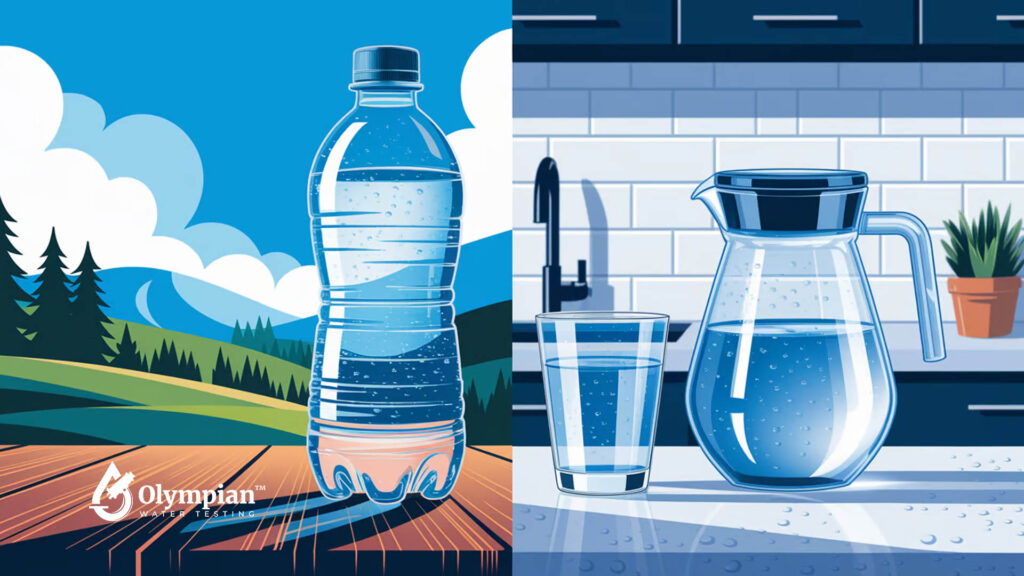
Bottled Water vs. Tap Water
Choosing between bottled water and tap water involves considering safety, cost, and environmental impact. In developed countries like the United States, tap water is generally safe. It is regulated to remove harmful contaminants. The cost of tap water is nearly free, making it a cost-effective hydration option.
Bottled water, on the other hand, is typically more expensive. The production and transportation of single-use plastic bottles have a significant environmental impact. A plastic bottle made from polyethylene terephthalate (PET) takes approximately 450 years to decompose.
Regulations and Testing
Both bottled water and tap water are subject to drinking water regulations. Bottlers test for coliform bacteria once a week, while tap water is tested 100 or more times a month. The EPA standard for lead in tap water is one-third of the FDA’s standard for bottled water. It’s worth noting that an estimated 25% or more of bottled water sold is actually just tap water, sometimes treated further, sometimes not.
Environmental Impact
The production and disposal of plastic bottles have a significant environmental impact. The extraction and transportation of fossil feedstocks for plastic release toxic substances. These can cause cancer and other health issues. The refining and production of plastic resins also release carcinogenic substances, leading to health risks.
Plastic waste management methods, including incineration, release heavy metals and toxic substances into the environment. Fragmenting plastic leads to the formation of microplastics. These can be ingested and are associated with health impacts like inflammation and cancer.
Lack of Fluoride in Most Bottled Water
One important difference between bottled water and tap water is the presence of fluoride. Most bottled water lacks fluoride, which helps prevent tooth decay. In contrast, many public water sources in California are fluoridated, providing an additional benefit for dental health.
When considering the overall tap water quality in California, it’s important to weigh the benefits of cost-effective, regulated tap water against the drawbacks of bottled water. These include higher costs, environmental impact, and the lack of fluoride in most brands. By making an informed decision based on these factors, individuals can ensure they are choosing the best option for their health and the planet.
Choosing the Right Water Filter
Ensuring the safety and quality of your tap water in California requires the right water filtration system. With numerous options, it’s vital to consider your specific needs and the contaminants in your water. Activated carbon filters can reduce chlorine, lead, and volatile organic compounds (VOCs). Yet, they might not effectively remove nitrate, perchlorate, and 1,4 dioxane.
Carbon block filters outperform granulated activated carbon filters due to their larger surface area and slower filtration rate. If you’re concerned about arsenic, hexavalent chromium, and other contaminants, reverse osmosis systems are highly effective. Yet, these systems can waste significantly more water than they produce.
Filter Type | Contaminants Removed | Considerations |
Activated Carbon | Chlorine, lead, disinfection by-products, VOCs | Less effective for nitrate, perchlorate, 1,4 dioxane |
Reverse Osmosis | Arsenic, hexavalent chromium, nitrates, perchlorate | Wastes 3-5 times more water than produced |
Ion Exchange | Calcium, magnesium | Replaces minerals with sodium; may not suit low-sodium diets |
Distillation | Minerals, many bacteria, viruses | May only partially remove chlorine, trihalomethanes, VOCs |
When choosing a water filter, consider cost, maintenance, and environmental impact. Whole house filters are more expensive but necessary for high levels of radiologicals or iron. Some filters may remove beneficial minerals like fluoride and calcium, which is important to consider.
To ensure your water filter meets high standards, look for NSF or California Department of Health Services certification. Investing in the right water treatment processes can greatly improve your tap water quality. This protects your health and well-being.
Water Vending Machines
Water vending machines offer a convenient way for consumers to fill their own containers. Yet, concerns about maintenance, inspection, and water quality testing have been raised. California, with its 9,200 machines, faces challenges in ensuring the safety of vended water. The markup on vended water can reach up to 10,000% compared to tap water. In 2015, San Diego County inspected only 2 out of 1,100 machines.
To ensure the safety of vended water, California mandates that operators obtain a Water Vending Machine Operator License. This license must be renewed annually. Machines are inspected periodically by the California Department of Public Health (FDB) to ensure compliance with state and federal regulations. Water treatment processes must adhere to specific guidelines, such as using granular activated carbon that meets American Water Works Association specifications.
Regular maintenance is essential to prevent contamination in water vending machines. Operators must clean, service, and sanitize machines at least once every 31 days. Bacteriological analyses for coliform organisms must be performed by a certified laboratory every 6 months. Machines must also display bilingual information, including the operator’s contact details, treatment process, and a toll-free number for complaints or questions.
Maintenance and Inspection Concerns
Despite regulations, concerns about maintenance and inspection practices persist. A study by the Environmental Working Group found that two-thirds of the water from tested machines did not match marketing claims regarding contaminants. This highlights the need for more stringent oversight and enforcement of water quality testing standards.

Inspection and service records, along with consumer complaint records, must be maintained for a minimum of two years. These records must be available for FDB review. If water is labeled as "Purified water" or "Pure water," it must not exceed 10 mg/L total dissolved solids (TDS). Testing must be conducted by a laboratory certified by the California Environmental Laboratory Accreditation Program (ELAP) or the United States Environmental Protection Agency (USEPA).
Requirement | Frequency |
Cleaning, servicing, and sanitizing | At least once every 31 days |
Bacteriological analyses for coliform organisms | Every 6 months |
Inspection and service record maintenance | Minimum of 2 years |
Consumer complaint record maintenance | Minimum of 2 years |
It is essential for consumers to be aware of the risks associated with water vending machines. They should report any concerns to the FDB toll-free telephone number: (800) 495-3232. By prioritizing proper maintenance, inspection, and testing of these water sources, California can ensure safe and reliable drinking water for its residents.
Steps to Take if Tap Water is Contaminated
If your tap water is contaminated with harmful substances like water contaminants or elevated lead levels in water, immediate action is necessary. Stop using the contaminated water for drinking, cooking, making ice, or preparing baby formula. This is to protect yourself and your family.
To ensure a safe and reliable water supply, consider the following options:
Using Bottled Water or Filtration Systems
Switch to bottled water or invest in a certified water filtration system. Look for one that meets the NSF/ANSI Standard 53. This standard is designed to reduce harmful contaminants like lead, mercury, and benzene. The U.S. Environmental Protection Agency (EPA) states that drinking water should not contain more than 0.002 mg/liter of mercury or 0.005 mg/liter of benzene.
Notifying Families and Testing Children for Lead Exposure
If you have children in your care, notify their families about the water contamination issue. Encourage them to have their children’s blood lead levels tested. Exposure to lead can cause serious health problems, mainly in young children. Seek assistance from your local public health department for guidance on testing and any necessary follow-up actions.
Water contamination is a widespread issue in California. Here are some statistics:
- Approximately 1 in 10 California residents relies on water systems that do not meet federal drinking water standards.
- An estimated 7 million Californians are served by community water systems that have reported violations of the Safe Drinking Water Act.
- More than 1,000 public water systems in California have been identified as having water quality issues.
- Reports indicate that about 2,000 water quality violations were recorded in California in 2020 alone.
By staying informed, taking proactive measures, and working with local authorities, you can ensure safe, clean drinking water for yourself and your loved ones.
tap water quality California
Maintaining tap water quality in California is a complex task. It requires collaboration among state and federal agencies, Native American tribes, universities, and non-profit organizations. These groups conduct drinking water research, monitor quality, offer expert advice, and educate the public. Their efforts ensure California’s tap water meets strict regulations and minimizes harmful contaminants.
California’s vast network of public water systems serves millions. The Los Angeles Department of Water and Power, for instance, supplies nearly 3.9 million people. The Metropolitan Water District of Southern California serves over 18.6 million. Smaller systems also play a critical role in maintaining quality standards.
California has taken additional steps to protect its drinking water. The Lead Service Line Inventory aims to replace lead service lines by October 16, 2024. The South Coast Water District has inspected 1,435 lines, finding none to be lead. Historical sampling data from 1993 to 1998 also helps assess service line materials.
Through the collaboration of stakeholders, rigorous water treatment, and continuous monitoring, California aims to provide safe tap water. The state’s ongoing investment in water infrastructure and adaptation to new challenges ensure residents can trust their drinking water. This collective effort maintains the highest standards of tap water quality in California.
FAQ
Is California’s tap water safe to drink?
Yes, California’s tap water is safe to drink. It meets or exceeds state and federal standards. Public water systems collect, store, test, and treat water to remove contaminants before distribution.
What are California’s water quality standards?
California’s water quality standards are stricter than federal regulations. Public water systems test water regularly. They provide annual Consumer Confidence Reports (CCRs) to customers, detailing water quality testing results.
How do public water systems ensure water safety?
Public water systems in California collect, store, and treat water to remove contaminants. This makes the water less corrosive to pipes. The treated water is distributed through mains and service lines to buildings, where plumbing pipes carry it to faucets.
Can water become contaminated after leaving the public water system?
Yes, water can become contaminated after leaving the public system. This is common in older plumbing where lead can flake off pipes or leach into standing water. Regular exposure to contaminants in drinking water can cause serious health issues, affecting children the most.
Are licensed child care centers required to test their tap water for lead?
Yes, licensed child care centers in California built before 2010 must test their tap water for lead every five years. Local public health departments, the Child and Adult Care Food Program (CACFP), and advocacy groups offer low-cost or free water testing for families and child care providers with financial needs.
What can I do to ensure safer tap water at home?
To ensure safer tap water, use only cold water for drinking, cooking, and mixing infant formula. Hot water can dissolve lead from pipes more quickly. Clean faucet screens and aerators to remove collected particles and debris. Flush faucets for 30 seconds to 2 minutes if the water has been sitting in the pipes for several hours or longer.
Should I use a water filter?
While most people do not need to filter their tap water, filters certified by NSF International for NSF/ANSI standard 53 can effectively remove lead and copper. When selecting a water filter, consider your specific needs and follow the manufacturer’s instructions for installation and filter replacement.
Is bottled water safer than tap water?
If tap water is safe, there is no need to buy bottled water. Bottled water production and transportation harm the environment. Most bottled water lacks fluoride, which helps prevent tooth decay.
What should I do if my tap water is found to be contaminated?
If tap water is found to be contaminated, use bottled water or a reliable filtration system for drinking, cooking, making formula, and making ice until the issue is resolved. Notify families of the children in your care so their blood lead levels can be tested. Seek assistance from your local public health department.