Organochlorine Contamination Hotspots: Identifying High-Risk Areas
- Published:
- Updated: December 16, 2024
Listen to this article
Summary
Organochlorine compounds pose significant health and environmental risks, necessitating the identification of high-risk areas for effective mitigation.
- Understanding Organochlorines: These synthetic compounds, including pesticides and industrial chemicals, persist in the environment and bioaccumulate, threatening ecosystems and human health.
- Identifying High-Risk Areas: Advanced analytical techniques like GC-MS and HPLC, coupled with GIS and remote sensing, aid in pinpointing contamination hotspots.

Organismchlorine compounds loom large over industrial and developing worlds, with potentially disastrous consequences for public health and ecology. They are synthetics, which includes many chemicals ranging from pesticides such as DDT to industrial chemicals such as PCBs, which are infamous for their persistent and bioaccumulative effects on the environment. Finding and remediating land where organochlorine pollutants are abundant is not only a scientific mission, it’s a social obligation in the name of protecting human health and biodiversity.
The Genesis of Organochlorine Compounds
Organochlorines have a long history connected to 20th-century agricultural and industrial development. Although first touted for their insect-control and myriad industrial uses, these chemicals soon revealed themselves to be sinister with persistent residues leaching into the soil, water and plants. The higher the production, the more it was understood how hazardous they were on their route from fab to pollutant. It was the widespread use of DDT in the mid-19th century, for example, that helped propel organochlorine compounds into the eyes of the environment’s enemies.
Organismochlorine pollution begins, in most cases, with human activity. Land-covering run-off teeming with pesticides, industrial emissions and organochlorine waste mismanufacture all encourage the build-up of these corrosive chemicals in the air. These kinds of accumulations have a tremendous effect not just on the near-neighbourhood but also on places at a much greater distance via transport in the atmosphere. Such a global reach of organochlorine compounds means that strict control of their flow and remediation of contaminated areas is needed.
Methods of Identifying High-Risk Areas

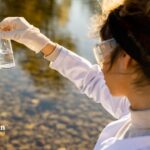
The most important thing for the fight against organochlorine contamination is to know where you are at risk. Advanced analytical methods are the key to the detection and measurement of organochlorine residues. There is GC-MS, a traditional standard here for precise, sensitive analysis. Other than this, HPLC is used to separate organochlorines from environmental samples. Such analytical techniques, when applied correctly, give an in-depth picture of the contamination map to inform the design of remediation interventions.
Together with analysis, Geographic Information System (GIS)-based analysis and remote sensing tools have proven to be effective ways of characterising contamination hotspots in space. GIS can be used to draw a multi-layered image over the various data points including contamination status, hydrology, and land cover, to create a picture of the contamination scenario. The other is remote sensing technology, whose coverage and live data are too extensive to be able to keep track of and estimate the amount of contamination. The combination of these technologies not only focuses attention to affected locations but it opens the possibility of a data-driven response to organochlorine contamination.
Case Studies of Organochlorine Contamination
It is only time to remind ourselves of some of the horrors of organochlorine contamination that can happen. One of those dark chapters was the Love Canal accident in the late 1970s in the United States, where hazardous industrial waste was disposed of without proper treatment, with devastating health and environmental effects. Just as the Yusho and Yu-Cheng cases in Japan and Taiwan respectively, caused by tainted cooking oil, revealed a narrative of human horror, and showed why organochlorine compounds should be monitored and controlled.
Each of these episodes echo back with lessons that help strengthen the countermeasures to organochlorine contamination. They highlight the power of strong regulation, acquiescing monitoring and public awareness to prevent other such disasters. What they also show is how important immediate remediation is to mitigate the impacts and avoid escalating effects of contamination. The tapestry of these cases weaved together suggests a stark call to arms – the need for constant care when it comes to organochlorine poisoning.
Mapping the Hotspots
Getting to the root of organochlorine hotspots takes a combination of powerful instruments and rigorous scrutiny. Technologies such as GIS and remote sensing, which can see the contamination landscape through a bird’s-eye view, are lighthouses in this journey. The power of GIS is in being able to combine so many disparate data sets into maps of contamination level and extent. And remote sensing, with its fleet of satellites and drones, offers up data in real time required for evacuating quickly.
But there are problems with the project of identifying contamination hotspots. These range from contamination heterogeneity, access challenges, to the temporality of organochlorine dissemination, both natural and human-made. Those challenges require multi-disciplinary approaches – including technological innovations, effective data analysis and stakeholder coordination. We hope to build a living map-system that not only identifies the hotspots, but predicts the spread in order to plan an early intervention.
Health and Environmental Implications
The medical effects of organochlorine are not so bright, spanning acute illness to chronic diseases such as cancer and neurodegeneration. Also, the bioaccumulation of these compounds makes it even more risky, swell up the food chain until you end up with large amounts in higher trophic zones. The Japan-caused infamous case of Minamata disease, though mercury-based, shows a chilling picture of the human tragedy that can be caused by chronic environmental pollutants.
Organisms that have no human proxies are long-term obliterators of the biosphere. They are deadly for wildlife – especially birds and aquatic animals – by disrupting reproduction, death and habitats. We know the damage to top predators such as eagles and otters from a scientific paper and the ripples spread through the ecosystem. The story of organochlorine pollution is thus not just about the human occupants but the health of ecosystems as well, and it is worth repeating: we need to fix it.
Regulatory Landscape
The regulatory environment for organochlorine compounds has changed over decades, in part as the science is now more clear about their toxicity. Nations have worked to stop the production and consumption of toxic organochlorines such as DDT and PCBs, using institutions such as the Stockholm Convention on Persistent Organic Pollutants. Yet how they are enacted and implemented is a global variation, and often tied to the economy and politics.
International partnerships are the hope that can overcome the regulatory divide. These partnerships provide a framework for sharing information, resources and coordinated action that enhances the overall capacity to confront organochlorine contamination. But it will require continuing to work on strengthening regulations, achieving compliance and building a global culture of surveillance of persistent organic pollutants.
Community Engagement in Identifying High-Risk Areas
Local activism opens up as a powerful tool for detecting and treating organochlorine contaminant hotspots. Through the culture of conscious participation, societies become valuable partners in the fight against contamination. The influence of collective action in environmental issues are illustrated by grassroots movements, local monitoring and local remediation campaigns.
There are so many success stories of community-based projects, where there is local expertise, groupwork and creativity. Community monitoring programmes, for example, have appeared across the country and give people in the area access to the resources and skills to monitor and report pollution. These narratives reflect the mutually beneficial nature of communities and ecology, which signal a shift towards a more sustainable and inclusive way of addressing organochlorine contamination.
Technological Innovations for Hotspot Identification
It is in the technology field where a wave of new tools have emerged to increase the accuracy and convenience of finding organochlorine contamination foci. From sensor networks to machine learning driven data analysis, the hotspot detection toolbox is growing. These innovations aren’t theoretical experiments, they are being tested in the field, and they have carved out a space in the commercial environment of contamination monitoring and detection.
These are some of the technological advances among so many others, which perfectly capture the spirit of innovation in this area:
Sensor Technologies: Improvements in sensor design and technology for near-real-time, in-field monitoring of organochlorine molecule.
Artificial Intelligence & Machine Learning: Using the power of AI to crawl through massive amounts of data, spot patterns, and forecast contamination hotspots.
Blockchain Environment Monitoring: Blockchain based transparency and fool-proof monitoring networks.
Mobile Labs: These labs are equipped with the latest analytical equipment and offer analysis at the site which makes sampling-analysis times lag. Combining technology and environmental science has become an increasingly promising frontier on the road to a pollution-free planet.
Mitigation Strategies
Setting out in the direction of mitigation is a process that is not just about getting the contamination right, but also about making sure it doesn’t happen again. Techniques for cleanup range from the standard excavation and incineration to novel technologies such as bioremediation and phytoremediation. Such methods, each with its benefits and drawbacks, seek to reduce the organochlorine burden in the environment, and the health and environmental risks that go with it.
Preventive efforts, meanwhile, are grounded in strict rules, close surveillance and public education. If we can promote an environmentalism, safer alternatives and enforce regulations strictly, the tsunami of organochlorine pollution can be slowed. Remediation and prevention together, becomes an effective plan whose vision of a healthier planet appears.
Share this on social media:
Facebook
Twitter
LinkedIn

Related Posts