UV Rays for Clean Water: The Advantages of Ultraviolet Water Treatment
- Published:
- Updated: December 16, 2024
Listen to this article
Summary
Water is crucial for our well-being, demanding effective treatment methods like ultraviolet (UV) rays. Here’s how UV water treatment works:
- UV rays, with wavelengths between 200 and 400 nanometers, damage microorganisms’ DNA, rendering them harmless.
- UV water treatment systems pass water through chambers containing UV lamps, killing bacteria and viruses effectively.
- Compared to traditional methods, UV treatment is faster, safer, and more cost-effective, making it a sustainable option for clean water.

Water is scarce and must be kept clean and safe for drinking and other uses. Water is increasingly contaminated so we need good water treatment technology to make water safe for human consumption. One of the new and effective water treatments is ultraviolet (UV) rays.
How do UV rays work in water treatment and purification?
UV rays are already used for years to treat water and it is a very common water purification technique. UV radiation is between 200 and 400 nanometres long, and it kills bacteria, viruses and other microbes in water. Under the UV light of water, the DNA of the microbes is destroyed, and they can no longer replicate and damage. It is fast, effective and does not deposit residue in the water, so it’s a safe water.
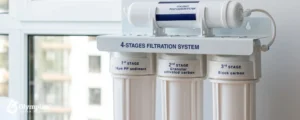
The UV water treatment procedure is a water passing through a tube equipped with a UV lamp. UV rays enter the water and kill the microorganisms, and that lamp emits UV radiation. The water then drains out of the room, and it is okay. UV water treatment systems are small, convenient to install and very low maintenance which makes them one of the most popular water treatment devices.
The history and evolution of UV water treatment technology

It was only around the turn of the 20th century that UV rays were first applied to disinfect city water supplies. The technology has improved over the decades since then and UV water treatment systems are more efficient. The UV water treatment industry now has applications from domestic homes to huge industrial complexes.
It is these factors that are the driving force behind UV water treatment: water quality enhancement and rising water demand. In the process, technology has improved UV lamps (that emit more UV radiation) and water treatment systems. UV water treatment was one of the breakthroughs that made our water supply safer and cleaner.
Benefits of UV water treatment compared to traditional methods
Ultraviolet (UV) water treatment has several benefits compared to traditional methods, such as:
- Efficacy: UV light is highly effective in killing bacteria, viruses, and other microorganisms in water, without the use of chemicals. This makes it a safe and effective alternative to traditional methods that rely on chemical disinfectants, such as chlorine.
- Speed: UV water treatment is a fast process, taking only seconds to disinfect the water. This is much faster than traditional methods that can take several hours or even days to achieve the same results.
- Safety: UV water treatment does not produce harmful by-products, such as trihalomethanes (THMs), which are created when chlorine reacts with organic matter in water. THMs are linked to cancer and other health problems.
- Cost: UV water treatment is more cost-effective than traditional methods, particularly over the long term. The initial cost of purchasing a UV system may be higher, but it eliminates the ongoing costs of purchasing and transporting chemicals, as well as the cost of disposing of chemical waste.
- Sustainability: UV water treatment is a sustainable option because it does not produce chemical waste and uses less energy than traditional methods. This makes it an environmentally friendly alternative to traditional water treatment methods.
Overall, UV water treatment is a safe, effective, and sustainable alternative to traditional methods, and can provide numerous benefits in terms of water quality, safety, and cost-effectiveness.
The cost-effectiveness of UV water treatment
The price of UV water purification system has dropped significantly over the past few years and it is now more affordable for more consumers. These systems are extremely small in scale and minimal in maintenance making them a low cost water treatment solution for the small scale.
And UV water treatment not only consumes less energy compared to other types of water treatment, but it doesn’t leave behind harmful by-products which make it a clean water treatment alternative. This can save a lot of money in the long run, especially in large industrial plants where you need a continual supply of clean water.
The impact of UV water treatment on the environment
Treatment by ultraviolet (UV) radiation is, by and large, more environmentally benign than a classical approach. Some of the benefits include:
Use of Less Chemicals: UV water disinfection replaces the use of chemical disinfectants like chlorine that can be environmental-threatening if not managed properly.
No Chemical By-products: There are no chemical by-products, like trihalomethanes (THMs), produced by chlorination of organic materials in water when chlorine reacts with them. THMs cause cancer and other diseases.
Energy Saver: UV water treatment is less energy-intensive than the traditional water treatment methods because the water is disinfected by UV lamps. This saves the treatment process carbon footprint and conserve energy.
Zero Waste: UV water treatment does not generate chemical waste which will need to be shipped and dumped responsibly.
More Water Quality: UV water treatment provides better water quality by eradicating pathogens effectively which is capable of sustaining aquatic ecosystems and wildlife.
The safety and reliability of UV water treatment systems
UV water treatment systems are not harmful and are safe, and it has been in water treatment applications for decades. The machines are fully operational and tested to destroy bacteria, viruses and other waterborne germs.
It’s all down to the engineering and construction of UV water treatment units that make them safe and reliable. The systems are made from quality materials and use UV lamps that give out a lot of UV light, so the water is clean. The systems are easy to install and low maintenance, so it’s an affordable and safe water treatment system.
Applications of UV water treatment in various industries
UV water treatment can be used for many purposes across all sectors, from home to huge corporations. The systems are so small and easy to maintain that they are perfect for small applications including households and small businesses.
UV water treatment for process water, cooling water and wastewater in large industrial plants. The units can treat big volumes of water, so it is the perfect solution for such needs. There is also UV water treatment for the food and beverage industries, which is used to purify and safeguard the water used in manufacturing processes.
Future of UV water treatment technology and its potential advancements
The UV water treatment technology is in brighter days and a great deal of potential can be created here. As we need cleaner water more than ever, and water treatment must be more environmentally friendly, UV water treatment could be a crucial part of keeping our water safe and clean.
Technology will only further produce the UV lamps and water treatment equipment more effective and economical to UV water treatment. UV water treatment is also set to become more prevalent, with increasing number of industries and end-users using the technology to keep their water safe and clean.
Share this on social media:
Facebook
Twitter
LinkedIn

Related Posts