Understanding Mercury Contamination in Water
Mercury contamination in water poses a significant threat to both the environment and human health globally. The World Health Organization (WHO) has identified mercury as one of the top ten chemicals of major public health concern. It is vital to comprehend the sources and pathways of mercury contamination to develop effective monitoring and mitigation strategies. Mercury can enter water bodies through various means, including industrial discharges, mining activities, and atmospheric deposition. Understanding the effects of mercury in water is crucial, as it can lead to bioaccumulation in aquatic organisms, ultimately impacting the entire food chain and posing serious health risks to humans who consume contaminated fish. Implementing rigorous regulations and remediation efforts is essential to mitigate mercury pollution and protect both ecosystems and public health.
Mercury enters water bodies through natural and human-induced sources. Natural sources include volcanic eruptions, geothermal activity, and the weathering of mercury-bearing rocks. Yet, human activities have greatly increased mercury levels in the environment. Industrial pollution, such as coal combustion, waste incineration, and chlor-alkali production, significantly contributes to mercury emissions. Mining activities, including artisanal and small-scale gold mining, also release substantial mercury into the environment.
Sources of Mercury Contamination
Mercury contamination in water comes from both point and non-point sources. Point sources include industrial discharges, wastewater treatment plants, and mining operations. Non-point sources, being more diffuse, are harder to control. These include atmospheric deposition, leaching from contaminated soils, and runoff from urban and agricultural areas.

Fossil fuel combustion, mainly coal burning, is a significant source of mercury emissions. In 1995, coal combustion in the United States alone introduced an estimated 50 tons of mercury into the atmosphere. Globally, coal and oil combustion account for approximately 890 tons of mercury emissions, with China being the largest contributor at 295 tons.
Anthropogenic and Natural Sources
| Anthropogenic Sources | Natural Sources |
|---|---|
| Industrial pollution | Volcanic eruptions |
| Mining activities | Geothermal activity |
| Fossil fuel combustion | Weathering of mercury-bearing rocks |
| Waste incineration | |
| Chlor-alkali production |
Once mercury enters the environment, it undergoes complex transformations and transport processes. Atmospheric mercury can be deposited into water bodies through precipitation or dry deposition. Mercury in soils can leach into groundwater or be transported to surface waters through erosion and runoff. Understanding these pathways is essential for predicting the fate and impact of mercury contamination in aquatic ecosystems.
Health Risks Associated with Mercury Exposure
Mercury, in its methylmercury form, is a highly toxic substance. It can lead to severe health consequences. As a potent neurotoxin, mercury exposure can cause significant damage to the nervous system. This results in neurotoxicity, neurological disorders, cognitive impairments, and even permanent brain damage.
Infants and young children are more vulnerable to mercury’s effects. Their developing brains are more susceptible to neurotoxicity. Exposure to mercury during pregnancy or through nursing can lead to developmental delays. This impacts a child’s growth, learning abilities, and overall development. The FDA has established a strict limit of 2 parts per billion (ppb) for mercury in bottled water and public drinking water to minimize these risks.

Mercury exposure has been linked to various other health problems. It can have detrimental effects on the cardiovascular system, increasing the risk of heart disease and high blood pressure. Mercury can also cause kidney damage, as it accumulates in the kidneys and impairs their function over time. Further, mercury has been found to suppress the immune system, making individuals more susceptible to infections and immunotoxicity.
| Health Effect | Description |
|---|---|
| Neurotoxicity | Damage to the nervous system, cognitive impairments, permanent brain damage |
| Developmental Delays | Impaired growth, learning difficulties, and developmental issues in children |
| Cardiovascular Effects | Increased risk of heart disease and high blood pressure |
| Kidney Damage | Accumulation of mercury in the kidneys, leading to impaired function |
| Immunotoxicity | Suppression of the immune system, increased susceptibility to infections |
The World Health Organization (WHO) recognizes mercury as one of the top 10 chemicals of major public health concern. In the United States, healthcare professionals are required to report elevated blood mercury levels above 5 nanograms/milliliter (ng/mL) and urine mercury levels exceeding 20 ng/mL. While mercury levels in the body can decrease over time after exposure, the long-term health consequences remain a significant concern.
Importance of Regular Mercury Monitoring
Regular water quality testing for mercury is vital to meet EPA regulations and safeguard public health. The EPA mandates a maximum contaminant level (MCL) of 2 parts per billion (ppb) for mercury in drinking water. This monitoring is key to quickly identify and address any mercury levels above the allowed threshold.
Mercury is among the top ten chemicals of major public health concern, as identified by the World Health Organization. Even small amounts of mercury can lead to severe health issues, impacting the nervous, digestive, and immune systems. Fetuses and young children are significantly more vulnerable to mercury’s effects than adults.
Compliance with Regulatory Standards
Water systems must test for mercury regularly to adhere to the EPA’s MCL. Not meeting these standards can lead to enforcement actions and hefty fines. Consistent monitoring shows a dedication to delivering safe drinking water, bolstering public trust.
| Contaminant | Maximum Contaminant Level (MCL) | Potential Health Effects |
|---|---|---|
| Mercury | 0.002 mg/L (2 ppb) | Kidney damage, nervous system disorders |
| Benzene | 0.005 mg/L | Anemia, increased cancer risk |
| Trichloroethylene | 0.005 mg/L | Liver problems, increased cancer risk |
Early Detection and Prevention
Water quality testing enables the early detection of mercury contamination, facilitating swift action to prevent public exposure. Identifying the source of contamination is essential for effective remediation. Common sources include improper disposal of mercury-containing products, coal-fired power stations, and industrial processes.
By focusing on regular mercury monitoring, water systems can proactively safeguard public health, maintain adherence to EPA regulations, and ensure the provision of safe drinking water to their communities.
Water Sampling Techniques for Mercury Analysis
Accurate mercury detection requires proper water sampling techniques. To ensure representative sampling, collect water from multiple points within the system. Follow standardized protocols to prevent contamination. Use clean, mercury-free containers made of glass or HDPE for collection.
Consider these factors when collecting water samples:
- Only 2.5% of Earth’s water is freshwater, and a smaller percentage is usable and accessible. Monitoring mercury levels in these resources is critical.
- Mercury is a priority hazardous substance in the European Parliament’s Water Framework Directive. It’s toxic to humans, plants, animals, and the environment.
- High mercury doses can be fatal to humans. Low doses can harm cardiovascular, immune, and reproductive systems. Methyl mercury, the most toxic form, can harm mental development in unborn babies.
To preserve sample integrity, acidify the collected water samples. The EPA methods use small volumes of HNO3 to lower the pH below 2. This is a standard in environmental testing. Teledyne LABS suggests using 3 percent HCl as the diluent for mercury standards or sample dilutions. This ensures consistent and reproducible results.
| Sampling Container | Preservative | Holding Time |
|---|---|---|
| Glass or HDPE | HNO3 to pH < 2 | 28 days |
| Glass or HDPE | 3% HCl | 28 days |
Following proper sample collection, preservation, and storage protocols is key. It ensures the accuracy and reliability of mercury analysis results. These techniques are vital for monitoring mercury levels in water systems and meeting regulatory standards.

Sample Preservation and Storage
Ensuring accurate mercury analysis results hinges on proper sample preservation and storage. Without proper preservation, mercury losses can be significant, with up to 90% lost in just one week. Acidification with nitric acid is a common method to prevent mercury adsorption onto container walls, maintaining sample integrity.
Collecting water samples for mercury analysis requires adherence to established guidelines and best practices. For instance, the EPA Method 1631 mandates a minimum of 250mL sample collection. This sample must be preserved with 0.5mL of bromine chloride per 100mL. The yellow tint from bromine chloride must be verified upon sample receipt. If the indicator paper does not turn dark purple, an additional 1.25mL of bromine chloride is added. Samples are then oxidized to Hg(II) at 50ºC for 6 hours.
Ideal Storage Conditions
After preservation, water samples should be stored in a cool, dark place to prevent mercury concentration changes. Refrigeration at 4°C is recommended, as it allows for 85% ± 10% total mercury recovery over 4 weeks. Storage at 16°C in the dark also yields similar recoveries.
The urgency of timely analysis in mercury testing cannot be overstated. Preserved samples have a 90-day window for analysis. It is critical to adhere to this timeframe for accurate results. Environmental laboratories must follow strict standards and protocols, including maintaining proper storage temperatures and documenting any anomalies upon receipt.
| Storage Condition | Temperature | Recovery (4 weeks) |
|---|---|---|
| Refrigerated, dark | 4°C | 85% ± 10% |
| Unrefrigerated, dark | 16°C | 85% ± 10% |
By following proper preservation techniques, cool storage conditions, and timely analysis, you can guarantee the accuracy and reliability of mercury testing results. This ensures effective monitoring and decision-making to protect public health and the environment from mercury contamination.
Cold Vapor Atomic Absorption Spectroscopy (CV-AAS)
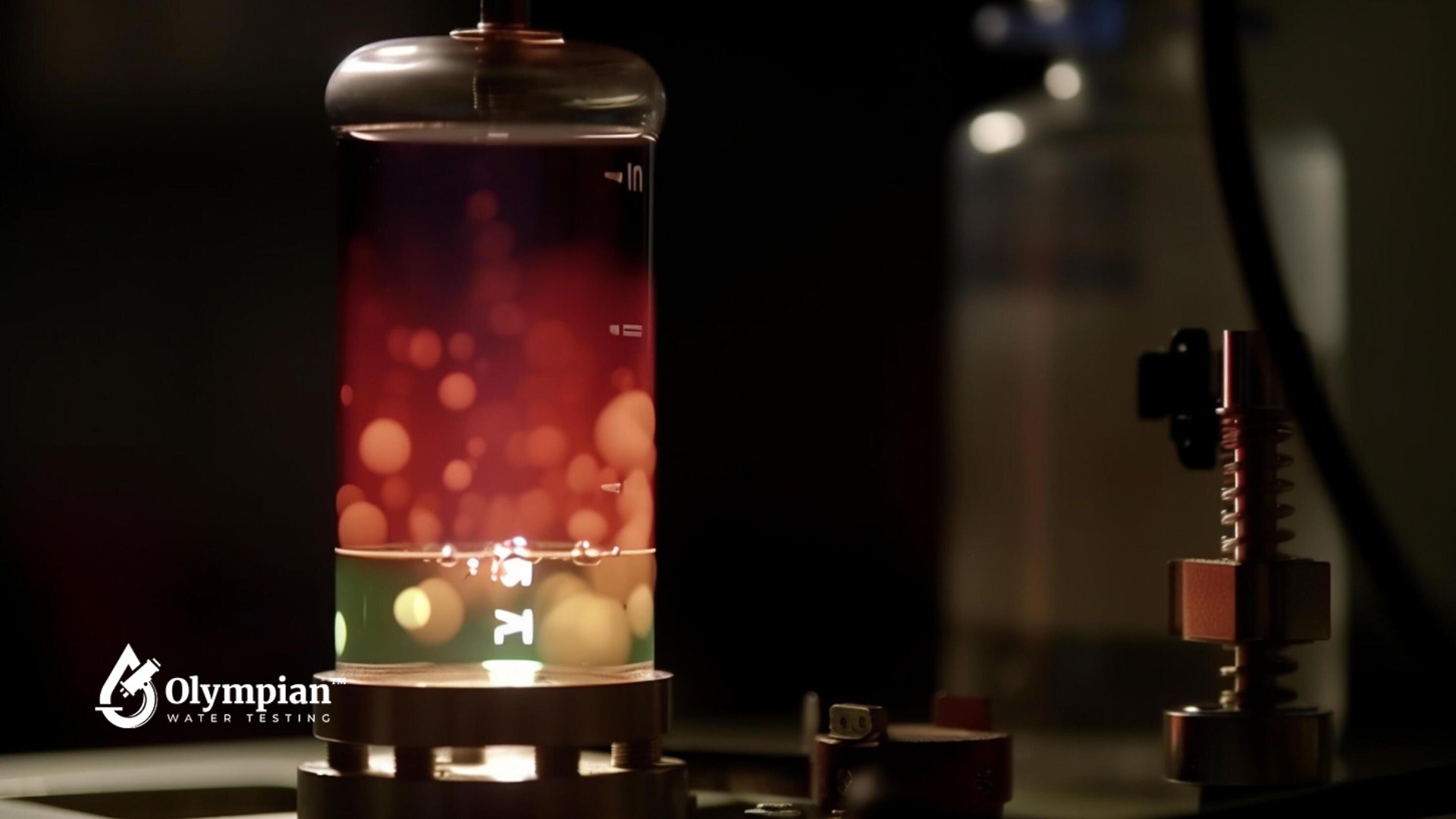
Cold Vapor Atomic Absorption Spectroscopy (CV-AAS) stands out as a highly sensitive method for total mercury analysis in water samples. It’s designed to measure elemental mercury content with unmatched accuracy and precision. This makes it a vital tool for environmental monitoring and ensuring regulatory compliance.
CV-AAS works by reducing mercury compounds in the sample to elemental mercury using a strong reducing agent. The mercury vapor is then transported to the atomic absorption spectrometer. There, it’s quantified based on its light absorption at a specific wavelength. This technique allows for mercury detection at extremely low concentrations, often in the parts per billion (ppb) range.
Principles of CV-AAS
The core of CV-AAS lies in mercury’s unique properties. Unlike other elements, mercury can be vaporized at room temperature. This characteristic enables efficient mercury separation from the sample matrix, reducing interference.
In CV-AAS, the sample undergoes digestion to release mercury compounds. The digested sample is then mixed with a reducing agent, such as stannous chloride or sodium borohydride. This conversion transforms all mercury forms into elemental mercury vapor. The vapor is carried by an inert gas, typically argon, to the spectrometer’s absorption cell.
Sensitivity and Detection Limits
CV-AAS boasts exceptional sensitivity and low detection limits. Modern instruments, like the contrAA 800 series, offer performance rivaling advanced techniques like Inductively Coupled Plasma (ICP) systems. This high sensitivity allows for reliable mercury quantification at trace levels, making it versatile for various applications.
CV-AAS detection limits are typically in the parts per billion (ppb) range. This capability ensures accurate mercury concentration measurement below regulatory thresholds. For example, the mercur DUO plus model, combining CV-AAS and atomic fluorescence spectroscopy (AFS), provides sensitive and compliant mercury analysis.
| Instrument | Detection Limit (ppb) |
|---|---|
| contrAA 800 series | |
| novAA 800 AAS | |
| ZEEnit series | |
| mercur DUO plus |
Its ability to detect mercury at such low levels is vital for monitoring mercury in various samples, including water, soil, and biological ones. CV-AAS’s capability to quantify trace mercury amounts is essential for effective risk assessment and decision-making in environmental monitoring, food safety, and public health.
Cold Vapor Atomic Fluorescence Spectroscopy (CV-AFS)
Cold Vapor Atomic Fluorescence Spectroscopy (CV-AFS) stands out for its ability to detect mercury at ultra-trace levels in water. It can identify mercury concentrations as low as parts per trillion (ppt). This makes it a top choice for monitoring low-level contamination in drinking water.
This method works by exciting mercury atoms with specific light wavelengths, causing them to emit fluorescence at different wavelengths. This fluorescence is then measured to determine mercury levels in the sample. The process involves reducing mercury ions to elemental mercury vapor, which is then analyzed in the spectrometer.
The sensitivity of CV-AFS is boosted by advanced materials like Metal-Organic Frameworks (MOFs) and Solid-Phase Extraction (SPE) sorbents. MOFs have incredibly high specific surface areas and pore volumes, ideal for capturing mercury from water samples. SPE efficiently extracts and concentrates mercury from complex matrices.
| Parameter | Value |
|---|---|
| Detection limit | 0.2 nM |
| Linear response range | 1.0 to 240.0 nM |
| EPA maximum allowable concentration | 1 × 10⁻⁸ M |
| Adsorption capacity (Hg(II)-IIP) | 29.4 mg/L |
| Adsorption capacity (NIP) | 17.3 mg/L |
Recent studies have shown CV-AFS’s effectiveness in detecting mercury at ultra-trace levels. A study used a sensor with a linear response range of 1.0 to 240.0 nM and a detection limit of 0.2 nM. The mercury-imprinted polymer (Hg(II)-IIP) and non-imprinted polymer (NIP) samples showed adsorption capacities of 29.4 mg/L and 17.3 mg/L, respectively. These results underscore CV-AFS’s exceptional sensitivity and selectivity in mercury analysis.
Using CV-AFS for routine mercury monitoring in drinking water ensures compliance with regulatory standards. It protects public health from mercury’s harmful effects. This technique’s ultra-trace level detection capabilities make it a critical tool in combating low-level contamination and maintaining water quality.
Inductively Coupled Plasma Mass Spectrometry (ICP-MS)
Inductively Coupled Plasma Mass Spectrometry (ICP-MS) is a leading method for comprehensive water quality analysis. It excels in detecting multiple elements, including mercury, in a single sample. This makes it ideal for high-throughput labs.
ICP-MS’s ability to detect contaminants at ultra-low concentrations is unmatched. It can identify elements at parts per trillion (ppt) levels. This high sensitivity is key for detecting toxic heavy metals in drinking water and environmental samples. It ensures labs meet strict regulatory standards.
Multi-Element Analysis Capability
ICP-MS’s multi-element analysis capability sets it apart. It can measure a wide range of elements in one sample. This streamlines testing and boosts efficiency, essential for food safety labs.
Ultra-Trace Level Detection
ICP-MS’s ultra-trace level detection is a standout feature. The Thermo Scientific iCAP MX Series ICP-MS platform balances sensitivity and efficiency. The iCAP MSX ICP-MS model offers top-notch performance, even with complex samples. The iCAP MTX ICP-MS ensures interference-free analysis for tough samples.
With detection limits in the parts per trillion range, ICP-MS meets stringent regulatory standards. It’s vital for:
- Environmental monitoring of toxic heavy metals in drinking water and soil
- Food safety analysis for compliance with FDA and EFSA standards
- Pharmaceutical manufacturing quality control to ensure drug safety and efficacy
- Clinical diagnostics for the detection of heavy metal poisoning
ICP-MS’s power in ultra-trace level detection and multi-element analysis ensures reliable results. It maximizes productivity and reduces downtime. As the need for detailed water quality analysis grows, ICP-MS remains a top choice for its unmatched sensitivity and versatility.
High-Performance Liquid Chromatography (HPLC) Coupled with ICP-MS
High-Performance Liquid Chromatography (HPLC) paired with Inductively Coupled Plasma Mass Spectrometry (ICP-MS) is a top-notch method for mercury analysis in water. It separates and quantifies mercury types, like methylmercury and inorganic mercury. This gives deep insights into mercury contamination in your water.
HPLC separates mercury species by polarity or size. ICP-MS then detects and measures these species with high sensitivity, down to parts per billion (ppb). This combination accurately determines mercury speciation, key to understanding health risks from mercury exposure.
Reliable results depend on proper sample preparation. This involves filtering or centrifuging to remove particles that could affect analysis. The sample is then injected into the HPLC system. Here, mercury species are separated, each exiting at specific times based on the sample and method used.
The interface between HPLC and ICP-MS is vital for precise mercury analysis. Special interfaces are used to minimize sample loss and optimize flow. This ensures mercury species are efficiently transferred to ICP-MS for detection. While the system’s cost is higher, the detailed mercury speciation data it provides is worth it.
Advances in technology are making HPLC-ICP-MS systems more automated and efficient. Automated workflows reduce errors and increase speed, making it better for regular mercury monitoring. Research also aims to improve the technique’s sensitivity and accuracy, focusing on eco-friendly mobile phases and enhanced ICP-MS detectors.
Direct Mercury Analyzers (DMA)
Direct Mercury Analyzers (DMA) introduce a groundbreaking method for mercury testing in water samples. They provide a streamlined, efficient alternative to traditional methods. DMAs enable direct analysis of both solid and liquid samples with minimal preparation. This significantly reduces the time and effort needed for mercury analysis.
DMAs stand out for their ability to deliver fast results with minimal sample preparation. They are ideal for routine mercury level monitoring in water. The DMA-80 evo Direct Mercury Analyzer has been shown to cut analysis costs by nearly 90% compared to traditional methods like Cold Vapor Atomic Absorption/Fluorescence (CV-AAS/AFS) and Inductively Coupled Plasma Mass Spectrometry (ICP-MS).
Rapid Analysis without Sample Digestion
Unlike other mercury analysis techniques, DMAs do not require sample digestion. This step is often time-consuming and labor-intensive. By eliminating it, DMAs streamline the analytical workflow and minimize sample contamination risk. This is critical for low-level mercury concentrations, where slight contamination can greatly affect result accuracy.
A study on sediment samples using a DMA-80 total Hg analyzer showed its efficiency. With a sample size of just 0.05 g per analysis, the DMA-80 accurately measured total Hg concentrations. This highlights its sensitivity and precision.
Applicability for Routine Monitoring
DMAs are perfect for routine mercury level monitoring in water due to their rapid analysis capabilities and minimal sample preparation. Regulatory agencies and water treatment facilities can benefit from their high sample throughput and cost-effectiveness. This ensures compliance with drinking water guidelines and protects public health.
| Instrument | Detection Limit (Hg) | Sample Preparation | Analysis Time |
|---|---|---|---|
| DMA-80 | 0.0015 ng | Minimal | 5 minutes |
| CV-AAS | 1 µg/L | Digestion required | 30-60 minutes |
| ICP-MS | 0.001-0.1 µg/L | Digestion required | 2-5 minutes |
The table above shows DMAs offer detection limits comparable to ICP-MS while significantly reducing sample preparation time and analysis duration. This makes them a valuable tool for routine mercury monitoring in water samples. They allow for more frequent testing and faster response times in case of contamination events.
Testing for Mercury in Drinking Water: Regulatory Standards and Guidelines
Ensuring the safety of drinking water is a top priority for public health. Regulatory agencies like the U.S. Environmental Protection Agency (EPA) have established Maximum Contaminant Levels (MCLs) for mercury and other harmful substances in drinking water. These legally enforceable standards apply to all public water systems under the Safe Drinking Water Act (SDWA).
The EPA has set the MCL for mercury at 0.002 mg/L, recognizing its harmful effects. Exposure to high levels of mercury can lead to kidney damage and other serious health problems. To ensure compliance monitoring, water utilities are required to regularly test their water supply for mercury and report the results to the EPA.
In addition to the MCL, the EPA also provides water utility requirements and guidelines for testing and reporting. These include specific sampling techniques, preservation methods, and approved analytical procedures. Following these guidelines helps ensure accurate and reliable testing results.
| Contaminant | MCL (mg/L) | Health Effects |
|---|---|---|
| Mercury | 0.002 | Kidney damage |
| Benzene | 0.005 | Increased risk of cancer |
| Chlorobenzene | 0.1 | Liver or kidney problems |
| Toluene | 1 | Nervous system, kidney, or liver problems |
Regular monitoring and adherence to EPA maximum contaminant levels are critical for public health protection. By staying vigilant and proactive in testing for mercury and other contaminants, water utilities can ensure a safe and reliable drinking water supply for their communities.
Biosensors: Emerging Technology for Mercury Detection
Biosensors are transforming mercury detection in water, presenting a new approach beyond traditional methods. These devices use biological components like enzymes and antibodies to detect mercury at trace levels. Their portability, affordability, and rapid results make them perfect for field applications.
Diverse biosensor types offer unique benefits. Whole-cell biosensors (WCBs) can detect mercury from 1 nM to 1 μM. The Mer-Blue biosensor, for instance, detects mercury from 2 nM to 125 nM. A study in Madre de Dios, Peru, showed their effectiveness in detecting mercury below 3.2 nM Hg2+ in mining ponds.
Enzyme-Based Biosensors
Enzyme-based biosensors utilize enzymes’ catalytic abilities to detect mercury. They work by mercury interacting with the enzyme, causing a measurable response. Their sensitivity and specificity are ideal for detecting mercury at low concentrations in water.
Antibody-Based Biosensors
Antibody-based biosensors, or immunosensors, use antibodies to detect mercury. They rely on the specific binding between mercury and antibodies, producing a detectable signal. This type offers high selectivity, ensuring accurate detection in complex water samples.
| Biosensor Type | Limit of Detection (LOD) | Linear Detection Range |
|---|---|---|
| Whole-cell biosensors (WCBs) | 1 nM to 1 μM | – |
| Mer-Blue biosensor | – | 2 nM to 125 nM |
The push for biosensors in mercury detection stems from the need to address mercury pollution. With mercury emissions from human activities expected to hit 2220 metric tons annually, the need for rapid, portable, and reliable detection is critical. Biosensors, capable of detecting mercury at nanomolar levels, hold promise for protecting public health and the environment.
Nanotechnology-Based Sensors for Enhanced Sensitivity
Nanotechnology has transformed mercury detection, providing unmatched sensitivity and specificity. It leverages the unique attributes of nanomaterials like gold nanoparticles and carbon nanotubes. These advancements have led to the creation of sensors that can detect mercury at ultra-low detection limits.
The high surface-to-volume ratio of nanotechnology-based sensors significantly boosts their interaction with mercury ions. Gold nanoparticles, for example, possess outstanding electrical and optical properties. These make them perfect for electrochemical and colorimetric sensing. When coated with specific ligands, they can selectively bind to mercury, causing a noticeable change in the sensor’s signal.
Carbon nanotubes have also become a focus due to their remarkable electrical and mechanical properties. Their unique structure and large surface area facilitate efficient mercury ion adsorption. This leads to highly sensitive detection. By incorporating carbon nanotubes into sensors or field-effect transistors, researchers have achieved detection capabilities down to parts per trillion (ppt).
| Nanomaterial | Detection Limit | Sensing Mechanism |
|---|---|---|
| Gold Nanoparticles | 0.1 ppt | Colorimetric, Electrochemical |
| Carbon Nanotubes | 0.01 ppt | Electrochemical, Field-Effect Transistor |
| Quantum Dots | 0.05 ppt | Fluorescence Quenching |
The miniaturization of nanotechnology-based sensors is another significant benefit. These sensors can be integrated into portable devices, making on-site mercury monitoring possible. This capability is invaluable for quick and real-time analysis of water samples. It’s essential in remote areas or where access to advanced laboratory equipment is limited.
As nanotechnology evolves, it promises to further enhance mercury detection sensitivity and specificity in water. The development of new nanomaterials and sensing technologies will likely lead to even more precise and reliable mercury monitoring methods. This advancement is critical for ensuring the safety of our drinking water and protecting public health.
Routine Monitoring Programs for Public Water Systems
To safeguard drinking water and public health, routine monitoring is critical. It helps detect and prevent mercury contamination in public water systems. These efforts include regular testing and following regulatory standards. They focus on areas with industrial pollution or known mercury sources.
The testing frequency for mercury in public water systems varies. It depends on the system’s size and contamination risk. Eurofins, the largest water quality testing lab in the U.S., offers lead and mercury testing. They follow 40 CFR Part 136 regulations and are certified by all states, ensuring compliance.
Frequency of Testing Based on System Size
Mercury testing frequency changes with system size. Larger systems need more frequent tests to protect more people. Below is a table showing testing frequency by system size:
| System Size (Population Served) | Minimum Testing Frequency |
|---|---|
| Less than 1,000 | Annually |
| 1,000 to 10,000 | Semi-annually |
| 10,001 to 50,000 | Quarterly |
| Greater than 50,000 | Monthly |
Increased Monitoring in High-Risk Areas
In polluted or mercury-prone areas, public water systems must test more often. Eurofins creates custom monitoring plans to identify mercury and other contaminants. Their team ensures compliance with wastewater permits and takes action for mercury exceedances.
New York City has strict mercury regulations for its water. Its water is nearly mercury-free from upstate reservoirs. Mercury use in plumbing was banned in 1987. Yet, older homes might have mercury pipes. The NYC DEP tests tap water across the five boroughs to ensure safety.

Remote Sensing and Automated Monitoring Systems
Technological advancements have transformed how we track mercury levels in water. Remote sensing and automated monitoring systems are at the forefront. They offer real-time data and enable continuous measurement of mercury concentrations. This empowers water utilities and municipalities to anticipate and prevent contamination.
These smart water monitoring systems use the Internet of Things (IoT) to cut down on maintenance costs. They reduce the need for manual checks, providing accurate and timely data. This data is essential for better emergency preparedness and solution development.
| Technology | Benefits |
|---|---|
| AI and Machine Learning | Enhances anomaly detection by establishing routine functioning baselines |
| Smart Water Meters | Enables accurate billing, early leak detection, and customer empowerment |
| Automated Data Collection | Saves time and labor costs for water utilities |
| Remote Service Management | Enhances operational efficiency and maintains customer satisfaction |
The integration of artificial intelligence (AI) and machine learning algorithms boosts water quality testing accuracy and efficiency. These technologies analyze large datasets. They help establish a baseline for routine functioning, making it easier to detect anomalies and provide an early warning system for issues.
Portable testing devices have also become critical in water quality monitoring. They allow for on-site testing with immediate results, reducing the need for laboratory analysis. Low-power sensor technologies contribute to energy efficiency while maintaining precise measurements.
By adopting remote sensing and automated monitoring systems, water management organizations can meet safety, quality, and industry standards in real-time. This shift not only saves time and money but also promotes proactive monitoring of water supplies. It protects public health and the environment.
Interpreting Mercury Test Results and Taking Action
Understanding mercury test results is key to identifying health risks and ensuring safe drinking water. When mercury levels exceed safety standards, a detailed health risk assessment is vital. This evaluation considers the mercury level, exposure duration, and the sensitivity of certain groups, like pregnant women and young children.
Upon confirming high mercury levels, water utilities must seek out and apply effective treatment methods. Activated carbon filtration and reverse osmosis are often used to lower mercury levels. The choice of treatment should be based on a thorough analysis of the water’s quality and the practicality of implementation.
When mercury poses a significant health risk, public notification and health advisories are critical. Water utilities must quickly inform the public about high mercury levels. They should also guide on precautions and the steps being taken to fix the issue. Open communication and community engagement are essential to build trust and ensure public safety.
By continuously monitoring mercury levels, conducting health risk assessments, and implementing effective treatments, water utilities can manage mercury contamination. This proactive approach, involving regulators, providers, and consumers, ensures our drinking water remains safe from mercury.
FAQ
What are the top methods for detecting mercury levels in your water?
To detect mercury in water, several methods are used. Cold Vapor Atomic Absorption Spectroscopy (CV-AAS) and Cold Vapor Atomic Fluorescence Spectroscopy (CV-AFS) are among the most effective. Inductively Coupled Plasma Mass Spectrometry (ICP-MS) and High-Performance Liquid Chromatography (HPLC) with ICP-MS also play key roles. Direct Mercury Analyzers (DMA) are another critical tool. These methods ensure high sensitivity and specificity, making them ideal for detecting mercury at trace levels.
What are the sources of mercury contamination in water?
Mercury contamination in water comes from both human activities and natural sources. Industrial processes, like mining and chemical manufacturing, are major contributors. Mercury in the atmosphere can fall into water bodies through rain or leach from contaminated sites.
What are the health risks associated with mercury exposure?
Mercury, mainly in its methylmercury form, is highly toxic. It can harm the nervous system, leading to developmental delays and cognitive issues. Exposure has also been linked to heart disease, kidney damage, and weakened immune systems.
Why is regular mercury monitoring important?
Regular mercury monitoring is vital for meeting EPA standards, like the Maximum Contaminant Level (MCL) of 2 ppb. Routine testing helps identify mercury early, allowing for swift action to prevent exposure to harmful levels.
What are the proper water sampling techniques for mercury analysis?
Accurate mercury detection requires proper sampling techniques. Samples should be taken from various points in the system, following strict protocols to avoid contamination. Glass or HDPE containers are used, and samples are acidified to preserve them.
How are mercury samples preserved and stored?
Preserving and storing mercury samples correctly is essential. Acidification with nitric acid prevents mercury adsorption and maintains sample integrity. Samples should be stored in a cool, dark place and analyzed promptly to prevent concentration changes.
What are the regulatory standards and guidelines for testing mercury in drinking water?
The EPA sets Maximum Contaminant Levels (MCLs) for mercury in drinking water. Water utilities must test mercury levels regularly to comply with these standards and protect public health.
How can biosensors and nanotechnology enhance mercury detection?
Biosensors and nanotechnology-based sensors are revolutionizing mercury detection. Biosensors use biological components to detect mercury at low concentrations. Nanotechnology sensors, like those using gold nanoparticles and carbon nanotubes, offer enhanced sensitivity and selectivity. These technologies promise portable, cost-effective, and rapid mercury detection.
What should you do if mercury levels exceed regulatory standards in your water?
If mercury levels exceed standards, water utilities must consider treatment options. Activated carbon filtration or reverse osmosis can remove mercury. In cases of high mercury levels, public notification and health advisories may be necessary. It’s critical to follow local authorities’ guidance and take precautions to minimize mercury exposure.