Understanding the Water Infrastructure in Russia
Russia’s water infrastructure is vital for delivering safe drinking water to its people. The vast network of water treatment facilities and distribution systems ensures tap water quality. Yet, the infrastructure’s condition varies across regions, with some areas struggling to provide clean water.
Recent data shows that 26% of the world’s population lacks access to safe drinking water, and 46% lacks basic sanitation. In conflict-affected states, the situation worsens, with 38% lacking basic drinking water and 61% lacking basic sanitation in 2015. This highlights the need for maintaining and upgrading water infrastructure, like in Russia, where disparities exist.
Water Treatment Facilities in Russia
Water treatment facilities are key to Russia’s water infrastructure, tasked with removing contaminants. They use processes like filtration, sedimentation, and disinfection to treat water from various sources. The efficiency of these processes depends on the facilities’ age, condition, and maintenance investment.
Efforts to modernize and expand water treatment facilities in Russia have been made. For example, in Bucha, Ukraine, around 9,000 residents now have access to quality drinking water thanks to a renovated facility. This project, costing about €100,000, was funded by the Ukraine Recovery Programme, with a total budget of €340 million. Such investments are critical for improving water access and reducing disease risks.
Water Distribution Systems in Russian Cities
After treatment, water is distributed through a network of pipes, pumps, and tanks. The condition and efficiency of these systems impact tap water quality and reliability. In many Russian cities, aging and poorly maintained pipelines cause leaks, contamination, and supply issues.
City | Population (millions) | Water Supply Coverage (%) | Non-revenue Water (%) |
Moscow | 12.5 | 99.9 | 12.5 |
Saint Petersburg | 5.4 | 99.8 | 14.2 |
Novosibirsk | 1.6 | 95.0 | 22.0 |
Yekaterinburg | 1.5 | 98.5 | 18.7 |
The table shows data on water supply coverage and non-revenue water in four major Russian cities. While cities like Moscow and Saint Petersburg have high coverage, smaller cities and rural areas face challenges. Improving these disparities and investing in distribution system maintenance is essential for better tap water quality and safety in Russia.
Water Quality Regulations and Standards in Russia
Russia has set water quality standards to protect its citizens’ health. These standards monitor contaminants in drinking water, like chemicals, microbes, and heavy metals. The Ministry of Natural Resources and Environment oversees these rules.
The main rule for drinking water is SanPiN 2.1.4.1074-01. It outlines maximum allowed concentrations for various pollutants. This rule is updated with new science and emerging threats. Water quality standards in Russia are vital for public health and safe drinking water access.
Despite these rules, their enforcement varies across Russia. Issues like old infrastructure, funding gaps, and regional water differences affect water quality. In some places, tap water may not meet standards, posing health risks.
The Russian government is tackling these issues with various initiatives. They’re investing in modernizing water systems, boosting monitoring, and educating the public. Help from the World Bank and the European Union has also been key in improving water management.
Ensuring consistent enforcement of water quality standards is critical. The government, water utilities, and public must collaborate. Regular checks, clear reports, and investing in water systems are essential for safe drinking water for all Russians.
Common Contaminants in Russian Tap Water
Many countries have safe tap water, but Russia faces challenges in its water infrastructure. This has led to various contaminants in its drinking water. These can be divided into chemical, microbial, and heavy metal contaminants. It’s vital to understand these pollutants to protect public health and safety.
Chemical contaminants include chloronitramide anion, used in water systems with chloramines. About 113 million people in the U.S. are exposed to this through their water. Research links chlorinated water to colon and bladder cancers. It also suggests a link to miscarriages and low birth weights in pregnancy.
Microbial Contaminants
Microbial contaminants, like bacteria, viruses, and parasites, are harmful. In Russia, poor water treatment and old infrastructure contribute to their presence. Infections from E. coli and Salmonella can cause severe symptoms. Parasites like Giardia can lead to long-term digestive issues if untreated.
Heavy Metals
Heavy metal contamination is a major concern in Russian tap water. These come from industrial activities, mining, and corroded pipes. Exposure to lead, mercury, and cadmium can harm children and pregnant women. It can cause developmental delays, neurological issues, and organ damage.
Microplastics in tap water have also become a concern. A study in Kokshetau, Kazakhstan, found microplastics in tap water. The sizes ranged from 100 µm to 500 µm, with some over 300 µm. While their health effects are being studied, they can cause oxidative stress and DNA damage.
Health Risks Associated with Contaminated Tap Water in Russia
The issue of water contamination in Russia has raised significant concerns about the health risks it poses. Contaminated tap water can lead to a range of short-term and long-term health effects. It is essential for individuals to understand these risks and take appropriate measures to ensure the safety of their drinking water.
Recent studies show that more than 70% of water systems in Russia failed to meet basic security requirements set out in the Safe Drinking Water Act. This alarming statistic highlights the widespread nature of the problem. It emphasizes the urgent need for action to address water contamination issues in the country.
Short-term Health Effects
Exposure to contaminated tap water can result in various short-term health effects, including:
- Gastrointestinal illnesses such as diarrhea, nausea, and vomiting
- Skin irritation and rashes
- Eye and ear infections
- Respiratory issues, which can be severe in vulnerable populations like children and the elderly
These health problems can be severe in regions with high water contamination levels. They lead to increased healthcare costs and reduced quality of life for affected individuals.
Long-term Health Consequences
In addition to the immediate health effects, long-term exposure to contaminated tap water can have severe consequences, including:
- Increased risk of certain cancers, such as bladder and kidney cancer
- Developmental issues in children, including impaired cognitive function and growth
- Reproductive problems, such as infertility and birth defects
- Chronic illnesses, including liver and kidney damage
These long-term health consequences underscore the importance of addressing water contamination issues in Russia. It is vital to implement effective measures to ensure access to safe and clean drinking water for all citizens.
By understanding the health risks associated with contaminated tap water, individuals can make informed decisions about their water consumption. They can take steps to protect themselves and their families from the harmful effects of water contamination in Russia.
Regional Differences in Russia Tap Water Quality
Russia, the world’s largest country by land area, has diverse regions with varying tap water quality. Urban areas like Moscow and St. Petersburg generally have better access to safe drinking water. In contrast, rural regions often face more significant challenges. A survey found that 30% of Moscow residents worry about tap water safety, but this number jumps to 50% in smaller cities.
Industrial regions are heavily affected by water contamination, with heavy metals like lead and mercury found in 15% of tested locations. The North Caucasus has only 70% of its population with reliable tap water access, significantly lower than the national average. Aging infrastructure also plays a role, as seen in the Volga Federal District, where up to 50% of water supply systems are in poor condition.
The table below highlights the stark contrasts in tap water access and quality across different regions in Russia:
Region | Access to Safe Drinking Water | Concerns about Tap Water Safety |
Urban Areas | 85% | 30% (Moscow) |
Rural Regions | 60% | 50% (Smaller Cities) |
North Caucasus | 70% | N/A |
Volga Federal District | N/A | 50% (Poor Infrastructure) |
These regional disparities in russia tap water quality have significant health implications. Waterborne diseases linked to tap water account for approximately 2% of total reported illnesses in the country. Yet, gaps in water quality monitoring, which occurs in only 40% of municipalities, make it challenging to assess the full extent of the problem.
Addressing these regional differences requires targeted investments in infrastructure upgrades, expanded monitoring programs, and public education campaigns. By prioritizing these efforts, Russia can work towards ensuring equitable access to safe drinking water for all its citizens, regardless of their location.
Water Quality Testing and Monitoring in Russia
Ensuring tap water safety in Russia is a top priority for both the government and the public. A mix of government-led testing and independent assessments is used to monitor water quality. These efforts aim to find contaminants, check treatment facilities, and inform the public.
Government-led Testing Programs
The Russian government has set up various testing programs to ensure tap water safety. They regularly sample and analyze water from sources like rivers, lakes, and groundwater. They also test treated water from distribution systems. The tests cover many parameters, including chemicals, microbes, and heavy metals.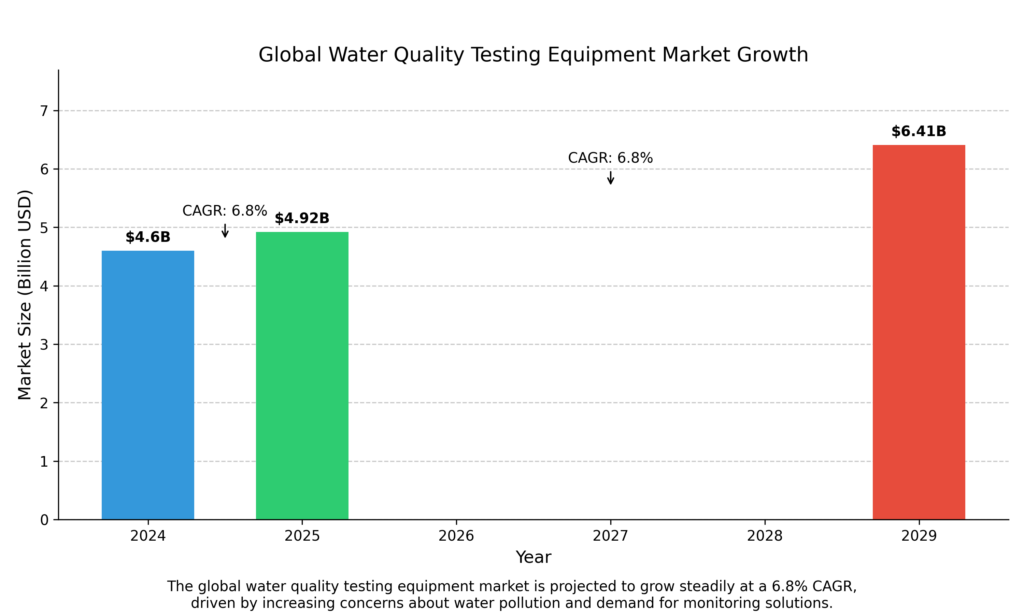
Recent market research shows the global water quality testing equipment market is growing fast. It’s expected to reach $4.92 billion by 2025, with a 6.8% annual growth rate. By 2029, the market size is forecasted to hit $6.41 billion, maintaining the same growth rate. This growth is due to rising concerns about water pollution and the need for better monitoring solutions.
Year | Market Size (Billion USD) | CAGR |
2024 | 4.60 | – |
2025 | 4.92 | 6.8% |
2029 | 6.41 | 6.8% |
Independent Water Quality Assessments
Independent organizations and researchers also conduct water quality assessments in Russia. These studies often focus on specific areas or water bodies. They provide detailed analyses of local water quality issues.
For example, a systematic study of water quality in the Moskva and Oka rivers found major pollutants. These included ammonium, phosphate, nitrate, AOX, and PAH, with levels up to 14 times the water-quality targets. The study found that wastewater from Moscow was the main pollution source, highlighting the need for water quality improvement.
As Russia faces challenges like aging infrastructure and urbanization, effective water quality testing is critical. By investing in advanced technologies and promoting transparency, Russia can ensure safe tap water for all its citizens.
Public Perception and Trust in Russian Tap Water
Public perception and trust in Russian tap water are critical in shaping consumption habits and the use of alternative water sources. A recent survey in the Pavlodar and Akmola regions, with a population of 562,986 in 2024, highlights the public’s views on tap water quality. This study offers insights into the prevailing sentiments regarding the safety of drinking water.
The survey involved 7,469 individuals from eleven villages, totaling 9,810 people. These villages, with populations ranging from 187 to 3,058, provided a diverse sample. Water quality sampling was done in 55 households, with samples collected three times for thorough data.
The results show widespread skepticism and concern about tap water safety. Many doubt the effectiveness of water treatment facilities and the quality of distribution systems. This distrust has led to increased reliance on bottled water and home filtration systems.
Comparative analysis of tap water and bottled water samples showed higher total alkalinity of plastics (TAP) in tap water. Tap water had an average TAP concentration of 11.06 ± 4.99 ng/L, while bottled water had 8.55 ± 3.98 ng/L. This 29.4% higher TAP concentration in tap water further fuels public concerns about contaminants.
The Pavlodar region, with its industrial activities, faces challenges in maintaining tap water quality trust. Industrial emissions from Ekibastuz, Aksu, and Pavlodar account for 46%, 26.5%, and 25.5% of the region’s emissions, respectively. Residents are keenly aware of the impact on their drinking water.
To improve Russian drinking water safety and regain trust, a multi-faceted approach is needed. This includes investing in modern water treatment infrastructure and regular water quality monitoring. Transparency in communicating results to the public is also essential. By addressing these concerns and demonstrating a commitment to safe drinking water, authorities can rebuild trust and encourage a return to tap water consumption.
Initiatives to Improve Water Quality in Russia
The Russian government and international organizations are teaming up to tackle water quality issues. They aim to update water systems, introduce cutting-edge treatment methods, and foster sustainable water use. These efforts are critical for the country’s future.
About 90% of Russia’s population enjoys safe drinking water, with urban areas reaching 95%. The government plans to modernize 2,000 water supply and water purification facilities by 2030. A digital inventory of water infrastructure will launch in 2025, pinpointing areas needing improvement and streamlining resource use.
Government Projects and Investments
In the last five years, Russian experts have revitalized hundreds of kilometers of rivers and over 20,000 hectares of lake and reservoir ecosystems. The government is set to start a massive water project in 2025. This project will be twice as large as previous ones, benefiting 22 million people by 2030.
International Collaborations and Support
International organizations are partnering with Russia to enhance water quality. Their focus includes sharing knowledge, transferring technology, and building capacity. Key areas of cooperation include:
- Implementing best practices in water resource management
- Developing and deploying innovative water treatment technologies
- Promoting public awareness and education on water conservation and hygiene
- Strengthening institutional frameworks and policies for sustainable water management
Through joint efforts, Russia hopes to greatly improve its water quality. This will ensure a sustainable future for its people.
Alternatives to Tap Water in Russia
Many in Russia opt for alternatives to tap water due to safety and quality concerns. These options provide peace of mind and ensure access to clean drinking water. They are essential for daily use.
In Russia, several alternatives to tap water are commonly used:
Bottled Water
Bottled water is a preferred choice for those questioning tap water quality. Its convenience and perceived safety make it appealing, despite the environmental and financial drawbacks. In the U.S., over 60 million plastic water bottles are discarded daily. This amounts to about 22 billion bottles yearly. Each American generates around 66 plastic water bottles of waste annually, with a household of four producing about 260 bottles yearly.
Water Filtration Systems
Water filtration systems, like reverse osmosis (RO) units and pitcher filters, are becoming more popular in Russia. They offer a sustainable and cost-effective alternative to bottled water. These systems remove contaminants, enhance taste, and provide safe drinking water from the tap. The cost of a reverse osmosis system ranges from $200 to $500, with installation adding an extra $150 to $300. Over a decade, the total cost of an RO system is around $1,400, significantly less than the $4,500 spent on bottled water for a household of two over the same period.
Boiling Water
Boiling water is a traditional and reliable method for purifying tap water in Russia. By boiling water for several minutes, harmful microorganisms and some contaminants can be eliminated. This makes the water safer to drink. Yet, boiling does not remove chemical contaminants or heavy metals, and it can be time-consuming and energy-intensive.
While these alternatives provide immediate solutions to tap water safety in Russia, addressing the underlying problems is critical. Improving water purification processes and upgrading distribution systems are essential. This will ensure access to safe, clean drinking water for all Russians in the long term.
Traveler’s Guide to Drinking Water in Russia
Traveling to Russia requires knowledge about the safety of drinking water. Tap water in major cities like Moscow and Saint Petersburg is treated, but quality varies across the country. To have a healthy and enjoyable trip, follow these guidelines.
It’s wise to avoid drinking tap water in Russia without boiling or filtration. Even in safe areas, the old infrastructure and different standards can lead to contamination. Bottled water is widely available in stores and restaurants, making it a safer choice.
For remote areas or outdoor activities, a reliable water purification method is essential. Portable water filters can remove harmful bacteria and other contaminants. Boiling water for at least a minute is also a safe option.
When eating out, ask about the water used for cooking and drinks. Good places use filtered or bottled water. But, it’s safer to ask for bottled water with your meals.
To avoid waterborne illnesses, be cautious with raw fruits and vegetables. Washing them thoroughly with clean water is key. Also, be careful with ice cubes in drinks, as they might be made from tap water.
Region | Tap Water Safety | Recommended Alternatives |
Moscow and Saint Petersburg | Generally safe, but filtration advised | Bottled water, boiled water |
Rural areas and small towns | Unsafe without treatment | Bottled water, portable water filters, boiled water |
Remote regions and wilderness | Unsafe without treatment | Portable water filters, boiled water, purification tablets |
By taking these precautions and knowing about local water quality, travelers can have a safe and enjoyable time in Russia. The country’s diverse landscapes and rich culture await.
Environmental Impact of Poor Water Quality in Russia
Russia’s battle with water pollution has severe effects, impacting human health and the environment. Industrial waste, agricultural runoff, and poor wastewater treatment have caused significant environmental harm. This has led to the degradation of water quality across the nation.
The pollution of water bodies is a clear sign of environmental damage. Rivers, lakes, and wetlands are now filled with harmful chemicals and heavy metals. This has resulted in the decline of fish populations and other aquatic species. For instance, the Volga River, Europe’s longest river, has seen severe pollution. This has led to the loss of valuable fish stocks and biodiversity.
Poor water quality also affects the soil, contaminating agricultural lands. This contamination can harm crops and livestock, leading to toxins in the food chain. These toxins pose risks to both human and animal health. Contaminated water also impacts terrestrial wildlife, as animals rely on clean water for survival.
Environmental Impact | Affected Areas | Consequences |
Aquatic habitat degradation | Rivers, lakes, wetlands | Decline in fish populations and biodiversity |
Soil contamination | Agricultural lands | Accumulation of toxins in the food chain |
Threat to wildlife | Terrestrial and aquatic ecosystems | Health risks for animals relying on contaminated water |
To tackle these environmental challenges, Russia must focus on improving its water treatment infrastructure. It also needs to enforce stricter regulations on industrial and agricultural waste. By investing in sustainable water management and raising awareness, Russia can restore its ecosystems. This will protect its natural resources for future generations.
Economic Consequences of Inadequate Water Infrastructure in Russia
Russia’s aging and inadequate water infrastructure has significant economic impacts. A study highlights the consequences of neglecting water systems. It shows how poor maintenance and lack of investment lead to high healthcare costs and productivity losses. These issues weigh heavily on society, limiting the country’s development.
Healthcare Costs
The quality of drinking water in Russia is often compromised due to outdated facilities. This leads to various health problems among the population. Waterborne diseases and chronic illnesses caused by contaminated water increase healthcare expenses. The healthcare system is strained, diverting resources from other critical medical needs.
Long-term health effects of contaminated water, such as cognitive impairment and reduced productivity, add to the economic burden. These consequences are far-reaching, affecting individuals and society as a whole.
Productivity Losses
Inadequate water infrastructure also impacts Russia’s economic productivity. Water supply disruptions and the need for alternative sources result in lost work hours and reduced efficiency. Businesses, including agriculture and manufacturing, face production challenges and increased costs due to inconsistent water supply.
Individuals and households spend time and effort managing water-related issues, such as boiling water or buying bottled water. These efforts contribute to productivity losses. The cumulative effects of these issues hinder economic growth and competitiveness.
FAQ
Is tap water safe to drink in Russia?
Tap water safety in Russia varies by region. Some areas have better water quality than others. It’s wise to use caution and opt for water purification methods or bottled water for safe drinking.
What are the common contaminants found in Russian tap water?
Russian tap water may contain various contaminants. These include chemical pollutants like pesticides and industrial waste. It also has microbial contaminants like bacteria and viruses, and heavy metals like lead and mercury. The presence and levels of these contaminants vary by region and the state of the local water infrastructure.
What are the health risks associated with drinking contaminated tap water in Russia?
Drinking contaminated tap water in Russia can lead to health issues. Short-term risks include gastrointestinal illnesses like diarrhea and vomiting. Long-term consequences may include chronic diseases, developmental issues, and increased cancer risk, depending on the contaminants present.
How does water quality vary across different regions in Russia?
Tap water quality varies across Russia’s regions. Some areas face more severe water contamination issues than others. Factors like industrial activity, agricultural practices, and the age and condition of water infrastructure influence these regional variations.
What initiatives are in place to improve water quality in Russia?
Various initiatives aim to improve water quality in Russia. Government projects and investments focus on upgrading water treatment facilities and distribution networks. International collaborations and support from organizations like the World Bank and the European Union also contribute to improving water infrastructure and management practices.
What alternatives to tap water are available in Russia?
Russians often rely on alternatives to tap water for safe drinking. These include bottled water, water filtration systems, and boiling water to eliminate microbial contaminants. The choice depends on individual preferences, budget, and specific water quality concerns.
Can travelers safely drink tap water in Russia?
Travelers visiting Russia are advised to avoid drinking tap water directly. The quality can be uncertain and vary by location. To ensure safety, travelers should opt for bottled water or use portable water filtration devices. When dining out, it’s wise to request bottled water and avoid ice cubes made from tap water.
How does poor water quality impact the environment in Russia?
Poor water quality in Russia has significant environmental consequences. It affects ecosystems and biodiversity. Contaminated water harms aquatic life, disrupts ecological balances, and degrades rivers, lakes, and wetlands. Addressing water pollution is essential for preserving Russia’s natural resources and maintaining ecological health.