Understanding PFAS in Drinking Water
PFAS, or Per- and Polyfluoroalkyl Substances, have been used in industries and products for decades. Known for their durability, they are found in non-stick cookware, stain-resistant fabrics, and firefighting foams. Yet, their environmental persistence and health risks have sparked concerns about their presence in drinking water.
What are PFAS Chemicals?
PFAS chemicals include over 9,000 compounds, with PFOA and PFOS being the most recognized. Their carbon-fluorine bonds resist degradation, leading to environmental accumulation. This has resulted in PFAS detection in drinking water across the U.S.
A US Geological Survey study found 45% of tap water supplies contain at least 32 PFAS types. The EPA states 80% of PFAS exposure comes from products, while 20% is from drinking water. PFAS have been identified in 1,517 locations across 49 states.
Health Risks Associated with PFAS Exposure
Research has linked PFAS to several health issues:
- Developmental effects or delays in children
- Decreased vaccine response in children
- Increased risk of certain cancers (testicular and kidney)
- Liver effects
- Immune system effects
- Thyroid changes
Babies, developing children, and pregnant individuals are most vulnerable to PFOA and PFOS. While more research is needed, the evidence has prompted regulatory actions to limit PFAS in drinking water.
| PFAS Compound | EPA Maximum Contaminant Level (MCL) |
|---|---|
| PFOA | 4.0 parts per trillion (ppt) |
| PFOS | 4.0 ppt |
| PFNA | 10 ppt |
| PFHxS | 10 ppt |
| HFPO-DA (GenX) | 10 ppt |
As PFAS concerns in drinking water escalate, it’s critical for individuals and communities to be informed. Testing water, using certified filters, and pushing for stricter regulations are key steps to mitigate exposure to these chemicals.
The Prevalence of PFAS in NYC Drinking Water
PFAS contamination in drinking water is a pressing issue in the United States, with New York City being no exception. Recent studies have revealed the widespread presence of these harmful chemicals in the city’s water supply. This has raised significant concerns about the health risks they pose to residents.
A 2023 study found that about 45% of U.S. tap water contains PFAS. This includes both public supplies and private wells. This statistic is alarming, showing that millions of Americans, including those in New York City, are affected.

Recent Studies on PFAS Levels in NYC Water Supply
New York State took action in 2020 by setting new drinking water standards for PFAS. These standards established maximum contaminant levels (MCLs) for PFOA and PFOS, two common PFAS chemicals. Despite these efforts, PFAS remains a significant issue in NYC’s water supply.
Environmental Advocates NY reports that around 300 New York water systems need updates to meet the new EPA standards for PFAS levels. The EPA believes that 6-10% of the country’s public water systems will need to adjust to comply with the updated regulations. This highlights the magnitude of the problem.
Areas Most Affected by PFAS Contamination
While PFAS contamination is a citywide concern, some areas in New York City are more affected than others. Studies indicate that Black and Latino communities face a higher risk of exposure to dangerous PFAS levels in their water. This disparity emphasizes the need for targeted efforts to address PFAS contamination in vulnerable communities.
Ensuring equitable access to safe drinking water for all New Yorkers is essential. This requires focused efforts to protect those most at risk from PFAS contamination.
EPA’s New Regulations on PFAS in Drinking Water
The Environmental Protection Agency (EPA) has made a significant move to safeguard public health. They have introduced strict new limits on per- and polyfluoroalkyl substances (PFAS) in drinking water. This decision follows an extensive review of over 120,000 public comments on the proposed rule.
The final National Primary Drinking Water Regulation (NPDWR) for PFAS was announced on April 10, 2024. It aims to prevent PFAS exposure in drinking water for about 100 million people. By setting these strict limits, the EPA hopes to prevent thousands of deaths and reduce tens of thousands of serious illnesses. This shows the profound public health impact of this regulation.
Strict Limits on PFOA and PFOS
The EPA has set Maximum Contaminant Levels (MCLs) for six PFAS chemicals. PFOA and PFOS are not to exceed 4 parts per trillion (ppt). Three additional PFAS (PFHxS, PFNA, and HFPO-DA) are restricted to 10 ppt. Mixtures of PFHxS, PFNA, HFPO-DA, and PFBS have a Hazard Index of 1 (unitless). These limits are the lowest detectable and treatable levels in public water supplies.
| PFAS Chemical | Maximum Contaminant Level (MCL) |
|---|---|
| PFOA | 4.0 ppt |
| PFOS | 4.0 ppt |
| PFHxS | 10 ppt |
| PFNA | 10 ppt |
| HFPO-DA | 10 ppt |
Potential Impact on Public Health
The EPA’s new PFAS regulation is expected to have a significant impact on public health. By limiting exposure to these harmful chemicals, it could prevent numerous health issues. These include liver damage, high cholesterol, certain cancers, and immune problems in children.
Public water systems must complete initial monitoring of PFAS by 2027. They must implement solutions by 2029 if monitoring shows MCLs are exceeded. The regulation is expected to save at least $1.5 billion in health-related costs annually. The estimated annual cost for implementation is approximately $1.5 billion.
The EPA has also announced $1 billion in funding through the Infrastructure Investment and Jobs Act for PFAS testing and treatment. This further demonstrates their commitment to addressing this critical public health issue.
Is Bottled Water a Safer Alternative?
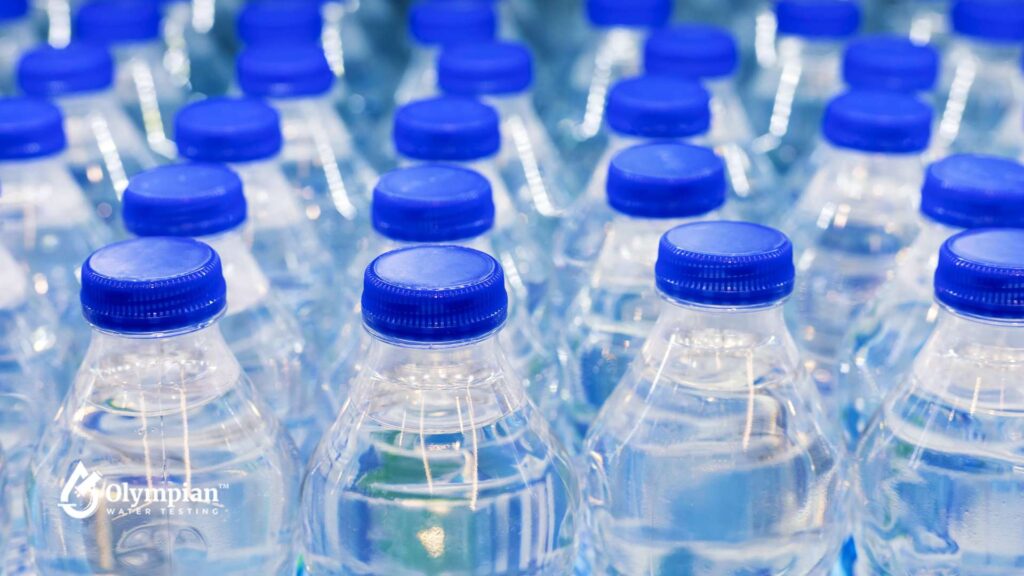
Many turn to bottled water as a way to avoid PFAS contamination. Yet, recent studies show this may not be effective. Bottled water is more expensive than tap water, and some brands contain PFAS chemicals.
A 2021 study by Johns Hopkins University tested 101 bottled water samples. It found 39 contained PFAS, a 39% contamination rate. The study included water from 19 retail chains, like spring and purified water.
In 2020, Consumer Reports tested 47 bottled water samples. Most had measurable PFAS levels. Around 25% of bottled water brands use the same sources as public water systems, which may also be contaminated.
PFAS chemicals have been used in products for decades. They persist in the environment for hundreds or thousands of years. The U.S. Environmental Protection Agency lists health risks from PFAS exposure, including cancer and developmental delays in children.
- Increased risk of cancer
- Elevated cholesterol levels
- Developmental delays in children
- Reduced vaccine responses
- Decreased fertility
New U.S. regulations require public water utilities to address PFAS contamination within five years. Three years are for testing, and two for treatment. Despite this, PFAS are widespread in drinking water, soil, and consumer products.
Over 70 million Americans rely on water systems with PFAS contamination. The U.S. Geological Survey found nearly half of tap water contains harmful chemicals. Consumer Reports tested 120 water samples and found PFAS in 117, with over a third exceeding safe levels.
Given these findings, bottled water is not a foolproof solution for avoiding PFAS. Consumers should be cautious and consider using certified water filters for safe drinking water.
Using Water Filters to Remove PFAS
As concerns about PFAS in drinking water grow, many Americans are turning to water filters. Drinking water is a significant source of PFAS exposure. With the EPA finalizing national drinking water standards for PFAS in April 2024, it’s vital to understand water filter effectiveness.
Types of Water Filters Effective Against PFAS
Choosing a water filter for PFAS removal requires a certified product. As of April 2024, certifications focus on PFOA and PFOS removal. Look for "NSF/ANSI 53" or "NSF/ANSI 58" on the packaging for PFAS reduction assurance.
A 2020 study of over 60 US found reverse-osmosis and dual filtration systems remove PFAS near completely. Carbon filters, while cheaper, remove PFAS up to 70%. Under-sink reverse-osmosis systems are the most effective but also the most expensive. Bench-top carbon filter systems offer some protection at a lower cost.
| Filter Type | PFAS Removal Effectiveness | Cost Range |
|---|---|---|
| Reverse-osmosis, dual filtration | Near-complete removal | $400 – $1,000+ |
| Carbon filters | Up to 70% removal | $100 – $200 |
Importance of Proper Filter Maintenance
Proper maintenance is key for ongoing PFAS removal, regardless of filter type. Following the manufacturer’s maintenance instructions is essential. This includes:
- Replacing filter cartridges as recommended
- Cleaning the system regularly
- Monitoring for any signs of reduced performance
It’s important to note that current certification standards do not guarantee that a filter will remove PFAS down to the levels set by the EPA as of April 2024. With over 10,000 PFAS chemicals, complete removal is challenging. Yet, by choosing a certified filter and maintaining it properly, consumers can significantly reduce PFAS exposure in their drinking water.
Tips for Drinking Water with PFAS
The concern over PFAS contamination in drinking water is growing. It’s vital to take proactive steps to ensure your water supply’s safety. While 80% of PFAS exposure comes from consumer products, 20% comes from drinking water. Here are some practical tips to help you navigate this issue:

Choose Independently Certified Water Filters
When picking a water filter to remove PFAS, look for certifications from NSF, WQA, IAPMO, UL, CSA, or Intertek. These certified water filters have been tested to meet strict standards. Under-sink filters are often the most effective, but faucet-attached and pitcher filters can also work if certified.
| Filter Type | Effectiveness | Replacement Frequency | Cost |
|---|---|---|---|
| Reverse Osmosis | High | Every 5 years | Around $200 |
| Carbon Filters | Moderate | Every 6 months | $50-$100 |
Regularly Replace Filter Cartridges
To keep your water filter effective, replace cartridges as recommended by the manufacturer. Not replacing them can lead to PFAS levels in your water increasing. Set reminders or subscribe to replacement programs to avoid missing replacement dates.
Avoid Boiling Water as a PFAS Removal Method
Boiling water can eliminate some contaminants but is ineffective against PFAS. Boiling can actually increase PFAS concentration as water evaporates, leaving chemicals behind. Rely on certified water filters to keep your drinking water PFAS-free.
By following these tips and staying updated on PFAS research and regulations, you can control your household’s water quality. This minimizes exposure to harmful chemicals.
Accessing Your Local Water Quality Report
As a responsible consumer, it’s vital to stay informed about your drinking water quality. This is even more important with growing concerns about PFAS contamination. Obtaining and reviewing your local water quality report, also known as a Consumer Confidence Report (CCR), is a key step.
Water utilities are required to test for regulated contaminants and share the results annually through a CCR. These reports offer insights into the levels of substances in your drinking water, including PFAS. They help you make informed decisions about your water consumption and treatment options.
How to Obtain a Consumer Confidence Report (CCR)
Getting your local CCR is easy. You can access it through several methods:
- Contact your water supplier directly and request a copy of the report
- Visit your water supplier’s website, where the CCR is often available for download
- Use the EPA’s online search tool to locate your water utility and access their CCR
If you’re a renter, you can ask your landlord or building manager for a copy. Or, contact the water utility directly.
Interpreting PFAS Levels in Your CCR
As of 2022, at least eight states require PFAS monitoring in public water systems. This means your CCR may include PFAS level information. When interpreting PFAS levels, compare them to the EPA’s health advisory levels and any state-specific regulations.
| PFAS Compound | EPA Health Advisory Level (ppt) |
|---|---|
| PFOA | 0.004 |
| PFOS | 0.02 |
| GenX Chemicals | 10 |
| PFBS | 2,000 |
If your utility doesn’t test for PFAS or you use well water, consider testing through an EPA-certified lab. Mail-in kits like SimpleLab ($299) and Cyclopure ($79) have shown good performance in independent tests. They can give you accurate results.
By regularly accessing and reviewing your local water quality report, you can stay informed about PFAS and other contaminants. This empowers you to make the best decisions for your health and well-being.
Testing Your Home’s Water for PFAS
If you’re worried about PFAS in your drinking water, and your utility doesn’t test for it, or if you have a private well, you can get your water tested. Home water testing kits like SimpleLab ($299) and Cyclopure ($79) have been praised by Consumer Reports. They offer a convenient way to send in your water for PFAS analysis. Yet, it’s worth noting that full PFAS testing can be expensive, costing between $250 to $795 per sample, based on the lab and the test’s depth.
When looking into home water testing for PFAS, knowing the EPA’s testing methods is key. The EPA has validated four methods for analyzing up to 29 PFAS compounds in drinking water:
- EPA Method 537 tests for 14 long-chain PFAS compounds
- EPA Method 537.1 expands to 18 PFAS compounds
- EPA Method 533 focuses on 25 PFAS compounds, including short-chain PFAS
- EPA Draft Method 1633, currently under review, aims to test for up to 40 PFAS compounds
When you get your home water testing results, it’s vital to compare them to the EPA’s new maximum contaminant levels (MCLs) for PFAS. The MCLs are set at 4 parts per trillion (ppt) for PFOA and PFOS, and 10 ppt for PFNA, PFHxS, and HFPO-DA (GenX). These levels are much stricter than those for other contaminants like arsenic (10,000 ppt) and nitrate (1,000,000 ppt), highlighting the health risks of PFAS exposure.
| PFAS Compound | EPA Maximum Contaminant Level (ppt) |
|---|---|
| PFOA | 4 |
| PFOS | 4 |
| PFNA | 10 |
| PFHxS | 10 |
| HFPO-DA (GenX) | 10 |
While home water testing for PFAS is a big investment, it’s a critical step in ensuring your drinking water’s safety. By choosing reputable labs and understanding the EPA’s guidelines, you can protect your family’s health from these persistent "forever chemicals."
Advocating for Stronger PFAS Regulations
As awareness about PFAS dangers grows, communities across the United States are pushing for stronger pfas regulations to safeguard public health. With over 200 million Americans possibly exposed to PFAS in their tap water, the urgency for federal action and state legislation is at an all-time high.
The Environmental Protection Agency (EPA) has made a significant move by setting maximum contaminant levels (MCLs) for six common PFAS compounds. These include PFOA, PFOS, GenX, PFBS, PFNA, and PFHxS. These new standards aim to prevent countless illnesses and save lives nationwide.
Supporting State-Level PFAS Legislation
Several states are leading the charge against the PFAS crisis through state legislation. Maine, Minnesota, California, Colorado, New York, and Washington have enacted laws limiting PFAS use in consumer products. This move acknowledges the urgent need to reduce exposure.
Supporting state-level efforts can encourage local representatives to prioritize PFAS regulations. Grassroots actions, such as letter-writing campaigns and public demonstrations, can build momentum for stronger pfas regulations at the state level.
Encouraging Federal Action on PFAS
While state legislation is vital, federal action is essential for nationwide protection. The EPA’s establishment of MCLs for six PFAS compounds is a major step forward. Yet, with thousands of PFAS chemicals existing, more work is required.
Advocates can push for federal action by supporting bills that regulate PFAS as a class, not just individual compounds. They should also advocate for increased funding for PFAS research, remediation, and support for affected communities.
| Action | Impact |
|---|---|
| Support state-level PFAS legislation | Encourages local representatives to prioritize PFAS regulations |
| Advocate for federal action on PFAS | Ensures consistent protection across the nation |
| Push for regulation of PFAS as a class | Addresses the thousands of PFAS chemicals in existence |
| Support increased funding for PFAS research and remediation | Helps affected communities and expands understanding of PFAS impacts |
The existence of PFAS was largely unknown until recently, highlighting the need for established standards to inform communities about water safety.
By advocating for stronger pfas regulations at both state and federal levels, communities can strive for a future where clean, safe drinking water is accessible to all.
Minimizing PFAS Exposure from Other Sources
PFAS are ubiquitous in our environment and products, making it hard to avoid them completely. Yet, we can take steps to reduce our exposure. Strong laws and regulations are key to tackling the PFAS issue on a larger scale.
In the United States, nearly all people have PFAS in their blood, similar to other contaminants. Exposure to PFOA and PFOS from products is generally low. Yet, young children may face higher risks due to behaviors like chewing on items.
Avoiding PFAS in Consumer Products
PFAS are found in many products, including:
- Cleaning products
- Water-resistant fabrics
- Grease-resistant paper
- Nonstick cookware
- Personal care products (e.g., shampoo, dental floss, nail polish, eye makeup)
- Stain-resistant coatings on carpets and upholstery
To reduce exposure, consider replacing nonstick cookware and check for "fluoro" or "perfluoro" in product ingredients. Cutting down on fast food and items with grease-resistant packaging also helps.
Reducing PFAS Exposure through Diet
In areas with PFAS in drinking water, water is a major source of exposure. Using water filters certified to remove PFAS is essential. Also, be cautious of locally-sourced fish, wildlife, meat, and dairy, as they may contain PFAS due to contaminated water and feed.
| PFAS Compound | Drinking Water Health Advisory Level (ng/L) |
|---|---|
| PFOA | 4 |
| PFOS | 4 |
| FOSA | 4 |
| NEtFOSA | 4 |
| NEtFOSAA | 4 |
| NetFOSE | 4 |
| PFNA | 10 |
| PFHxS | 10 |
| GenX (HPFO-DA) | 10 |
Regular dusting and cleaning can reduce PFAS in dust at home. Soil and dust can also contain PFAS. The Environmental Working Group offers a guide to avoiding PFAS for more information on minimizing pfas exposure from consumer products and diet.
The Role of Water Utilities in Addressing PFAS
Water utilities are key in tackling PFAS contamination in drinking water. The EPA’s new rules set strict limits on PFOA and PFOS at 4 parts per trillion (ppt) and 10 ppt for PFHxS, PFNA, and GenX Chemicals. This means many utilities must update their systems to comply. The EPA believes 6% to 10% of the 66,000 public drinking water systems will need to act to lower PFAS levels.
Under the new rule, public water systems must start monitoring for PFAS within three years. They must then implement solutions to reduce PFAS within five years if levels exceed the new standards. Systems serving over 10,000 customers must monitor quarterly within a year. Those serving fewer than 10,000 must monitor twice in a year.
The Bipartisan Infrastructure Law (BIL) has allocated nearly $1 billion for testing and treatment at public water systems affected by PFAS. An additional $12 billion is available through the BIL for general drinking water improvements. This includes addressing emerging contaminants like PFAS.
| Contaminant | Maximum Contaminant Level (MCL) |
|---|---|
| PFOA and PFOS | 4 parts per trillion (ppt) |
| PFHxS, PFNA, and GenX Chemicals | 10 parts per trillion (ppt) |
Water utilities are tasked with testing water supplies, implementing treatment methods, and informing the public about water quality. Advocating for funding and support for water utilities to address PFAS is vital for public health. The EPA estimates the final rule for PFAS in drinking water will benefit about 100 million people. It will prevent thousands of deaths and tens of thousands of serious illnesses due to long-term PFAS exposure.
Staying Informed on PFAS Developments
The issue of PFAS contamination is a growing concern across the United States. With 97% of U.S. residents having PFAS in their bloodstream, it’s vital to stay updated. This knowledge is key to protecting public health, given PFAS presence in all 50 states.
Following Updates from Environmental Organizations
Following updates from reputable environmental organizations is a smart move. These groups offer the latest news, research, and resources on PFAS. They focus on its impact on human health and the environment. Consider following:
- Environmental Working Group (EWG)
- Natural Resources Defense Council (NRDC)
- Sierra Club
- Safer Chemicals, Healthy Families
Monitoring Local News for PFAS-Related Stories
Monitoring local news is also essential. It provides insights into PFAS-related stories affecting your community. Local news can inform you about:
- PFAS contamination incidents in your area
- Updates on local water quality and testing results
- Changes in state or local regulations regarding PFAS
- Cleanup efforts and progress in affected communities
By keeping up with local news, you gain a deeper understanding of PFAS challenges in your area.
| PFAS Compound | EPA Maximum Contaminant Level (MCL) |
|---|---|
| PFOA | 4.0 parts per trillion (ppt) |
| PFOS | 4.0 ppt |
| PFHxS | 10 ppt |
| PFNA | 10 ppt |
| HFPO-DA (GenX) | 10 ppt |
| Mixtures of PFHxS, PFNA, HFPO-DA, and PFBS | Hazard Index MCL of 1 (unitless) |
By staying informed through environmental organizations and local news, you can advocate for stronger protections. This proactive approach helps minimize exposure to harmful PFAS chemicals. As research advances and regulations evolve, vigilance and action are critical in addressing PFAS challenges.
Supporting Communities Affected by PFAS Contamination
PFAS contamination has ravaged communities nationwide, hitting hardest near industrial sites and military bases. These areas use firefighting foam laced with these toxic chemicals. It’s estimated that up to 200 million Americans are exposed to PFAS in their drinking water. Over 97% of the population has detectable levels in their bodies. It’s imperative to support these communities to tackle this widespread problem.
Advocating for health monitoring and cleanup funding is vital for those affected by PFAS. The EPA’s new rules mandate water utilities to test for six specific PFAS contaminants, impacting about 100 million Americans. Groundwater contamination in at least 38 states further emphasizes the need for stricter PFAS discharge regulations.
Organizations like Earthjustice are leading the charge in supporting these communities. They have 620 cases related to PFAS contamination and over 40,000 comments supporting new drinking water standards. It’s essential to amplify the voices of those directly impacted by PFAS contamination.
| Statistic | Value |
|---|---|
| Americans affected by PFAS in drinking water | Up to 200 million |
| U.S. population with detectable PFAS levels in their bodies | More than 97% |
| States with PFAS-contaminated groundwater | At least 38 |
| Earthjustice cases related to PFAS contamination | 620 |
| Comments submitted by Earthjustice advocating for new drinking water standards | Over 40,000 |
The health risks from PFAS exposure are alarming. They include possible links to testicular and kidney cancer, fertility issues, liver damage, thyroid disease, and asthma. Supporting affected communities means advocating for their immediate needs and investing in long-term solutions. This is necessary to safeguard public health and the environment.
Protecting Future Generations from PFAS Exposure
Ensuring the health of future generations against PFAS exposure demands a thorough strategy. With over 14,000 PFAS chemicals, halting new introductions and tightening regulations are key. The Biden-Harris administration has made a significant move by setting national drinking water standards for PFAS. Yet, more efforts are needed at both state and federal levels.
To protect future health, we must push for stringent standards, defend transparency on PFAS releases, and ensure health screenings for affected communities. States are leading the way by banning PFAS in various products. By limiting PFAS use in products and industrial settings, we can significantly reduce exposure risks.
Supporting affected areas is also essential. TasWater in Tasmania, Australia, exemplifies proactive measures for safe drinking water. In 2023-24, it conducted over 280,000 water quality tests, averaging one every two minutes. It also tested 1,960 samples for PFAS in 70 raw water catchments, finding no presence. Such efforts help communities address PFAS contamination, ensuring a safer future.
Combining efforts from governments, industries, environmental groups, and citizens is vital. By acting now, supporting affected communities, and pushing for stronger regulations, we can secure a healthier future. It’s our duty to learn from past errors and prioritize future generations’ health in our decisions.
FAQ
What are PFAS chemicals and why are they a concern in drinking water?
PFAS, or per- and polyfluorinated substances, are known as "forever chemicals." They resist heat, grease, stains, oil, and water. Their persistence in the environment poses health risks, including high blood pressure and increased cholesterol levels. They can also lead to changes in liver enzymes and lower vaccine antibody responses. Kidney and testicular cancers are among the serious health effects associated with PFAS exposure.
How prevalent are PFAS in NYC drinking water?
Studies indicate that about 45% of U.S. tap water contains PFAS. This includes both public supplies and private wells. New York, along with ten other states, had already set maximum contaminant levels for PFAS in water before the EPA’s recent announcement.
What are the new EPA regulations on PFAS in drinking water?
The EPA has set strict limits on PFAS in drinking water. PFOA and PFOS levels are not to exceed 4 parts per trillion. Three additional PFAS are restricted to 10 parts per trillion. These levels are the lowest detectable and treatable in public water supplies. The EPA emphasizes that no exposure level is safe, advocating for the elimination of these chemicals.
Is bottled water a safer alternative to avoid PFAS?
Bottled water may not be a reliable solution for avoiding PFAS. A 2021 study found that 39 out of 101 tested bottled waters contained PFAS. The study did not identify specific brands, highlighting the need for caution. Bottled water is also often more expensive than tap water.
How can I remove PFAS from my drinking water?
Certain water filtration systems, independently certified by labs like NSF, WQA, and UL, can remove PFAS. Under-sink systems are often the most effective and long-lasting. Faucet-attached and water pitcher filters can also be effective if properly maintained.
How can I access my local water quality report?
Water utilities must test for regulated contaminants and share results annually in a Consumer Confidence Report (CCR). You can obtain a CCR from your water supplier, their website, or the EPA’s search tool. Renters should ask landlords or building managers for access to this information.
What if my utility doesn’t test for PFAS or I use well water?
If concerned about PFAS and your utility doesn’t test for them, or if you get water from a well, consider having your water tested. EPA-certified labs like SimpleLab and Cyclopure offer mail-in kits. Be aware that PFAS testing can be costly. Additionally, researching local pfas testing laboratory services can provide you with more options and possibly more affordable solutions for water testing. Some community organizations also offer assistance or grants to help offset the costs associated with testing. Ensuring the safety of your water supply is crucial, so taking this step can provide peace of mind for you and your family.
How can I minimize PFAS exposure from other sources?
To reduce exposure, use water filtration systems certified to lower PFAS levels. Regularly wet dusting/mopping can remove household dust potentially containing PFAS. Cutting back on certain fast food packaging and replacing old nonstick cookware can also help. Always check advisories before consuming locally-sourced fish, wildlife, meat, and dairy.
What role do water utilities play in addressing PFAS contamination?
Water utilities are responsible for testing water supplies, implementing treatment methods, and communicating with the public about water quality. Many utilities will need to update their systems to meet the EPA’s new PFAS regulations. Advocating for funding and support for water utilities is essential to protect public health.
How can I stay informed on PFAS developments?
Stay informed by following updates from environmental organizations like the Environmental Working Group. They offer news and resources on PFAS. Also, monitor local news for PFAS-related stories impacting your community, such as contamination incidents, regulatory changes, or cleanup efforts.