...

Pesticides and Water Quality

Summary

Pesticides, while essential for modern agriculture, pose significant environmental and health risks, particularly to water quality. Their presence in water can affect both human health and aquatic ecosystems. This article discusses the pathways of pesticide contamination and the importance of regulation and sustainable practices.

  • Pesticides contaminate water through runoff, leaching, drift, and point-source pollution.
  • Contaminated water can lead to acute and chronic health risks, as well as disrupt aquatic ecosystems.
  • Strategies such as best management practices in agriculture and community education help reduce pesticide impact.

Pesticides play a crucial role in modern agriculture. They help control pests and diseases, ensuring bountiful harvests.

However, their use comes with significant environmental implications. One of the most pressing concerns is their impact on water quality.

Pesticides can find their way into our water systems through various pathways. Runoff, leaching, and drift are common culprits. This contamination can affect both surface water and groundwater sources.

The presence of pesticides in water poses risks to human health and the environment. Safe drinking water, a fundamental human right, can be compromised. Aquatic ecosystems may also suffer, disrupting food chains and causing biodiversity loss.

Understanding the relationship between pesticides and water quality is vital. It informs regulatory water testing, guides the enforcement of water quality standards, and shapes strategies for reducing pesticide impact. This article aims to shed light on these issues, providing valuable information for those concerned about water quality and the environmental impact of pesticides.

Understanding Pesticides and Their Use

Understanding Pesticides and Their Use

Pesticides are chemicals designed to kill or control pests. These include insects, weeds, and diseases affecting crops. They are essential tools in agriculture, enabling farmers to increase productivity and reduce crop losses.

However, the benefits of pesticides must be balanced with their environmental impacts. These chemicals can persist in the environment. Their widespread use raises concerns over contamination of natural resources, particularly water sources. Understanding these dynamics is crucial for developing sustainable agricultural practices and minimizing harmful effects.

How Pesticides Reach Our Water

agriculture spraying (4)

Pesticides can contaminate water through several pathways. Understanding these pathways helps in evaluating the associated risks. Two major routes are surface and groundwater contamination.

Key processes include:

  • Runoff from fields carrying pesticides into surface waters.
  • Leaching where pesticides seep into groundwater supplies.
  • Drift from aerial applications settling on water bodies.
  • Direct discharge from manufacturing sites as point source pollution.

These processes highlight the complexity of managing pesticide use effectively. Each pathway requires different strategies to mitigate contamination risks.

Runoff and Leaching

Pesticide runoff and leaching into water. Image shows agricultural fields and water contamination.

Runoff occurs when rain or irrigation water flows over treated fields. It picks up pesticides and deposits them into rivers and lakes. This surface runoff is a significant non-point source of pollution.

Leaching, on the other hand, involves pesticides seeping through the soil to reach groundwater. Soil type, pesticide properties, and rainfall influence the extent of leaching. Both processes pose a threat to water quality, necessitating regular monitoring and control efforts.

Drift and Point Source Pollution

Drift refers to pesticides being carried by the wind during application. This can result in unintended deposition on nearby water bodies. Drift is common in aerial spraying and needs precise management to minimize impact.

Point source pollution comes from defined sources, like pesticide manufacturing plants. These sources discharge waste directly into water bodies. Regulations are in place to limit this type of pollution. However, enforcement and compliance remain critical in protecting water resources.

The Effects of Pesticides on Water Quality

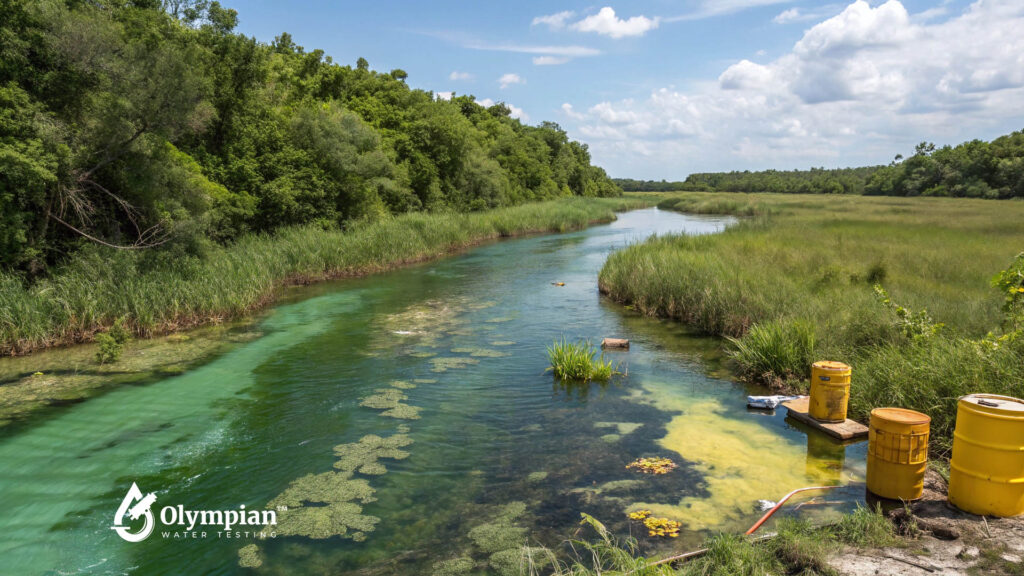
Pesticide effects on water quality. Polluted river with yellow barrels and algae bloom. Environmental impact concept.

Pesticides in water can have significant ramifications. They threaten both human health and the environment. These effects vary based on pesticide type, concentration, and exposure duration.

Contamination can render drinking water unsafe. This poses severe risks to communities, especially those reliant on untreated water sources. The impact often extends to wildlife, affecting ecosystems and biodiversity.

Besides direct toxicity, pesticides can disrupt ecological balances. For example, they alter food webs, jeopardizing the survival of various species. The cumulative impact on ecosystems can be profound, necessitating concerted mitigation efforts.

Risks to Human Health

Pesticides and water quality: Man experiencing nausea and stomach pain. Risks to human health.

Exposure to pesticides in drinking water can lead to acute health issues. Symptoms may include nausea, dizziness, and in severe cases, neurological damage. Long-term exposure poses chronic health risks, including cancer and endocrine disruption.

Regulatory bodies strive to set limits on permissible pesticide levels in water. Compliance ensures that drinking water remains within safe limits. However, continuous monitoring is essential to detect and address contamination promptly.

Environmental Impact on Aquatic Ecosystems

Healthy aquatic ecosystem with fish swimming near coral. Water quality is important for marine life.

Pesticides are detrimental to aquatic ecosystems. They can decimate populations of sensitive species, such as fish and amphibians. The loss of aquatic life reduces biodiversity, impacting ecosystem resilience.

Pesticides interfere with the reproductive cycles of many aquatic organisms. This can lead to population declines and altered community structures. Moreover, the effects can cascade through food chains, affecting even non-target species. The result is often a disrupted ecological balance that demands restoration efforts.

Regulatory Framework and Water Quality Standards

Regulatory frameworks play a crucial role in safeguarding water quality. They set permissible limits on pesticide residues, ensuring public safety. These standards are developed based on scientific research and risk assessments.

Regulatory Framework and Water Quality Standards

Water quality standards are not static. They require regular updates to incorporate new scientific findings. This adaptability ensures they remain effective in protecting both human health and the environment.

The Role of the EPA and Safe Drinking Water Act

The Environmental Protection Agency (EPA) is pivotal in water quality regulation. The agency establishes guidelines that limit pesticides in water. Their work helps maintain safe drinking water for communities nationwide.

The Safe Drinking Water Act is another key component. It mandates the protection and monitoring of public water systems. This comprehensive legislation ensures that water remains safe for consumption, reducing health risks associated with contamination.

Strategies for Reducing Pesticide Impact

Minimizing the impact of pesticides on water quality requires strategic planning. A proactive approach focuses on both preventing contamination and improving existing conditions. These strategies involve diverse stakeholders, from farmers to policymakers.

Innovation in agriculture can significantly lower pesticide runoff. Technologies and practices that reduce pesticide use can make a substantial difference. Implementing these solutions requires collaboration and a commitment to sustainability.

Best Management Practices in Agriculture

Best Management Practices in Agriculture

Adopting best management practices in agriculture is vital for reducing pesticide pollution. Techniques such as precision farming help to use chemicals more efficiently, minimizing excess runoff. By targeting application areas more accurately, farmers can lessen environmental harm.

Cover crops and buffer strips are also effective. They capture nutrients and pesticides before they can reach water bodies. These natural barriers help improve soil health while protecting nearby water sources from contamination.

Community Involvement and Education

Community involvement and education are crucial to tackling pesticide impact. Awareness programs educate people about the consequences of pesticide use on water quality. Informed citizens can advocate for policies and practices that protect vital resources.

Local initiatives and workshops empower communities to take action. By fostering a collective understanding, residents can work together to implement sustainable solutions. Through education, individuals become powerful agents for change, promoting healthier ecosystems and safer water.

Conclusion: The Path Forward for Safe Water

Ensuring safe water requires ongoing commitment and collaboration. Reducing pesticide impact involves regulatory vigilance, sustainable practices, and community engagement. By integrating these efforts, we can protect water quality for current and future generations, ensuring access to clean water, a fundamental human right, and vital for healthy ecosystems.

Share this on social media:

Facebook
Twitter
LinkedIn