Manganese in Drinking Water: A Comprehensive Review of Treatment Options
- Published:
- Updated: December 16, 2024
Listen to this article
Summary
Explore comprehensive treatment options for manganese in drinking water:
- Filtration Systems: Activated carbon, ion exchange, and reverse osmosis systems effectively reduce manganese levels, with each system offering different advantages and considerations.
- Chemical Treatment: Oxidation and coagulation processes can remove soluble manganese, often used in municipal water treatment plants.
- Biological Treatment: Biofiltration methods utilize beneficial bacteria to break down manganese and other contaminants, offering eco-friendly solutions with proper management.

A dissolved element, manganese, occurs naturally in the crust of the Earth and enters our drinking water from both above and below ground. Although it is an essential trace mineral, too much manganese is a double-edged sword for our health and beauty. Manganese in our water has unwanted side-effects — from discolored water to ugly spots. Moreover, overuse of this mineral disrupts the brain and leads to all kinds of health issues. This makes keeping manganese levels within the legal limits of toxicity an urgent matter in order to protect us.
Potential Health Implications
There can be health issues with excessive manganese in the water. The human body will tolerate manganese up to a point because it’s a fundamental nutrient needed for so many biological processes, but too much can be problematic.
The main worry is the effects on the nervous system. A potential connection between manganese and neurological disease was identified by a number of researches. And children and babies are more susceptible to these side effects because their nascent bodies receive more manganese and shed less. Manganese should never be below an acceptable level in drinking water if we want to avoid these illnesses.
Manganese Standards for Drinking Water
Some agencies have developed recommendations or requirements for manganese in water to keep public health safe. The World Health Organization (WHO) for example has a recommended value for manganese in water.
Manganese now comes with a health advisory from the Environmental Protection Agency (EPA) in the US. These aren’t enforced but they establish the minimum recommended manganese levels for drinking water, so water companies and customers can make better water treatment decisions.
Identifying Manganese in Drinking Water
The easiest way to tell if your water has manganese in it is to test your water. Your water provider should be checking your water on a regular basis for manganese and other contaminants if you get your water from a public well.
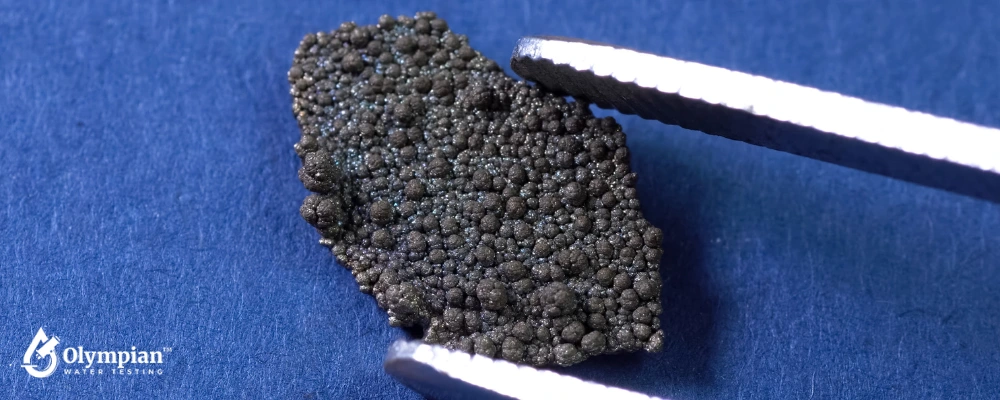
For water with manganese in excess, you might notice metallic taste or brown-black stains on fixtures and laundry. But make sure you have a water test to back up these suspicions, since contaminants do all kinds of stuff. There are some labs that provide water testing services or you can buy home testing kits for a faster, but less accurate assessment.
Filtering Systems for Manganese Removal
The most common manganese remover in drinking water is filtration. Different kinds of filters can remove manganese:
Activated carbon filters: These can trap some manganese in very small quantities, but might not be suitable for large quantities.
System with ions: Ion exchange machines will remove manganese by comparing ions in water with ions on the resin surface.
Reverse osmosis: These work great on manganese and other contaminants, but can be expensive and produce effluent.
Note: Any manganese-removing filter must be maintained and replaced on a regular basis for proper performance.
Chemical Treatment Options for Manganese
Getting rid of manganese in drinking water can be a job that’s done chemically. Manganese is removed from them by the common chemical oxidation. Oxidising filters react soluble manganese with either potassium permanganate or chlorine to convert the metal into insoluble particles and filter it.
The other chemical treatment is coagulation, in which a chemical is added to the water to create particles that bind manganese and other contaminants. These larger bits can then be filterered. This is a typical treatment used at city water treatment facilities.
Biological Treatment Methods
You can even remove manganese from water through biological treatment techniques like biofiltration. The good bacteria in such systems digest manganese and other toxins into forms easily discarded.
Such systems can work well and they’re ecologically friendly, but they do need to be kept under close supervision in order to ensure the conditions for the bacteria are suitable. These can be water temperature, pH, and nutrients.
The beauty of biological treatment is that you can get rid of other contaminants at the same time. Some strains of bacteria, for example, can even decompose iron, arsenic and organic compounds.
Choosing the Right Treatment for Your Home
Whether it’s a treatment for your home or another depends on a number of things such as how manganese-rich your water is, what your budget is, and whether you can handle maintaining it. Consider these things when choosing a treatment:
The amount of contaminant: If you’re testing for high manganese in your water, you may need to go with a higher quality treatment such as reverse osmosis or oxidation-filtration.
Cost: There are some systems, such as reverse osmosis, that can be more expensive to start but very efficient in terms of getting manganese and other contaminants out.
Keeping it maintained: All systems require some maintenance to stay up. Make sure you’re OK with how much upkeep there will be for your system of choice.
Quality of the water overall: If manganese is not your only problem with your water, you may want to think about a multi-pronged treatment solution.
Share this on social media:
Facebook
Twitter
LinkedIn