Manganese in Drinking Water: The Impact of Manhattan's Financial District on Water Quality
- Published:
- Updated: November 27, 2024
Listen to this article
Summary
Examining the presence of manganese in Manhattan’s Financial District highlights concerns over water quality in urban areas.
- Understanding Manganese: While essential in small amounts, excessive manganese exposure can lead to neurological and cognitive issues.
- Industrial Impacts: Construction and waste disposal in the Financial District can potentially affect water quality, necessitating rigorous testing and monitoring.
- Mitigation Efforts: Water treatment facilities employ oxidation and filtration to remove manganese, but ongoing measures and public engagement are crucial for ensuring clean water in the Financial District.

Manganese in tap water is an issue we should really be looking out for, especially in cities such as Manhattan’s Financial District. This urban centre of economic activity can have a powerful effect on the water quality of the surrounding area. If we can trace the Financial District to water quality, we’ll know how much manganese intrusion is going on in the drinking water supply.
Understanding Manganese
Manganese is a mineral that’s found everywhere, and is essential to many biological functions. It’s a macronutrient we need for a variety of things, from metabolism to building bones. But its ubiquitousness puts us at risk if it gets in our waterways in abundance, and we can get sick.
Manganese in small quantities is important for humans, but the right amount of manganese too can be harmful. These include Parkinson’s-like neurological problems like tremors and gait disturbance, as well as cognitive impairments like memory loss. This is manganese’s paradoxical nature, both wholesome and toxic in excess, and the combination is a tricky and pertinent water quality problem.
Manhattan's Financial District: An Overview

In the Financial District, at the southern end of Manhattan, you will find Wall Street and all the big financial companies. Its compact cluster of high rise buildings is home to a large working class in the daytime, and its housing stock has increased by almost a factor of 10. In a city this densely populated, keeping the essential services, such as water, up to standard is very important.
There’s commerce and industry that can be found throughout the neighbourhood, going back to the very beginning of the city. Nowadays, a financial center by default, it’s a neighbourhood and tourist destination with ancient monuments and chic condos to match. The size and diversity of the Financial District means that clean and safe water is critical.
Water Sources in Manhattan's Financial District
The water for Manhattan’s Financial District and much of New York City comes from a system of reservoirs and lakes upstate. This world-large water supply supplies more than a billion gallons of water per day to the city’s citizens, industry and tourists.
But before it gets to the taps in the skyscrapers of the Financial District, it goes through hundreds of miles of tunnels and aqueducts and is treated to make it health and safety-compliant. Even in these efforts, there are worries of contamination, such as manganese, in the water supply.
Industrial Impacts on Water Quality
In a bustling area like the Financial District, various industrial activities have the potential to impact water quality. Construction projects, for example, can disrupt soil and rock, potentially releasing manganese and other minerals into the groundwater. Similarly, waste from offices and residences could contribute to the contamination of water supplies.
- Construction: Large-scale construction and renovation projects can disturb underground minerals and potentially lead to their leaching into the water supply.
- Waste Disposal: Improper disposal of waste from businesses and residential buildings can also impact water quality.
Testing and Monitoring of Water Quality in Manhattan
New York City also tests and monitors its water supply on a regular basis to keep it safe. The Water Quality Inspectorate checks water for several contaminants, such as manganese, in the Financial District as everywhere else in the city.
Yet, for all these measures, manganese in the city’s water supply has been an issue. If you’re ensuring these monitoring and testing protocols are working, and if problems are found, that is the answer to keeping the Financial District water safe and clean.
Comparison with Other Areas in New York City
Where do the Water Quality in the Financial District Stand Compared to other New York City Neighborhoods? This is a good question to try to get a feel for the specific difficulties here.
And though manganese and other pollutants vary slightly from one area of the city to the next, in general, New York City’s water is among the nation’s best. But there are regional differences, and some areas might have more extreme water quality concerns, such as industrial production or degrading infrastructure. Knowing these differences and managing any regional issues is critical to making sure everyone has safe water in the city.
Mitigation Efforts and Water Treatment
For manganese and other contaminants, there are several mitigation measures in place. The first way to remove manganese from water is by purifying it at water treatment plants. In these stations, pollutants are removed through oxidation and filtration.
Oxidation: An oxidant is added to the water to convert manganese into a powder which can be removed by filter.
Removal of Solid Manganese Particles Filtration: After oxidation, the water goes through filters.
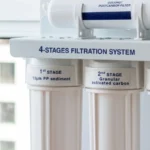
For the Financial District buildings, it’s also possible to add in other safeguards like water filtration at the building site to enhance water quality.
How can we improve water quality in the Financial District as we move forward?
As we move forward, we can see that it’s going to take a multifaceted approach to keep Manhattan’s Financial District water cleaner. That means continuous testing and monitoring, improved treatment technologies and greater public communication and engagement on the water quality problem.
More strict laws could be the answer, so industrial production does not damage the water supply. Greater investment in infrastructure such as new water treatment plants could also be undertaken to keep the water in the city clean and healthy for the citizens.
Community Engagement and Public Awareness
Awareness and community engagement are key to the manganese contamination in the Financial District of Manhattan. Homeowners and business owners need to know where manganese comes from and what the hazards are. There are simple steps, like getting your trash away and not using as many toxic chemicals, to mitigate contamination. Even grassroots efforts such as local water quality monitoring groups can help to catch problems early.
Conclusion: Ensuring Safe Drinking Water in Manhattan's Financial District
ConclusionWater quality in Manhattan’s Financial District must be of high quality to safeguard public health and the environment. Manganese is needed in tiny quantities, but at high levels it is dangerous for the health. Water pollution is often a result of industrial activities and urban development, and so careful testing, treatment technologies and community monitoring are needed. By having comprehensive mitigation measures, promoting public education, and putting into place the most current water treatment technologies, Manhattan will keep its water safe and clean for every Manhattan resident and business.
Share this on social media:
Facebook
Twitter
LinkedIn
Next Article:

Related Posts