New Jersey’s tap water quality rankings
Recent studies have highlighted the state of drinking water quality rankings in the United States. New Jersey ranks second-worst, sparking concerns among residents. This has led to a closer examination of the factors behind this poor ranking.
The Environmental Working Group (EWG) found New Jersey with 556 water systems exceeding PFAS limits. This is more than states like Massachusetts, California, New Hampshire, and Pennsylvania. These numbers underscore the widespread contamination and the need for immediate action.

In New Jersey, contaminated water affects many counties, with Morris County being a prime example. Dover, among others, faces health risks due to "forever chemicals" in public water systems. This calls for urgent and thorough measures to protect public health.
State | Number of Water Systems Above PFAS Limit |
New Jersey | 556 |
Massachusetts | 439 |
California | 263 |
New Hampshire | 202 |
Pennsylvania | 125 |
Percentage of population served by public water systems with health violations
In New Jersey, 38.6% of the population relies on public water systems with health violations from 2019 to 2023. The state saw 1,279,034 acute health-based violations and 2,807,128 health-based violations. This highlights the severity of the situation and its health risks.
Water companies have five years to meet new federal standards for PFAS levels. The federal government has allocated billions to support the installation of filtration systems. This effort aims to reduce PFAS levels and ensure safer drinking water for all.
Common contaminants in New Jersey’s tap water
New Jersey’s tap water faces numerous contaminants, posing health risks to its residents. With 563 public water utilities serving about 8,854,000 people, ensuring water safety is a challenge. The Environmental Working Group (EWG) found 131 contaminants in New Jersey’s tap water, including arsenic, chloroform, and nitrate.
PFAS, PFOS, and PFOA, known as "forever chemicals," are major concerns. These substances are found in nearly every American’s blood, including newborns. Over 143 million people in the U.S. are exposed to PFAS in their drinking water. New Jersey has set Maximum Contaminant Levels (MCLs) for these PFAS and reached a $393 million settlement with Solvay over PFAS contamination.
Lead and arsenic contamination are also significant in New Jersey’s tap water. Exposure to these contaminants can cause developmental issues in children, cancer, and other chronic diseases. E. coli and other acute health-based contaminants have also been found, underscoring the need for continuous monitoring and treatment.
Contaminant | Potential Health Effects |
PFAS (PFOA, PFOS, PFNA) | Developmental issues, cancer, immune system damage |
Lead | Developmental delays, learning difficulties, behavioral problems |
Arsenic | Bladder, lung, and skin cancer |
E. coli | Gastrointestinal illness, urinary tract infections |
Nitrate | Methemoglobinemia (blue baby syndrome) |
Hexavalent chromium (chromium-6) is another concern, found in over 250 million Americans’ drinking water. It has no federal limit despite being carcinogenic. Disinfection byproducts from chlorine disinfectants are linked to cancer and reproductive health issues. Radiological contaminants like radium and uranium have also been detected, potentially exceeding EPA limits and increasing cancer risk due to ionizing radiation.
Health risks associated with contaminated tap water
Drinking contaminated tap water poses significant health risks to New Jersey residents. The severity of these risks varies based on several factors. These include the type and concentration of contaminants, the duration of exposure, and individual susceptibility. Age, overall health status, and the presence of other contaminants also play a role in the extent of adverse health effects.

Short-term health effects
Short-term effects of contaminated water may include gastrointestinal issues like nausea, vomiting, and diarrhea. These symptoms can be severe in young children, the elderly, and those with compromised immune systems. Exposure to contaminants such as E. coli or other bacteria can lead to acute illnesses needing immediate medical attention.

Long-term health effects
Long-term exposure to contaminated tap water can lead to more severe health consequences. Contaminants like lead and arsenic have been linked to developmental delays, neurological disorders, and cancer. PFAS, known as "forever chemicals," have been associated with a range of long-term effects, including increased cancer risk, impaired immune function, hormonal disruptions, and elevated cholesterol levels.
The table below shows the mean blood serum levels of PFAS in the United States population (2017-2018):
PFAS Compound | Mean (ng/mL) | 50th Percentile (ng/mL) | 95th Percentile (ng/mL) |
PFOS | 4.25 | 4.30 | 14.6 |
PFOA | 1.42 | 1.47 | 3.77 |
PFNA | 0.41 | 0.40 | 1.40 |
PFHxS | 1.08 | 1.10 | 3.70 |
To mitigate the long-term effects of PFAS exposure, New Jersey has established Maximum Contaminant Levels (MCLs) for several PFAS compounds. Public water systems must adhere to these MCLs by implementing appropriate treatment solutions. Regularly monitoring tap water quality and staying informed about local water issues can help individuals make informed decisions to protect their health from the risks associated with contaminated water.
Winter weather and its impact on tap water quality
In New Jersey, the taste of tap water often changes during winter. This shift is caused by the increased use of road salt and brine to clear roads. As snow and ice melt, these substances flow into local water sources, affecting drinking water quality.
The winter weather impact on tap water quality worsens due to drought conditions in New Jersey. With nearly 72% of the state facing severe drought and 34% in extreme drought, water reservoirs and rivers are at lower levels. This results in higher sodium and chloride levels in drinking water.

Increased Use of Road Salt and Brine During Winter Months
New Jersey American Water states that the salty taste in tap water comes from salt and brine use in extreme winter weather. The company notes that increased sodium and chloride in source water are due to road salt runoff, mainly during winter weather events.
Drought Classification | Percentage of New Jersey Affected |
Moderate Drought | 100% |
Severe Drought | 72% |
Extreme Drought | 34% |
Runoff from Snow Melt Washing Contaminants into Water Sources
Snow melt runoff carries contaminants like road salt and brine into water sources, raising sodium and chloride levels in drinking water. The New Jersey Department of Environmental Protection says these levels are not a health risk for most people. Yet, those on sodium-restricted diets should talk to their healthcare providers about water intake during these times.
New Jersey American Water assures customers that water quality meets all health standards, despite the taste changes. The issue of salty tap water is a broader concern in New Jersey, affecting many water systems due to winter weather and drought.

Monitoring and regulation of tap water quality in New Jersey
The New Jersey Department of Environmental Protection (NJDEP) and local water providers collaborate to ensure the state’s drinking water is safe. They address contamination issues through rigorous testing. The NJDEP started testing for PFOA and PFOS in drinking water in 2006. The Drinking Water Quality Institute recommended Maximum Contaminant Levels (MCLs) for PFAS chemicals in 2009.
By April 2024, New Jersey proposed enforceable drinking water standards for PFAS. The state set limits for PFOA and PFOS at 14 ppt and 13 ppt, respectively, in 2020.
Regular water quality monitoring is key to meeting these standards. For instance, the Raritan Basin Water Supply System serves over 126 million gallons of water daily to 56 New Jersey communities. In 2023, PFOA levels in Middlesex Water Company reached 6 ppt, while PFOS levels were at 5 ppt. These levels are above the EPA’s Maximum Contaminant Level Goal (MCLG) of zero for both contaminants.
Municipal water treatment plants, like the Raritan-Millstone Water Treatment Plant, are vital for water quality. Yet, some facilities have outdated infrastructure, with filters from the 1920s to the 1980s. Upgrading these plants is critical for effective contaminant removal and compliance with evolving regulations.
Contaminant | EPA MCL | NJ State Limit (2020) | Middlesex Water Company Average (2023) |
PFOA | 4 ppt | 14 ppt | 6 ppt |
PFOS | 4 ppt | 13 ppt | 5 ppt |
Continuous monitoring and proactive measures are vital for New Jersey’s drinking water safety. By following strict standards, investing in infrastructure upgrades, and maintaining open communication with the public, the state aims to provide clean, reliable tap water for its residents.
Role of the New Jersey Department of Environmental Protection (NJDEP)
The New Jersey Department of Environmental Protection (NJDEP) is at the forefront of protecting the state’s tap water quality. It focuses on enforcing strict water safety regulations. The NJDEP works tirelessly to tackle statewide water issues. This ensures every resident has access to clean, safe drinking water.
The NJDEP plays a critical role in maintaining communication with water systems and customers. It keeps stakeholders informed about water quality concerns and updates on regulations. This empowers communities to make informed decisions about their drinking water.
Addressing winter weather-related water quality issues
The NJDEP has acknowledged the significant impact of winter weather on water quality. To address these challenges, the agency has implemented several measures. These aim to mitigate the effects of seasonal weather on New Jersey’s tap water:
- Increased monitoring of water systems during winter months
- Collaboration with water providers to develop contingency plans for extreme weather events
- Public outreach campaigns to educate residents about winter water quality concerns and conservation measures
Recent updates to groundwater quality standards
On February 3, 2025, the NJDEP amended the Ground Water Quality Standards (GWQS) for 73 constituents of Class II-A ground water in New Jersey. The changes, which affected 64 of the 73 constituents, are summarized in the table below:
Change | Number of Constituents |
Standards made more stringent | 50 |
Standards made less stringent | 12 |
Interim generic criteria replaced with specific criteria | 2 |
These updates to the GWQS reflect the NJDEP’s dedication to maintaining high water quality standards. By regularly reviewing and revising water safety regulations, the agency ensures New Jersey’s tap water remains safe. This protects public health.
Tap water quality New Jersey
New Jersey residents have long been concerned about their tap water quality. The state ranks second-worst in the nation for drinking water quality. This is due to numerous contaminants found in water systems serving a significant portion of the population. Regular tap water quality testing is essential to ensure the safety and compliance of New Jersey’s drinking water.
From 2021 to 2023, several contaminants were detected in New Jersey tap water that exceeded health guidelines set by the Environmental Working Group (EWG). These include haloacetic acids (HAA5 and HAA9) and total trihalomethanes (TTHM). Yet, over 100 other substances, such as 1,1,1-trichloroethane, 1,1-dichloroethylene, atrazine, benzene, cadmium, and inorganic mercury, were tested for but not detected.
Specific contaminants that are closely monitored in New Jersey’s tap water include:
- Arsenic
- Bromate
- Hexavalent chromium
- Nitrate & nitrite
- Perfluorooctanoic acid (PFOA)
- Total trihalomethanes (TTHMs)
To assess the safety of tap water, annual utility averages are compared against health guidelines established by federal or state public health authorities. The presence of contaminants exceeding these guidelines is indicative of possible health risks associated with New Jersey’s tap water quality.
Per- and polyfluoroalkyl substances (PFAS), often referred to as "forever chemicals," have recently gained significant attention. From 2019 to 2021, PFAS were detected in 63% of New Jersey water systems, collectively serving 84% of the state’s population. The impact of PFAS contamination has been disproportionately felt by communities of color:
Population | Percentage Served by Water Systems with PFAS Detections |
Hispanic | 92% |
Black | 94% |
Asian | 95% |
Non-Hispanic White | 76% |
In response to growing concerns about PFAS contamination, the EPA finalized drinking water regulations for six PFAS compounds on April 10, 2023. The Bipartisan Infrastructure Law has also allocated $9 billion to address PFAS and other contaminants. Two PFAS compounds have been added to the Superfund list of hazardous chemicals, making polluters responsible for remediation.
Despite these challenges, there are signs of progress in improving New Jersey’s tap water quality. Levels of PFAS detections appear to be declining over time. Water systems that have installed treatment technologies are less likely to detect these contaminants. As efforts to upgrade water infrastructure and implement stricter safety regulations continue, New Jersey residents can hope for safer, cleaner drinking water in the future.
Sodium and chloride concentrations in tap water
Winter weather events can significantly impact the quality of tap water in New Jersey, affecting sodium and chloride levels. Road salt and brine, used to ensure public safety, can enter local water sources. This happens through runoff from melting snow and ice.
The U.S. Drought Monitor map shows 100% of New Jersey is in moderate drought. Nearly 72% face severe drought, and about 34% are in extreme drought. The dry conditions and increased road salt use have raised sodium and chloride levels in tap water.
Impact of Winter Weather Events on Sodium and Chloride Levels
The environmental impact of winter salt usage is substantial. Millions of roads, homes, and businesses in New Jersey are affected. A single 12-ounce coffee mug can hold enough salt to treat a 20-foot driveway.
While proper salt application is key, excess salt often ends up on dry pavement. It then washes into storm drains, raising sodium and chloride levels in local waterways.
Health Concerns for Individuals on Sodium-Restricted Diets
New Jersey American Water assures that tap water meets quality standards, despite taste changes. Yet, individuals on sodium-restricted diets should be cautious. While these changes do not pose a health risk for most, those with dietary restrictions should consult their healthcare provider.
Ongoing drought conditions and their effect on water quality
New Jersey, with a population of 9.3 million and an economy worth around $800 billion, faces a major challenge due to drought. The U.S. Drought Monitor map shows 100% of the state in moderate drought. Severe drought affects 72%, and extreme drought impacts 34% of New Jersey. The southern part is hit the hardest.
The 2024 Plan states New Jersey has enough water under normal conditions. Yet, climate change is expected to increase storm intensity and dry spells. This affects water quality, as lower levels in reservoirs and rivers concentrate contaminants like sodium and chloride.
The taste of tap water in New Jersey has changed due to salt use during extreme weather and drought. Road salt runoff, worsened by low water levels, has raised sodium and chloride levels. The New Jersey Department of Environmental Protection says these levels are generally safe. Yet, those with health concerns or on sodium-restricted diets should talk to their doctor.
New Jersey American Water assures that the water meets all health standards, despite the salty taste. This issue is part of a broader problem, as noted by the New Jersey Department of Environmental Protection (NJDEP). The Jersey Water Works emphasizes the need for maintaining water systems and infrastructure. Proper management is key to ensuring clean water access and reducing costs and incidents.
Recommendations for individuals with health concerns
Recent winter weather in New Jersey has raised concerns about tap water safety for those with health concerns or on sodium-restricted diets. Increased salt levels in tap water necessitate proactive steps to ensure access to clean drinking water.

Consulting healthcare providers for guidance
The New Jersey Department of Health recommends that individuals with health concerns or dietary restrictions consult their healthcare providers about tap water safety. Healthcare professionals can tailor advice based on an individual’s health needs, including age, medical history, and current health status. They can also suggest ways to reduce risks associated with tap water during high salt periods.
Considering alternative water sources or filtration systems
For added reassurance, exploring alternative water sources or investing in water filtration systems might be beneficial. Some may switch to bottled water or use water delivery services until tap water salt levels normalize. Others might choose to install water filtration systems, like reverse osmosis units or water softeners, to remove contaminants. It’s vital to ensure these systems are installed correctly to avoid water corrosivity issues.

When looking into alternative water sources or filtration systems, it’s important to research and compare options. This will help find the best fit for your needs and budget. Consulting with water treatment experts or certified laboratories can offer valuable insights and guidance in making an informed choice.
Option | Advantages | Considerations |
Bottled Water | Convenient, readily available | Higher cost, environmental impact |
Water Delivery Services | Scheduled delivery, variety of options | Subscription costs, storage space |
Reverse Osmosis Systems | Effective contaminant removal | Installation costs, maintenance |
Water Softeners | Reduces water hardness, can remove lead | Proper installation is critical |
By proactively seeking guidance from healthcare providers and water treatment experts, individuals with health concerns can ensure access to safe drinking water. This is essential during challenging times, such as winter weather events or drought conditions.
Water filtration and treatment services in New Jersey
In New Jersey, the safety of tap water is a pressing concern. Water filtration and treatment services offer a reliable solution. Aqua Doctor, with over 30 years of experience, specializes in removing harmful contaminants like PFAS, PFOS, PFOA, lead, and arsenic. They serve counties such as Bergen, Essex, Sussex, Hudson, Morris, and Passaic. Aqua Doctor has a proven track record of successful projects, providing water solutions to many.
Aqua Doctor is a State Certified water treatment company, committed to quality. They adhere to strict water quality standards. Their services include water softening, purification, and filtration, catering to the diverse needs of New Jersey households. They use only the finest materials for their water systems, ensuring the health and safety of their customers.
Impurities Removed | Customer Rating | Emergency Response | Recommended Maintenance |
90% to 99% by reverse osmosis systems | 4.9 Stars based on over 575 reviews | 24/7 availability for water treatment and plumbing needs | Every six months for heating and air systems |
Hard water issues are common in the region, causing fabric damage, skin irritation, and dishwashing complications. Aqua Doctor offers water softening solutions to combat these problems. They address the high levels of minerals like magnesium, iron, and calcium in Pennsylvania’s water. They also provide free water testing services to identify specific issues and recommend the best water treatment services.
"Reverse osmosis is the only full-proof filtration system that removes every type of contaminant from water, ensuring the highest level of purity for our customers." – Aqua Doctor
Aqua Doctor has a new location at 555 Goffle Road, Ridgewood, NJ. They are well-positioned to meet the growing demand for water filtration services in the state. Investing in a whole-home water filtration system ensures high-quality water at every faucet. This provides peace of mind and a healthier living environment for New Jersey residents.
Importance of testing and monitoring tap water quality
Ensuring the safety of drinking water in New Jersey requires regular testing and monitoring. The Bureau of Safe Drinking Water of the New Jersey Department of Environmental Protection (NJDEP) oversees these efforts. They enforce the Federal Safe Drinking Water Act and the New Jersey Safe Drinking Water Act. This mandates public community water systems to test their water at specific locations and on a strict schedule.
Between September 2002 and April 2007, data showed significant results. Out of 51,028 private wells tested in New Jersey, about 13% of the estimated 400,000 private wells used for drinking water were tested. The results were:
- 88% of the wells "passed" all required primary drinking water standards
- 12% (6,369 wells) exceeded primary drinking water standards, categorized as "failed"
The most common exceedances among the failed wells included:
Contaminant | Number of Wells Exceeding Standards |
Gross alpha particle activity | 2,209 |
Arsenic | 1,445 |
Nitrates | 1,399 |
Fecal coliform or E. coli | 1,136 |
Volatile organic compounds (VOCs) | 702 |
Mercury | 215 |
Contacting Local Water Providers for Information
Residents can reach out to their local water providers for information on water quality testing and safety measures. Drinking water suppliers must notify customers if monitored chemical levels exceed standards. This includes public postings, media announcements, and direct mailings.
Reaching out to the U.S. Environmental Protection Agency for Guidance
The U.S. Environmental Protection Agency (EPA) offers valuable guidance on water quality testing and standards. The EPA sets maximum contaminant level goals (MCLGs) at zero for carcinogenic chemicals and has established action levels (ALs) for lead and copper. If residents suspect contamination in their drinking water, they can contact the EPA for guidance on appropriate testing and safety measures.
Nationwide, an estimated six to ten million lead pipes are in use, affecting water delivery to homes. Between January 1, 2018, and December 31, 2020, 186 million people in the United States (56% of the U.S. population) drank water from systems detecting lead.
By staying informed, contacting local water providers, and seeking guidance from the EPA, New Jersey residents can take proactive steps to ensure the safety and quality of their tap water.
Comparison of New Jersey’s water quality to other states
In the realm of state water quality comparison, New Jersey stands out as one of the lowest in the nation. A recent report reveals that 38.6% of New Jersey’s population relies on public water systems with health violations from 2019 to 2023. This makes New Jersey the second-worst state for drinking water quality.

On the other hand, states like North Dakota, Nevada, Washington, and Hawaii lead the country in drinking water quality. These states have set high standards and invested in cutting-edge water treatment systems. This ensures their tap water is safe and pure.
State | Population Served by Water Systems with Health Violations |
New Jersey | 38.6% |
North Dakota | 0.5% |
Nevada | 1.2% |
Washington | 1.8% |
Hawaii | 2.3% |
The stark contrast in state water quality comparison emphasizes the need for New Jersey to tackle its drinking water problems. The state must focus on upgrading its water infrastructure, enforcing stricter regulations, and adopting advanced water treatment technologies. This is essential for the health and well-being of its residents.
New Jersey can learn from states like North Dakota and Nevada to enhance its tap water quality. By adopting their strategies, New Jersey can improve its water quality and regain public trust. It is vital for the state to work with local water providers, environmental agencies, and health experts. Together, they can develop effective plans to combat water contamination and provide clean, safe drinking water to all.
Efforts to improve tap water quality in New Jersey
New Jersey is making significant strides to improve its drinking water quality. It’s focusing on water infrastructure upgrades and stricter safety regulations. Thanks to the Bipartisan Infrastructure Law, the state is tackling contamination head-on. This ensures residents have access to safe, clean tap water.
The Bipartisan Infrastructure Law has provided substantial funding for water quality improvements in the Mid-Atlantic. New Jersey, Pennsylvania, and Delaware are among the beneficiaries. This money will be used to replace lead pipes, treat PFAS, and upgrade aging water systems.
Addressing Lead Contamination
Lead pipes are a major concern in New Jersey and nationwide. The Bipartisan Infrastructure Law has set aside $15 billion to replace these pipes. Pennsylvania has already replaced over 30,000 lead service lines with this funding.
Combating PFAS and Other Contaminants
PFAS is another significant threat to drinking water quality. About 50% of U.S. drinking water contains PFAS. The EPA has mandated that water providers test and treat these substances to nearly zero levels within five years. New Jersey is actively working to meet these new standards.
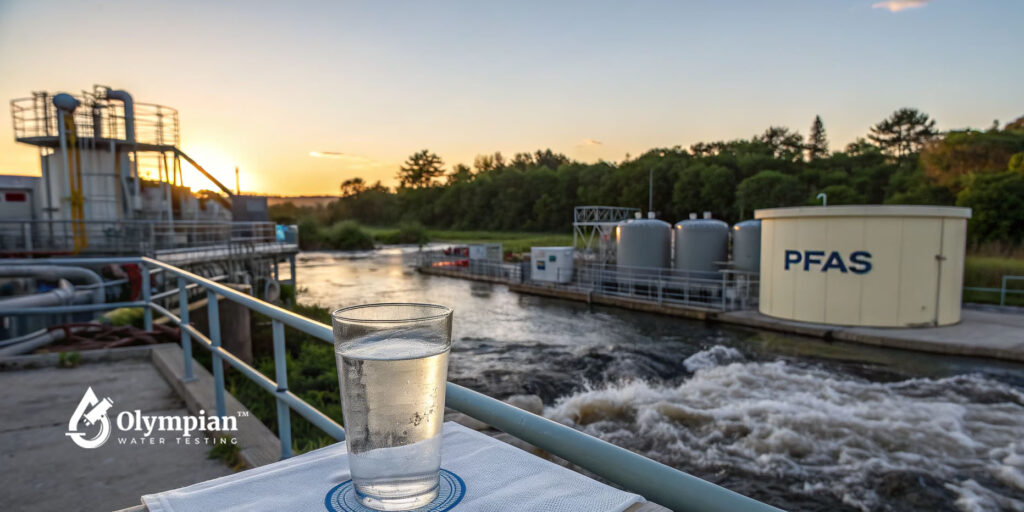
The EPA now regulates over 90 contaminants in drinking water, most established over 25 years ago. The EPA requires water providers to nearly eliminate PFAS levels. This shows a strong commitment to public health.
New Jersey is investing in water infrastructure upgrades and stricter safety regulations. These efforts, backed by federal funding and the Safe Drinking Water Act, aim to provide clean, safe tap water for future generations.
Individual actions to ensure safe drinking water
In New Jersey, residents face tap water quality challenges. It’s vital for individuals to take proactive steps for safe drinking water. While big efforts tackle contamination, there are key individual actions to protect health and family well-being.
Testing your tap water regularly is a critical step. Home water testing kits offer insights into water quality. If tests show harmful substances like lead, arsenic, or PFAS, a water filtration system can help remove them.
Contaminant | Potential Health Effects | Filter Options |
Lead | Developmental delays, learning difficulties, and other health issues | Reverse osmosis, activated carbon, or NSF/ANSI Standard 53 certified filters |
Arsenic | Skin damage, circulatory problems, and increased cancer risk | Reverse osmosis, activated alumina, or iron oxide filters |
PFAS | Immune system effects, hormonal disruptions, and certain types of cancer | Activated carbon or reverse osmosis filters |
Staying informed about local water quality is also essential. Watch for public notices and follow recommended actions. Attend community meetings and contact local officials to advocate for better water infrastructure and treatment.
Everyday practices can also help. Properly dispose of household chemicals and medications to prevent contamination. Supporting eco-friendly initiatives, like reducing pesticide use, helps keep water sources clean.
"By taking a proactive approach and implementing these individual actions, New Jersey residents can play a vital role in ensuring access to safe drinking water for themselves and their communities."
While big solutions are important, individual actions are powerful. Together, we can ensure a safer, healthier future for New Jersey residents.
Long-term solutions for addressing water contamination issues
Dealing with water contamination in New Jersey demands a broad strategy. The New Jersey Institute of Technology (NJIT) has been at the forefront, thanks to funding from the Bureau of Reclamation’s Desalination and Water Purification Research program. Their innovative pre-treatment method has significantly boosted the time to 50% breakthrough for PFBS, a regulated short-chain PFAS. This could lead to a 50% reduction in the need for granular activated carbon (GAC) replacement.
Strengthening water safety regulations is also vital. New Jersey was the first to set PFAS limits in drinking water in 2021, before the EPA followed suit. Enforceable regulations for PFAS in drinking water were introduced in April 2024, with limits at 4 parts per trillion (ppt) for PFOA and PFOS. By June 2023, over 70 public water systems in New Jersey exceeded state PFAS health limits. It’s expected that this number could rise to hundreds once enforceable limits were in place.
Raising public awareness about safe drinking water is another essential step. By February 2023, about 62.4% of untreated well water samples and 11.8% of treated well water samples exceeded New Jersey’s arsenic Maximum Contaminant Level (MCL). Those exposed to contaminated water might be eligible for settlements ranging from $30,000 to $300,000, based on exposure and diagnosis. Collaboration between government agencies, water providers, and residents is key to securing a safe water supply for future generations.
FAQ
Is it safe to drink tap water in New Jersey?
New Jersey ranks second-worst in the U.S. for drinking water quality, with 38.6% of the population served by public water systems with health violations from 2019-2023. While tap water is generally safe to drink, it’s essential to be aware of possible contaminants. Taking precautions, such as regular testing and using water filtration systems, is recommended.
What are the common contaminants found in New Jersey’s tap water?
New Jersey’s tap water contains various contaminants, including PFAS, PFOS, and PFOA (known as "forever chemicals"), lead, arsenic, and E. coli. These contaminants pose serious health risks to residents and are a growing concern for many.
What health risks are associated with drinking contaminated tap water?
Drinking contaminated water can have both short-term and long-term health effects. The severity depends on the type and amount of contaminant, duration of exposure, and individual susceptibility. Factors such as age, health status, and the presence of other contaminants can influence the severity of health risks.
How does winter weather impact tap water quality in New Jersey?
During winter months, the increased use of road salt and brine can lead to higher concentrations of sodium and chloride in tap water. Runoff from snow melt can also wash these contaminants into water sources, exacerbating the issue.
Who is responsible for monitoring and regulating tap water quality in New Jersey?
Tap water quality in New Jersey is monitored and regulated by various agencies, including the New Jersey Department of Environmental Protection (NJDEP) and local water providers. These entities work together to ensure that drinking water meets safety standards and to address any contamination issues that arise.
What should individuals with health concerns or sodium-restricted diets do about drinking tap water?
Individuals with health concerns or those on sodium-restricted diets should consult their healthcare provider for guidance on drinking tap water. They may also want to consider alternative water sources or invest in water filtration systems to ensure the safety of their drinking water.
How can I ensure my tap water is safe to drink?
Regular testing and monitoring of tap water quality are essential for ensuring the safety of drinking water in New Jersey. Residents can contact their local water provider or reach out to the U.S. Environmental Protection Agency for information on testing and safety measures if they suspect contamination. Investing in water filtration systems can also help remove harmful contaminants.
What efforts are being made to improve tap water quality in New Jersey?
Efforts to improve tap water quality in New Jersey include water infrastructure upgrades and the implementation of stricter water safety regulations. These measures aim to address contamination issues and ensure that residents have access to safe, clean drinking water.
What long-term solutions are there for addressing water contamination issues in New Jersey?
Long-term solutions for addressing water contamination issues in New Jersey include continued investment in water infrastructure, stricter enforcement of water safety regulations, and increased public awareness about the importance of safe drinking water. By working together, government agencies, water providers, and residents can help ensure a safe and reliable water supply for generations to come.