Overview of Delaware’s Water Sources
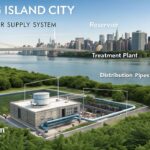
Delaware’s drinking water comes from municipal systems, groundwater, and surface water. Most people get their water from public systems, which use both groundwater and surface water. Private wells also provide drinking water, mainly in rural areas.
New Castle County relies heavily on surface water, like the Brandywine Creek and Christina River. In contrast, Kent and Sussex Counties use groundwater, drawing from aquifers for their water needs.
In Wilmington, the water infrastructure includes about 74,000 service lines. Only a small fraction, less than 3%, are made of lead. About 1,000 lines are galvanized. Yet, 75% of the system does not contain lead.
Water Source | Primary Counties |
Surface water (Brandywine Creek, Christina River) | New Castle |
Groundwater (aquifers) | Kent, Sussex |
Private well water | Rural areas across all counties |
Despite the variety of water sources, water quality concerns remain. Over 90% of Delaware’s waterways are polluted, failing to meet standards for recreation, fishing, or drinking. Common pollutants include pathogens and nutrients, with high levels of microbes detected during the COVID-19 pandemic.
Water Treatment Processes in Delaware
In Delaware, public water systems use various treatment processes to ensure drinking water is safe and of high quality. These processes aim to remove contaminants, enhance taste and odor, and meet federal and state standards. The ultimate goal is to provide clean, healthy water to every tap in the state.
The journey starts at water treatment plants, where raw water from sources undergoes purification. The methods used depend on the water quality and contaminants present. Key steps include filtration and disinfection.
Filtration Methods
Filtration is vital in removing suspended solids and impurities from water. Delaware employs activated carbon filtration and reverse osmosis for this purpose.
- Activated carbon filtration adsorbs contaminants like organic compounds, pesticides, and herbicides. It improves water taste and odor.
- Reverse osmosis uses a semi-permeable membrane to remove dissolved solids. This method is effective but more energy-intensive and costly.
Disinfection Techniques
Disinfection is the final step, ensuring all microorganisms are eliminated. Delaware uses chlorination and UV disinfection for this purpose.
- Chlorination adds chlorine to kill harmful microorganisms. It provides a residual disinfectant that protects the water in the distribution system.
- UV disinfection uses ultraviolet light to inactivate microorganisms by damaging their DNA. It’s highly effective and chemical-free, making it a popular choice.
Despite the effectiveness of these methods, some contaminants like PFAS require advanced technologies to meet EPA standards. Delaware’s water utilities are continually upgrading their systems to address emerging contaminants. This ensures the highest quality drinking water for residents.
Current Water Quality Standards in Delaware
In Delaware, tap water quality is overseen by both federal and state regulations. The U.S. Environmental Protection Agency (EPA) sets maximum contaminant levels (MCLs) for various substances under the Safe Drinking Water Act. All public water systems must follow these standards. Delaware’s Department of Natural Resources and Environmental Control (DNREC) also enforces state-specific requirements for contaminants like PFAS chemicals.
Federal Regulations

The EPA’s regulations are vital for maintaining water quality nationwide. On April 10, 2024, the EPA introduced the final National Primary Drinking Water Regulation for six PFAS substances. This regulation marks the first national, legally enforceable drinking water standard for PFAS. Public water systems have three years to start monitoring PFAS levels and five years to meet the new MCLs by 2029.
State-specific Requirements
Delaware also has its own water quality standards. The state’s annual drinking water quality reports show that about 90% of public water systems meet EPA health-based standards. Yet, the Department of Health and Social Services notes that around 10% of private wells may have unsafe contaminants. The state has invested over $100 million in water quality improvement projects in the last five years.
Contaminant | Federal MCL | Delaware MCL |
Lead | 15 ppb | 15 ppb |
Nitrates | 10 ppm | 10 ppm |
Total Coliform Bacteria | 5% of monthly samples | 5% of monthly samples |
PFOA | 4 ppt | TBD |
PFOS | 4 ppt | TBD |
Delaware is committed to bettering its water quality. The state has achieved a 100% compliance rate for public water systems with monitoring and reporting under the Safe Drinking Water Act. It has also seen a 20% reduction in nitrogen and phosphorus levels in the Chesapeake Bay watershed, leading to improved water quality.
Common Contaminants Found in Delaware Tap Water
Residents in Delaware are increasingly worried about contaminants in their tap water. These drinking water contaminants come from various sources. This includes old infrastructure, industrial activities, and agricultural runoff. Let’s explore some of the most common contaminants in Delaware’s tap water.
Lead
Lead is a major concern in Delaware’s tap water. This toxic metal can seep from lead pipes and fixtures, posing health risks, mainly to children and pregnant women. In cities like Wilmington, efforts are being made to replace lead pipes. Yet, residents in older homes need to be cautious and test their water for lead.
PFAS Chemicals
PFOA and PFOS, types of PFAS, have been found in Delaware’s water, often near military bases and industrial sites. These chemicals, used in manufacturing and products, do not break down easily and can build up in living things. By April 2024, the EPA classified PFOA and PFOS as hazardous substances. Delaware is monitoring PFAS levels in drinking water and other systems. EWG’s Tap Water Database offers more information on PFAS in Delaware.
Nitrates
Nitrate contamination in Delaware’s groundwater is mainly due to agricultural runoff from fertilizers. High nitrate levels can harm health, like methemoglobinemia in infants. Bacterial contamination from septic systems and livestock also affects private wells in rural areas. In Sussex County, efforts to reduce nitrate levels have been successful.
Delaware’s tap water also contains naturally occurring arsenic, iron, and manganese, as well as VOCs from industrial sites. Coastal areas face saltwater intrusion, while some areas deal with water hardness and hydrogen sulfide gas. A broad approach is needed to tackle these contaminants, including infrastructure upgrades, strict regulations, and education.
Health Concerns Associated with Tap Water Contaminants
Delaware’s tap water contains contaminants that pose serious health risks. These include an elevated risk of cancer, developmental issues in children, and immune system problems. Chronic exposure to these contaminants is a major concern.

Lead is a significant contaminant in Delaware’s tap water. It can cause developmental issues, learning difficulties, and behavioral problems in children. Even small amounts of lead can harm a child’s cognitive development and health. Pregnant women exposed to lead may also face higher risks of pregnancy complications and childbirth issues.
PFAS chemicals, known as "forever chemicals," are another concern. They have been linked to various cancers, thyroid disorders, and immune system effects. These substances persist in the environment and can accumulate in the human body, posing long-term health risks.
Contaminant | Associated Health Risks |
Lead | Developmental issues, learning difficulties, behavioral problems in children |
PFAS Chemicals | Certain types of cancer, thyroid disorders, immune system effects |
Nitrates | Blue baby syndrome, complications for infants and pregnant women |
Nitrates in Delaware’s tap water are harmful to infants and pregnant women. They can cause "blue baby syndrome," leading to oxygen deprivation in infants. Pregnant women exposed to high nitrates may also face pregnancy complications.
The long-term effects of chronic exposure to these contaminants are alarming. Increased exposure duration and levels raise the risk of health issues, including cancer and chronic conditions. It is essential to address these contaminants and ensure access to safe drinking water in Delaware.
Recent Water Quality Testing Results in Delaware
The safety of Delaware’s drinking water is a top priority for both residents and authorities. Regular water testing procedures are conducted by public water systems across the state. These tests provide valuable insights into the presence of contaminants and help guide efforts to maintain and improve water quality.
Under the Environmental Protection Agency’s (EPA) Unregulated Contaminant Monitoring Rule (UCMR5), public water system data is collected to assess the occurrence of various contaminants, including Per- and Polyfluoroalkyl Substances (PFAS). Recent findings from the UCMR5 testing in Delaware have revealed that while the majority of samples meet current safety standards, a small percentage have exceeded the EPA’s newly established health advisory levels for certain PFAS compounds.
UCMR5 Data Findings
The UCMR5 testing conducted in Delaware during 2023 and 2024 has provided valuable insights into the presence of PFAS in the state’s drinking water. Out of 3,172 samples taken from public water systems, 6 percent were found to contain detectable levels of PFAS chemicals. While this may raise concerns, it is important to note that the mere presence of these substances does not necessarily indicate a health risk.
Percentage of Samples Exceeding Health Limits
Of greater significance is the percentage of samples that exceeded the EPA’s recently updated health advisory levels for specific PFAS compounds. The testing revealed that 2.5 percent of the samples showed PFAS levels above the 14-21 parts per trillion (ppt) threshold, which experts consider a public health threat. For example, a sample from Suez Water’s Stanton plant on October 26, 2023, detected Perfluorooctanoic acid (PFOA) at 24.4 ppt, while an Artesian Water well at Caravel Farms recorded PFOA at 23.1 ppt on May 6, 2024.
Public Water System | Date | PFOA Level (ppt) |
Suez Water – Stanton Plant | October 26, 2023 | 24.4 |
Artesian Water – Caravel Farms Well | May 6, 2024 | 23.1 |
In response to growing concerns about PFAS contamination, the EPA has set a stringent national limit of 4 ppt for both Perfluorooctanesulfonic acid (PFOS) and PFOA in drinking water. Public water utilities will be required to comply with this new standard by 2029, prompting many to invest in advanced treatment technologies and infrastructure upgrades.
While these findings underscore the need for continued vigilance and proactive measures to safeguard Delaware’s drinking water, it is reassuring to note that the vast majority of tested samples (97.5%) fell below the EPA’s health advisory levels. As authorities work to address the challenges posed by emerging contaminants like PFAS, residents can have confidence in the ongoing efforts to ensure the safety and quality of their tap water.
Efforts to Improve Delaware Tap Water Quality
Delaware is making significant strides in improving its tap water quality. It’s investing in water infrastructure and treatment technologies. The state has been allocated about $21 million from the Bipartisan Infrastructure Law. This is part of a nationwide effort to ensure safe drinking water for all.
Replacing lead service lines is a major focus of these investments. Lead pipes pose a significant health risk. The Environmental Protection Agency (EPA) estimates over 9 million lead pipes in the U.S. Delaware aims to replace these pipes quickly, using federal funding to provide safer drinking water.
Delaware is also investing in advanced treatment technologies to combat PFAS chemicals. Almost half of U.S. drinking water contains PFAS, prompting the EPA to require treatment to nearly zero levels in five years. Delaware is exploring solutions like granular activated carbon and ion exchange resins to remove PFAS.
State | Funding Allocated | Key Initiatives |
Delaware | $21 million | Lead service line replacement, PFAS treatment technologies |
Pennsylvania | $132 million | Drinking water quality improvements, lead pipe replacement |
New Jersey | $168 million | Water infrastructure enhancements, contaminant reduction |
These water infrastructure investments and treatment upgrades are essential but costly. The total cost to replace lead pipes nationwide is expected to be several times higher than the initial $15 billion. Despite this, Delaware is committed to meeting EPA standards and providing safe drinking water by 2029.

Infrastructure Upgrades
The funding will support about 30 water infrastructure projects in Delaware. These projects aim to modernize aging water systems and improve water quality. Upgrades will enhance drinking water safety and reliability, supporting the state’s environmental goals.
Funding for Water Treatment Plants
Delaware is also allocating resources to improve water treatment plants. Investments in advanced technologies and equipment will enable these facilities to remove contaminants more effectively. This ensures water delivered to homes and businesses meets the highest safety standards.
Private Well Water Safety in Delaware
In Delaware, about 21.1% of residents, or 217,610 individuals, depend on private wells for their drinking water. Unlike public water systems, which serve 78.9% of the population, private wells are not regulated by the EPA or state agencies. This lack of oversight means well owners must ensure water safety themselves.

To safeguard their health and drinking water quality, Delaware’s private well owners must test their water regularly. They should look for contaminants like nitrates, bacteria, and PFAS. These can enter groundwater from agricultural runoff, septic systems, and industrial sites. Without testing, owners may not know if their water contains harmful substances.
If groundwater contamination is found through private well testing, owners have several water treatment options. They can install systems like reverse osmosis or activated carbon filters to remove contaminants. But, choosing the right system requires knowing the specific contaminants and their levels.
Delaware is helping private well owners meet their well owner responsibilities with funding from the Bipartisan Infrastructure Law. The state will use a part of the $9 billion package for grants to test and treat PFAS in private wells. It also received $75 million from a settlement with DuPont, Chemours, and Corteva to tackle PFAS contamination.
Despite these efforts, some areas in Delaware, like those near New Castle and Dover airbases, have high PFAS levels. These levels are well above the new EPA limit of 4 parts per trillion (ppt). In some cases, levels have hit double digits, highlighting the need for regular testing and treatment in these areas.
By staying informed, conducting regular private well testing, and using the right water treatment options, well owners in Delaware can control their water quality. This ensures the health of their families. As the state continues to address groundwater contamination, it’s vital for well owners to remain vigilant and proactive in their well owner responsibilities.
Public Perception and Concerns About Delaware Tap Water
Delaware residents are increasingly worried about the safety and quality of their tap water. This worry is heightened by contamination issues in certain areas. Organizations like the Environmental Working Group (EWG) and the Delaware Department of Natural Resources and Environmental Control (DNREC) have found harmful chemicals. These include PFAS, nitrates, arsenic, and heavy metals in various water systems across the state.
New Castle Residents’ Experiences
In New Castle County, people near the New Castle Air National Guard Base have seen high illness rates. They suspect PFAS contamination from the base is the cause. In 2021, high PFAS levels were found in New Castle’s water, causing widespread concern. Exposure to PFAS has been linked to serious health problems, like cancer and liver damage. This makes it urgent to address these issues and restore consumer confidence in tap water safety.
Lack of Public Education and Communication
Many Delaware residents feel there’s been a lack of public outreach and education on water quality. This has led to frustration and mistrust. To rebuild trust and engage the community, water utilities and local authorities must improve transparency. They should provide regular water quality reports and involve residents in decision-making. By fostering open dialogue and community engagement, Delaware can ensure safe and reliable drinking water for all.
Contaminant | Potential Health Effects |
PFAS | Cancer, liver damage |
Nitrates | Methemoglobinemia ("blue baby syndrome") |
Arsenic | Skin lesions, cancer, cardiovascular diseases, diabetes |
Heavy Metals | Various health issues depending on the specific metal |
To address these concerns, a multi-faceted approach is needed. This includes infrastructure upgrades, increased funding for water treatment plants, and stricter water quality standards. By working together, Delaware communities, water utilities, and local authorities can ensure safe and clean drinking water. This will protect public health and restore trust in the state’s water supply.
Role of the Environmental Protection Agency in Regulating Water Quality
The Environmental Protection Agency (EPA) is key in protecting the nation’s drinking water and public health. It sets epa drinking water standards for substances like six PFAS chemicals: PFOA, PFOS, GenX, PFBS, PFNA, and PFHxS. These standards are vital, as over 200 million Americans may have PFAS in their tap water.
The EPA requires public water systems to monitor and report contaminants regularly. It oversees the National Pollutant Discharge Elimination System (NPDES) too. This system ensures facilities discharging pollutants into waterways have permits with specific pollutant levels and monitoring needs. If there are violations, the EPA can take enforcement actions against non-compliant water systems.
The EPA’s work has greatly improved water quality in major waterways, like the Delaware River. This river is a drinking water source for over 17 million people in New York City, Philadelphia, Trenton, Wilmington, and northern New Jersey. The agency works with state agencies to tailor water quality protections based on local conditions. It also provides public information on water quality and pollution levels in specific rivers.
By setting federal standards for PFAS in drinking water, the EPA aims to safeguard communities drinking polluted water for decades. This decision, seen as the most significant drinking water regulation in 30 years, offers certainty to states, public water systems, and residents. It highlights the EPA’s dedication to public health protection.
Long-term Impact of PFAS Contamination in Delaware
The presence of per- and polyfluoroalkyl substances (PFAS) in Delaware’s drinking water has raised significant concerns about the long-term health effects on residents. These "forever chemicals" have been linked to various health risks, including certain cancers, thyroid disorders, and immune system effects. With the Environmental Protection Agency (EPA) recently finalizing the National Primary Drinking Water Regulation (NPDWR) for PFAS, states like Delaware are now tasked with addressing this pressing issue.
Delaware is home to several military bases and industrial sites where PFAS contamination has been detected. The New Castle Air National Guard Base and Dover Air Force Base are among the locations undergoing environmental remediation efforts to clean up PFAS in groundwater and soil. The extent of the contamination and the effectiveness of cleanup methods remain uncertain, leaving residents worried about their long-term exposure to these harmful chemicals.
Potential Health Risks for Residents
The EPA has set stringent maximum contaminant levels (MCLs) for specific PFAS compounds in drinking water:
PFAS Compound | Maximum Contaminant Level (MCL) |
PFOA | 4 parts per trillion (ppt) |
PFOS | 4 ppt |
PFNA, PFHxS, PFBS, GenX chemicals | 10 ppt |
Mixtures of two or more of PFHxS, PFNA, HFPO-DA, and PFBS | 1 Hazard Index (unitless) |
These strict standards underscore the significant health risks associated with PFAS exposure. Residents living near superfund sites or areas with known PFAS contamination are at higher risk. Long-term exposure to these chemicals can lead to adverse health outcomes, highlighting the need for swift and effective cleanup efforts.
Cleanup Efforts at Military Bases
The Department of Defense (DoD) has initiated cleanup programs at military bases in Delaware to address PFAS contamination. These efforts involve investigating the extent of the contamination, implementing remediation strategies, and monitoring the progress of the cleanup process. The complexity of PFAS contamination and the challenges associated with their removal from the environment have raised concerns about the long-term effectiveness of these efforts.
Residents near military bases have expressed frustration with the pace of the cleanup process and the lack of transparency regarding the extent of the contamination. As the DoD continues its environmental remediation efforts, it is essential to engage with the affected communities and provide regular updates on the progress being made.
The long-term impact of PFAS contamination in Delaware remains a significant concern for residents and public health officials alike. With the EPA’s new regulations in place, it is essential for the state to prioritize the identification and remediation of contaminated sites while ensuring transparency and public participation throughout the process. Only through concerted efforts can Delaware safeguard the health of its residents and protect its precious water resources for generations to come.
Steps Consumers Can Take to Ensure Safe Drinking Water
In Delaware, ensuring the safety of our drinking water is a top priority. Public water systems are regulated and treated, but more can be done at home. Implementing water treatment solutions and regular water quality testing can safeguard your family from harmful contaminants.
Home Filtration Systems
Installing point-of-use filters is a smart way to purify your tap water. Reverse osmosis or activated carbon filters can effectively remove lead, PFAS chemicals, and other pollutants. It’s important to pick a system certified to tackle the contaminants prevalent in your area.
Here’s a look at common home filtration systems and their benefits:
Filtration System | Contaminants Removed | Maintenance Required |
Reverse Osmosis | Lead, PFAS, nitrates, bacteria | Replace filters every 6-12 months |
Activated Carbon | Chlorine, pesticides, herbicides | Replace cartridges every 2-6 months |
UV Disinfection | Bacteria, viruses, protozoa | Replace UV lamp annually |
Regular Testing of Private Wells

For those relying on private wells, regular water quality testing is critical. Well owners should test their water annually for bacteria, nitrates, and heavy metals. If contamination is found, installing the right water treatment solutions and maintaining your well properly is essential.
Staying informed about local water quality and advocating for better regulations and infrastructure is also key. By taking these steps, we can ensure a healthier future for ourselves and future generations.
The Future Outlook for Delaware Tap Water Quality
Delaware’s commitment to safe drinking water is unwavering. The future of tap water quality will be shaped by ongoing monitoring, emerging contaminants, regulatory updates, and infrastructure investments. Public water systems must evolve their treatment methods to combat new contaminants. Regulators will also need to set health standards to safeguard consumers.
Investing in water infrastructure is essential for Delaware’s tap water safety. This includes replacing old lead service lines, upgrading treatment plants, and adopting new technologies. The state has begun these efforts, but consistent funding and political commitment are vital for timely completion.
Public awareness and advocacy will significantly influence Delaware’s tap water future. As residents learn more about their water’s challenges, they can demand stronger regulations and more transparency. Through collective efforts, communities, utilities, and government can ensure safe drinking water for all for years to come.
FAQ
Is Delaware tap water safe to drink?
While most Delaware water systems meet current federal regulations, some samples have exceeded health limits for contaminants like PFAS chemicals and lead in recent years. The Environmental Protection Agency (EPA) has set strict new standards for PFAS in drinking water, but utilities have until 2029 to fully comply. Consumers can take steps to ensure safe drinking water, such as using home filtration systems and regularly testing private wells.
Where does Delaware’s drinking water come from?
Delaware’s drinking water comes from a combination of groundwater and surface water sources, with the majority supplied by public water systems. New Castle County mainly uses surface water from the Brandywine Creek and the Christina River. Kent and Sussex Counties rely more on groundwater from aquifers. Private wells are also a significant source of drinking water for many Delaware residents, mainly in rural areas.
What treatment processes are used to ensure the safety of Delaware’s drinking water?
Public water systems in Delaware employ various treatment processes to remove contaminants and ensure the safety of drinking water. Filtration methods, such as activated carbon filters and reverse osmosis systems, are used to remove chemicals, particulates, and other impurities. Disinfection techniques, including chlorination and UV light treatment, help eliminate harmful microorganisms. Some contaminants, like PFAS, may require advanced treatment technologies to meet the new EPA standards.
What are the current water quality standards in Delaware?
Water quality in Delaware is regulated by both federal and state standards. The EPA sets maximum contaminant levels (MCLs) for various substances under the Safe Drinking Water Act, which all public water systems must comply with. Delaware also has its own state-specific requirements for certain contaminants, such as PFAS chemicals. The Delaware Department of Natural Resources and Environmental Control (DNREC) oversees the implementation and enforcement of these regulations.
What are the most common contaminants found in Delaware tap water?
Several contaminants have been detected in Delaware’s tap water, raising concerns among residents. Lead, which can leach from old pipes and plumbing fixtures, has been found in some water samples, mainly in older homes and buildings. PFAS chemicals, including PFOA and PFOS, have been detected near military bases and industrial sites, often at levels exceeding the new EPA health limits. Nitrates, which can come from agricultural runoff and septic systems, have also been found in some groundwater sources.
What health concerns are associated with tap water contaminants in Delaware?
Exposure to tap water contaminants can lead to various health concerns. Lead is known to cause developmental issues, learning difficulties, and behavioral problems, mainly in children. PFAS chemicals have been linked to certain types of cancer, thyroid disorders, and immune system effects. Nitrates can pose risks to infants and pregnant women, potentially causing "blue baby syndrome" and other complications. Long-term exposure to these contaminants may increase the likelihood of developing chronic health conditions.
What do recent water quality testing results show in Delaware?
The EPA’s Unregulated Contaminant Monitoring Rule 5 (UCMR5) requires public water systems to test for various contaminants, including PFAS. Recent data from Delaware shows that while most samples meet current standards, a small percentage (2.5%) have exceeded the EPA’s new health limits for PFOA and PFOS. These findings highlight the need for continued monitoring and investment in treatment technologies to ensure the safety of Delaware’s drinking water.
What efforts are being made to improve Delaware tap water quality?
Delaware is taking steps to improve tap water quality through infrastructure upgrades and investments in water treatment plants. The state has received federal funding to replace lead service lines and upgrade aging water systems. Utilities are also investing in advanced treatment technologies, such as granular activated carbon and ion exchange resins, to remove PFAS chemicals from drinking water. The cost of these upgrades can be significant, and some utilities may struggle to meet the new EPA standards by the 2029 deadline.
How can private well owners ensure the safety of their drinking water in Delaware?
Approximately 20% of Delaware residents rely on private wells for their drinking water. Unlike public water systems, private wells are not regulated by the EPA or state agencies, making it the responsibility of well owners to ensure the safety of their water. Regular testing for contaminants, such as nitrates, bacteria, and PFAS, is essential. If contamination is detected, well owners may need to install treatment systems, such as reverse osmosis or activated carbon filters, to remove the contaminants and protect their health.
What are the public perceptions and concerns about Delaware tap water?
Many Delaware residents have expressed concerns about the safety of their tap water, mainly in areas with known contamination issues. In New Castle County, residents near the New Castle Air National Guard Base have reported high rates of illness and suspect that PFAS contamination from the base may be to blame. Some residents feel that there has been a lack of public education and communication about water quality issues, leading to a sense of frustration and mistrust. Improving transparency, providing regular water quality reports, and engaging with communities could help rebuild consumer confidence.
What role does the Environmental Protection Agency (EPA) play in regulating water quality?
The Environmental Protection Agency plays a critical role in regulating water quality and protecting public health. The agency sets drinking water standards, including maximum contaminant levels for various substances, and requires public water systems to monitor and report on the presence of these contaminants. The EPA also conducts research on emerging contaminants, such as PFAS, and develops new regulations when necessary. In cases of non-compliance, the EPA has the authority to take enforcement actions against water systems to ensure the safety of drinking water.
What is the long-term impact of PFAS contamination in Delaware?
The long-term impact of PFAS contamination in Delaware is a significant concern, mainly for residents living near military bases and industrial sites. Exposure to these "forever chemicals" has been linked to various health risks, including certain cancers, thyroid disorders, and immune system effects. Cleanup efforts at military bases, such as the New Castle Air National Guard Base and Dover Air Force Base, are underway to address PFAS contamination in groundwater and soil. The extent of the contamination and the effectiveness of cleanup methods remain uncertain, leaving residents worried about the long-term consequences for their health and the environment.
What steps can consumers take to ensure safe drinking water in Delaware?
Consumers can take several steps to ensure the safety of their drinking water. For those on public water systems, installing home filtration systems, such as reverse osmosis or activated carbon filters, can help remove contaminants like lead and PFAS. It’s important to choose a filtration system that is certified to remove the specific contaminants of concern. For private well owners, regular testing for a wide range of contaminants is essential. If contamination is detected, well owners should install appropriate treatment systems and maintain them according to manufacturer recommendations. Staying informed about local water quality issues and advocating for stronger regulations and infrastructure investments can also help protect public health.
What is the future outlook for Delaware tap water quality?
The future outlook for Delaware’s tap water quality depends on a combination of factors, including ongoing monitoring, infrastructure investments, and regulatory updates. As new contaminants emerge and existing ones become better understood, it will be critical for public water systems to adapt their treatment processes and for regulators to set appropriate health standards. Continued investment in water infrastructure, including the replacement of lead service lines and the upgrade of treatment plants, will be essential to maintaining safe drinking water for all Delaware residents. Increased public awareness, engagement, and advocacy will also play a role in shaping the future of water quality in the state.