
Microplastics are a pressing issue in water quality discussions. These tiny particles vary in shape and composition, but they all share a common denominator: they are derived from plastic materials.
Microplastics are found in diverse environments. From remote mountain streams to urban water supplies, they are pervasive. Given their minuscule size, they often evade traditional water treatment processes, making their way into our homes.
The concern over microplastics isn’t just about their presence. It’s about the cumulative impact on human health and the ecosystem. The journey of microplastics from our waste streams to our water taps illustrates a cycle that needs urgent attention.

The sheer volume of plastic produced globally contributes significantly to the microplastic problem. Every piece of plastic that isn’t properly disposed of contributes. This calls for a comprehensive understanding and proactive steps.
Here’s a brief rundown on the matter:
- Definition and Characteristics: Microplastics are plastic fragments less than 5mm in size.
- Sources: They come from larger plastic debris breakdown, textiles, cosmetics, and industrial processes.
- Distribution: They are found in surface waters, groundwater, and even in bottled water.
- Impact on Health: While research is ongoing, potential health risks are becoming increasingly apparent.
- Water Safety Measures: Existing water treatment methods struggle to completely remove these particles.
Understanding microplastics in drinking water requires us to grasp not only their source but their pathway and impact. Moving from knowledge to action is essential to safeguard water quality.
What Are Microplastics?
Microplastics are fragments of plastic that are less than 5mm in size. They are not a single type of plastic but encompass a variety of types, shapes, and colors. These tiny pieces result mainly from the breakdown of larger plastic debris. Over time, sunlight, water, and physical stress cause plastic items to fragment into smaller pieces, eventually becoming microplastics.

Microplastics are broadly categorized into primary and secondary types. Primary microplastics are manufactured to be small, such as microbeads in cosmetics. In contrast, secondary microplastics come from the breakdown of larger items, like plastic bottles and bags. This distinction is crucial in understanding their various entry points into the environment.
The physical properties of microplastics, such as their buoyancy and durability, allow them to persist and spread easily through water systems. This persistence poses challenges for both detection and removal, making them a significant concern for water safety professionals.
Sources of Microplastics in the Environment
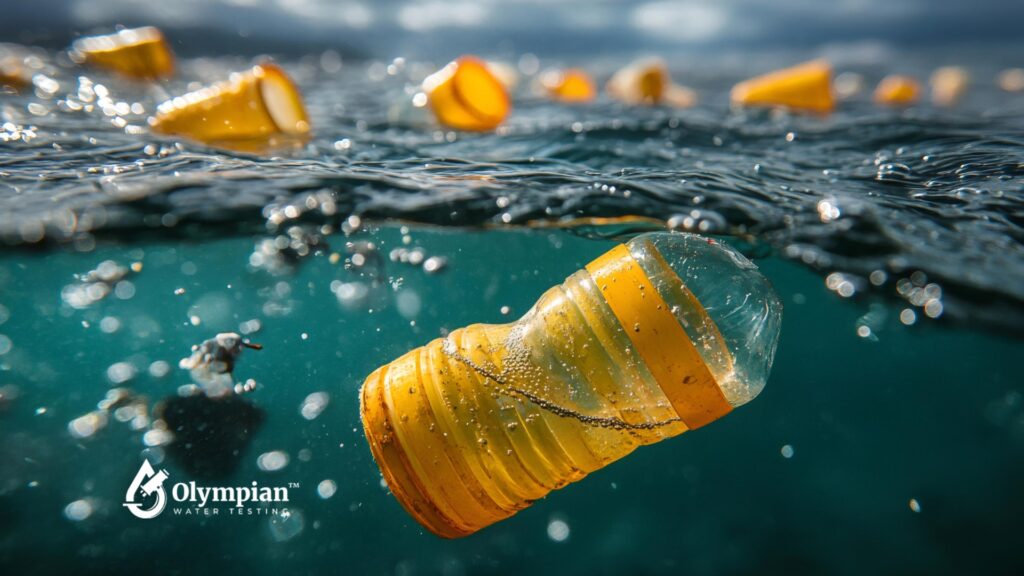
Microplastics originate from multiple sources. One significant source is the degradation of larger plastic items like bottles, bags, and packaging materials. As these items are exposed to environmental forces, they break down into smaller and smaller particles.
Synthetic textiles are another major contributor. Every time synthetic clothes are washed, they shed tiny fibers, which are flushed into waterways. These fibers become a significant portion of microplastic pollution.
Personal care products, such as exfoliants and toothpaste, previously used microbeads—tiny plastic particles—as abrasives. Although many countries have banned their use, they persist in waters where they were previously allowed. Industrial activities contribute as well, either through manufacturing processes or through the wear and tear of plastic materials.
Microplastics in Tap vs. Bottled Water
The issue of microplastics in drinking water is not limited to tap water; bottled water is affected too. Studies indicate that bottled water can contain even higher concentrations of microplastics compared to tap water. This surprising finding highlights the widespread nature of the problem and challenges assumptions about bottled water’s purity. Moreover, the sources of microplastics in bottled water can be attributed to various factors, including the packaging materials and the bottling process itself. Consumers may not be fully aware of the extent of microplastics in bottled water, which raises concerns about public health and safety. As awareness of microplastics in bottled water grows, it is crucial for researchers and policymakers to investigate the implications for human consumption and to develop strategies to mitigate this pervasive contamination.
The production process of bottled water and the plastic bottle materials themselves can introduce microplastics. Plastic caps, in particular, can contribute fibers as they are unscrewed and tightened. Understanding these sources is crucial for making informed decisions about drinking water safety.

Microplastics have become a concern for human health, raising questions about their safety in drinking water. Despite their minute size, their potential impact is anything but small. Understanding these impacts is crucial for ensuring safe drinking water.
Several pathways exist for microplastics to enter the human body. Ingesting contaminated water is one of them. Once consumed, microplastics can interact with biological systems in ways that are still being studied. Some concerns focus on the potential to cause physical damage or stress due to their abrasive nature.
In addition to physical interactions, microplastics can carry harmful chemicals. Many plastics contain additives like phthalates and bisphenol A (BPA), which are known endocrine disruptors. Microplastics can also adsorb other pollutants from the environment, including heavy metals and persistent organic pollutants (POPs). These compounds raise further alarms about toxicity.
The gastrointestinal tract is likely the initial interaction site with microplastics. Early studies suggest that prolonged exposure might trigger inflammation or immune responses. The broader implications of these interactions, however, require more research to establish clear health outcomes.
Ongoing research aims to clarify these risks and understand what safe exposure levels might look like. As findings emerge, they will inform guidelines and regulations designed to protect consumer health.
Current Research on Microplastics and Human Health
Current research on the health effects of microplastics is advancing rapidly. Scientists are focusing on quantifying exposure levels and potential biological responses. Recent studies have highlighted that these particles can indeed migrate through the human gut. However, whether they penetrate deeper tissues remains a topic of investigation.

Laboratory studies have shown that certain types of microplastics can cause cellular stress. In model organisms, microplastics are associated with inflammatory responses. Though more research is needed to extrapolate these findings to humans, they underscore the potential for health impacts.
A key focus is understanding how microplastics might act as carriers for other harmful substances. Their ability to adsorb toxins complicates the potential health risk landscape. Each compound could have distinct and combined effects on human health. This complexity is driving international collaborations and research funding in this area.
Potential Long-Term Effects of Microplastic Consumption
Long-term microplastic consumption remains one of the most concerning unknowns in environmental health. While acute exposure appears to be low-risk, the chronic, cumulative effects are uncertain. These potential impacts warrant a precautionary approach.
One area of interest is the potential for microplastics to influence metabolic or endocrine functions. Chemicals leached or transported by microplastics could disrupt hormone regulation over time. This disruption could manifest in metabolic syndromes or reproductive health issues.

While definitive causal links are still being explored, the research community continues to stress caution. The persistent nature of microplastics in the environment, combined with their potential health impacts, underlines the importance of reducing plastic waste. Advancing our understanding of these long-term effects is crucial. This will ensure informed decisions and policy-making that prioritize public health.
The dialogue between researchers and policymakers will play a vital role in shaping strategies for microplastic management. By bridging scientific knowledge and regulatory action, we can address both immediate concerns and future risks associated with microplastics.
Addressing microplastics in drinking water requires robust regulation and thorough testing methods. However, the regulatory landscape is still evolving. Most countries lack specific guidelines for microplastics in water.
Globally, regulatory bodies are beginning to recognize the significance of microplastic pollution. Efforts are underway to establish international standards. These standards aim to protect public health and maintain water quality.
Some organizations, like the World Health Organization (WHO), have provided preliminary assessments. These assessments highlight the need for more research to guide policy creation. Despite these developments, concrete regulatory frameworks remain limited.

Testing for microplastics in water is pivotal for developing these regulations. Accurate detection and quantification methods help assess risks. They also guide the implementation of effective water treatment solutions.
A comprehensive testing regimen includes several key steps:
- Sample Collection: Gather water samples from different sources.
- Filtration: Use specialized filters to separate microplastics.
- Analysis: Examine particles using microscopy and spectroscopy.
- Quantification: Calculate microplastic concentration per liter.
Adopting these testing protocols ensures data reliability. Such data is essential for understanding contamination levels and creating awareness.
Existing Regulations on Microplastics in Water
Currently, there are no unified regulations specifically targeting microplastics in drinking water. Most existing guidelines are at the research stage. Nations are beginning to acknowledge the urgency of regulating this emerging contaminant.
The European Union (EU) has initiated steps to address microplastics through comprehensive environmental policies. Some EU directives focus on limiting plastic waste, indirectly influencing microplastic levels in water.
In the United States, agencies like the Environmental Protection Agency (EPA) are exploring the incorporation of microplastics into their Safe Drinking Water Act. However, legislative action has yet to formalize.
Despite progress, comprehensive laws are still needed worldwide. Coordinated international efforts could drive the establishment of such crucial regulations. Policymakers must prioritize these initiatives to ensure safe drinking water globally.
How to Test Your Water for Microplastics
Testing your water for microplastics is an informative way to understand contamination levels. Knowing the presence and concentration of microplastics helps you make informed decisions about water safety. Additionally, conducting tests at a certified drinking water analysis lab ensures that you receive accurate and reliable results. These labs utilize advanced techniques to detect even the smallest particles, providing a comprehensive overview of the water’s quality. By understanding the specific types and amounts of microplastics present, you can take appropriate measures to safeguard your health and the environment.

Home testing kits are available, though more specialized than regular water tests. They involve collecting a water sample, filtering it, and analyzing particles under a microscope. For accuracy, professional testing services provide in-depth analysis.
While commercial options exist, conducting your own tests requires specific equipment. Microscopes and specialized filters are necessary. Thus, collaboration with certified laboratories often yields more precise results.
When selecting a testing service or kit, ensure they meet credible standards. Look for certifications from recognized organizations to ensure testing reliability. This ensures the methods align with scientific and industry best practices.
By testing your water, you gain valuable insights into its microplastic content. This knowledge can guide protective actions and promote informed consumer choices.
Removing microplastics from drinking water is crucial for safeguarding health. While conventional water treatments may fall short, advanced filtration technologies offer viable solutions. Choosing the right method depends on several factors, including cost, efficiency, and maintenance requirements.
Several filtration systems are particularly effective in capturing microplastics. These systems work through various mechanisms tailored to the unique properties of microplastic particles. Understanding each method’s strengths and limitations is key to making informed decisions.
Consider the following filtration methods:
- Activated Carbon Filters
- Reverse Osmosis Systems
- Ultrafiltration and Nanofiltration
- Distillation and Sedimentation
- Emerging Technologies
Each method has distinct advantages and challenges. It is important to evaluate these in the context of your water source and specific needs.
Activated Carbon Filters

Activated carbon filters are popular for household water purification. These filters work by adsorbing contaminants, including small particles like microplastics. Although primarily designed to remove organic compounds, they can capture microplastics due to their porous structure.
Their effectiveness depends on the size of the microplastics and the filter’s pore size. While they may not catch the tiniest particles, they offer a cost-effective and accessible solution for reducing larger microplastic presence.
Reverse Osmosis Systems

Reverse osmosis (RO) systems are highly effective for removing a broad spectrum of contaminants. They operate by forcing water through a semi-permeable membrane, leaving impurities behind. This process effectively filters out microplastics, given their size relative to the membrane pores.
RO systems are recognized for their thorough purification capabilities. However, they require regular maintenance and can produce significant water waste, which may be a consideration for some users.
Ultrafiltration and Nanofiltration
Ultrafiltration (UF) and nanofiltration (NF) are advanced techniques that offer high precision in water purification. UF removes particles larger than 0.01 microns, making it effective against most microplastics. NF, even finer, tackles particles down to 0.001 microns.

These methods excel in water treatment settings where microplastic contamination is a major concern. They are less common in domestic use due to their complexity and cost but represent robust solutions for drinking water safety.
Distillation and Sedimentation

Distillation involves heating water to produce vapor, leaving impurities behind. Microplastics, with their higher boiling points, remain as residue. Distillation is effective but energy-intensive, making it less practical for home use.
Sedimentation leverages gravity to settle larger particles in a water body. While not sufficient alone, when combined with other methods, it aids in reducing microplastic levels. It serves as a preliminary step in multi-stage treatment processes.
Emerging Technologies in Microplastic Removal
Innovation in water treatment continuously introduces new solutions for microplastic removal. Emerging technologies like electrochemical processes and biofiltration show promise. These methods focus on sustainable and efficient ways to purify water.
Electrochemical techniques aim to degrade microplastics at the molecular level, while biofiltration employs natural materials to capture particles. Although still under development, they highlight the future of microplastic treatment. These technologies signal hope for enhanced water safety in coming years.
Addressing microplastics in drinking water doesn’t always require complex technology. Many simple, cost-effective methods exist for individuals to reduce their exposure. These DIY solutions empower consumers to take control of their water quality at home.

Incorporating best practices in daily life can significantly lower the risk of microplastic contamination. This involves making informed choices about water consumption and filter usage. Understanding how to properly maintain these systems ensures they function optimally.
Consider the following best practices:
- Regularly monitor your local water quality reports.
- Educate yourself on the latest water filtration technology.
- Encourage community discussions about water safety.
- Be proactive in replacing and maintaining household water filters.
- Learn how to use simple sedimentation techniques.
- Stay updated on global and local environmental policies.
Implementing these practices not only enhances water safety but also fosters a conscious approach to consumption and waste management. Awareness is a powerful tool in combating pollution.
Home Remedies for Reducing Microplastic Intake
While advanced filtration systems are effective, straightforward home remedies can also minimize microplastic intake. Boiling water is a traditional method that may not remove all microplastics but can reduce certain contaminants. Utilizing activated charcoal is another accessible option. This natural filter can adsorb some impurities, providing an extra layer of protection.
Additionally, using cotton cloth filters can help in initially straining larger particles. Though not foolproof, such practices combined with other methods improve water quality at home.
The key is consistency in application. Regularly employing these techniques complements more robust solutions, ensuring safer drinking water.
Maintenance and Replacement of Water Filters
Proper maintenance of water filtration systems is vital for their longevity and efficiency. Filters can become clogged over time, reducing their effectiveness. Following a scheduled maintenance plan helps prevent this.

Check the manufacturer’s guidelines for maintenance instructions. Regularly inspect filters for signs of wear or damage. Promptly replace them as needed to maintain optimal performance.
Ignoring maintenance can lead to deteriorated filter function, which diminishes the benefits of installation. Clean filters not only enhance water quality but also extend the life of the entire system, providing peace of mind in the pursuit of safe drinking water.
Every person holds power in reducing microplastic pollution through mindful consumer behavior. Small changes in daily habits collectively contribute to larger environmental benefits. Choosing alternatives to plastic can have a significant impact.
Consumers influence demand for environmentally friendly products, thereby encouraging companies to adopt sustainable practices. Awareness of product lifecycles and plastic content helps make informed decisions. Empowered with knowledge, consumers can drive demand for safer, greener options.
Here are steps individuals can take:
- Opt for reusable items instead of single-use plastics.
- Support businesses that focus on sustainable practices.
- Educate others about the impact of plastic pollution.
- Participate in local clean-ups or environmental initiatives.
- Advocate for better waste management systems.
- Choose products with minimal or biodegradable packaging.
These steps demonstrate the collective power of conscious consumerism in creating positive environmental change.

Reducing Personal Plastic Use
Minimizing personal plastic use is an effective way to address microplastic pollution. Begin by identifying plastic-heavy areas in daily routines. Simple swaps, like using metal straws and cloth bags, significantly cut down on single-use plastic.
Switching to natural fibers in clothing reduces synthetic microfibers that shed during washing. Opt for glass or stainless steel containers to store food instead of plastic. These changes not only lessen plastic waste but also promote a healthier environment.
Adopting these habits might seem insignificant individually, yet they send a powerful message collectively. It encourages industry shifts toward sustainable materials and product design.
Advocating for Environmental Policies and Regulations
Active advocacy for environmental policies significantly aids in managing microplastic challenges. Individuals can engage with policy-making processes and support legislation aimed at reducing plastic production. Writing to local representatives to express support for sustainable initiatives emphasizes public demand.
Community involvement amplifies these efforts. Participating in or organizing public forums elevates the conversation on environmental policies. Sign petitions aimed at enforcing stricter regulations on plastic usage and waste.
Furthermore, aligning with environmental NGOs provides another avenue for influence and advocacy. By supporting policy changes, individuals not only contribute to tackling microplastic issues but also help shape a more sustainable legislative framework.
Addressing microplastic pollution requires a concerted effort at both community and global levels. Communities play a crucial role in implementing grassroots initiatives. By engaging citizens, local projects can yield significant environmental benefits.
Community actions often include organizing clean-up drives and educational workshops. These initiatives not only clean local environments but also raise awareness about plastic pollution. Grassroots movements foster a sense of responsibility and empower individuals to contribute to solutions.
Globally, collaboration and policy-making are essential to tackle microplastic issues effectively. Countries must unite to establish binding agreements and standards. This helps ensure that efforts to reduce plastic pollution are sustained and impactful.
Both local and international efforts must be integrated to create a cohesive strategy. Collaboration across different sectors and regions amplifies the impact of individual actions. These joint efforts ensure a comprehensive approach to combating microplastic pollution.
Local Initiatives and Community Engagement
Local initiatives form the backbone of efforts to reduce microplastics. Communities organize clean-up events in parks, rivers, and beaches to minimize plastic in nature. These activities not only clear plastic waste but also foster community spirit.
Education is also a pivotal part of local initiatives. Workshops and seminars can educate residents about the effects of microplastics. Such events inspire individuals to adopt sustainable practices and reduce plastic consumption at the source.
Engagement in community planning meetings encourages the adoption of policies promoting plastic reduction. Through local governance, communities can influence effective waste management programs, focusing on recycling and minimizing plastic waste.
International Cooperation and Policy Making
International cooperation is critical in the global fight against microplastics. Countries can work together to establish consistent regulations that limit plastic production and improve waste management. Global treaties and agreements are vital in harmonizing efforts across borders.
Policies must not only target the reduction of existing pollution but also prevent further plastic production. Adopting best practices from countries successful in waste management can accelerate progress. Shared technological innovations and research can drive advancements in microplastic remediation.
High-level global forums play a role in raising awareness and commitment to tackle microplastic issues. By pooling resources and expertise, international bodies can support developing nations in implementing effective solutions. This collective effort ensures a sustainable future for our planet.