Understanding Well Water Basics
Groundwater is a vital source for many homes, providing a steady flow beneath the soil. It’s estimated that about 30% of the world’s easily accessible freshwater is stored underground. This highlights the need for careful well design and oversight.
Wells tap into hidden aquifers, which store water from rainfall and surface seepage. The amount of water stored varies based on soil composition and depth. These factors play a significant role in determining the water accumulation in each area.
Families relying on residential well water benefit from regular maintenance. This ensures the longevity of pumps and pipes. It also helps in detecting any drops in supply or quality. Addressing these issues promptly prevents major problems, ensuring a consistent water supply for household needs.
Residents with residential well water can improve their daily lives by adopting a few practices:
- Schedule routine inspections to track water levels
- Monitor local conditions that influence groundwater recharge
- Test water quality to confirm safety
Factors That Affect Well Water Volume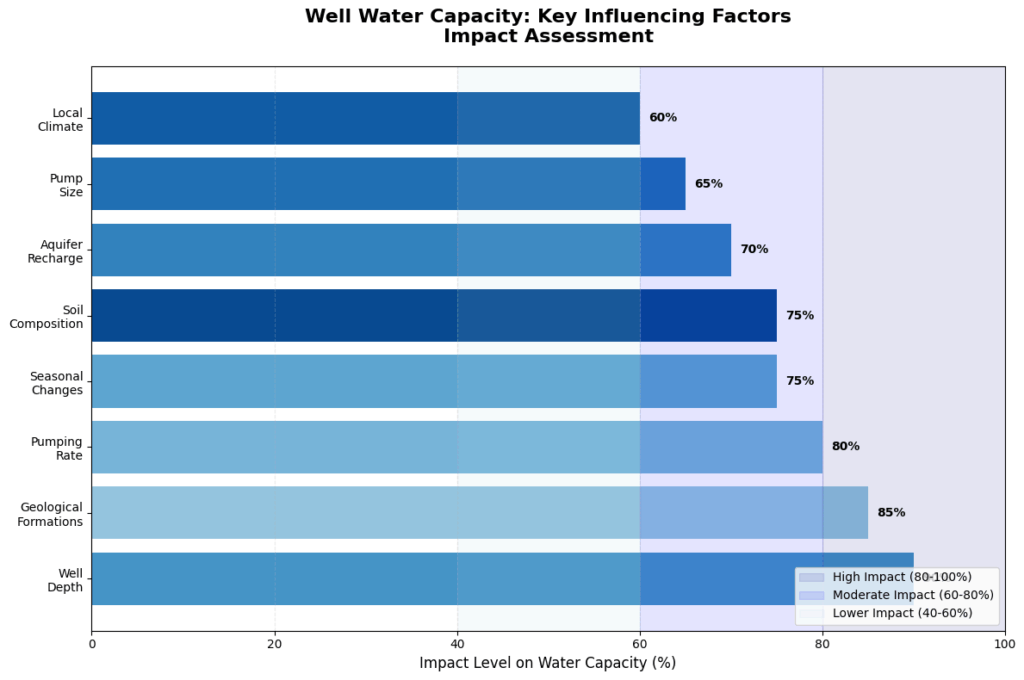
Wells vary in capacity due to geological conditions, pumping demands, and weather patterns. These elements can cause water volumes to change over time.
Geological Formations
Regions with bedrock or sediment layers can facilitate water flow. Sand and gravel formations promote efficient flow, while clay and shale restrict it. This affects how quickly a well can replenish its water.
Pumping Rate Impact
The rate at which water is withdrawn, known as the pumping rate, impacts supply steadiness. A higher rate can deplete the source faster, reducing replenishment time. Effective groundwater management balances usage with recharge for sustainable well performance.
Seasonal Changes to Consider
Rainy months can increase well levels, but droughts can lower them quickly. Seasonal changes affect aquifer recharge efficiency under different climates. Proper groundwater management ensures balanced usage, even with shifting precipitation patterns.
how much water is in a well
Many property owners are curious about the water volume in a well before investing in a system. A well yield calculation is a method to estimate this, measuring gallons per minute. Experts suggest around one gallon per minute per fixture. This helps families plan their water use for various activities.
Static and pumping water levels offer insights into well performance. Deeper wells can increase reserves, and pump size is critical for matching supply to demand. If the pump can handle the flow rate, water supply remains steady. Regular tests track any changes in output.
The National Ground Water Association recommends verifying these figures for everyday activities. A detailed well yield calculation confirms capacity for daily needs. Regular evaluations alert families to any drops in volume, allowing for timely adjustments or expert advice. This ensures a reliable and efficient water source.
Exploring Different Types of Wells
Properties often rely on various designs to access groundwater. The choice depends on local geology, cost, and personal preferences. This overview covers well drilling basics and what makes each option unique.
Drilled Wells
Drilled wells reach deep into bedrock or stable sediment. They require a professional rig, costing between $3,000 to $15,000. The National Ground Water Association highlights their reliability, making them a popular choice.
Dug Wells
Dug wells are common in older homesteads. They are shallow and lined with materials like stone or brick. Despite the risk of contamination, some areas continue to use them for basic water needs.
Driven Wells
Driven wells involve a pipe driven into softer earth. They are ideal where water is near the surface. This method appeals to those seeking a simpler solution while ensuring safe water flow.
Methods to Measure Well Water Supply
Accurate checks of a well’s output offer peace of mind and help owners plan for changing water needs. Simple tests involve filling a known container and timing the flow. This approach reveals a basic snapshot of supply, yet it only scratches the surface.
Some experts track pumping water levels to understand how quickly an aquifer refills. Electronic sensors, installed in the well, give real-time data and alert homeowners when significant drops occur. Historical logs, with consistent readings, pinpoint slow declines and confirm steady recovery periods.
- Container fill tests show how many gallons flow per minute
- Professional flow equipment from manufacturers like Xylem captures in-depth data
- Regular tracking of pumping water levels indicates well health over time
Frequent evaluations prevent small issues from escalating. A consistent routine, backed by accurate numbers, offers valuable insights that support wise resource management. This balanced strategy keeps homes prepared for fluctuations and extends the life of the well.
Interpreting Static and Pumping Water Levels
Water monitoring is essential to ensure a well can meet daily needs without overstraining. By measuring both the resting water level and the depth when the pump runs, we gain valuable insights. These measurements can reveal signs of excessive drawdown or inadequate well recharge.
Static Level Basics
The static water level is the distance from the well’s water surface to the ground under calm conditions. Accurate measurement requires several hours with the pump off. This figure shows how much water is available before pumping begins. A deeper static water level may indicate that pumping has lowered the aquifer’s reserve.
Pumping Level Significance
The pumping water level indicates how much the water dips when the system is in operation. A sharp drop might suggest over-pumping or an undersized submersible pump. It’s critical to match flow to the well’s recharge rate to avoid pump damage.
Condition | Water Level | Possible Risk | Action Step |
Stable | Minimal drop from static water level | Low drawdown | Maintain current pump settings |
Significant Drop | Large difference between static and pumping level | Over-pumping | Consider adjusting pump placement |
Tools and Techniques for Gauging Capacity
Homeowners often turn to specialized devices to gauge their well’s water output. These methods offer critical insights for making informed decisions and conserving resources. Each technique has its own advantages, helping to identify problems early on.
Well Sounders
Well sounders emit signals into the well shaft to measure depth. They track how far the sound travels until it hits water, showing changes in water levels. This method helps detect aquifer shifts and water level dips.
Flow Meters
Flow meters accurately measure water flow in real-time. They provide insights into output volumes, revealing issues like pump problems or changes in usage. Reliable flow meters enable quick responses to water supply issues.
Smart Home Monitoring Systems
Wireless sensors offer real-time updates on water usage, displaying consumption patterns. They alert users to sudden changes, indicating leaks or dwindling water reserves. These systems enhance convenience and support water conservation.
Method | Key Benefit | Ideal For |
Well Sounders | Accurate depth readings | Monitoring static levels |
Flow Meters | Real-time output checks | Assessing performance |
Smart Systems | Instant usage alerts | Preventing large-scale leaks |
Addressing Possible Well Water Shortages
Many well owners face low water supply when shifting rain patterns limit aquifer recharge. These drops can be more noticeable during seasonal well changes, when usage peaks. Monitoring daily consumption and checking water levels help detect early signs of shortages before they become critical.
Conservation steps reduce the strain on a well’s capacity. Rainwater collection barrels supplement everyday tasks. Heavy tasks like laundry or dishwashing can be arranged during less demanding times. Aquifer recharge often takes longer than expected, so steady, mindful usage preserves resources for the long term.
- Track household consumption with a simple flow meter
- Collect roof runoff in storage containers
- Consider professional advice for well-deepening procedures
Fresh groundwater draws rely on local climate influences, and seasonal well changes remind households that careful planning prolongs a well’s supply. Balancing usage with nature’s pace protects both the water table and future resources.
Importance of Regular Inspections and Testing
Regular inspections are key to catching contamination early and safeguarding your water. Even small issues like cracks or pump wear can escalate if not caught promptly. This is why consistent monitoring is essential to avoid major problems.
Inspections allow for flow rate measurements and equipment reviews. Knowing your water is safe and appliances work well brings peace of mind. This diligence also ensures resource efficiency.
Quality Testing
Quality testing focuses on detecting harmful bacteria, heavy metals, and pollutants. Experts use advanced kits or lab tests to ensure water purity. Regular testing helps identify and address issues before they become severe.
Maintenance Scheduling
Regular maintenance is vital for well capacity and reliability. It includes tasks like pump servicing, seal reinforcement, and cleaning. By planning these activities, you ensure your system operates efficiently and cost-effectively.
Key Task | Suggested Interval | Primary Benefit |
Water Sampling | Yearly | Ensures safe drinking supply |
Mechanical Inspection | Every 2-3 Years | Extends pump lifespan |
Casing and Seal Check | On Schedule or As Needed | Prevents leaks and contamination |
Signs Your Well May Need Professional Attention
Sudden changes in water taste or odor can signal deeper issues in the well system. A drop in pressure, or a pump that cycles more often, might reveal worn components or diminishing water volume. Unusual noises or air bursts in faucets indicate that parts of the assembly could be struggling to maintain steady flow.
Maintaining a reliable supply starts with staying alert to these warning signs. Experts often recommend a professional well inspection when flow rates decline or unexplained pump failures occur. This process sheds light on possible contaminants, poor casing seals, and mechanical blockages, helping homeowners preserve water quality.
- Reduced pressure during daily tasks
- Odors resembling sulfur or chemicals
- Frequent pump cycling
Another way to stay informed is to read common signs that your water well needs. A thorough evaluation may uncover surface water infiltration or failing pump parts before they escalate. Investing in a professional well inspection protects both a household’s health and its budget by preventing more serious complications down the line.
Planning for a Sustainable Water Future
Global data reveals that persistent groundwater depletion can cause land subsidence and water shortages. Local practices and personal habits significantly influence future water supplies. By installing water-efficient devices and optimizing daily water use, individuals can help safeguard aquifers. This proactive approach supports sustainable groundwater management on both local and global levels.
Advancements in well technology, such as smart monitoring tools, enable homeowners to track their water consumption accurately. Community-wide efforts amplify these individual actions. Public initiatives that promote sustainable groundwater management help reduce the strain on limited resources. By staying informed about local water trends and planning ahead, people can protect this vital resource for generations to come.
FAQ
Why is accurate well water measurement so important for homeowners?
Accurate well water measurement is vital for homeowners to ensure their well system meets daily needs. It tracks data like static and pumping water levels. This insight helps homeowners make informed decisions about maintenance, pump adjustments, or upgrades.
What factors influence how much water is in a well?
Several factors affect well water volume. Local geology impacts natural recharge, while pumping rate and seasonal changes also play a role. If water is drawn too quickly, the aquifer may not replenish, causing temporary low levels or even dryness. Monitoring these factors is key to effective groundwater management.
How does well yield calculation affect daily household usage?
Well yield calculation shows how many gallons per minute a well can provide. This figure is essential for meeting household demands. With accurate data, homeowners can size pumps correctly and maintain stable water flow without overtaxing the aquifer.
What role do smart home monitoring systems play in well management?
Smart home monitoring systems track real-time well output and alert homeowners to unusual usage spikes or drops. They integrate flow meters or well sounders, providing immediate feedback on well health. This helps preserve water and identify issues early, preventing costly problems.
How can seasonal well changes impact long-term supply?
Seasonal changes, like reduced rainfall or increased irrigation in warmer months, can lower water levels. While many wells recover naturally, consistent monitoring is necessary. It helps determine if deeper management or minor modifications are needed to maintain adequate supply.
When should a professional well inspection be scheduled?
Signs like irregular pump cycling, lingering odors, or fluctuating water pressure may indicate declining well performance. A professional inspection evaluates casing integrity, pump function, and contamination sources. Early resolution prevents damage, preserves capacity, and safeguards water quality.
What is the importance of routine maintenance scheduling and quality testing?
Regular maintenance and quality testing detect contamination or mechanical wear early. They ensure the system operates efficiently, protecting water quality and the investment in the property’s well.
How do different well types—drilled, dug, or driven—affect water availability?
Drilled wells extend deeper into bedrock, providing a consistent supply and lower contamination risk. Dug wells, shallower and older, may be more susceptible to pollutants. Driven wells tap into easily accessible aquifers. The right choice depends on local geology and desired water capacity.
Why is groundwater management essential for a sustainable water future?
Groundwater management balances withdrawals with natural recharge. Over-pumping can deplete aquifers, cause land subsidence, and lead to water shortages. Tracking well water levels, using efficient irrigation, and adopting conservation strategies protect water resources for future generations.