Historic Brooklyn Waterworks and Their Legacy Today
- Published:
- Updated: January 2, 2025
Listen to this article
Summary
The historic Brooklyn Waterworks, established in the 19th century, shaped the city’s infrastructure and public health, leaving a lasting legacy today.
- Architectural Marvels: Structures like the Ridgewood Reservoir showcased innovative engineering and aesthetic design, setting standards for utility infrastructure.
- Public Health Impact: The Waterworks provided clean water, reducing waterborne diseases and supporting population growth.
- Cultural Influence: Figures like engineer J.B. Kirkwood and Mayor Seth Low, along with the Waterworks’ expansion, fueled Brooklyn’s development and identity.

Brooklyn Waterworks: The Brooklyn Waterworks story begins in the early 18th century. The growing population of Brooklyn realised that the city needed a clean and consistent water source. In acknowledgment of the city’s demands, the state legislature established a board of water commissioners in 1852 and so the Brooklyn Waterworks was born. The mission was simple, but crucial – to keep Brooklynians drinking pure water at all times.
The Brooklyn Waterworks was huge. In the beginning, water came from wells and into houses by way of wooden pipes. As the city expanded and technology improved, larger and larger pumps were built to pump water from ponds and reservoirs. These acutally modern buildings were testaments to the engineering talents of their day, and they formed the foundations for a network that would benefit the city for centuries.
Architectural Marvels and Engineering Feats
The Brooklyn Waterworks weren’t merely funcional buildings. They were amazing buildings and works of engineering, both functional and beautiful. The Ridgewood Reservoir, for instance, was a wonder. The dam, which had been constructed between 1856 and 1858, was a network of sloping basins bounded by beautifully built, high earthen embankments.
And these architectural feats were augmented by advanced engineering methods. Engineers built massive lines of iron pipes to go in place of wooden ones and to pump water over long distances. They also used sophisticated filtration equipment to ensure that water supplied there was clean and safe. These advanced networks were a model for public utility infrastructure not only in Brooklyn, but throughout the nation.
Brooklyn Waterworks Through the Years

New reservoirs and pumphouses were created as the city’s population grew. The network got bigger and better, with each incremental update reflecting technology.
The Brooklyn Waterworks was already a huge facility by the late 19th century, not just in Brooklyn but across New York City. But when the 20th-century development of the New York City Water Supply system brought much of the Brooklyn Waterworks to a close. But there are still their buildings, silent reminders of the city’s colourful past.
What is the role of Brooklyn Waterworks in public health?
The Brooklyn Waterworks played a crucial role in improving public health in the city. Before their establishment, residents relied on wells and cisterns for their water supply. Unfortunately, these sources were often contaminated, leading to outbreaks of diseases like cholera and typhoid.
With the introduction of the Brooklyn Waterworks:
- Access to clean, safe water significantly improved
- Waterborne diseases were substantially reduced
- General public health improved, contributing to the population growth
Notable Figures and Their Contributions
It’s hard to count all the people who worked in or around the Brooklyn Waterworks. Most important among them was engineer J B Kirkwood, who managed the Ridgewood Reservoir. It was the result of his creative imagination.
There were also civic activists such as Mayor Seth Low who were integral to assisting with the expansion of the Brooklyn Waterworks. They pushed the political terrain to make sure that these critical public works projects could get the funding and resources they required.
The Waterworks' Influence on Brooklyn's Growth
Brooklyn’s development could have not been possible without the Waterworks. With access to clean water, housing, commercial and industrial built-up thrived. Lands that had once been rural or unpopulated soon became prosperous urban districts. And it was the Waterworks that supplied other important sectors such as brewing and manufacturing that depended on an uninterrupted supply of water.
More broadly, Brooklyn’s identity was shaped by the Waterworks. The city’s water system grew as pride and as a badge of Brooklyn’s growth and creativity.
Preservation and Adaptive Reuse of the Brooklyn Waterworks
The Brooklyn Waterworks buildings, which were retired from active duty, are still around today. Some have been kept in place for historical reasons and architectural appeal. For instance, the retired Ridgewood Reservoir in the 1950s has been converted into a suburb oasis of species of plants and birds.
Other times, adaptive reuse schemes revived these old buildings. Williamsburg Water Tower, for example, is now a sculpture and part of the neighbourhood skyline. Through these conservation and re-use, the history of the Brooklyn Waterworks is still carried on, reminding us of our city’s glorious past while enriching its present.
Legacy of the Brooklyn Waterworks Today
It’s in all parts of the city today that the Brooklyn Waterworks legacy lives on. They’re still present in the city’s water system, much of which built on the Brooklyn Waterworks. They were also immortalised in the city’s architecture, with their iconic structures shaping later public works plans.
But above all, the Brooklyn Waterworks is a reminder of how central public utilities are to urban fabric and health. They point to the importance of fresh water to building a city and its residents.
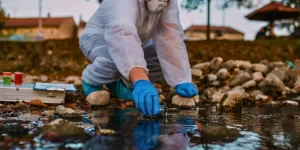
Enjoy water testing near me in Brooklyn from Olympian Water TestingTM. Our lab is conveniently located in order to be convenient for customers who are looking for professional water testing. Rely on us to get the job done right and on time with your safety in mind.
Share this on social media:
Facebook
Twitter
LinkedIn
Next Article:

Related Posts