Introduction to PFOS and PFAS
Per- and polyfluoroalkyl substances (PFAS) encompass over 14,000 synthetic chemicals, used globally for more than 70 years. Perfluorooctane sulfonate (PFOS) is a key PFAS compound that has drawn significant attention. This is due to its widespread use and the concerns over its health impacts.
PFOS and other PFAS compounds have been used in various industries and consumer products for decades. Their exceptional chemical and thermal stability, along with their water and oil resistance, make them valuable. They are found in stain-resistant textiles, food-handling materials, firefighting foam, medical devices, paints, personal care products, and construction materials.
The History of PFOS and Its Widespread Use
The history of PFOS begins in the mid-20th century, when it was first synthesized. It was quickly adopted in numerous industrial and consumer products. Its unique properties made it a popular choice, leading to its global use.
| Period | Event |
|---|---|
| 1930s | PFAS compounds, including PFOS, begin to be used in various industries |
| 1970s | The Department of Defense (DOD) starts using AFFF containing PFOS |
| 2000s | Growing concerns about the environmental and health impacts of PFOS emerge |
| 2024 | The EPA establishes drinking water limits for five specific PFAS compounds, including PFOS |
PFOS’s extensive use has led to its detection in air, water, and soil worldwide. Most people have been exposed to PFAS at low levels. The Environmental Protection Agency (EPA) reports that PFAS compounds are detectable in the blood of most of the population. The widespread presence of PFOS and other PFAS compounds raises significant health concerns, as these substances have been linked to various adverse health effects. To address potential risks, many organizations and homeowners are turning to pfas contamination testing services to assess their environments and ensure safety. By identifying and quantifying PFAS levels, these testing services play a crucial role in managing exposure and promoting public health initiatives.
The Impact of PFOS on Human Health and the Environment
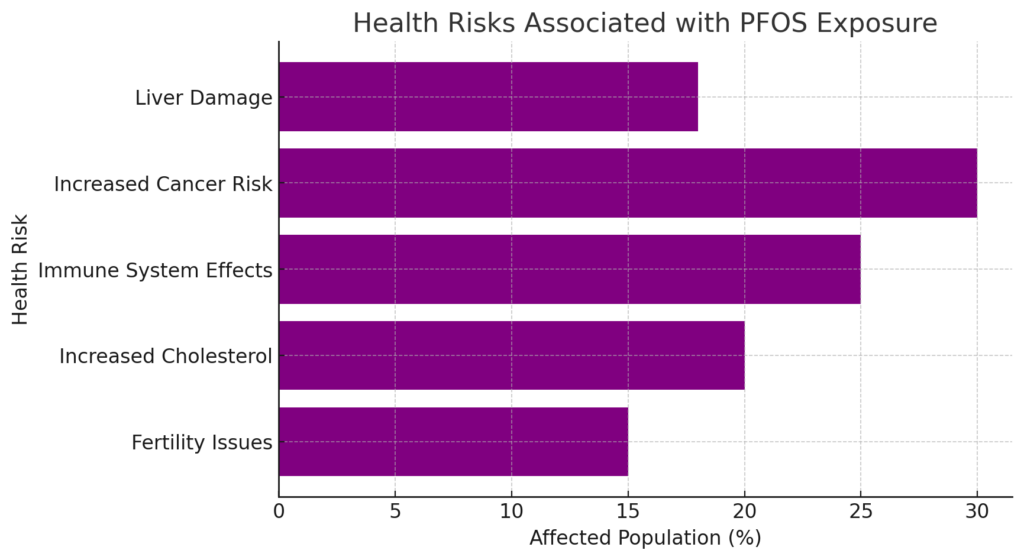
Research into PFOS and other PFAS compounds has raised concerns about their impact on human health and the environment. Studies indicate that exposure to certain PFAS may be linked to various health issues. These include fertility problems, pregnancy-induced hypertension, increased cholesterol levels, changes in the immune system, and an increased risk of certain cancers.
- Fertility issues and pregnancy-induced hypertension/preeclampsia
- Increased cholesterol levels
- Changes in the immune system
- Increased risk of certain cancers, such as testicular and kidney cancer
- Changes in fetal and child development
- Liver damage
- Increased risk of thyroid disease and asthma
While the scientific evidence on PFAS exposure’s health effects is not conclusive, ongoing research aims to clarify these impacts. Organizations like the National Institute for Occupational Safety and Health (NIOSH) and the National Institute of Environmental Health Sciences (NIEHS) are leading this effort.

The Chemical Structure and Properties of PFOS
PFOS, a key member of the PFAS family, is one of over 9,000 compounds identified by the Environmental Protection Agency (EPA). Its pfos chemical structure features a fully fluorinated carbon chain. This unique feature contributes to its remarkable properties and environmental persistence.
The carbon-fluorine bonds in PFOS are exceptionally strong, making it highly resistant to degradation. This pfos persistence in the environment has raised significant concerns about its long-term effects on ecosystems and human health. The strength of these bonds also imparts water and oil-resistant pfos properties. These properties make PFOS useful in various applications, such as firefighting foams and stain-resistant coatings.
The Unique Chemical Bonds that Make PFOS Persistent
The pfos chemical structure includes a chain of eight fully fluorinated carbon atoms, with a sulfonic acid group at one end. The presence of fluorine atoms bonded to each carbon in the chain creates a highly stable and persistent compound. The carbon-fluorine bond is one of the strongest in organic chemistry, with a bond dissociation energy of approximately 116 kcal/mol. This exceptional strength makes PFOS resistant to degradation by environmental factors such as heat, light, and microbial activity.
The Water and Oil-Resistant Properties of PFOS
The unique pfos properties stem from its amphiphilic nature, meaning it has both hydrophobic (water-repelling) and hydrophilic (water-attracting) parts. The fully fluorinated carbon chain is highly hydrophobic, while the sulfonic acid group is hydrophilic. This combination of properties allows PFOS to reduce surface tension and act as a surfactant. It is useful in applications that require water and oil resistance, such as firefighting foams and stain-resistant coatings.
| Property | Value |
|---|---|
| Molecular Formula | C8F17SO3H |
| Molar Mass | 500.13 g/mol |
| Melting Point | >400°C |
| Boiling Point | Not applicable (decomposes) |
| Water Solubility | 570 mg/L at 24°C |
The pfos persistence and unique properties have led to its widespread use and subsequent environmental contamination. Understanding the pfos chemical structure and its implications is essential for addressing the challenges posed by this persistent pollutant.

Environmental Persistence of PFOS
Perfluorooctane sulfonic acid (PFOS) is a synthetic chemical known for its environmental persistence. Its chemical structure, with strong carbon-fluorine bonds, resists natural degradation. This makes PFOS stay in the environment for a long time, posing risks to ecosystems and human health.
The pfos environmental persistence is enhanced by its ability to travel long distances. Volatile PFOS molecules and those attached to airborne particles can be carried by wind. They eventually settle on soils and enter water bodies far from their sources. This pfos global distribution has been detected in remote areas, including the Arctic and Antarctic, showing its wide reach.
The Long-Term Presence of PFOS in the Environment
PFOS’s slow elimination from the environment contributes to its long-term presence. Studies indicate that PFOS can remain in soil and sediments for decades. Its half-lives range from several years to over a century. This prolonged presence leads to accumulation in ecosystems, increasing exposure risks for wildlife and humans.
| Environmental Media | PFOS Concentration | Year of Measurement |
|---|---|---|
| Marine Organisms (EU) | 0.01 to 100 times the EQS level | 2001-2021 |
| Polar Bears | Almost 100 times the EQS level (900 µg/kg wet weight) | – |
| Baltic Sea (Annual Average) | 35 times higher than the EQS | 2018 |
| Mediterranean Sea (Annual Average) | 50% higher than the EQS | 2018 |
The Global Spread of PFOS Through Air and Water
PFOS’s global spread is facilitated by its transport through air and water. Atmospheric deposition is a key pathway, as PFOS can be carried by wind and settle on land and water surfaces. It also enters water systems through direct discharges, runoff from contaminated sites, and the breakdown of PFOS-containing products.
- Between 2006 and 2016, 80% of maritime areas assessed in the EU were designated as ‘problem areas’ due to chemical contamination, including PFOS.
- In 2018, annual average concentrations of PFOS were approximately 35 times higher in the Baltic Sea and 50% higher in the Mediterranean Sea compared to the EU’s Environmental Quality Standard (EQS) for transitional, coastal, and territorial waters.
The pfos environmental persistence and pfos global distribution highlight the need for effective measures. These include monitoring, stringent regulations, and remediation strategies. They are essential to mitigate the long-term impacts of PFOS on ecosystems and public health.
PFOS Bioaccumulation in Ecosystems
Per- and polyfluoroalkyl substances (PFAS), including perfluorooctane sulfonate (PFOS), have become a growing concern. They persist and bioaccumulate in the environment. PFOS, used for decades, is found in various environmental media, including water and drinking water.
Recent studies have highlighted PFOS bioaccumulation in ecosystems. An analysis of over 150,000 entries found that fish, seafood, and biota have the highest PFAS concentrations. Out of 9,015 samples, 1,323 exceeded the limit of quantification for PFAS, with seafood samples showing the highest levels.
Accumulation in Plants and Animals
PFOS accumulates in a wide range of organisms, from plants to higher-level animals. Its sorption to sediments and soils depends on organic carbon and site-specific conditions. Biota-soil accumulation factors (BSAFs) show the extent of PFOS bioaccumulation. The average BSAF for PFOS is 0.167 kg-OC/kg-ww, with a standard deviation of 0.311, based on 424 BSAFs from 25 reports.
| PFAS Compound | Average BSAF (kg-OC/kg-ww) | Standard Deviation | Count |
|---|---|---|---|
| PFOS | 0.128 | 0.262 | 57 |
| PFOA | 0.0134 | 0.0160 | 43 |
| PFDA | 0.132 | 0.250 | 28 |
| PFHxS | 0.437 | 1.52 | 27 |
Biomagnification in Food Chains
PFOS bioaccumulation in plants and animals raises concerns about biomagnification in food chains. As PFOS moves up the trophic levels, its concentration increases significantly. This effect has been observed in various ecosystems, with higher-level predators showing higher PFOS levels than their prey.
The detection of PFOS in biota samples, such as ticks, at concentrations exceeding 2 mg/kg (wet weight), highlights the severity of this issue. The prevalence of PFOS in the environment has led to its detection in food sources, posing risks to human health. Out of 5,524 dairy product samples analyzed, 100 had PFAS concentrations above the LOQ. The European Food Safety Authority (EFSA) has proposed a tolerable intake of 8 ng/kg/week for the combined sum of PFAS, equating to an annual dose of 0.42 µg/kg, to mitigate health risks associated with dietary exposure.
Toxicity and Health Effects of PFOS
PFOS, a key member of the PFAS family, has been extensively used across various industries for decades. Concerns over its health risks have sparked increased research and scrutiny. Exposure to PFOS has been linked to several health risks, including high cholesterol levels, altered immune function, and negative impacts on thyroid and liver function.
Research indicates that PFOS exposure can elevate serum cholesterol levels in both adults and children. It may also alter immune function, leading to more lower respiratory tract infections and atopic dermatitis in children. PFOS has been associated with reduced serum total thyroxine levels, indicating its ability to disrupt thyroid function. Exposure to PFOS may also contribute to the development of nonalcoholic fatty liver disease (NAFLD) by increasing alanine aminotransferase levels.
Reproductive health is another area of concern with pfos toxicity. Studies have shown that PFOS exposure can lead to adverse reproductive outcomes, such as decreased serum levels of sex hormone-binding globulin (SHBG) in men and follicle-stimulating hormone (FSH) in women. These findings suggest that PFOS may disrupt the delicate balance of hormones essential for reproductive health.
The exact mechanisms of pfos health risks are not fully understood. Its persistence in the body and ability to disrupt endocrine function are thought to contribute to these adverse effects. As a long-chain PFAS, PFOS is more bioaccumulative and toxic due to its poor water solubility and higher affinity for serum proteins.
Exposure to PFOS can occur through various routes, including contaminated food and water. PFOS has been detected in food items, often due to migration from PFAS-containing cookware or packaging materials. Workers in fluorochemical manufacturing facilities and firefighters using aqueous film-forming foams (AFFF) are at a higher risk of PFOS exposure.
To mitigate the risks associated with PFOS exposure, several strategies have been employed. Water filtration methods, such as reverse osmosis and dual-stage filters, have proven effective in reducing PFOS levels in drinking water. Phlebotomy has also been shown to effectively reduce serum PFOS concentration in highly exposed individuals, such as firefighters who donated blood or plasma for over 12 months.
As research continues to uncover the full extent of PFOS toxicity and its impact on human health, it is essential to take proactive measures to minimize exposure and protect public health. This includes ongoing monitoring, regulation, and the development of safer alternatives to PFOS and other PFAS compounds.

PFOS Contamination in Water Sources
The presence of PFOS in drinking water has become a pressing global issue. As a member of the PFAS family, PFOS has been used in various industries and products for decades. Its unique structure allows it to persist in the environment, posing long-term risks.
Research has found PFOS in rivers, lakes, and coastal waters. From 2018 to 2022, monitoring data showed that 51-60% of rivers, 11-35% of lakes, and 47-100% of transitional and coastal waters exceeded the annual average environmental quality standards (EQS) for PFOS. The EQS for PFOS is set at 0.65 nanograms per litre (ng/l) for inland surface waters and 0.13 ng/l for transitional, coastal, and territorial waters.

Challenges in Monitoring and Treatment
Monitoring and treating PFOS contamination in water sources is challenging. The low concentrations at which PFOS can cause adverse effects make detection and quantification difficult. Conventional water treatment methods, such as filtration and chlorination, may not effectively remove PFOS from drinking water supplies.
The table below illustrates the percentage of water bodies exceeding the PFOS EQS in selected European countries in 2022:
| Country | Percentage of Water Bodies Exceeding PFOS EQS |
|---|---|
| Belgium | 100% |
| France | 100% |
| Iceland | 100% |
| Netherlands | 96% |
| Germany | 83% |
| Italy | 54% |
The Forever Pollution project estimates around 23,000 PFAS-contaminated sites in Europe, with approximately 2,300 identified as ‘hotspots’ posing threats to human health. To address this issue, advanced remediation technologies are being developed to effectively remove PFOS and other PFAS compounds from water sources.
Regulatory measures, such as the proposed quality standard for the sum of 24 PFAS in surface and groundwater (4.4 ng/l as PFOA equivalents) and the Drinking Water Directive’s monitoring requirements, aim to protect public health by ensuring safe drinking water supplies. Continued research and collaboration between scientists, policymakers, and water treatment professionals are essential in tackling the challenges posed by pfos water contamination and safeguarding our water resources from the presence of pfos in drinking water.
Regulatory Measures for PFOS
As evidence mounts on PFOS’s harmful effects, governments worldwide have stepped up. They aim to limit its use and find safer alternatives. This shift reflects a global consensus on the need to regulate PFOS more strictly.
In the United States, the Environmental Protection Agency (EPA) has led the charge against PFOS. On April 10, 2024, the EPA set a new standard for six PFAS compounds, including PFOS. This move is expected to protect 100 million people from PFAS in their drinking water, preventing thousands of deaths and serious illnesses.
The new rule sets a Maximum Contaminant Level (MCL) for PFOS at 4 parts per trillion (ppt). Public water systems must test for PFAS by 2027. If levels exceed the MCL, they have until 2029 to implement solutions and inform the public.
| PFAS Compound | Maximum Contaminant Level (MCL) |
|---|---|
| PFOA | 4.0 ppt |
| PFOS | 4.0 ppt |
| PFHxS | 10 ppt |
| PFNA | 10 ppt |
| HFPO-DA | 10 ppt |
| Mixtures of PFHxS, PFNA, HFPO-DA, and PFBS | Hazard Index of 1 (unitless) |
The EPA has also moved to restrict PFOS production. In January 2024, it introduced a rule requiring a thorough review for 329 PFAS before new uses can begin. In April 2024, the EPA designated PFOA and PFOS as hazardous substances under the Superfund law.
These actions highlight the global push to mitigate PFOS risks. As research deepens, more regulations and phase-out efforts are expected. These steps aim to safeguard public health and the environment from PFOS contamination.
PFOS Alternatives and Their Implications
Concerns over PFOS’s environmental and health impacts have prompted manufacturers to explore alternatives. These PFOS alternatives, like short-chain PFAS, were thought to be less harmful. Yet, recent studies have raised doubts about their safety.
Research indicates that some PFOS substitutes may carry similar risks. This has sparked worries about "regrettable substitutions." It suggests we might be trading one set of problems for another. Further research is needed to ensure we’re making the right choices.
The presence of PFAS in the U.S. is alarming. Here are some key statistics:
- At least 97% of Americans tested have PFAS compounds in their body fluids.
- The U.S. Environmental Protection Agency (EPA) has identified around 120,000 U.S. facilities that may have handled or released PFAS.
- As of August 2024, 2,067 sites in the United States have detectable levels of PFAS contamination in their drinking water.
- The U.S. Geological Survey estimates that at least 45% of U.S. tap water contains PFAS.
Despite declines in PFOS and PFOA blood levels, their widespread presence is a major concern. As we tackle PFOS challenges, evaluating alternative safety is critical. We must avoid unintended consequences.
About PFOS
Perfluorooctane sulfonate (PFOS) has emerged as a major environmental and health risk. Its widespread use, persistence, and possible health hazards have sparked widespread concern. As a synthetic chemical, PFOS is known for its resistance to water and oil. Yet, this property also contributes to its long-term presence in the environment and its accumulation in living organisms.
The global spread of PFOS through air and water has led to its detection in drinking water worldwide. Efforts to monitor and treat PFOS contamination face significant challenges. The accumulation of PFOS in plants and animals, and its biomagnification in food chains, raises health concerns for ecosystems and humans alike.
The Need for Further PFOS Research
To tackle the growing concerns about PFOS, further research is essential. Scientists are exploring new technologies for PFOS remediation and developing more effective monitoring and treatment strategies. Studies are also underway to understand the health effects of PFOS exposure, including possible links to cancer, immune system dysfunction, and developmental issues.
| PFAS Detection in Foods (FDA Testing) | Percentage | Samples |
|---|---|---|
| Fresh and processed foods with no detectable PFAS (Total Diet Study) | 97% | 787 out of 810 |
| Seafood samples testing positive for at least one type of PFAS (Total Diet Study) | 54% | 19 out of 35 |
| Seafood samples with detectable PFAS (2022 targeted survey) | 74% | 60 out of 81 |
Recent studies have shown PFAS contamination in various food products, as revealed by FDA testing. While most foods tested showed no PFAS, seafood samples had a higher contamination rate. These findings highlight the need for ongoing monitoring and research into PFOS and other PFAS in our food supply.
As research into PFOS continues, it is vital to develop a holistic approach to address contamination. This includes regulatory actions, public education, and collaboration among government, industries, and scientific communities. By focusing on PFOS research and proactive measures, we can protect the environment and human health from PFOS’s long-term effects.
PFOS Remediation Strategies
The presence of PFOS in the environment has raised health and ecosystem concerns. Scientists, policymakers, and affected communities are focusing on effective PFOS remediation strategies. This is a critical priority.
Cleaning up PFOS contamination is challenging due to its persistence and unique properties. It can be found in low concentrations in soils worldwide. High levels are often found at sites using firefighting foams, such as airports and military bases.
Challenges in PFOS Cleanup
Traditional methods like activated carbon filtration and reverse osmosis are not always effective or affordable for large-scale cleanup. For example, treating a cubic meter of polluted water with boron-doped diamond costs about $8.5 million. Standard wastewater treatment cannot fully remove PFOS, and the effectiveness of methods to contain PFOS in soils is uncertain.
Innovative PFOS Remediation Technologies
To overcome these challenges, researchers are exploring new technologies. These include advanced oxidation processes, bioremediation, and electrochemical remediation. These emerging approaches aim to improve efficiency and reduce costs.
- Advanced oxidation processes, which use powerful oxidizing agents to break down PFOS molecules
- Bioremediation, which harnesses the ability of certain microorganisms to degrade PFOS
- Electrochemical remediation, which uses electricity to remove PFOS from contaminated water
For example, scientists at the University of Rochester have developed an electrochemical method that is significantly cheaper than boron-doped diamond. This innovation could make large-scale PFOS remediation more affordable and feasible.
| PFOS Remediation Method | Effectiveness | Cost per Cubic Meter |
|---|---|---|
| Boron-doped diamond | High | $8.5 million |
| Electrochemical remediation (Rochester method) | High | $85,000 |
| Soil washing (granular soils) | Moderate | Varies |
| High-temperature combustion | High (100% removal possible) | High |
Continued research into PFOS remediation is essential. It’s vital to focus on developing cost-effective, scalable solutions. These solutions must address PFOS contamination effectively, protecting public health and the environment.

The Economic Impact of PFOS Contamination
The environmental contamination caused by PFOS has significant economic repercussions. The costs for monitoring, treating, and cleaning up PFOS are substantial. This burden falls heavily on communities, businesses, and governments.
In the United States, the annual costs for PFAS in drinking water are estimated at $1.5 billion. This affects about 66,000 regulated water systems. An estimated 4,100 to 6,700 systems might need action to lower PFAS levels. This could improve drinking water quality for 83 to 105 million people.
The economic impact of PFOS contamination goes beyond water treatment and monitoring costs. The health effects of PFOS exposure also add to the economic burden. The annual benefits from reduced health issues due to PFAS regulation are estimated at $1.549 billion. This includes preventing an estimated 9,600 deaths and 30,000 serious illnesses annually.
| Cost/Benefit Category | Annual Amount (in millions) |
|---|---|
| Water System Monitoring | $36 |
| Water System Treatment and Disposal | $1,506 |
| Water System Administrative Expenses | $1 |
| Primacy Agency Implementation and Administration | $5 |
| Benefit from Avoiding Developmental Effects | $209 |
| Benefit from Avoiding Cardiovascular Effects | $607 |
| Benefit from Avoiding Kidney Cancer | $354 |
| Benefit from Avoiding Bladder Cancer | $380 |
The pfos economic impact has prompted the U.S. government to allocate significant funds. The Infrastructure Investment and Jobs Act provides $9 billion for PFAS-impacted communities. $4 billion goes to the Drinking Water State Revolving Fund (DWSRF), and $5 billion to the EPA’s Emerging Contaminants in Small or Disadvantaged Communities Grant Program. An additional $12 billion is available in the DWSRF for safer drinking water.
The costs of PFOS cleanup extend across various sectors
The pfos cleanup costs affect more than just the water industry. Sectors like aerospace, defense, healthcare, energy, automotive, semiconductor manufacturing, and data centers are impacted. These sectors support over 6 million jobs and contribute more than $2.4 trillion to the U.S. economy. A ban on fluorochemistries could severely harm the American economy, as highlighted by the Chamber of Commerce and a U.S. Department of Defense study.
PFOS Litigation and Legal Implications
PFOS contamination’s far-reaching effects have led to a surge in lawsuits. Individuals, communities, and states are seeking compensation for cleanup costs and health impacts. These lawsuits target PFOS producers and users, who could face hefty legal costs. The EPA has set a one-pound threshold for PFOA and PFOS under CERCLA, mandating immediate notification for any release above this amount. Noncompliance can result in fines exceeding $69,000 daily.
The financial burden of PFOS litigation is immense. Cleanup efforts, including groundwater remediation, can cost millions. The EPA has inspected over 700 military sites for PFAS contamination, underscoring the scope and expense of these investigations. Notable settlements include $260 million for the Clark Fork River Basin and $850 million by 3M for PFAS claims. Dupont has set aside $4 billion for PFAS liabilities and settled a lawsuit in Ohio for $83 million in 2021.
The growing number of PFOS-related lawsuits
PFAS-related lawsuits have skyrocketed in the US over the last decade. Between July 2005 and March 2022, over 6,400 lawsuits were filed in federal court. In 2023, PFAS in drinking water lawsuits resulted in over $11 billion in settlements. 3M agreed to pay more than $10 billion over 13 years to settle claims involving over 11,000 public water systems. Other significant settlements include $750 million by Tyco Fire Products LP and $316.5 million by BASF Corp. By April 2024, about 30 states had sued manufacturers and others for water contamination and natural resource damage.
The legal liabilities for PFOS manufacturers and users
PFOS manufacturers and users face significant legal liabilities. Tort claims under CERCLA are on the rise as plaintiffs seek compensation for PFOA or PFOS contamination. The EPA’s PFAS Enforcement Discretion and Settlement Policy targets those who significantly contributed to PFAS releases. Yet, proving health outcomes from PFOS exposure remains a challenge. Companies must also navigate complex insurance coverage, including public liability, commercial liability, employers’ liability, product liability, and environmental liability insurance.
FAQ
What is PFOS, and why is it a concern?
PFOS, or perfluorooctane sulfonate, is a synthetic chemical used in many products. It’s known for its persistence in the environment and its ability to accumulate in living organisms. Studies have linked PFOS to health issues like high cholesterol and certain cancers. This makes it a major concern for both the environment and human health.
How does PFOS enter the environment?
PFOS enters the environment through various means. This includes industrial emissions and the disposal of PFOS-containing products. It also comes from the breakdown of precursor compounds. Once in the air, PFOS can settle on soil and water bodies, leading to contamination. Its persistence and mobility allow it to travel long distances, accumulating in the environment.
How does PFOS affect human health?
Exposure to PFOS has been linked to several health problems. These include high cholesterol and certain cancers. The exact mechanisms of PFOS toxicity are not fully understood. Yet, its ability to persist in the body and disrupt endocrine functions is thought to contribute to these risks.
Is PFOS present in drinking water, and how can it be removed?
Yes, PFOS has been found in drinking water worldwide, posing a risk to human health. Traditional water treatment methods often fail to remove PFOS. To address this, researchers are exploring new technologies. These include advanced oxidation processes and bioremediation, aimed at monitoring and treating PFOS in water sources.
What are the regulations and measures in place to address PFOS contamination?
Governments have introduced regulations to limit PFOS production and use. These measures aim to phase out PFOS and introduce safer alternatives. Despite these efforts, PFOS’s persistence in the environment poses challenges. The effectiveness of these regulations is limited by the ongoing presence of PFOS.
What are the economic impacts of PFOS contamination?
The economic costs of PFOS contamination are substantial. Cleanup efforts, monitoring, and addressing health impacts all contribute to these costs. In the U.S., the estimated costs of addressing PFAS contamination, including PFOS, are in the billions of dollars. These costs include site remediation, water treatment upgrades, and compensation for affected individuals and communities.
Are there legal implications for PFOS manufacturers and users?
As PFOS contamination awareness grows, so do PFOS-related lawsuits. These lawsuits seek compensation for cleanup and health impacts. Manufacturers and users of PFOS face significant legal risks. Establishing a direct link between PFOS exposure and health outcomes remains a challenge in these cases.