
Content
Beryllium
Beryllium is a lightweight, silver-gray metal that is commonly used in a variety of industrial applications, including the aerospace, defense, and nuclear industries (ATSDR, 2020). It is also found naturally in certain minerals, including beryl and bertrandite, and can be released into the environment through the mining and processing of these minerals (ATSDR, 2020).
Beryllium can be harmful to human health when inhaled or ingested in high amounts. It has been shown to cause respiratory problems and lung cancer when inhaled, and it can also cause skin irritation and other health problems when it comes into contact with the skin (ATSDR, 2020). Ingestion of beryllium through drinking water is a lesser known, but still significant, route of exposure for some individuals.
The World Health Organization (WHO) has established guidelines for the maximum concentration of beryllium in drinking water, which is currently set at 0.4 μg/L (WHO, 2011). However, even at levels below this guideline, long-term exposure to low levels of beryllium in drinking water has been associated with negative health effects, including the development of an immune system disorder called chronic beryllium disease (CBD) (WHO, 2011).
The occurrence of beryllium in drinking water can be due to a variety of factors, including the release of beryllium into the environment through industrial activities and the presence of naturally occurring beryllium in the water source (WHO, 2011). In addition, the use of certain types of pipes and fittings that contain beryllium can also contribute to the contamination of drinking water with this metal (WHO, 2011).
Definition and Structure
Beryllium is a Group 2 element in the periodic table, classified as an alkaline earth metal. It has a hexagonal close-packed crystal structure, contributing to its high strength and rigidity. Beryllium’s atomic structure allows it to form strong covalent bonds, which makes its compounds, like beryllium oxide and beryllium carbide, exceptionally hard and thermally conductive. This metal is also non-magnetic and resistant to corrosion, enhancing its suitability for specific industrial applications.
Historical Background
Beryllium was discovered by French chemist Louis-Nicolas Vauquelin in 1798. However, it wasn’t isolated in its metallic form until 1828 by Friedrich Wöhler and Antoine Bussy. Early uses of beryllium were limited due to extraction difficulties and health risks. With advancements in extraction techniques during the 20th century, beryllium became crucial in aerospace, electronics, and nuclear industries. Its unique properties have led to ongoing research and development, despite its associated health risks.
Chemical Properties
Beryllium is a relatively unreactive metal at room temperature. It resists oxidation in air and does not react with water or steam. Beryllium can react with acids and bases, forming beryllium salts and beryllium hydroxide, respectively. Its compounds are generally colorless and have high melting points. Beryllium exhibits covalent bonding, giving its compounds distinct chemical and physical properties. Due to its toxicity, handling beryllium requires careful control and specific safety measures.
Synthesis and Production
Beryllium is extracted from minerals like beryl and bertrandite through a series of chemical processes. The most common method involves crushing the ore and treating it with chemicals to produce beryllium hydroxide. This compound is then converted into beryllium fluoride or beryllium chloride, which is reduced with magnesium to yield metallic beryllium. Refinement processes enhance its purity for industrial use. The production of beryllium requires strict safety protocols to protect workers from exposure.
Applications
Beryllium’s unique properties make it valuable in various industries. In aerospace, it is used in lightweight structural components and satellite systems due to its stiffness and thermal stability. In electronics, beryllium’s high thermal conductivity and non-magnetic nature are ideal for connectors and semiconductor devices. The nuclear industry uses beryllium as a neutron reflector and moderator. Beryllium alloys, such as beryllium-copper, are used in precision instruments and tools due to their strength and hardness.
Agricultural Uses
Beryllium is not commonly used in agriculture due to its toxicity and limited biological role. Its compounds are not utilized in fertilizers or pesticides, and there is minimal direct interaction with agricultural practices. However, the presence of beryllium in industrial emissions and waste can lead to soil and water contamination, indirectly affecting agricultural areas. Monitoring and controlling beryllium pollution is essential to prevent adverse environmental and health impacts in farming regions.
Non-Agricultural Uses
Outside of agriculture, beryllium has significant industrial applications. In telecommunications, it is used in high-frequency components and connectors. The automotive industry utilizes beryllium in airbag sensors and electronic braking systems. Beryllium mirrors are critical in scientific instruments, including telescopes and laser systems. Its alloys are essential in manufacturing precision tools, springs, and bearings. Beryllium is also used in medical devices, particularly in X-ray windows and MRI machines, due to its transparency to X-rays.
Health Effects
Beryllium exposure poses severe health risks, primarily through inhalation of dust or fumes. Chronic beryllium disease (CBD) is a serious lung condition caused by prolonged exposure, leading to coughing, shortness of breath, and fatigue. Beryllium is also a carcinogen, linked to lung cancer. Acute beryllium poisoning can result in chemical pneumonia. Preventing exposure through protective equipment and workplace controls is critical to minimizing health risks associated with beryllium.
Human Health Effects
Exposure to beryllium can cause both acute and chronic health problems. Inhalation of beryllium dust or fumes can lead to beryllium sensitization, where the immune system becomes highly reactive to the metal. Chronic Beryllium Disease (CBD) is a debilitating lung disease resulting from this sensitization. Symptoms include persistent cough, chest pain, and difficulty breathing. Long-term exposure increases the risk of lung cancer. Strict industrial hygiene practices are necessary to protect workers from these health hazards.
Environmental Impact
Beryllium can contaminate air, water, and soil, posing environmental risks. Industrial emissions and improper disposal of beryllium-containing waste contribute to pollution. Beryllium particles in the air can settle in water bodies and soil, affecting ecosystems and potentially entering the food chain. Due to its toxicity, even low concentrations of beryllium can be harmful to plants and aquatic life. Environmental regulations and proper waste management practices are essential to mitigate the impact of beryllium pollution.
Regulation and Guidelines
Regulations governing beryllium focus on minimizing exposure and environmental contamination. Occupational safety standards, set by organizations like OSHA, limit airborne beryllium concentrations in workplaces. The EPA regulates beryllium emissions and monitors environmental levels to protect public health. Guidelines also govern the safe handling, storage, and disposal of beryllium and its compounds. Compliance with these regulations is crucial to prevent health risks and environmental damage associated with beryllium.
Controversies and Issues
The use of beryllium is controversial due to its health risks. Occupational exposure has led to numerous cases of chronic beryllium disease and lung cancer, sparking debates over safety standards and industry practices. The balance between beryllium’s industrial value and its potential harm remains a contentious issue. Advances in protective measures and alternative materials are ongoing to reduce reliance on beryllium. Regulatory scrutiny and litigation over exposure incidents highlight the need for stringent safety measures.
Treatment Methods
Treatment for beryllium exposure focuses on managing symptoms and preventing further exposure. There is no cure for Chronic Beryllium Disease (CBD), but medications like corticosteroids can reduce inflammation and improve lung function. Regular monitoring and lung function tests are essential for individuals with CBD. In cases of acute exposure, removing the individual from the source and providing supportive care, such as oxygen therapy, is crucial. Preventive measures in workplaces are key to reducing the risk of beryllium-related health issues.
Monitoring and Testing
Monitoring and testing for beryllium are essential to ensure safety in workplaces and the environment. Air sampling methods measure beryllium concentrations to assess occupational exposure levels. Biological monitoring, including blood and lung function tests, helps identify sensitization and early signs of Chronic Beryllium Disease. Environmental testing of soil and water detects beryllium contamination from industrial sources. Advanced analytical techniques, such as inductively coupled plasma mass spectrometry (ICP-MS), provide accurate and sensitive detection of beryllium, ensuring regulatory compliance and protection of public health.
References
- Agency for Toxic Substances and Disease Registry (ATSDR). (2020). Beryllium. Retrieved from https://www.atsdr.cdc.gov/
- Environmental Protection Agency (EPA). (2021). Drinking water treatment technologies. Retrieved from https://www.epa.gov/
- World Health Organization (WHO). (2011). Beryllium in drinking-water. Retrieved from https://www.who.int/
Beryllium
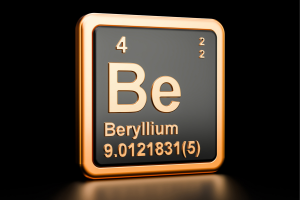
( Beryllium, 4Be )
| Parameter | Details |
|---|---|
| Source | Industrial emissions, coal combustion |
| MCL | 4 ppb (US EPA) |
| Health Effects | Chronic beryllium disease, lung cancer |
| Detection | Atomic absorption spectroscopy, ICP-MS |
| Treatment | Ion exchange, precipitation |
| Regulations | US EPA, OSHA, WHO |
| Monitoring | Annual (varies by region) |
| Environmental Impact | Soil and water contamination, bioaccumulation |
| Prevention | Emission controls, safe handling practices |
| Case Studies | Workplace exposure incidents, cleanup efforts |
| Research | Toxicity studies, improved detection methods |
Other Chemicals in Water

Beryllium In Drinking Water
| Property | Value |
|---|---|
| Preferred IUPAC Name | Beryllium |
| Other Names | Glucinum, Glucinium |
| CAS Number | 7440-41-7 |
| Chemical Formula | Be |
| Molar Mass | 9.0122 g/mol |
| Appearance | Steel gray, hard |
| Melting Point | 1,287 °C (2,349 °F) |
| Boiling Point | 2,469 °C (4,476 °F) |
| Solubility in Water | Insoluble |
Videos