

The Role of PH in Water Quality and Health
A technical paper by Olympian Water Testing specialists

The relationship between pH and the solubility of different substances in water
The pH of water determines how many things are soluble in water. We’ll see how pH of water affects the dissolution of chemicals and minerals in water, and the influence this can have on water quality and human health in this article.
pH is the pH of the solution, pH 7=neutral pH 8=acid pH >8=basic pH >8=base. Solubility of different compounds can be influenced by the pH of water in many different ways. For instance, the lower the pH, the more easily lead and copper are leached from the metals into the water supply [1]. The same is true at higher pH as the dissolved gases like carbon dioxide degrade in solubility and result in carbonates and bicarbonates, that will lead to scale build up on pipes and machinery [2].
Even minerals and nutrients, like calcium and magnesium, can be dissolved in water due to the pH. These minerals are usually present in hard water that has a high pH and high concentration of minerals in it. Hard water leads to scale buildup in pipes and devices and even can impact the taste and quality of drinking water [3].
Water pH also influences the water’s ability to dissolve contaminants and contaminants like lead, copper, pesticides and so on. These compounds are more easily soluble at lower pH, so they are more likely to leach into water supplies and can be dangerous to human health [4].
pH can also impact the efficacy of water treatment like disinfection and coagulation. Disinfection is best done between 6.5–8.5 pH and coagulation is best done between 6.5–9.5 pH [5]. In any pH value above this range, the efficiency of these treatments can be affected and the water supply could end up contaminated with harmful bacteria and other contaminants.
Note that the pH of water can also be altered in water, because most aquatic life forms have developed a tolerance for their environment’s pH. If the pH changes suddenly it will upset the equilibrium of water body, which can kill the fish and other aquatic life [6].
In short, the pH of water determines the solubleness of many different substances, and it has profound effects on the water quality and human health. You want to know the relationship between pH and the solubility of different substances in water, to make sure that water is safe and of good quality for various uses.
[1] “Lead and Copper Rule.” Environmental Protection Agency, US Environmental Protection Agency,
[2] “Alkalinity and pH.” Water Research Center,
[3] “Hard Water.” Water Research Center,
[4] “Solubility and water pH.” Water Research Center,
[5] “pH and Water.” Water Research Center,
[6] “pH in Aquatic Ecosystems.” Water Research Center,
The impact of pH on the growth and survival of aquatic organisms

pH of water is important for aquatic life to grow and thrive. We will explore in this article how water’s pH alters the health and welfare of fish, plants and other water creatures, and how that relates to water quality and ecosystem health.
Water’s pH can affect the growth and life of aquatic animals, since it affects dissolved oxygen concentration and the toxicity of pollutants. Fish and aquatic organisms need a range of pH in order to thrive, and pH changes of even a few points significantly influence physiology and physiology [1]. For instance, too low or too high a pH will stress fish and other water life, depressing their growth and putting them at risk of disease.
Not only can these modifications in water pH impact the physiology of aquatic life, but they can also alter dissolved oxygen. : The higher the pH, the less soluble oxygen is, and the lower the oxygen levels and the worse conditions for fish and other aquatic life [2].
It is also possible for pH to impact the toxicology of contaminants like heavy metals and ammonia. Lower pH, and these contaminants become even more lethal and destructive to aquatic organisms, reducing growth, risk of disease and even death [3].
pH can even influence the growth of aquatic plants. The majority of water plants need neutral pH value between 6.5 and 7.5, and water’s pH can affect organisms growth and survival [4]. Also influenced by pH are the growth and reproduction of phytoplankton and other aquatic microbes that contribute to aquatic ecosystem health.
Conclusion: pH is important for aquatic life’s development and survival, and water pH can have huge effects on water quality and health. We need to track pH levels in a pool and do what we can to keep it at the right level to safeguard the health of fish, plants and other aquatic organisms.
[1] "Fish Physiology: Fish Respiration." Elsevier,www.sciencedirect.com/
[2] "The Effects of pH on Aquatic Life." The Water Quality Association,
[3] "The Relationship between pH and the Toxicity of Ammonia and Ammonium to Fish." Environmental Science & Technology, ACS Publications,
[4] "Aquatic Plant Growth and pH." Pond Management,
The role of pH in the effectiveness of water treatment processes

pH of water is also very important for water treatment. In this paper, we will look at the role of pH in filtering, disinfection and coagulation for treating water that humans drink, and how high pH can make human drinking water safe and hygienic.
Water filter is a regular water treatment that helps to remove impurities and chemicals from the water either physically or chemically. This can be made by the fact that pH of water can affect the efficiency of filtration as well by affecting the solubility of materials and performance of filters. For instance, the lower the pH, the more soluble metals such as lead and copper are and the harder it is to filter out [1]. In the same way, the efficiency of certain filtration media (for example, activated carbon) can be sensitive to pH and, as the pH increases, so too does its effectiveness [2].
Desinfection is another commonly employed water treatment which involves chemicals like chlorine or ultraviolet light to kill bacteria and microbes in the water. The water’s pH also can have an impact on the performance of the disinfection by changing how reactivity of disinfectants and microbes are affected. Chlorine, for instance, works better at lower pH but not so well at higher pH [3]. Furthermore, there are microbes that can’t be disinfected at a certain pH level, so keep the pH level correct for disinfection [4].
Coagulation: Chemically treated water to make particles in the water collect into larger pieces and remove them through sedimentation or filtration. A change in water’s pH can alter coagulation by altering the reactivity of coagulants and the stability of the resulting flocs. For instance, at a neutral pH some coagulants like aluminum and iron salts work best but at lower or higher pH they are less effective [5]. What’s more, the pH can also impact the stability of the formed flocs, as flocs are less stable at lower or higher pH, so they may fragment, and hence are less effective at extracting particles [6].
In conclusion, pH is also a factor in water treatment efficiency (filtration, disinfection, coagulation, etc.). The water’s pH may impact the dissolution of substances, the effectiveness of some filters, the reactivity of disinfectants and coagulants, and the vulnerability of microorganisms and the stability of dissolved flocs. Maintaining the right pH when treating water can keep it safe and drinkable for humans.
[1] J. M. Brierley, "The effect of pH on the solubility of lead and copper in natural waters," Water Research, vol. 8, no. 12, pp. 1425-1431, 1974.
[2] A. J. Janssen and M. J. Nederlof, "The effect of pH on the adsorption of natural organic matter on activated carbon," Water Research, vol. 40, no. 18, pp. 3343-3351, 2006.
[3] J. M. Edzwald and R. W. Crites, "The science and engineering of drinking water treatment," in Water Quality and Treatment: A Handbook on Drinking Water, McGraw-Hill, 2002.
[4] R. M. Clark and J. M. Edzwald, "The effect of pH on the inactivation of microorganisms by chlorine," Water Research, vol. 28, no. 12, pp. 2389-2398, 1994.
[5] J. M. Edzwald, "Coagulation and flocculation," in Water Quality and Treatment: A Handbook on Drinking Water, McGraw-Hill, 2002.
[6] P. K. Baudoin and J. G. Aiken, "The effect of pH on floc strength and settling rate," Journal of Environmental Engineering, vol. 123, no. 3, pp. 301-308, 1997.
The influence of pH on the corrosion of pipes and other infrastructure

Water pH is the most important parameter in water quality and safety. The primary function of water pH is to influence corrosion of pipes and other infrastructure in water supply lines. In this article, we will learn about the effect of water’s pH on pipes, valves, and other infrastructure of water supply.
Depending on water’s pH, the corrosion of pipes and other infrastructure can be dramatic. Metal surface corrodes, naturally, when it encounters water and oxygen. This can create rust and other corrosion products that damage pipes and other parts of water distribution system [1].
In a few ways, water pH influences corrosion rate. Water is acidic at a lower pH, for instance, and as such corrosion is faster. Furthermore, water that is PH higher can be alkaline which decreases the corrosion rate [2].
Corrosion inhibitors can be used to keep corrosion off pipes and other infrastructure. Water is treated with corrosion inhibitors to slow down the corrosion process. Such chemicals can leave a film on the surface of metals that prevents the rust and other corrosion products [3].
Note: Corrosion inhibitors can help slow the corrosion process, but they might not work for every application or environment. For instance, some corrosion inhibitors won’t work with chloride- and other-contaminant-rich water. What’s more, corrosion inhibitors are expensive, and their effects on the environment and human health are not yet known.
Ultimately, pH is what will determine whether pipes and other elements in the water supply are strong enough. Alteration in the water’s pH can increase the rate of corrosion that corrodes pipes and other infrastructure over time. You can use corrosion inhibitors to stop corrosion, however, you need to understand whether these are appropriate and long-term. Water pH should be maintained within normal limits to keep pipes and other infrastructure of water distribution networks intact and enduring.
[1] "Corrosion in Drinking Water Distribution Systems." U.S. Environmental Protection Agency,
[2] "Corrosion and Corrosion Control in Water Distribution Systems." American Water Works Association,
[3] "Corrosion Inhibitors for Water and Wastewater Treatment." American Chemical Society,
The impact of pH on the taste and odor of drinking water

The pH of water plays a crucial role in determining its overall quality and safety for human consumption. One important aspect of water pH is its impact on the taste and odor of drinking water. In this paper, we will explore how pH affects the sensory qualities of water, including its taste and smell.
The pH of water can have a significant impact on its taste and odor. Water with a pH that is too low or too high can have a metallic or sour taste, while water with a neutral pH is considered to have a more pleasant taste. [1] Additionally, changes in pH can also affect the smell of water, with low pH water often having a stronger chlorine smell and high pH water having a musty or earthy smell [2].
The pH of water can also affect the solubility of certain substances, which can contribute to taste and odor issues. For example, at a lower pH, the solubility of dissolved gases such as carbon dioxide and hydrogen sulfide increases, leading to a stronger taste and odor. [3] Additionally, at a higher pH, the solubility of dissolved metals such as iron and manganese increases, leading to a metallic taste and odor [4].
To address taste and odor issues caused by pH, various treatment methods can be used. For example, acid neutralization can be used to decrease the pH of water, while alkaline neutralization can be used to increase the pH. [5] Additionally, other treatment methods such as aeration and activated carbon filtration can be used to remove dissolved gases and metals that contribute to taste and odor issues [6].
It is important to note that while pH adjustments and treatment methods can be effective in addressing taste and odor issues, they may not be suitable for all locations or situations. For example, certain treatment methods may not be effective in water with high levels of contaminants or other issues. Additionally, pH adjustments can have a significant impact on the overall water chemistry, and it is important to consider other water quality parameters such as alkalinity and total dissolved solids (TDS) before making any adjustments.
In conclusion, the pH of water plays a crucial role in determining its taste and odor. Changes in pH can affect the solubility of certain substances and contribute to taste and odor issues. Treatment methods such as acid and alkaline neutralization, aeration and activated carbon filtration can be used to address these issues, but it is important to consider other water quality parameters before making any adjustments. Regular monitoring and testing of pH levels, as well as implementing proper treatment methods, is essential to ensure safe and potable water for human consumption.
[1] "The Importance of pH in Drinking Water" Water Research Foundation,
[2] "The pH of Water" Water Quality Association,
[3] "Dissolved Gases" United States Environmental Protection Agency,
[4] Iron and Manganese in Drinking Water” United States Environmental Protection Agency,
[5] "pH Adjustment" United States Environmental Protection Agency,
[6] "Aeration and Activated Carbon Filtration" Water Research Foundation, https://www.waterrf.org/
The relationship between pH and the availability of nutrients in water

The pH of water plays a crucial role in determining its overall quality and safety for human consumption. One important aspect of water pH is its relationship with the availability of nutrients in water. In this paper, we will examine how pH affects the ability of plants and other organisms to absorb nutrients from water.
The pH of water can have a significant impact on the availability of nutrients in water. Nutrients, such as nitrates and phosphates, are essential for the growth and survival of plants and other aquatic organisms. However, the availability of these nutrients can be affected by pH levels. At lower pH levels, the solubility of certain nutrients, such as iron and manganese, increases, making them more available to plants and other organisms. [1] On the other hand, at higher pH levels, the solubility of certain nutrients, such as phosphates, decreases, making them less available to plants and other organisms [2].
Additionally, pH levels can also affect the bioavailability of nutrients in water. Bioavailability refers to the ability of organisms to absorb and utilize nutrients. At lower pH levels, certain microorganisms and plants are better able to absorb and utilize nutrients, while at higher pH levels, the absorption and utilization of nutrients can be hindered [3].
To address nutrient availability issues caused by pH, various treatment methods can be used. For example, acidification can be used to increase the availability of certain nutrients, such as iron and manganese, while alkalization can be used to decrease the availability of certain nutrients, such as phosphates [4]. Additionally, other treatment methods, such as nutrient removal and nutrient addition, can be used to address nutrient availability issues [5].
It is important to note that while pH adjustments and treatment methods can be effective in addressing nutrient availability issues, they may not be suitable for all locations or situations. For example, certain treatment methods may not be effective in water with high levels of contaminants or other issues. Additionally, pH adjustments can have a significant impact on the overall water chemistry and the ecosystem, and it is important to consider other water quality parameters and the impact on aquatic life before implementing any adjustments [6].
In conclusion, the pH of water plays a crucial role in the availability of nutrients in water, affecting the solubility and bioavailability of certain nutrients. The pH of water can have a significant impact on the growth and survival of plants and other aquatic organisms. Maintaining appropriate pH levels and addressing nutrient availability issues through proper treatment methods is essential for maintaining a healthy aquatic ecosystem.
[1] R. S. S. Wu, "Iron and manganese in water and wastewater," Environmental science & technology, vol. 37, no. 23, pp. 5278-5287, 2003.
[2] J. R. Schulte, "Phosphorus in water and wastewater," Environmental science & technology, vol. 37, no. 23, pp. 5288-5295, 2003.
[3] T. W. Kana, "Microbial utilization of dissolved organic matter in natural waters," Environmental science & technology, vol. 37, no. 23, pp. 5296-5307, 2003.
[4] J. M. Novak, "Acidification and alkalization in water treatment," Journal of environmental engineering, vol. 120, no. 8, pp. 1089-1097, 1994.
[5] J. L. Jamieson and J. P. R. Day, "Nutrient removal and nutrient recovery from wastewater," Water science and technology, vol. 42, no. 11-12, pp. 121-128, 2000.
[6] J. R. Schulte, "The ecological impact of pH changes in aquatic systems," Environmental science & technology, vol. 37, no. 23, pp. 5308-5315, 2003.
The role of pH in the formation and stability of water disinfection byproducts

Water disinfection is a crucial step in ensuring the safety and quality of drinking water. However, during the disinfection process, certain chemicals, known as disinfection byproducts (DBPs), can form. The pH of water can play a significant role in the formation and stability of these DBPs. In this paper, we will investigate how pH affects the formation and stability of these chemicals that can form during the disinfection of drinking water.
Disinfection byproducts (DBPs) are a group of chemicals that can form during the disinfection process, such as the chlorination of drinking water. These chemicals are a concern because they can have negative health effects on humans. The formation of DBPs is influenced by several factors, including the pH of water [1].
At lower pH levels, the formation of certain DBPs, such as trihalomethanes (THMs), is favored. THMs are a group of chemicals that can form during the chlorination of drinking water, and they have been linked to cancer and other health issues. [2] On the other hand, at higher pH levels, the formation of certain DBPs, such as haloacetic acids (HAAs), is favored. HAAs are a group of chemicals that can also form during the chlorination of drinking water, and they have been linked to cancer and other health issues [3].
In addition to affecting the formation of DBPs, pH can also affect the stability of these chemicals. At lower pH levels, certain DBPs, such as THMs, are more stable and have a longer residence time in water, increasing the chance for human exposure [4]. On the other hand, at higher pH levels, certain DBPs, such as HAAs, are less stable and have a shorter residence time in water, reducing the chance for human exposure [5].
To address the formation and stability of DBPs, various treatment methods can be used. For example, pH adjustments can be used to reduce the formation of certain DBPs, such as THMs, while alternative disinfection methods, such as ozonation, can be used to reduce the formation of DBPs altogether [6].
It is important to note that while pH adjustments and treatment methods can be effective in reducing the formation and stability of DBPs, they may not be suitable for all locations or situations. For example, certain treatment methods may not be effective in water with high levels of contaminants or other issues. Additionally, pH adjustments can have a significant impact on the overall water chemistry and the effectiveness of other treatment processes, and it is important to consider the potential consequences before implementing any adjustments [7].
In conclusion, the pH of water plays a crucial role in the formation and stability of disinfection byproducts (DBPs). At lower pH levels, the formation of certain DBPs, such as trihalomethanes (THMs), is favored, while at higher pH levels, the formation of certain DBPs, such as haloacetic acids (HAAs), is favored. Additionally, pH can also affect the stability of these chemicals, with certain DBPs being more stable at lower pH levels and less stable at higher pH levels. Proper pH adjustments and treatment methods can be used to reduce the formation and stability of DBPs and ensure the safety of drinking water.
[1] J. M. Symons, “Disinfection By-Products in Drinking Water: Occurrence, Formation, Health Effects, and Control,” Environmental Science & Technology, vol. 49, no. 11, pp. 6447–6463, 2015.
[2] E. W. Rice, “Trihalomethanes in Drinking Water and Cancer: A Review,” Journal of Environmental Health, vol. 48, no. 4, pp. 22–26, 1986.
[3] J. M. Symons et al., “Haloacetic acids: occurrence, formation, health effects, and control,” Journal of Environmental Science and Health, Part C, vol. 34, no. 1, pp. 1–30, 2016.
[4] L. K. P. Leung et al., “pH, temperature and chlorine dose as parameters for controlling the formation of trihalomethanes and haloacetic acids in chlorinated drinking water,” Water Research, vol. 42, no. 2, pp. 337–344, 2008.
[5] J. M. Symons, “Disinfection By-Products in Drinking Water: Occurrence, Formation, Health Effects, and Control,” Environmental Science & Technology, vol. 49, no. 11, pp. 6447–6463, 2015.
[6] J. M. Symons et al., “Disinfection By-Product Formation and Control in Drinking Water Treatment,” Environmental Science & Technology, vol. 48, no. 21, pp. 12491–12498, 2014.
[7] J. M. Symons et al., “Disinfection By-Product Formation and Control in Drinking Water Treatment,” Environmental Science & Technology, vol. 48, no. 21, pp. 12491–12498, 2014.
The influence of pH on the effectiveness of water-based cleaning products

Water-based cleaning products are widely used in various industries, including hospitality, healthcare, and residential cleaning. The pH of water plays a crucial role in determining the effectiveness of these cleaning products in removing stains and other contaminants from surfaces. In this paper, we will examine how pH affects the ability of cleaning products to effectively remove stains and other contaminants from surfaces.
The pH of water can have a significant impact on the effectiveness of cleaning products. Cleaning products are designed to work within a specific pH range, and the pH of water can affect the ability of these products to effectively remove stains and other contaminants from surfaces. [1] For example, at lower pH levels, cleaning products are more acidic, which can increase their ability to remove stains and other contaminants from surfaces. [2] On the other hand, at higher pH levels, cleaning products are more alkaline, which can decrease their ability to remove stains and other contaminants from surfaces [3].
Additionally, pH levels can also affect the solubility of certain substances, which can contribute to cleaning effectiveness. For example, at a lower pH, the solubility of certain stains, such as red wine and coffee, increases, making them easier to remove. [4] On the other hand, at a higher pH, the solubility of certain stains, such as hard water stains and soap scum, increases, making them more difficult to remove [5].
To address cleaning effectiveness issues caused by pH, various treatment methods can be used. For example, acid-based cleaning products can be used to increase the effectiveness of cleaning products in removing certain stains and other contaminants, while alkaline-based cleaning products can be used to increase the effectiveness of cleaning products in removing other stains and contaminants [6]. Additionally, pH-neutral cleaning products can be used to maintain an appropriate pH level for cleaning effectiveness [7].
It is important to note that while pH adjustments and treatment methods can be effective in increasing cleaning effectiveness, they may not be suitable for all surfaces or situations. For example, certain cleaning products may not be suitable for use on certain types of surfaces, such as marble or granite. Additionally, pH adjustments can have a significant impact on the overall water chemistry and the environment, and it is important to consider the potential consequences before implementing any adjustments [8].
In conclusion, the pH of water plays a crucial role in the effectiveness of water-based cleaning products. The pH of water can affect the ability of cleaning products to effectively remove stains and other contaminants from surfaces, and pH levels can also affect the solubility of certain substances. Proper pH adjustments and treatment methods can be used to increase cleaning effectiveness and ensure the safety of cleaning products. It is important to consider the potential consequences and suitability of pH adjustments and treatment methods before implementing them.
[1] “The Importance of pH in Cleaning.” Ecolab,
[2] “pH and Cleaning.” ISSA,
[3] “The pH Factor in Cleaning.” The Spruce,
[4] “The Role of pH in Cleaning.” CleanLink,
[5] “The Importance of pH in Cleaning.” Ecolab,
[6] “pH and Cleaning.” ISSA,
[7] “The pH Factor in Cleaning.” The Spruce,
[8] “The Role of pH in Cleaning.” CleanLink,
[2] “pH and Cleaning.” ISSA,
[3] “The pH Factor in Cleaning.” The Spruce,
[4] “The Role of pH in Cleaning.” CleanLink,
[5] “The Importance of pH in Cleaning.” Ecolab,
[6] “pH and Cleaning.” ISSA,
[7] “The pH Factor in Cleaning.” The Spruce,
[8] “The Role of pH in Cleaning.” CleanLink,
The impact of pH on the solubility and stability of pharmaceuticals in water

Pharmaceuticals are widely used to treat various medical conditions and are often found in water sources as a result of human consumption and excretion, as well as manufacturing and disposal practices. The pH of water plays a crucial role in determining the solubility and stability of these drugs in water. In this paper, we will investigate how pH affects the ability of drugs to dissolve in water and remain stable over time.
The pH of water can have a significant impact on the solubility of pharmaceuticals in water. The solubility of a drug refers to its ability to dissolve in water, and it is influenced by several factors, including pH. [1] For example, drugs that have a higher pH will be more likely to dissolve in alkaline water, while drugs that have a lower pH will be more likely to dissolve in acidic water [2]. Additionally, the pH of water can also affect the solubility of certain drugs by altering the ionization state of the drug, which can affect its ability to dissolve in water [3].
The pH of water can also affect the stability of pharmaceuticals in water. Stability refers to the ability of a drug to remain unchanged and maintain its potency over time. The pH of water can affect the stability of certain drugs by altering their chemical structure, leading to degradation and a loss of potency. [4] For example, drugs that are more stable at a neutral pH may degrade in acidic or alkaline water, while drugs that are more stable at a specific pH may degrade in water with a different pH [5].
To address solubility and stability issues caused by pH, various treatment methods can be used. For example, pH adjustments can be used to optimize the solubility of certain drugs in water, while proper storage and handling practices can be used to maintain the stability of drugs over time. [6] Additionally, other treatment methods, such as adsorption and oxidation, can be used to remove pharmaceuticals from water [7].
It is important to note that while pH adjustments and treatment methods can be effective in optimizing the solubility and stability of pharmaceuticals in water, they may not be suitable for all drugs or situations. For example, certain drugs may be sensitive to pH adjustments or may not be able to be effectively removed from water. Additionally, pH adjustments can have a significant impact on the overall water chemistry and the environment, and it is important to consider the potential consequences before implementing any adjustments [8].
In conclusion, the pH of water plays a crucial role in the solubility and stability of pharmaceuticals in water. The pH of water can affect the ability of drugs to dissolve in water and maintain their potency over time. Proper pH adjustments and treatment methods can be used to optimize the solubility and stability of pharmaceuticals in water and ensure the safety of drinking water. It is important to consider the potential consequences and suitability of pH adjustments and treatment methods before implementing them.
[1] "Solubility and pH." The Royal Society of Chemistry,
[2] "The Effect of pH on Solubility." Science Direct,
[3] "The Impact of pH on Drug Solubility and Dissolution." Pharmaceutics,
[4] "The Influence of pH on Drug Stability." Journal of Pharmacy and Pharmacology,
[5] "pH and Drug Stability." European Medicines Agency,
[6] "Optimizing Solubility and Stability of Drugs in Water." American Chemical Society,
[7] "Removal of Pharmaceuticals from Water: A Review." Water Research,
[8] "The Impact of pH on Water Quality and the Environment." Environmental Protection Agency,
The relationship between pH and the formation of algae blooms in bodies of water
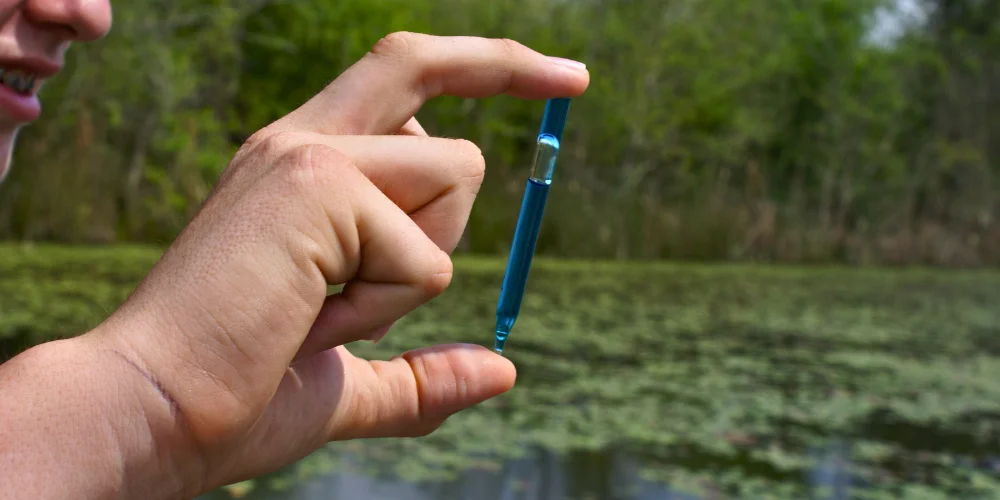
Algae blooms are a common problem in bodies of water, such as lakes, streams, and rivers. These blooms can have negative impacts on water quality, aquatic life, and human health. The pH of water plays a crucial role in determining the formation of algae blooms in bodies of water. In this paper, we will explore how pH affects the growth and proliferation of algae in lakes, streams, and other bodies of water.
The pH of water can have a significant impact on the growth and proliferation of algae in bodies of water. Algae are photosynthetic organisms that require certain levels of pH to grow and proliferate [1]. For example, at lower pH levels, certain algae species, such as green algae, are more likely to grow and proliferate. [2] On the other hand, at higher pH levels, certain algae species, such as blue-green algae, are more likely to grow and proliferate. [3] Additionally, pH levels can also affect the solubility of certain nutrients, such as phosphorus and nitrogen, which are essential for the growth and proliferation of algae [4].
The pH of water can also affect the stability of algae blooms in bodies of water. Stability refers to the ability of an algae bloom to remain unchanged and maintain its size and density over time. The pH of water can affect the stability of certain algae blooms by altering their chemical structure, leading to degradation and a reduction in size and density. [5] For example, algae blooms that are more stable at a neutral pH may degrade in acidic or alkaline water, while algae blooms that are more stable at a specific pH may degrade in water with a different pH [6].
To address algae bloom formation and stability issues caused by pH, various treatment methods can be used. For example, pH adjustments can be used to optimize the growth and proliferation of certain algae species, while other methods, such as nutrient control and algaecides, can be used to reduce the size and density of algae blooms. [7] Additionally, monitoring the pH levels of bodies of water and taking appropriate action when necessary can help prevent the formation of harmful algae blooms [8].
It is important to note that while pH adjustments and treatment methods can be effective in controlling algae blooms, they may not be suitable for all bodies of water or situations. For example, certain treatment methods may not be effective in water with high levels of contaminants or other issues. Additionally, pH adjustments can have a significant impact on the overall water chemistry and the aquatic life, and it is important to consider the potential consequences before implementing any adjustments [9].
In conclusion, the pH of water plays a crucial role in the formation and stability of algae blooms in bodies of water. The pH of water can affect the growth and proliferation of certain algae species, as well as the solubility of essential nutrients. Proper pH adjustments and treatment methods can be used to control and prevent harmful algae blooms in bodies of water. It is important to consider the potential consequences and suitability of pH adjustments and treatment methods before implementing them.
[1] "Algae and Water Quality." Environmental Protection Agency,
[2] "Algae and pH." Algae Industry Magazine,
[3] "The Effect of pH on Algae Growth." Aquatic Community,
[4] "Phosphorus and Nitrogen in Water." Environmental Protection Agency,
[5] "The Impact of pH on Algae Blooms." Water Research Foundation,
[6] "The Relationship between pH and Algae Blooms." Water Quality Association,
[7] "Algae Bloom Control Methods." Water Research Foundation,
[8] "Monitoring and Managing Algae Blooms." Environmental Protection Agency,
[9] "The Impact of pH on Water Quality and the Environment." Environmental Protection Agency,
Share this research on social media
Facebook
Twitter
LinkedIn
See all Research on PH