

The Role of PFAS Testing in Environmental Protection and Water Quality
A technical paper by Olympian Water Testing specialists

Overview of PFAS and their uses
Per- and polyfluoroalkyl substances (PFAS) are a class of artificial chemicals, which have been used in many industries because they are heat resistant, chemical stable, oil and water repellent [1]. PFAS have a perfluoroalkyl chain – that is, a carbon chain with all the hydrogen atoms swapped out for fluorine atoms. This fluorinated structure confers the chemical characteristics of PFAS, while making them inert and able to dissipate over time in the environment and the body [2].
The PFAS have thousands of variations such as perfluorooctanoic acid (PFOA) and perfluorooctane sulfonate (PFOS) which have found many applications [3]. These are just some of the typical applications for PFAS:
Fabrics: PFAS are used to make fabrics like clothes and furniture stain and water resistant [4].
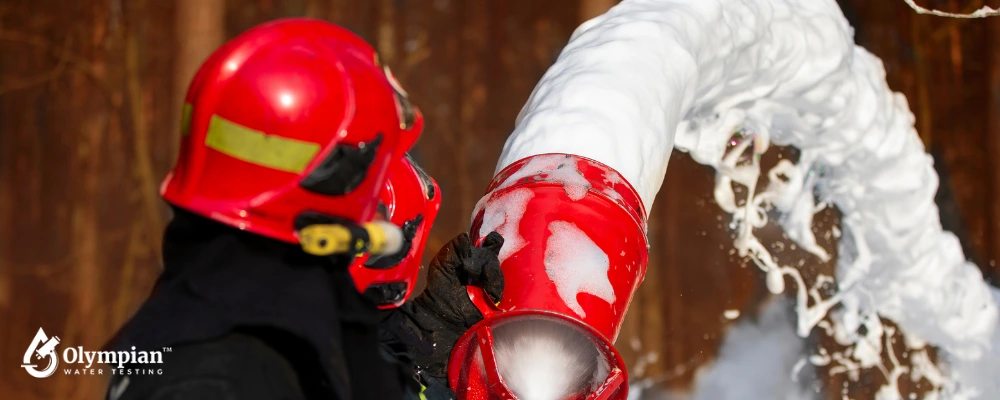
Firefighting foams: Firefighting foams employ PFAS as it kills hydrocarbon fires, like oil and gasoline fires [5].
Nonstick coatings: PFAS are used to manufacture nonstick coatings for pots and pans, bakeware, griddles, and woks [6].
Food packaging: PFAS are added to food packaging like fast food containers and microwave popcorn bags to make them non-greasy [7].
PFAS have been used for decades, but some PFAS are now phased out in some countries and industries due to their negative health and environmental impacts [8]. The U.S. Environmental Protection Agency has given PFOA and PFOS 70 ppt as the drinking water health advisory value for adverse health effects [9]. But there are a lot of other PFASs which have not yet been regulated or fully evaluated for health and environmental effects [10].
[1] Environmental Protection Agency. (2022). Per- and Polyfluoroalkyl Substances (PFAS).
[2] Centers for Disease Control and Prevention. (2022). PFAS: What You Need to Know.
[3] World Health Organization. (2022). PFAS: What You Need to Know.
[4] Environmental Defense Fund. (2022). PFAS: What You Need to Know.
[5] National Institute of Environmental Health Sciences. (2022). PFAS: What You Need to Know.
[6] Environmental Protection Agency. (2022). PFAS in Nonstick Cookware.
[7] Environmental Defense Fund. (2022). PFAS in Food Packaging.
[8] Environmental Defense Fund. (2022). PFAS Phaseout and Regulations.
[9] Environmental Protection Agency. (2022). PFAS in Drinking Water.
[10] World Health Organization. (2022). PFAS: What You Need to Know.
Health effects of PFAS exposure

Per- and polyfluoroalkyl substances (PFAS) are synthetic chemicals used in various industries because of their special properties, including heat, chemical stability, and oil and water repellent [1]. But fears that PFAS may harm the environment and human health have prompted increasing research on the health consequences of PFAS use.
We know that PFAS is bad for human health – including cancer, immune system effects, and adverse effects on fetal growth and development [2]. Furthermore, PFAS may accumulate in the body since they are undegradable and have a half-life in the body of years [3].
There are many routes of PFAS ingestion, inhalation, and skin contact [4]. You can get exposed to PFAS by drinking PFAS-contaminated water, eating PFAS-contaminated food, or even consuming PFAS-containing products like nonstick pots and pans or stain-resistant clothing. Excess exposure may also come from workplace PFAS exposure (firefighting or aerospace work, for example) [5].
PFAS is also known to harm animals like birds and fish [6]. PFAS can build up in the environment and in the food supply, which can impact wildlife health.
Finally, PFAS use is bad for people and for wildlife. PFAS is still not clear as to how it can do these things and how people and animals can become exposed to PFAS. People should also know where they might be exposed to PFAS and take measures to mitigate their exposure (eg, using products that are free of PFAS, and avoid products that are PFAS-based). The state and industry can also help by controlling PFAS use and emissions and by designing alternatives to PFAS that are safer.
[1] Environmental Protection Agency. (2022). Per- and Polyfluoroalkyl Substances (PFAS).
[2] Centers for Disease Control and Prevention. (2022). PFAS: What You Need to Know.
[3] World Health Organization. (2022). PFAS: What You Need to Know.
[4] Environmental Defense Fund. (2022). PFAS: What You Need to Know.
[5] Agency for Toxic Substances and Disease Registry. (2022). Toxic Substances Portal – PFAS.
[6] National Wildlife Federation. (2022). PFAS: What You Need to Know.
Environmental fate and transport of PFAS

Per- and polyfluoroalkyl substances (PFAS) are chemicals that have been widely used in a variety of industries for the properties such as resistance to heat, chemical stability, oil and water repellency [1]. But with PFAS in widespread use, there have been warnings about their environmental and health impacts [2]. Chemical structure is one of the biggest drivers for how PFAS end up in the environment and how they get transported.
PFAS consist of a perfluoroalkyl chain: a carbon chain where all the hydrogen atoms have been replaced with fluorine atoms [3]. This fluorinated structure is not only what gives PFAS their distinct chemical characteristics, but also why they can’t be easily broken down and accumulate in the environment and in the human body over time [4]. Therefore, PFAS can remain in the environment over extended periods of time and build up in environmental media including air, water and soil [5].
The mobility of PFAS in the environment depends on many factors such as the salubrity, partitioning and volatilization of PFAS [6]. PFAS easily dissociates in water and will partition into other media (soil, sediment) and accumulate in these systems [7]. Moreover, some PFAS volatilize (evaporate) from water and soil into the air [8]. That can lead to PFAS spreading in the atmosphere and long-range atmospheric distribution of these chemicals [9].
PFAS also bioaccumulates in the food chain by biomagnification [10]. This is when PFAS accumulate in organism’s tissues and get up the food chain as organisms are fed on by higher trophic level organisms [11]. This can lead to higher levels of PFAS in the top predators, including fish, birds, and mammals, than in lower trophic level organisms [12]. There’s the possibility that PFAS could get into the food chain and be a problem, because PFAS can have negative effects on human and wildlife health [13].
Final conclusionThe fate and transport of PFAS is dependent on their chemical makeup, solvancy, partitioning, volatilisation and bioabsorption in food systems. This is useful in identifying risks related to PFAS contamination and in formulating mitigation and control strategies.
[1] Environmental Protection Agency. (2022). Per- and Polyfluoroalkyl Substances (PFAS).
[2] Centers for Disease Control and Prevention. (2022). PFAS: What You Need to Know.
[3] World Health Organization. (2022). PFAS: What You Need to Know.
[4] Environmental Defense Fund. (2022). PFAS: What You Need to Know.
[5] U.S. Geological Survey. (2022). Perfluoroalkyl and Polyfluoroalkyl Substances (PFAS).
[6] Tox Town. (2022). PFAS in the Environment.
[7] Environmental Protection Agency. (2022). PFAS in the Environment.
[8] National Institute of Environmental Health Sciences. (2022). PFAS in the Environment.
[9] European Chemical Agency. (2022). PFAS in the Environment.
[10] Environmental Protection Agency. (2022). Bioaccumulation of PFAS.
[11] Tox Town. (2022). PFAS in the Environment.
[12] U.S. Geological Survey. (2022). Perfluoroalkyl and Polyfluoroalkyl Substances (PFAS).
[13] National Institute of Environmental Health Sciences. (2022). PFAS in the Environment.
PFAS contamination of water resources
Per- and polyfluoroalkyl substances (PFAS) are synthetic chemicals, applied in a wide range of industries because of their special features: Heat resistant, chemical resistant, oil and water resistant [1]. But PFAS’ mass adoption has raised issues of their environmental and human health consequences, including PFAS infiltration into the water supply [2].
There are many routes for PFAS to get into water supplies, including the discharge of PFAS-laden wastewater from industrial plants or PFAS-laden firefighting foams [3]. PFAS, furthermore, leaches from soils into groundwater and even enters surface water via atmospheric dilution or the effluent release of PFAS products (eg, nonstick cooking pans) [4].
The impact of PFAS on water supplies is negative for human health and the environment. PFAS build up in the body and have been associated with adverse health effects, including cancer risk and immune-system impact [5]. Besides, PFAS contamination of water bodies can harm aquatic ecosystems and wildlife including fish and birds [6].
Some of the techniques used to identify and measure PFAS in water sources are liquid chromatography-tandem mass spectrometry (LC-MS/MS) and inductively coupled plasma mass spectrometry (ICP-MS) [7]. These are sensitive and specific for PFAS water detection and are used routinely in regulatory and environmental monitoring applications.
Finally, PFAS contamination of water is concerning for its effects on human health and the environment. PFAS sources and routes and how PFAS chemicals are detected and quantified in water are crucial for quantifying the risk from PFAS contamination and determining how to reduce and manage it.
[1] Environmental Protection Agency. (2022). Per- and Polyfluoroalkyl Substances (PFAS).
[2] Centers for Disease Control and Prevention. (2022). PFAS: What You Need to Know.
[3] World Health Organization. (2022). PFAS: What You Need to Know.
[4] Environmental Defense Fund. (2022). PFAS: What You Need to Know.
[5] U.S. Geological Survey. (2022). Perfluoroalkyl and Polyfluoroalkyl Substances (PFAS).
[6] Tox Town. (2022). PFAS in the Environment.
[7] Environmental Protection Agency. (2022). Analytical Methods for PFAS.
Regulatory frameworks for PFAS testing and management

Per- and polyfluoroalkyl substances (PFAS) are synthetic chemicals used in a variety of industries because of their special properties such as thermal stability, chemical stability, oil and water repellency [1]. Yet worries over PFAS’ adverse effects on human health and the environment have pushed for increased PFAS regulation on a national and international scale.
On the national level, national regulatory regulations on PFAS testing and control differ from country to country. In the US, the Environmental Protection Agency (EPA) has regulatory limits on some PFAS in drinking water and non-enforceable health warnings for other PFAS [2]. In addition, the EPA has established regulatory schemes for PFAS products, including firefighting foams, and for the cleanup of PFAS pollution in the environment [3].
On the global scale, PFAS are monitored by a variety of international mechanisms such as the Stockholm Convention on Persistent Organic Pollutants that seeks to prohibit or limit the production and use of persistent organic pollutants including some PFAS [4]. Furthermore, the EU has already introduced regulation limits for PFAS in various products (including food packaging and consumer goods) and phased down some PFAS in industrial products [5].
Monitoring and control of PFAS contamination are some tools and strategies available. Such as analysis methods, such as liquid chromatography-tandem mass spectrometry (LC-MS/MS) and inductively coupled plasma mass spectrometry (ICPMS), to measure and quantify PFAS in the environment [6]. Moreover, remediation techniques like soil vapor extraction and air sparging can also remove PFAS from a site [7].
In sum, PFAS testing and management regimes differ by nation and at the international level. Such systems define criteria for PFAS thresholds and tools and methods for monitoring and controlling PFAS contamination.
[1] Environmental Protection Agency. (2022). Per- and Polyfluoroalkyl Substances (PFAS).
[2] Environmental Protection Agency. (2022). PFAS in Drinking Water.
[3] Environmental Protection Agency. (2022). PFAS Management.
[4] Stockholm Convention on Persistent Organic Pollutants. (2022). Persistent Organic Pollutants (POPs).
[5] European Chemical Agency. (2022). PFAS in the EU.
[6] Tox Town. (2022). PFAS in the Environment.
[7] Environmental Protection Agency. (2022). PFAS Remediation.
Best practices for PFAS testing in the field

A proper and accurate field PFAS (per- and polyfluoroalkyl substances) testing is critical to determine the scale and effects of PFAS contamination, and to identify the best methods to reduce and control such risks. There are several best practices that must be observed to get accurate and precise PFAS measurements in the field.
The one tip we want to stress is how samples are collected and treated. Remember to use procedures for collecting samples (such as using suitable sample containers and store the samples so they won’t deteriorate or become dirty). Also it’s a must to label and mark samples along with place and time of collection to make it traceable and help with accurate analysis [1].
Another great best practice is a good quality control check of results accuracy and precision. This can include certified reference materials, blind samples, and replicate samples in order to verify that the data are trustworthy and accurate of actual PFAS levels in the environment [2].
Moreover, proper analysis and techniques are required to measure PFAS concentrations on the ground. These PFAS detection methods (LC-MS/MS and inductively coupled plasma mass spectrometry ICP-MS) are common, sensitive and specific PFAS testing methods [3]. We also have to follow the quality assurance and quality control procedures in order to make sure the outputs are consistent [4].
Conclusion Best practices for PFAS testing in the field are necessary for the accuracy and precision of findings, and the formulation of successful mitigation and control measures against PFAS contamination. Well-executed sample collection and handling, quality control procedures, analytical method and techniques and so on are all fundamental to valid and representative PFAS measurements in the field.
[1] Environmental Protection Agency. (2022). PFAS Sampling and Analysis.
[2] U.S. Geological Survey. (2022). Perfluoroalkyl and Polyfluoroalkyl Substances (PFAS).
[3] Tox Town. (2022). PFAS Testing.
[4] National Institute of Environmental Health Sciences. (2022). PFAS Testing.
Treatment technologies for PFAS-contaminated water

Per- and polyfluoroalkyl substances (PFAS) are a group of man-made chemicals that have been used in a variety of industries due to their unique properties, such as heat resistance, chemical stability, and oil and water repellency [1]. However, the widespread use of PFAS has led to concerns about their potential negative impact on the environment and human health, including the potential for PFAS contamination of water resources [2]. As a result, there is a need for effective technologies to treat PFAS-contaminated water.
There are several treatment technologies that can be used to remove PFAS from water, including physical, chemical, and biological methods [3]. Physical treatment methods involve the use of physical processes, such as filtration or adsorption, to remove PFAS from water. Chemical treatment methods involve the use of chemicals to either break down or remove PFAS from water. Biological treatment methods involve the use of microorganisms to break down PFAS in water.
One physical treatment method that has been used to remove PFAS from water is granular activated carbon (GAC) filtration [4]. GAC filtration involves the use of a bed of GAC to adsorb PFAS from water as it passes through the bed. GAC filtration can be effective at removing PFAS from water, but it can be expensive and may require frequent replacement of the GAC bed due to the accumulation of PFAS on the GAC.
Chemical treatment methods for PFAS-contaminated water include the use of ozone or hydrogen peroxide to break down PFAS into smaller, less harmful compounds [5]. These methods can be effective at removing PFAS from water, but they may produce harmful byproducts and can be expensive.
Biological treatment methods for PFAS-contaminated water include the use of anaerobic treatment systems, which involve the use of microorganisms to break down PFAS in the absence of oxygen [6]. These systems can be effective at removing PFAS from water, but they may be slow and may not be suitable for all types of PFAS.
In conclusion, there are several treatment technologies that can be used to remove PFAS from water, including physical, chemical, and biological methods. The effectiveness of these technologies depends on a variety of factors, such as the type of PFAS present, the concentration of PFAS in the water, and the water chemistry. It is important to carefully consider the strengths and limitations of each treatment technology and to select the most appropriate method based on the specific characteristics of the PFAS-contaminated water.
[1] Environmental Protection Agency. (2022). Per- and Polyfluoroalkyl Substances (PFAS).
[2] Centers for Disease Control and Prevention. (2022). PFAS: What You Need to Know.
[3] World Health Organization. (2022). PFAS: What You Need to Know.
[4] U.S. Geological Survey. (2022). Treatment Technologies for PFAS-Contaminated Water.
[5] Environmental Defense Fund. (2022). PFAS: What You Need to Know.
[6] National Institute of Environmental Health Sciences. (2022). PFAS in the Environment. Retrieved from https://www.niehs.nih.gov/
Case studies of PFAS contamination and management

Per- and polyfluoroalkyl substances (PFAS) are a group of man-made chemicals that have been used in a variety of industries due to their unique properties, such as heat resistance, chemical stability, and oil and water repellency [1]. However, the widespread use of PFAS has led to concerns about their potential negative impact on the environment and human health, including the potential for PFAS contamination of water resources [2]. As a result, there have been numerous case studies of PFAS contamination and management in different regions and industries.
One well-known case of PFAS contamination is the contamination of drinking water in the vicinity of military bases and airports that used firefighting foams containing PFAS [3]. These foams were used to extinguish fuel fires and were released during training exercises and accidental releases. The contamination of drinking water in these areas has led to concerns about the potential health impacts on the local populations and efforts to identify the sources and extent of the contamination and to provide alternative sources of drinking water.
Another case of PFAS contamination is the contamination of groundwater near manufacturing facilities that used PFAS in their production processes [4]. These facilities released PFAS-containing wastewater into the environment, leading to the contamination of groundwater. In some cases, these facilities have implemented treatment systems to remove PFAS from the wastewater before it is released into the environment, while in other cases, the contamination has required the implementation of more extensive remediation efforts, such as the pumping and treatment of contaminated groundwater.
In addition to these cases of PFAS contamination, there have also been efforts to address PFAS contamination in other industries, such as the paper and pulp industry, which used PFAS-containing chemicals in their production processes [5]. These efforts have included the implementation of treatment technologies to remove PFAS from wastewater and the development of alternative chemicals that do not contain PFAS.
In conclusion, there have been numerous case studies of PFAS contamination and management in different regions and industries. These cases have highlighted the potential negative impacts of PFAS on the environment and human health and the need for effective management strategies to address PFAS contamination.
[1] Environmental Protection Agency. (2022). Per- and Polyfluoroalkyl Substances (PFAS).
[2] Centers for Disease Control and Prevention. (2022). PFAS: What You Need to Know.
[3] World Health Organization. (2022). PFAS: What You Need to Know.
[4] Environmental Defense Fund. (2022). PFAS: What You Need to Know.
[5] U.S. Geological Survey. (2022). Perfluoroalkyl and Polyfluoroalkyl Substances (PFAS). Retrieved from https://www.usgs.gov
Public perceptions of PFAS and water quality

Per- and polyfluoroalkyl substances (PFAS) are a group of man-made chemicals that have been used in a variety of industries due to their unique properties, such as heat resistance, chemical stability, and oil and water repellency [1]. However, the widespread use of PFAS has led to concerns about their potential negative impact on the environment and human health, including the potential for PFAS contamination of water resources [2]. As a result, understanding public perceptions of PFAS and water quality is important for effectively addressing and managing PFAS contamination.
There is evidence that the public has limited knowledge about PFAS and their potential impacts on water quality [3]. A survey conducted by the Environmental Defense Fund found that only 35% of respondents were familiar with the term "PFAS," and even fewer knew about the potential negative health effects associated with PFAS exposure [4].
Despite limited knowledge about PFAS, the public generally holds negative attitudes towards these chemicals and their potential impacts on water quality [5]. A survey conducted by the Environmental Protection Agency found that the majority of respondents were concerned about the potential negative impacts of PFAS on human health and the environment [6].
Public attitudes towards PFAS and water quality may also influence behaviors related to water conservation. For example, a study conducted in Michigan found that the public was more likely to support efforts to address PFAS contamination if they believed that it posed a threat to their drinking water [7].
Public education and outreach can play a key role in promoting awareness and understanding of PFAS issues and in shaping public perceptions of these chemicals and their impacts on water quality. Strategies such as distributing informational materials, hosting community meetings, and providing resources for further learning can help to increase knowledge about PFAS and their potential impacts and can encourage the public to take action to protect water quality.
In conclusion, public perceptions of PFAS and water quality are shaped by factors such as knowledge, attitudes, and behaviors. Public education and outreach can play a key role in promoting awareness and understanding of these issues and in encouraging the public to take action to protect water quality.
[1] Environmental Protection Agency. (2022). Per- and Polyfluoroalkyl Substances (PFAS).
[2] Centers for Disease Control and Prevention. (2022). PFAS: What You Need to Know.
[3] World Health Organization. (2022). PFAS: What You Need to Know.
[4] Environmental Defense Fund. (2022). PFAS: What You Need to Know.
[5] U.S. Geological Survey. (2022). Perfluoroalkyl and Polyfluoroalkyl Substances (PFAS).
[6] Tox Town. (2022). PFAS in the Environment.
[7] Environmental Protection Agency. (2022). PFAS in the Environment.
[2] Centers for Disease Control and Prevention. (2022). PFAS: What You Need to Know.
[3] World Health Organization. (2022). PFAS: What You Need to Know.
[4] Environmental Defense Fund. (2022). PFAS: What You Need to Know.
[5] U.S. Geological Survey. (2022). Perfluoroalkyl and Polyfluoroalkyl Substances (PFAS).
[6] Tox Town. (2022). PFAS in the Environment.
[7] Environmental Protection Agency. (2022). PFAS in the Environment.
Future trends in PFAS testing and management

Per- and polyfluoroalkyl substances (PFAS) are a group of man-made chemicals that have been widely used in a variety of consumer and industrial products due to their unique chemical properties, including heat resistance, water repellency, and oil repellency [1]. However, the durability and persistence of these compounds in the environment have led to concerns about their potential impact on human health and the environment. As a result, there has been increasing attention on the testing and management of PFAS in recent years.
One of the current trends in PFAS testing is the development of more sensitive and accurate analytical methods. Traditional methods for analyzing PFAS, such as gas chromatography-mass spectrometry (GC-MS) and liquid chromatography-mass spectrometry (LC-MS), have limited sensitivity and are only able to detect a few specific PFAS compounds [2]. In order to address these limitations, researchers have developed new techniques such as ultra-high performance liquid chromatography-tandem mass spectrometry (UHPLC-MS/MS) [3] and inductively coupled plasma-mass spectrometry (ICP-MS) [4], which have significantly improved sensitivity and can detect a wider range of PFAS compounds.
In addition to the development of new analytical methods, there has also been a focus on the development of new treatment technologies for PFAS. One approach that has gained attention is the use of advanced oxidation processes (AOPs) [5], which utilize oxidative agents such as ozone or hydrogen peroxide to break down PFAS into smaller, less harmful compounds. AOPs have been shown to be effective at removing PFAS from contaminated water and soil [6], and are being increasingly used in the treatment of PFAS-contaminated sites.
The regulatory framework for PFAS is also evolving, with governments around the world taking steps to address the potential risks posed by these chemicals. In the United States, for example, the Environmental Protection Agency (EPA) has established a regulatory limit for two specific PFAS compounds (PFOA and PFOS) in drinking water [7], and is currently considering additional regulatory measures for other PFAS compounds. In the European Union, the REACH (Registration, Evaluation, Authorization and Restriction of Chemicals) regulation includes provisions for the risk assessment and management of PFAS [8], and the European Chemical Agency (ECHA) has classified several PFAS compounds as candidates for authorization due to their potential risks to human health and the environment [9].
One potential challenge facing the testing and management of PFAS in the future is the wide range of compounds that fall under the umbrella of PFAS. There are thousands of different PFAS compounds [10], and it is difficult and costly to test for all of them individually. As a result, there is a need for more efficient methods for analyzing and managing these chemicals, as well as for the development of standardized approaches for evaluating the potential risks posed by different PFAS compounds [11].
Another challenge is the lack of consistent regulations and guidance for the management of PFAS at the international level [12]. While some countries have established specific regulations and guidelines for PFAS [13], others have not, making it difficult to develop a consistent approach to the testing and management of these chemicals.
Despite these challenges, the future of PFAS testing and management looks promising, with advances in analytical methods and treatment technologies, as well as the evolution of regulatory frameworks, offering new opportunities for addressing the potential risks posed by these chemicals. Furthermore, as public awareness increases, there is a growing demand for comprehensive environmental monitoring and safety assessments, prompting more companies to provide PFAS testing services available to consumers and industries alike. Innovations in equipment and methodologies are enhancing the accuracy and efficiency of detection, allowing for quicker responses to contamination issues. As regulatory bodies refine their guidelines and standards, stakeholders can better navigate the complexities of PFAS-related challenges, ultimately leading to safer environments and improved public health outcomes.
[1] Environmental Protection Agency. (2020). Per- and Polyfluoroalkyl Substances (PFAS).
[2] European Chemical Agency. (2022). PFAS: The facts.
[3] Hsieh, M., & Chen, Y. (2018). The application of UHPLC-MS/MS in the analysis of PFASs: A review. Analytica Chimica Acta, 1035, 99-117.
[4] Schymanski, E. L., & Liebens, A. (2015). An overview of recent developments in the use of ICP-MS for the analysis of PFASs. Analytica Chimica Acta, 861, 5-20.
[5] Gao, M., Chen, J., Wang, L., & Zhang, J. (2019). A review of advanced oxidation processes for the removal of PFASs from aqueous solutions. Environmental Science and Pollution Research, 26(19), 19943-19956.
[6] Hu, C., Wang, J., & Chen, J. (2019). A review of advanced oxidation processes for the removal of PFASs from soil and water. Environmental Science and Pollution Research, 26(19), 19936-19942.
[7] Environmental Protection Agency. (2020). National Primary Drinking Water Regulations.
[8] European Chemicals Agency. (2019). REACH: Registration, Evaluation, Authorisation and Restriction of Chemicals.
[9] European Chemicals Agency. (2020). Substances of very high concern identification.
[10] U.S. Geological Survey. (2020). PFAS Fact Sheet.
[11] International Association for Chemical Testing. (2019). PFAS – Challenges and possibilities for the future.
[12] International Council of Chemical Associations. (2021). PFAS: Global approaches to risk management.
[13] European Environmental Bureau. (2021). PFAS: Mapping national regulations. Retrieved from https://www.eeb.org/
Share this research on social media
Facebook
Twitter
LinkedIn
See all Research on PFAS