
Cyanide Contamination from Mining Activities: Evaluating the Risks
- Published:
- Updated: November 29, 2024
Listen to this article
Summary
Mining activities pose significant risks of cyanide contamination, impacting both the environment and human health. Explore the basics, global perspective, and mitigation strategies to address this pressing issue effectively.
- Cyanide, crucial in gold extraction, poses grave environmental risks.
- Global incidents highlight the widespread impact of cyanide spills.
- Alternatives like thiosulfate leaching offer promising but complex solutions.
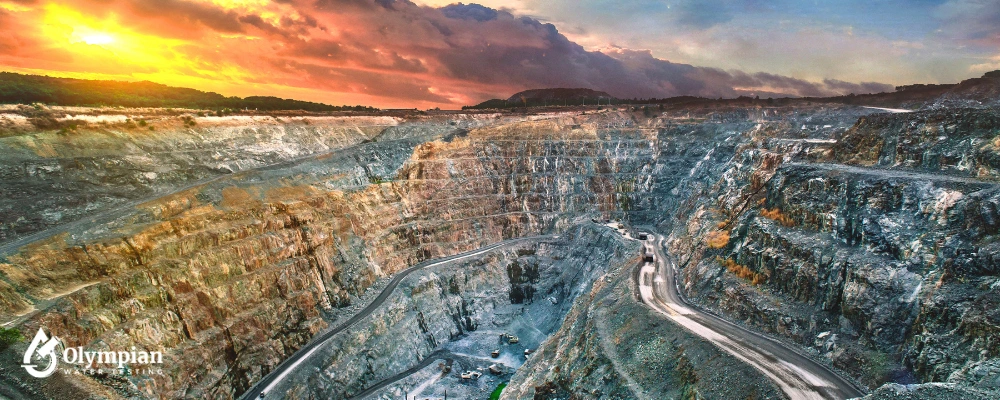
Mining has long been a core global industry that forms economies and geopolitical contexts. The more demand there is for valuable minerals such as gold, the more critical it becomes to know the health and environment implications of mining operations. Cyanide contamination is among these, one that rings alarm bells for environmentalists, communities and governments alike.
Understanding Cyanide: Basics and Properties
Cyanide is a powerful compound of carbon and nitrogen. It is famous for its deadly power, little-known is how it serves multiple industries. Applied in chemical synthesis, metal fabrication and medicine, cyanide has become an absolute necessity.
But it’s mining that gets called into question most often for the cyanide it uses. And especially in gold mining, this chemical comes into play. Cyanide attaches to gold particles, and this enables it to be separated from ore (a process perfected over decades).
The Mining Connection: Cyanide in Gold Extraction

In the old days, gold was extracted in different ways – either from plain panning or more complicated processes such as hydraulic mining. In time, these methods became more effective but they rarely turned up as much gold as possible. Enter the cyanide process. It was created at the end of the 19th century and improved the extraction of gold by exponentially increasing the yield.
Leaching cyanide, in which ore is mixed with cyanide solution. It attaches to gold to produce a soluble chemical, which can then be separated and refined to get pure gold. Though powerfully effective, the environmental impact of using or not using this poisonous cure is enormous.
Extent of Cyanide Contamination: A Global Perspective
There aren’t only cyanide leaks in mines. Over the years, we’ve seen a few cases of that contamination. The Baia Mare spill in Romania in 2000, for example, released 100,000 cubic metres of cyanide-contaminated water, which flowed to several countries downstream.
The most frequent victims are areas of South America, Africa and part of Asia where huge mining operations are being undertaken. It is whether from a lack of safety, a broken infrastructure or a natural disaster, and the consequence is the same: ecosystems pay, and the consequences last decades.
Environmental Impact of Cyanide Spills
The ecological impact of a cyanide spill is hardly bleak. Cyanide-contaminated soil becomes unproductive, incapable of growing plants and so impoverishing the entire system that depends on it. The ravages are worse on water. Freshwater fish in particular are can be wiped out by exposure to traces of cyanide.
And it is not only the immediate environment that suffers. The ripples of knock-on effects rip through the food web. Predators that consume contaminated meat can bioaccumulate the poison, which gets concentrated in the body. This cascade has the potential to change whole ecosystems, and its effects are not always predictable and catastrophic.
Human Health Implications
Cyanide pollution is deeply human. If exposed in any time, it causes dizziness, vomiting and, in severe cases, death. But the long-term consequences are worse. Exposure for a long period of time, especially in communities near mining sites, causes respiratory and cardiovascular problems among other diseases.
There are instances where entire communities have been decontaminated. Their rivers contaminated, their fields ruined, their lives on the line. The physical and mental damage that comes with that too.
Legal and Regulatory Landscape
Solutions for cyanide mining risk aren’t only an environmental or health issue, they’re a legal one. At the international level, laws and protocols regulate mining using, shipping and dumping of cyanide. International Cyanide Management Code, for example, is a move to make gold mining better managed with cyanide.
But laws are enforced differently in different countries and can be extremely strict. Other countries that realise the risks are making harsh rules about mining cyanide. Others might not have the infrastructure or political will to do so, which results in unmet regulatory oversight and risk.
Mitigating the Risks: Best Practices and Alternatives
Cyanide works phenomenally well in the recovery of gold, but its hazard has brought calls for new techniques and better methods. Some noteworthy advances include:
Thiosulfate Leaching: In place of cyanide, this one works, but is more involved.
Gravity Separation: A more ancient method that’s not chemical but is less effective.
Bioleaching: Using microbes to leach gold but in the prototype stage.
Additionally, some mining companies have already stepped up, in light of the risks. They also spend on the latest technology, training and crisis management in order to lower the likelihood of a spill and the consequences of a spill.
Community Advocacy and the NGOs’ Role Social action by community Advocacy, Inc.
Locals who have been harmed by mining aren’t silent onlookers. All have organised, protested and pleaded for more safety and regulation. They are, as much as sad as they are humane, living proof of the toll negligence takes on our humanity.
NGOs around the world have assumed the role, standing up for the people affected, and getting the world to hear about it. By conducting independent research, working with experts and lobbying the government, they are central actors in the story of cyanide pollution and prevention.
Share this on social media:
Facebook
Twitter
LinkedIn

Related Posts