A Comprehensive Guide to HAA5 Contamination in Queens' Drinking Water
- Published:
- Updated: January 2, 2025
Listen to this article
Summary
Unveiling the hidden threat of HAA5 in Queens’ drinking water:
- Understanding HAA5: Haloacetic Acids pose health risks due to water treatment reactions.
- Historical Perspective: Queens’ water quality journey reveals past contamination episodes.
- Current State: While some areas show improvement, others face persistent HAA5 challenges.

Queensites know all about the hassles of urban life. But a lot of people probably don’t realise that they need to worry about their water quality, especially HAA5 in the water. The ingredient, which might be asymptotic as it is, has ramifications for every human who takes the water. But what is HAA5 and why is it in Queens’ drinking water at all?
Understanding HAA5: A Deep Dive
The five chemicals HAA5 (haloacetic acid) are created when disinfectants – such as those in the disinfection of drinking water – react with the organic and inorganic matter present. These acids are monochloroacetic acid, dichloroacetic acid, trichloroacetic acid, monobromoacetic acid and dibromoacetic acid. They’re troublesome in drinking water, in large part because they might pose a health hazard when used over time.
Studies have associated regular water drinking with elevated HAA5 with multiple diseases. Exposure over time can cause cancer, and, in women in gestation, low birth weight and birth defects. Standards were established to control the absolute concentration of these acids in water, but due to urban water treatment problems they may occasionally rise in concentration.
A Historical Perspective: HAA5 Issues Over the Years

Queens’ water has been in a downward spiral over decades. From the industrial age, which had its fair share of pollution, to enacted water-treatment standards more recently, Queens’s water history is convoluted. HAA5 contamination isn’t new but it’s gained traction thanks to stronger tests and increasing awareness.
If we consider a timeline of Queens water quality, there are several episodes of HAA5 pollution. A spike was seen in the late ’90s, and the town responded with outcry and council intervention. Further upstream, a 2018 report indicated that certain neighborhoods remained in the area with over-recommended HAA5 levels, giving attention to the problem again.
Current State of HAA5 in Queens' Drinking Water
Recent Queens water quality test results are both a relief and a warning. While we have made some progress limiting HAA5 concentrations, some regions are still found to be contaminated above the recommendations. These communities, most of which are in south Queens, struggle with an old infrastructure and population increase.
At the time of the last full report:
Astoria and Long Island City: HAA5 in normal ranges.
Jamaica and Richmond Hill: Small rises over the limit.
Far Rockaway: Increasing HAA5 level. Urgent response and investigation.
Comparison: HAA5 Levels in Queens vs. Other Boroughs
New York City has boroughs with their own water problems. Manhattan’s commercial district has spent a lot of money on water treatment, and so HAA5 is low. The City of Brooklyn, like Queens for most purposes, has been a bit more or less successful with HAA5, in some places better than others.
Two stories emerge from Bronx and Staten Island. The Bronx, with its large green spaces and access to upstate reservoirs, is averagely lower in HAA5. Though Staten Island is less populated than Queens, there are pockets of the island where HAA5 is at a similar level as those of south Queens neighborhoods, evidence of the complexity of water quality factors.
Technologies & Techniques to Measure HAA5
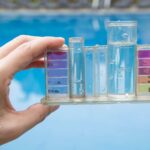
Detection of HAA5 in drinking water is still fairly new. Previous crude processes rarely picked up on small increments of contamination. New technologies today allow you to track and measure things in real time and more accurately, which can be vital for public health.
Large-scale chromatography, coupled with sophisticated sensors, can send plant operators a real-time message when HAA5 levels exceed permissible levels. In addition to these technology improvements, water treatment plants in Queens and elsewhere now use AI-based algorithms that predict episodes of contamination on the basis of multiple environmental variables so that proactive actions can be taken.
How Residents Can Protect Themselves
Sensitivity is key, but then something must be done. Renters and owners can pay for approved water filtration systems, the ones built to combat HAA5 and other contaminants. If it is municipal departments who are most responsible for keeping water clean, then a level of individual precaution can be provided.
In addition to water filtering, people need to be kept updated on water quality updates each year. They can even join public education campaigns so that there is a collective push for a healthier water supply. Even little practices like regularly cleaning faucet aerators and changing old plumbing fixtures help.
Local Initiatives & Responses to HAA5 Contamination
Getting government and non-profit partners to take the action that’s needed has led to a heightened focus on Queens HAA5 levels. From water treatment upgrades to local campaigns of education. Another shining example is the community-led work done in Far Rockaway, where residents worked with professionals to fix the frequent HAA5 problem.
And state and federal grants to update Queens’ water infrastructure have also been given. These funds go for short-term projects such as the deployment of new filtration technology, but also long-term efforts such as replacing old water pipes that are contaminated.
Future Projections: Is Queens' Water Getting Safer?
It’s the trajectory of water quality, including HAA5 in Queens, up. There are still many obstacles, but more consciousness, technology and community involvement suggests that there is a way out. According to local professionals, HAA5 will continue to go down in tandem with the current rate of infrastructure construction and regulatory actions.
But foretelling the future of water quality isn’t all about assessing HAA5. There will be climate change, urbanisation and other unknowables. What has not changed is Queens’ citizens and officials’ insistence that everyone get access to clean water.
Share this on social media:
Facebook
Twitter
LinkedIn
Next Article:

Related Posts