
Importance of Monitoring River Water Levels
Keeping an eye on water level changes is critical for both residents and city planners. It helps them tackle threats more effectively. Changes in currents can affect roads, buildings, and local ecosystems. Having access to real-time measurements is key to making timely decisions that safeguard people and property.
Preventing Flood Damage
Regular checks on river depth can prevent sudden emergencies. Early flood alerts allow families to strengthen their homes or clear out risky areas. This proactive step reduces repair costs and minimizes stress during storms or heavy rain.
Ensuring Boater Safety
For those who enjoy river activities, having up-to-date information on water conditions is essential. Recreational groups rely on gauges for speed, depth, and debris levels. Consistent flood alerts help them adjust their routes and schedules with caution. Communities that share this information foster safer outings under changing conditions.
Maumee River Water Level
Increased flows on the Maumee River can create swift currents, posing a challenge even for seasoned boaters. Water levels around 590–591 indicate flood stage, leading to sudden surges that require constant attention.
Local advisories stress the need for caution during these periods. Anglers planning weekend excursions are advised to verify reports and ensure they have all necessary equipment. Staying updated with the National Weather Service’s latest readings is also recommended.
Adhering to boater safety guidelines is essential for navigating these waters. Smaller boats may struggle with the strong currents, making it imperative to slow down and stay alert. The U.S. Coast Guard and local authorities provide critical guidelines to ensure the river remains a safe and enjoyable destination.
Key Factors Influencing Level Changes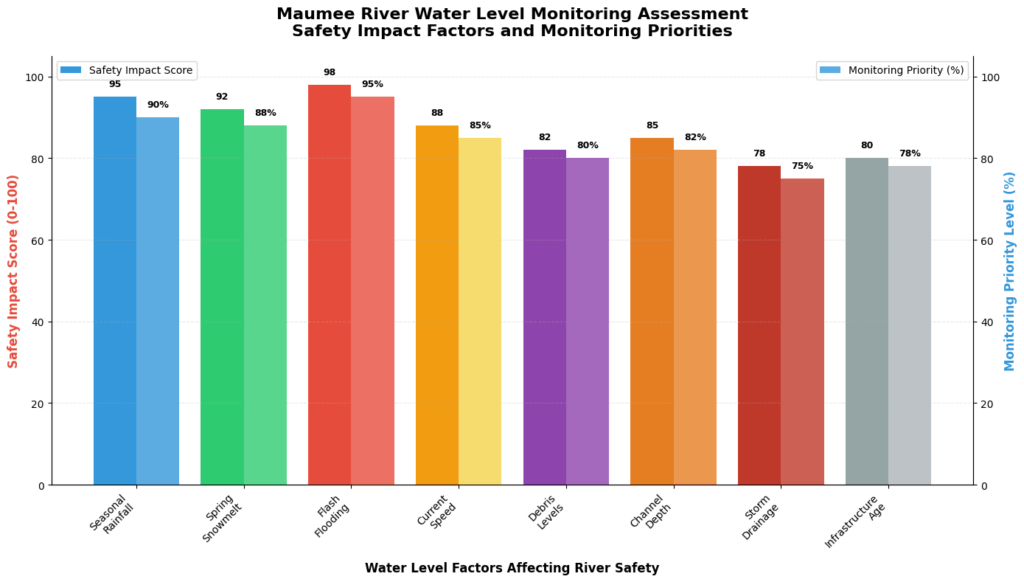
Changes in water flow are driven by weather and geography. Rain and melting snow cause sudden increases in river depth. Communities study these patterns to prepare for rapid changes and protect aquatic life.
Seasonal Rainfall Patterns
Heavy rain can overwhelm drainage systems, raising the river’s level. The timing and length of rain events are key. Local agencies monitor storms to manage water and support wildlife preservation.
Snowmelt and Spring Thaws
As temperatures rise, ice melts, adding water to the river. This thaw, combined with spring rains, can intensify currents. Planners track snow and forecasts to protect roads and homes, ensuring wildlife habitats remain safe.
Real-Time Data: Where to Find Reliable Information
Keeping up with official updates is essential for safe river outings. NOAA offers streamflow measurements and forecasts, aiding boaters and anglers in planning. Local agencies also maintain websites with daily water depth charts, making it easy to stay informed.
Many tackle shops provide regular reports, adding valuable insights for those planning Maumee River recreation. These local updates are invaluable, providing clarity during peak seasons. By tracking conditions from various sources, one can gain a complete understanding of the river’s dynamics.
Some turn to phone apps for immediate alerts on water level changes. This knowledge empowers travelers, allowing them to navigate currents and avoid hazards. Regular monitoring not only minimizes risks but also enhances the experience, creating lasting memories by the water.
Resource | Type of Data |
NOAA | Daily gauges and forecasts |
State Environmental Agencies | Regional alerts and live monitoring |
Local Tackle Shops | On-site conditions for Maumee River recreation |
Historic Flood Events and Lessons Learned
Decades of sudden water surges have shown us how nature can dramatically alter neighborhoods. Records highlight moments when overflowing rivers caused devastating damage. People learned that quick action and teamwork can save lives and property. This teaches us to stay vigilant, as river levels can shift without warning.
Impact on Local Communities
Local businesses and major roads often suffer when floodwaters rise. Families prepare by storing essential items in safe areas and monitoring weather forecasts. Municipalities invest in defenses, like stronger levees and drainage systems. This awareness is vital for anglers planning walleye fishing trips once the waters calm.
Strategies for Future Preparedness
Improved warning systems and customized evacuation plans are critical. Towns conduct training with rescue teams to ensure a swift response. Some even map out flood paths to ensure clear evacuation routes. These measures help mitigate long-term damage, allowing people to resume their routines and enjoy activities like walleye fishing when the waters recede.
Recreational Activities Along the Maumee River
Families and sightseers discover numerous ways to enjoy the scenic Maumee River. It offers fishing spots, gentle currents for canoeing and kayaking, and serene picnic areas. These activities provide a perfect blend of adventure and relaxation.
Regular updates on river level conditions are essential. They help avoid sudden changes that could impact hidden inlets and shoreline trails. Staying informed ensures safer and more enjoyable outings under the warm sun.
Some areas along the river may close when water levels exceed safe limits. It’s important to respect wildlife habitats and follow local guidelines. This approach fosters a deeper appreciation for the natural environment.
Activity | Recommended Season | Key Tip |
Kayaking | Late Spring to Early Fall | Wear a personal flotation device |
Fishing | All Year | Obtain necessary licenses |
Picnicking | Summer | Opt for sturdy footwear near wet banks |
Guidelines for Safe Boating and Fishing
Exploring the Maumee River demands a keen eye on water conditions. Checking real-time water data is a wise move before embarking. It helps visitors adjust to the ever-changing levels.
Whether you’re with a group or solo, understanding current changes and water height variations is key. Quick action to rising water levels can prevent issues and ensure safety.
Required Permits and Regulations
Boating and fishing on the Maumee River require adherence to federal and state rules. Licenses ensure that anglers and boat operators comply with local standards and support conservation.
Understanding channel markers is vital to avoid boundary disputes. Official documents outline the process for obtaining a permit.
Proper Safety Equipment
Life jackets or flotation devices are essential for passenger safety, given the river’s unpredictable currents. Additional fishing weights can help stabilize lines in strong currents.
Staying updated on real-time water data enhances awareness of sudden changes. Being prepared with the right equipment is critical for a safe and enjoyable trip.
Preserving the Ecosystem While Monitoring Water Levels
Tracking water levels responsibly protects communities and the creatures that inhabit the river. Each measurement is vital for spotting dangers to aquatic life. This includes the popular fish species found in these waters.
Conservation Efforts
Conservation plans aim to preserve fish habitats, restore natural shorelines, and enhance local wildlife preservation. Volunteers and environmental groups are essential in removing debris. They work to improve habitats for walleye and other species.
Impact of Pollution
Pollutants in the water harm fish and plants by reducing visibility. High runoff levels can disrupt reproductive cycles. Even small amounts of pollutants can affect water clarity. Monitoring systems help identify problem areas, guiding efforts to correct them. A dedication to preserving local wildlife ensures ecosystems thrive and recreational areas flourish.
Local Efforts to Manage Flood Risks
Local associations, city officials, and environmental groups work together to strengthen levees and keep channels clear. They upgrade storm drains to manage increased water flow, reducing the risk of sudden flooding. Public bulletins provide clear instructions and highlight flood alerts when conditions worsen.
Residents are urged to stay informed through community news and online dashboards. Emphasis on hazard education helps keep neighborhoods aware, focusing on high-risk areas. Timely surge warnings help minimize panic and property damage, while real-time alerts aid in evacuation planning.
Those who monitor flood alerts gain valuable insights into water levels. This allows them to secure personal belongings and follow evacuation guidelines. Volunteers and civic leaders organize workshops to teach how to prepare for emergencies.
Measure | Purpose | Benefit |
Levee Upgrades | Bolster structural integrity | Ward off severe overflows |
Warning Systems | Alert residents swiftly | Reduce emergency response time |
Drain Maintenance | Facilitate steady water flow | Lower the risk of blockages |
Staying Informed and Prepared
Consistent vigilance is key to safer excursions along the Maumee River. Local alerts inform visitors about swift water and sudden level changes. Checking NOAA’s resources each morning boosts confidence when planning a day of fishing or leisure.
Well-timed updates and boater safety guidelines add extra protection for families, anglers, and casual explorers. Clear signs of fast-moving currents should prompt people to stay onshore. Careful preparation and respect for local regulations ensure enjoyable outings while reducing risks.
These steps help preserve the river’s character for all who depend on it. Knowledge of the environment fosters a deeper respect for the water’s natural dynamics. When individuals stay ready for changing conditions, they safeguard their loved ones and maintain harmony with this vital waterway.
FAQ
Why is it important to monitor the Maumee River water level?
Real-time water level monitoring is critical. It alerts authorities and residents to flood risks, swift currents, and hazards. This knowledge allows for timely preparations, protecting property and ensuring recreational activities are safe.
Why do seasonal rainfall patterns and spring thaws cause the Maumee River to reach flood stage?
Seasonal rains, snowmelt, and spring thaws lead to rapid runoff. This causes the river level to surge, reaching flood stage around 590–591. Officials then issue public advisories, cautioning against areas like Bluegrass Island.
How do real-time water gauges from agencies like NOAA assist in river safety?
NOAA provides accurate, current water level data. This is vital for boaters, anglers, and local authorities. It helps in issuing flood alerts, closing ramps, and adjusting safety guidelines for changing conditions.
What effects can historic flooding have on community resilience?
Historic floods have taught local areas to improve infrastructure and emergency plans. They’ve also led to better zoning regulations. These efforts reduce damage and manage water level surges.
What should anglers know about fishing when the water reaches flood stage?
At flood stage, anglers face fast-moving water. It can affect bait or lure setups. Checking local tackle shops for conditions and ensuring permits are valid is essential for safety.
How do fluctuating water levels impact the local ecosystem?
Water level changes disrupt habitats and wetlands. Monitoring pollution and maintaining habitats is key. This supports healthy aquatic life, like walleye, attracting anglers.
Where can residents find trustworthy updates on Maumee River water conditions?
Updates come from NOAA, local agencies, and community websites. Tackle shops and wildlife agencies offer on-the-ground insights. These confirm water level, current, and pollution risks.
Are there recommended safety precautions for boaters on the Maumee River?
Boaters should check water levels, wear life vests, and be cautious in currents. Confirming safety notices or gauges before launching is essential for a safe experience.
What measures do local authorities take to manage flood risks?
Authorities reinforce levees, improve warning systems, and enhance infrastructure. They issue timely alerts and urge caution. This minimizes damage and protects lives.
How can individuals stay prepared for sudden Maumee River surges?
Stay informed with NOAA forecasts and local alerts. Check real-time data before activities. Keeping safety gear and being aware of currents prevent accidents and ensure responsible river use.