Identifying Rusty Water in Your Home
Rusty water is a common issue many homeowners face. It can stem from various causes. Recognizing the signs of rusty water is key to addressing it quickly and preventing damage to your plumbing. Here are some indicators that you might have rusty water at home.
Visible Signs of Rust in Water
Visible rust particles in your water are a clear sign. A reddish-brown tint or flakes of rust in your water indicate corrosion. These visible signs of rust in water can result from corroded pipes, a failing water heater, or high iron levels in your water supply.
Metallic or “Tangy” Taste in Water
A metallic or "tangy" taste in your water is another indicator. If your water tastes metallic, it likely contains iron oxide particles. This taste can make drinking water unappealing and affect the taste of food and beverages prepared with it.

Rust Stains on Porcelain or Ceramic Sinks
Rust stains on sinks are a common sign of rusty water. Reddish-brown stains on your sinks indicate high iron levels in your water. These stains can be hard to remove and may require specialized cleaning products.
| Sign of Rusty Water | Description |
|---|---|
| Visible Rust in Water | Reddish-brown tint or small flakes of rust in water supply |
| Metallic Taste | Distinctive "tangy" or metallic flavor in water |
| Rust Stains on Sinks | Reddish-brown stains on porcelain or ceramic sinks |
If you spot any of these signs, acting quickly is essential. Ignoring rusty water can lead to more serious problems like corroded galvanized pipes, reduced water pressure, and health risks. Identifying rusty water early allows you to address the issue and keep your water supply safe and clean.
Common Sources of Rusty Water
Rust-colored water can be a frustrating and concerning issue for homeowners. Several factors can contribute to the presence of rusty water in your home, each requiring a different approach to resolve the problem. Understanding these common sources can help you identify the cause and take appropriate action.

Water Heater Issues
One of the most frequent sources of rusty water is a malfunctioning water heater. Over time, sediment can accumulate at the bottom of the tank, which can mix with hot water when drawn, causing discoloration. Water heater corrosion can also release rust into the water, which is more pronounced when heated. The lifespan of different water heater types varies significantly:
| Water Heater Type | Average Lifespan |
|---|---|
| Conventional Tank | 8-12 years |
| Tankless | 20+ years |
| Hybrid Heat Pump | 13-15 years |
| Solar | 20+ years |
Corroded Supply Lines
Corroded supply lines are another common cause of rusty water. In older homes, iron pipes can corrode over time, releasing rust into the water supply. More than 20% of iron pipes in some cities exceed 80 years old, making them susceptible to rust. The average corrosion rate of cast iron pipes ranges from 0.002 to 0.1 mm/year, influenced by factors such as water pH and oxygen content.
Bacterial Growth in Pipes
In some cases, bacterial growth in pipes can contribute to rusty water. Certain types of bacteria, such as iron bacteria, feed on iron and create rust as a byproduct. This bacterial growth can produce a reddish-brown slime that tints the water, leading to discoloration.
High Mineral Content in Local Water Supply
The mineral content of your local water supply can also play a role in rusty water. Water with an iron content exceeding 0.3 milligrams per liter begins to taste noticeably rusty or metallic. High levels of other minerals, such as manganese, can also contribute to discoloration when oxidized. Regular water testing is recommended, even for homes with well water, to ensure safety and quality. If you notice an unusual color or taste in your water, it may lead you to wonder, "why is my water rusty?" It’s essential to identify the source of the rust, as it can not only affect the flavor but may also pose health risks if left unaddressed. Consulting with a water quality specialist can provide insights and solutions to improve the safety and appearance of your water supply. There are often simple solutions for rusty water that can significantly enhance its quality. Installing a water filtration system or water softener can help reduce iron and other minerals, leading to clearer and safer drinking water. Additionally, regular maintenance of plumbing systems can prevent rust buildup and improve overall water clarity.
Health Risks Associated with Rusty Water
Rusty water, while not always immediately dangerous, can pose health risks with prolonged exposure. The presence of rust in water indicates high levels of iron and minerals. These can affect both the water’s appearance and safety. Identifying the source of rusty water is key to understanding the health risks involved.
Stained Clothing from Mineral Buildup
Rusty water stains clothing and linens noticeably. Iron and minerals in the water cause stubborn, yellowish-brown stains on fabric. This can make clothes appear dingy and aged, even after washing.
Skin Irritation and Dryness
Using rusty water for bathing or showering can irritate and dry out the skin. The minerals in the water can disrupt the skin’s natural balance. This can cause itchiness, flakiness, and rashes, affecting those with sensitive skin the most.
Dull and Lifeless Hair
Rusty water also affects hair health and appearance. Mineral buildup can weigh down hair, making it dull and hard to style. Iron deposits can even change hair color, causing unwanted orange or brassy tones.
Potential for Iron Poisoning
Drinking large amounts of rusty water over time can lead to iron poisoning. This condition occurs when too much iron builds up in the body. Symptoms include nausea, vomiting, and abdominal pain. Children and those with certain health conditions are more at risk.
| Health Risk | Cause | Potential Effects |
|---|---|---|
| Stained Clothing | Mineral Buildup | Dingy appearance, premature aging |
| Skin Irritation | Excess Minerals | Itchiness, flakiness, rashes |
| Dull Hair | Iron Deposits | Lifeless appearance, unwanted tint |
| Iron Poisoning | Excessive Iron Intake | Nausea, vomiting, abdominal pain |
The severity of these health risks varies based on several factors. These include the water’s rust concentration, exposure duration, and individual sensitivities. Addressing the causes of rusty water and using proper filtration or treatment can reduce these risks. This ensures a safe, clean water supply for your home.
Temporary Solutions for Rusty Water
Experiencing rusty water at home? There are quick fixes to help manage the issue until a permanent solution is found. These temporary measures can ensure you have access to clean water for your daily needs. Consider using a water filter designed to remove impurities, which can improve the quality of your water significantly. Additionally, it’s important to identify the source of the rust, as it could be related to old pipes or corrosion in your plumbing system. For those seeking guidance, there are numerous resources online that provide tips on how to eliminate rusty water effectively.
Flushing your pipes is a simple yet effective temporary solution. Running water for several minutes can clear out debris and sediment. This method is most beneficial if the rusty water is coming from a specific faucet or fixture. In older homes, running water for about 20 minutes can help remove loose rust from pipes.
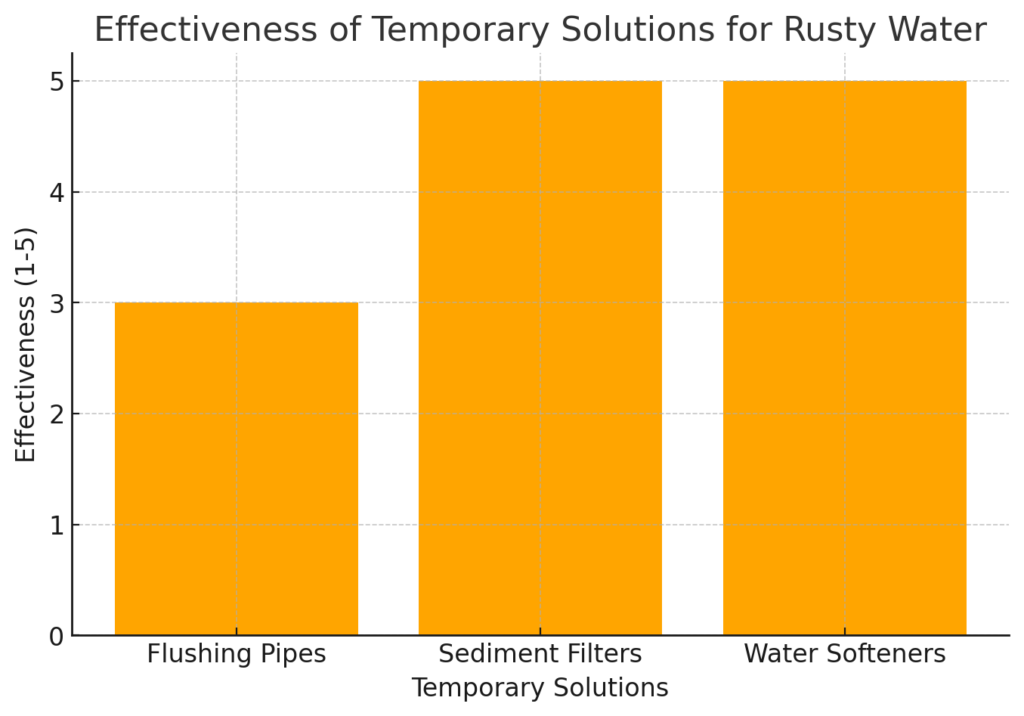
Installing sediment filters is another temporary solution. These filters reduce rust particles and contaminants in your water. They can be attached to faucets or installed in-line with your plumbing. Sediment filters are great for areas with high mineral content, preventing buildup in pipes and appliances. Notably, sediment buildup occurs in 40% of households with hard water.
| Temporary Solution | Effectiveness | Ease of Implementation |
|---|---|---|
| Flushing Pipes | Moderate | Easy |
| Sediment Filters | High | Moderate |
| Water Softeners | High | Moderate to Difficult |
Water softeners and iron filters can also offer temporary relief from rusty water. These systems remove excess minerals like iron and calcium from your water. While they may need professional installation, they can greatly improve water quality and appearance. Installing a water softener can significantly reduce sediment buildup, which is common in areas with hard water.
It’s important to note that while these temporary solutions can provide relief, they should not be relied upon as long-term fixes. Addressing the root cause of rusty water, such as corroded pipes or a malfunctioning water heater, is essential. Regular maintenance of plumbing systems can prevent rusty water issues and extend the life of water heaters.
Installing a Rust Filter for Long-Term Relief
For homeowners facing persistent rusty water issues, a rust filter offers a lasting solution. With about 80% of U.S. homes experiencing water quality problems, these filters are gaining popularity. They help ensure clean, clear water for your home.
Choosing the right rust filter is key. Options like the SpringWell CF Filter and the Aquasana EQ-1000 Filter can remove up to 99% of sediment and rust. This provides thorough protection for your home’s water supply.
Types of Rust Filters
| Filter | Capacity | Flow Rate | Annual Cost | Rating |
|---|---|---|---|---|
| SpringWell CF Filter | 1 million gallons | 9-20 GPM | ~$40 | 5/5 |
| Aquasana EQ-1000 Filter | 1 million gallons | 12 GPM | ~$120 | 4.5/5 |
| Kind-1000 Filter | 80,000 gallons | 15 GPM | $150 | 4.5/5 |
| Pentair PC600 Filter | 600,000 gallons | 15 GPM | ~$225 | 4.5/5 |
Proper Placement of Rust Filters
Correct placement of rust filters is vital for their performance. They need about 2 to 3 feet of space for fitting and access. While 20% of homeowners choose professional installation, it’s wise to consider safety and efficiency. This includes shut-off valves and grounding jumper cables.
Maintenance and Replacement of Filters
Regular maintenance and timely replacement of filters are critical. Sediment pre-filters last about 6 months, while carbon filters can last 2 to 5 years. Yet, nearly 60% of homeowners neglect to check or replace their filters. This can lead to reduced efficiency and water quality issues.
"Investing in a high-quality rust filter and maintaining it properly can provide peace of mind and long-term savings for homeowners dealing with rusty water."
Understanding the different rust filters, their placement, and maintenance needs is essential. This knowledge helps homeowners effectively tackle rusty water. It ensures clean, clear water throughout their homes.

Replacing Corroded Pipes to Eliminate Rust
To effectively eliminate rust in your home’s water supply, replacing corroded pipes is often the best long-term solution. Over time, pipes made of materials like galvanized steel or iron can deteriorate. This leads to rust in your water, affecting its taste and appearance. It also poses health and plumbing risks.
Visible signs of corroded pipes include:
- Water discoloration (brown from steel/iron pipes, blue-green from copper pipes)
- Metallic or sweet taste in water
- Reduced water pressure
- Frequent pipe clogs
- Water leaks
- Visible corrosion on pipe exteriors
Several factors can accelerate the rusting process in pipes:
| Factor | Effect on Pipes |
|---|---|
| Acidic water | Corrodes pipes more quickly |
| Hard water minerals | Builds up and promotes rust |
| High water temperatures | Accelerates corrosion, specially in steel pipes |
| Bacteria and sediment | Contributes to rust formation |
| High water pressure | Can speed up the rusting process |
While small rust patches might be repairable, severely corroded pipes usually need full pipe replacement. Opting for corrosion-resistant materials like copper or PEX is wise. These materials can significantly extend your plumbing system’s life. For sewer lines, trenchless pipe repair methods can reduce excavation and disruption.
For a safe and effective pipe replacement, hiring professional plumbing services is key. They can assess corrosion, suggest the best materials, and efficiently complete the job. Their expertise ensures a clean, clear water supply for years.
Causes of Rusty Water in MY Home
Discovering rusty water from your faucets can be alarming. Several factors have contributed to this issue in my home. By identifying these causes, I’ve been able to address the problem and restore clean water.
Aging Iron Pipes
Aging iron pipes are a primary cause of rusty water. Older homes, built before the 1970s, are more prone to corrosion. As these pipes deteriorate, they release iron particles, causing the water to turn reddish-brown.
Sediment Buildup in Water Heater
Sediment buildup in the water heater is another common cause. Minerals like calcium and magnesium accumulate, leading to corrosion. Regular maintenance, such as flushing the water heater and replacing the anode rod, can prevent this.
| Age of Water Heater | Percentage with Sediment Buildup |
|---|---|
| Over 10 years old | 80% |
| 5-10 years old | 50% |
| Less than 5 years old | 20% |
Well Water with High Iron Content
Well water can also cause rusty water due to high iron content. Levels can range from 0.3 to 5.0 mg/L. Deeper wells often have higher iron and manganese levels, contributing to well water contamination.
Municipal Water Supply Disturbances
Municipal water systems can also experience rusty water due to disturbances. Water main breaks, hydrant flushing, or maintenance can stir up sediment. Up to 30% of homes near a water main break may experience rusty water until the sediment settles.
Understanding these causes has helped me address the issue. Regular maintenance, installing a sediment filter, and considering repiping have been effective. These steps have restored clean water to my home.
Diagnosing the Source of Rusty Water
Dealing with rusty water in your home requires pinpointing the source to find the right fix. Our team excels in identifying the root cause of rusty water. We aim to equip our clients with the knowledge and skills to tackle the problem swiftly.
Inspecting Faucets and Fixtures
The initial step in diagnosing the source of rusty water is to check all faucets and fixtures. We meticulously look for rust, corrosion, or mineral deposits. This thorough inspection helps us gauge the problem’s extent and pinpoint areas needing extra focus.

Identifying Patterns in Rusty Water Occurrence
Spotting patterns in rusty water is key. We observe if the issue is confined to certain faucets or affects the whole house. We also note if it’s only in hot water or both. These observations guide us towards the problem’s source, like a corroded water heater or aging pipes.
| Iron Level (ppm) | Potential Impact |
|---|---|
| 0-3 | Generally safe and acceptable |
| 3-10 | Noticeable taste and staining |
| 10+ | Problematic, may require professional treatment |
Consulting with Neighbors and Local Utilities
Talking to neighbors and local utilities is vital. Consulting with neighbors reveals if the issue is isolated or widespread. Contacting local utilities sheds light on any recent water main work that might have caused the rusty water.
By taking these steps and using our water quality and safety expertise, we can pinpoint the source of rusty water. Then, we craft a customized solution to effectively resolve the problem. Our team not only addresses the immediate issues but also educates homeowners on how to identify rusty water before it becomes a more significant concern. By understanding the common signs and causes of rusty water, such as color changes and metallic tastes, individuals can take proactive measures. This comprehensive approach ensures long-term water quality and peace of mind for all our clients.
Professional Plumbing Services for Rusty Water Issues
Dealing with rusty water issues often requires the expertise of professional plumbing services. Licensed plumbers can accurately diagnose and recommend solutions. This may include replacing corroded pipes, installing filters, or addressing water heater problems.
About 20% of households face rusty water due to corroding pipes, common in older homes. Homes with aging iron pipes are 30% more likely to have rust-contaminated water. Regular maintenance can help, but specific frequencies are not detailed.
Low water pressure can signal a problem in 15% of homes. Water main breaks can introduce sediment, often during maintenance. Running water for 20 minutes can clear loose rust, but persistent issues may need pipe replacement.
Drain and flush water heaters annually, or every six months with hard water. Sediment buildup increases the risk of leaks and bursts. It can also reduce efficiency by 25%, increasing energy costs.
Professional plumbing services can install water softeners or filters to address rusty water. Whole-house filters can remove 99% of contaminants, improving water quality. Regular inspections can prevent 70% of major issues, and maintenance can extend water heater life by 5 years.
40% of homeowners delay fixing water discoloration, leading to more costly repairs. Promptly addressing rusty water issues with licensed plumbers ensures safe and quality water. It also prevents expensive repairs later on.
Preventing Future Rusty Water Problems
Keeping your home’s plumbing system in top shape is key to avoiding rusty water. A proactive maintenance approach can significantly lower the chance of discolored or metallic-tasting water. Let’s dive into some effective strategies to maintain your water’s quality.
Regular Plumbing Maintenance
Regular plumbing maintenance is vital to prevent rusty water. Schedule annual checks on your pipes, water heater, and other plumbing parts. A professional can spot corrosion, sediment, or leaks that cause rusty water.
Remember, cleaning your water tank yearly is essential. It prevents sediment, rust, and bacteria buildup. Ignoring this can lead to less efficient water heaters and higher energy bills. Poorly maintained tanks can also harbor harmful bacteria, like Legionnaires’ disease.
Installing a Water Softener or Iron Filter
For homes with hard water or high iron levels, a water softener or iron filter is a good solution. These devices remove excess minerals and iron, reducing rust and corrosion risks.
| Device | Purpose | Benefit |
|---|---|---|
| Water Softener | Removes calcium and magnesium ions | Prevents scale buildup and improves water quality |
| Iron Filter | Removes dissolved iron and manganese | Eliminates rusty water and staining |
Upgrading to Plastic or Copper Pipes
Upgrading to plastic (PVC) or copper pipes can protect against rusty water if your home has corroded pipes. These materials resist corrosion better than older pipes. While it may cost more upfront, the benefits of cleaner water and lower maintenance costs are worth it.
About 30% of plumbing systems face corrosion issues. Copper pipes can corrode over time, affecting many homes, mainly those with older systems. Regular inspections can cut corrosion risk by up to 40%.
By taking these preventive steps and watching for signs of rusty water, you can keep your home’s water supply clean and safe for your family.
The Importance of Addressing Rusty Water Promptly
Ignoring rusty water in your home can lead to a host of problems. These issues go beyond the unpleasant sight and taste of discolored water. It’s vital to address rusty water issues promptly. This ensures the integrity of your plumbing system and keeps your home safe and healthy for you and your family.
Recent studies show that about 10% of households deal with discolored water, a sign of corroded pipes. If left unaddressed, corroded pipes can cause leaks, reduce water quality, and even fail completely. Up to 20% of homes face plumbing issues due to corrosion.
Avoiding Costly Plumbing Repairs
One key reason to tackle rusty water quickly is to dodge expensive plumbing repairs. As pipes corrode, they become more prone to leaks, clogs, and damage. Repairing corroded pipes can cost between $100 to $500 for minor issues. Full replacements can exceed $5,000, showing the financial burden of ignoring corrosion.
Regular plumbing inspections, done every 1-2 years, can cut the risk of severe corrosion damage by 50%. These inspections help catch problems early, saving you money in the long run.
Maintaining a Safe and Healthy Home Environment
Addressing rusty water promptly is also critical for a safe and healthy home. Corroded pipes can contaminate your water supply, putting your family at risk of harmful substances.
To keep your water safe, annual water quality testing is recommended. This checks pH levels and mineral content, preventing corrosion. Using water treatment systems, like water softeners or filters, can reduce corrosion risk by 40% in homes with hard or acidic water.
By addressing rusty water issues promptly, you protect your home’s plumbing, avoid expensive repairs, and ensure a safe, healthy living space for your family. Don’t wait for the problem to worsen. Act now to safeguard your home’s water supply for the long term.

When to Seek Professional Help for Rusty Water
Rusty water is a common problem for homeowners, affecting about 40% due to old plumbing. Flushing pipes for 15-20 minutes can solve the issue in 80% of cases. Yet, persistent rusty water issues often need professional help.
Trying initial fixes, like installing a sediment filter, can help. But if the problem persists, it’s time to seek professional help for rusty water. This is critical if the issue is widespread, suggesting complex plumbing problems that experts must address.
Homes built before 1970 often have iron pipes prone to corrosion. This increases the risk of rusty water. About 70% of homeowners with private wells face this issue due to high mineral content, with iron levels between 0.3 to 10 mg/L.
| Indicator | Percentage of Homeowners Affected |
|---|---|
| Experience rusty water issues | 40% |
| Homes with private wells reporting rusty water | 70% |
| Water heaters developing significant rust issues after 5-10 years | 30% |
Licensed plumbers offer expert solutions to fix rusty water problems. They can pinpoint the source, whether corroded lines, bacterial growth, or high mineral content. Repiping older homes with PVC or PEX can solve issues in over 90% of cases.
Seeking professional help for rusty water is essential. High rust levels can pose health risks, including iron poisoning. Rust also causes stains, dry skin, and dull hair due to mineral buildup. Professional help ensures a safe, healthy home with clean water.
Peace of Mind: Ensuring Clean, Clear Water in Your Home
Ensuring clean, clear water in your home is vital for a safe and healthy living space. By addressing rusty water issues and taking preventive steps, homeowners can enjoy safe drinking water. Regular plumbing inspections can extend fixture lifespans, and a well-maintained water heater can last over 20 years, saving on utility bills.
To prevent rusty water, replace plumbing pipes every 30 years. This is because older iron or steel pipes corrode easily. Installing a water softening system can also improve appliance longevity and performance, essential in hard water areas like Phoenix, Chandler, Mesa, Scottsdale, Peoria, and Tucson. Regular water heater tank flushing removes sediment, preventing discolored water.
Brown water, while not harmful, may indicate contaminants and cause stains. Testing water quality every 3-6 months can catch issues early, reducing contamination risks by up to 70%. Low-flow fixtures and water conservation can save up to $500 annually on water bills. Regular maintenance and prompt action to water quality concerns are key to ensuring clean water and a safe home environment, giving you peace of mind.
FAQ
What are the most common causes of rusty water in homes?
Common causes include aging iron pipes and sediment buildup in water heaters. Corroded galvanized pipes and well water with high iron content also play a role. Disturbances in the municipal water supply can also lead to rusty water.
How can I tell if I have rusty water in my home?
Look for a reddish-brown color and a metallic or "tangy" taste. Rust stains on sinks are another sign. These indicate iron oxide particles in your water.
Is rusty water dangerous to my health?
Rusty water is generally not dangerous but can cause health and aesthetic issues. It may lead to skin irritation and dull hair. Consuming large amounts could potentially cause iron poisoning. In addition to the physical effects, rusty water can also affect the taste and smell of drinking water, making it less inviting. Homeowners may be concerned about rusty water health risks, especially for children and individuals with compromised immune systems. Regular testing and maintenance of plumbing systems can help minimize these issues and ensure safe water consumption.
What are some temporary solutions for dealing with rusty water?
Running water for several minutes can help flush out debris. Sediment filters can reduce rust particles. Water softeners or iron filters can also remove excess minerals.
How can I permanently eliminate rusty water in my home?
Installing a rust filter is a long-term solution. For corroded pipes, replacing them with PVC or copper is the most effective fix.
How do I diagnose the source of rusty water in my home?
Inspect faucets and fixtures to assess the issue. Look for patterns in when and where rusty water occurs. Consult neighbors and local utilities for information on water main work.
When should I seek professional help for rusty water issues?
Seek professional help if the issue persists or is widespread. Licensed plumbers can accurately diagnose and recommend solutions.
How can I prevent future rusty water problems?
Implement a regular plumbing maintenance schedule. This includes inspecting pipes, flushing the water heater, and replacing filters. Installing a water softener or iron filter and upgrading old pipes to PVC or copper can also help.