
Unraveling the Technologies: Comparing Different Types of Under Sink Water Filters
- Published:
- Updated: November 28, 2024
Listen to this article
Summary
Discover the world of under sink water filters, comparing various types to uncover their mechanisms and suitability for your needs.
- Carbon Filters: Utilize activated carbon to remove contaminants like chlorine, improving taste and odor, though they may not eliminate minerals.
- Reverse Osmosis Systems: Employ semi-permeable membranes to achieve high-purity water, albeit with higher maintenance and wastewater production.
- Ultraviolet Filters: Utilize UV light to eradicate microorganisms, lacking in non-biological contaminant removal and requiring electricity.

Take a trip into the world of under sink water filters as we untangle the technologies of them, comparing the various models out there. A large number of options to choose from, so it’s important to research what types have what pros and cons before you choose for your water filtration system. Whether it is activated carbon or reverse osmosis, this breakdown helps you understand the workings of each so you can make sense of all the differences between under sink water filters and choose the one that is right for your family.
Understanding under Sink Water Filters: The Basics
Filtration at the source is now a requirement of the modern home. The under sink water filter, the one that people prefer, has a few benefits over other models. A unit dedicated to your sink, this kind of filter filters water before reaching your faucet. It thus, gets rid of unhealthy particles, adds taste and smell, and can keep your plumbing from deteriorating by cutting down on sediment.
It works by passing water through a cartridge filter that removes dirt and particles. These filters are all different, from simple units to remove larger particulates to machines to filter microscopic life, heavy metals and even some chemicals. But not all under sink water filters are the same, and knowing what they are all about is the first step towards getting the perfect one for you.
Why carbon are filters a commonly used solution for water filtration?
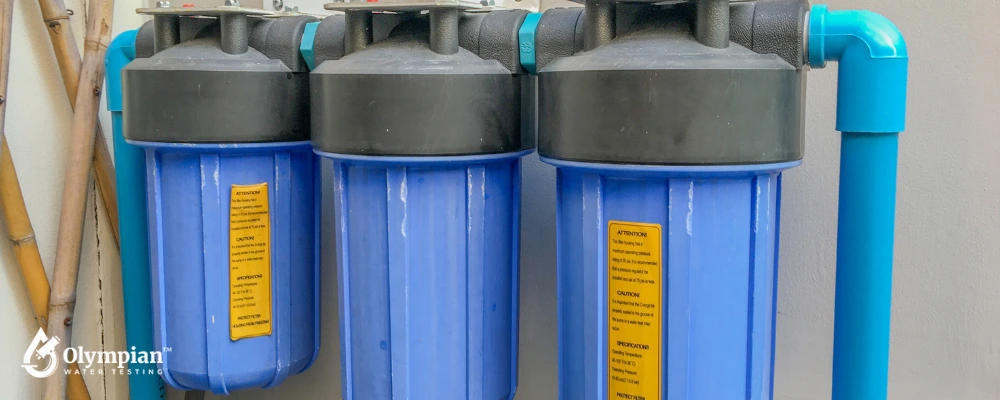
Most common kind of under sink water filter is carbon filter. This is a technology that makes use of the capability of activated carbon, with its huge porous surface. Passing pollutants adhere to this surface and so are detonated from the water. Activated carbon filters are especially good at getting rid of chlorine, some chemicals, and changing the flavor and odour of the water.
But carbon filters, though effective and cost-effective, are not perfect. They don’t take out minerals, salts and a little bit of inorganics. For higher levels of filtration, some filters use a block carbon material that has more surface area and is capable of capturing more contaminants.
Reverse Osmosis Systems: High Quality Purification
If you want something a little more advanced in filtration, reverse osmosis (RO) systems are a nice option. These machines run by pushing water through a semi-permeable membrane that is removed up to 99 per cent of dissolved solids, metals and toxic chemicals. RO systems are famous for providing extremely pure water.
RO on the other hand is more expensive than the rest, as well as creating sludge as part of the filter process. But the quantity of water they create is usually more important to most homeowners than these issues.
Understanding Ultraviolet (UV) Filters: Harnessing Light for Purification
Ultraviolet (UV) filters are one of the most efficient, chemical-free methods of eliminating microbes from your water. It is a technology that kills bacteria, viruses and other pathogens by ultraviolet light. UV rays damage these microbes’ DNA, and so they are impervious.
Non-biological contaminants are not removed by UV filters, even when they are effective. They’re therefore usually combined with other filter types to create a complete purification system. And UV filters need electricity to work which is a good thing.
Ceramic Filters: Old Technology, New Applications
This classic filtration technique was made so effective, and ceramic filters prove that. Micro-porous ceramic is a physical barrier to contaminants. They work well for cleaning bacteria, sediment and particulates, but they are also pretty straightforward to clean and keep clean.
But like all filters, ceramic ones are not without their disadvantages. They don’t wash out chemical pollution or efficiently process sediment-laden water. More recently, though, ceramics have been incorporated with activated carbon or silver for added filtration.
Multi-Stage Filters: Layered Protection
For some homeowners, multi-stage filters are the best choice. These vessels combine various filters for a complete clean. Usually they are composed of mechanical filtration, activated carbon and RO with each step targeting a specific pathogen.
Multi-stage solutions provide full-scale protection against all kinds of contaminants. They are easier to install and troubleshoot, though. But they are often considered better for the extra work. UV light could also be added in the system if needed, for biological contaminants to be effectively removed.
When choosing a filter, what factors should be considered to ensure the right choice?
When it comes to the right under sink water filter, it’s always a matter of proportion, considering a lot of things. Your water supply also affects contaminants in the first and most important way. New York water test can show you exactly what to purge.
Other factors to consider include:
Cost: There are various prices on under sink water filters from the cheaper single stage filters to the higher priced multi-stage models.
Repairs: Consider how much work you’re going to put into it. RO systems are fantastic at filtering but more maintenance than regular carbon filters.
Space: How much space you have under your sink also affects which filter to use. Other units are smaller.
Rate of flow: Different filters will affect your faucet’s rate of flow. If you’re absolutely putting this in, get a filter that doesn’t really drop pressure.
These are the points and after looking at each type of filter and getting a better idea about them, you can pick the best one for you based on your requirements and lifestyle. This can’t be an exchange for quality water and it shouldn’t be, thanks to the right under sink water filter.
Installation and Maintenance: Keeping Your Filter at Peak Performance
It is a pretty simple task to install an under sink water filter, but it depends on the type and model. Some can be spliced in with basic tools and some amateur DIY abilities, while others will require the expertise of a pro. Performing regular maintenance such as filter changes is important for these systems to operate correctly.
How much you need to maintain depends on model and water quality. Carbon filters should be replaced every 6 to 12 months, RO membranes last 2–3 years. Learn about your filter choice and make regular maintenance reminders to keep it at its best and for as long as possible.
Emerging Trends in Under Sink Water Filtration
As technology develops, the next generation of under sink water filtration is on the horizon. Such innovations as intelligent filters that track usage and let users know when they need replacement, or energy-efficient versions that use less water and energy are becoming common. They will enable cleaner, easier, and more sustainable water filtration.
Conclusion: Comparing Under Sink Water Filters
The bottom line when it comes to choosing an under sink water filter, you have to research the technologies and consider your exact requirement. Carbon filters are good for general filtering, reverse osmosis makes for ultra-pure water, and UV filters destroy microbes. Budget, maintenance, space, and even room can all help you to decide on the right filter for your home and bring fresh drinking water.
Share this on social media:
Facebook
Twitter
LinkedIn

Related Posts