
Understanding Lead (pb) in Drinking Water
Lead, a soft and toxic metal, can leach into drinking water from corroded lead pipes, faucets, and plumbing fixtures. This water contamination poses a significant risk, as lead exposure can severely impact health, mainly in children and vulnerable populations.
A 2021 National Resource Defense Council (NRDC) survey revealed an estimated 12 million lead service lines (LSLs) in use across the United States as of January 2024. The Environmental Protection Agency (EPA) has set the lead action level at 15 parts per billion (PPB). They propose reducing this to 10 PPB under the Lead and Copper Rule Improvements (LCRI).
What is Lead and Why is it a Health Concern?
Lead is a naturally occurring element that can have detrimental effects on human health when ingested or inhaled. Lead exposure can lead to various health effects, including:
- Decreased IQ and attention span issues in children
- Learning and behavioral problems in children
- Increased risks of heart disease and high blood pressure in adults
- Kidney problems and nervous system issues in adults
Lead can bioaccumulate in the body, with levels taking decades to reduce after exposure has ceased. There is no safe level of lead exposure for children, as even low levels can cause irreversible health effects.
Common Sources of Lead in Drinking Water
The most common sources of lead in drinking water include:
- Lead pipes and service lines, mainly in homes built before 1986
- Lead-based solder used in plumbing fixtures and pipes
- Brass or chrome-plated brass faucets and fixtures containing lead
The corrosivity of water, influenced by factors such as pH level, water temperature, and specific mineral content, can exacerbate lead leaching from these sources. This leads to increased water contamination.
| City | Number of Lead Service Lines |
|---|---|
| Chicago | 387,000 |
| Cleveland | 235,000 |
| New York City | 112,000 |
| Detroit | 80,000 |
Addressing lead in drinking water requires a concerted effort from both water utilities and homeowners. Regular testing, the replacement of lead pipes and plumbing fixtures, and the use of certified filters can help reduce lead exposure and protect public health.
How Lead Enters Drinking Water
Lead contaminates drinking water mainly through the corrosion of lead-containing materials. This includes lead pipes, service lines, and fixtures. It’s estimated that around 9.2 million lead service lines exist in the U.S. as of January 2024. Homes built before 1986, when lead was banned in plumbing, are most affected.
The corrosion process is influenced by several factors. These include water acidity, mineral content, temperature, and contact time with lead. Water with a pH below 6.5 is corrosive, increasing lead leaching risk. Warm or hot tap water also tends to have higher lead levels than cold water.

Corrosion of Lead Pipes and Plumbing Materials
Lead enters drinking water mainly through the corrosion of lead-containing materials. When water contacts these surfaces, a chemical reaction occurs. This reaction causes lead to leach into the water supply. Factors like water acidity, mineral content, and temperature speed up this process.
Studies show that lead pipe corrosion can raise lead levels in water by 10 to 100 times. In extreme cases, like the Flint, Michigan crisis, lead levels reached over 5,000 ppb. This is far above the EPA’s action level of 15 ppb.
Factors Influencing Lead Corrosion
Several factors affect the rate and extent of lead corrosion in drinking water systems:
- Water acidity: Water with a low pH (below 6.5) is more corrosive, speeding up lead leaching.
- Water temperature: Warmer water temperatures increase corrosion rates and lead levels in tap water.
- Mineral content: Minerals like calcium and magnesium form protective scales, reducing corrosion. Without these minerals, water is more corrosive.
- Contact time: Longer contact time with lead surfaces means more lead leaches into the water.
| Factor | Effect on Lead Corrosion |
|---|---|
| Low water pH ( | Increases corrosion rate |
| High water temperature | Accelerates corrosion |
| Low mineral content | Reduces protective scale formation |
| Prolonged contact time | Allows more lead to leach into water |
Understanding these factors is key to reducing lead exposure from drinking water. Water treatment methods, like using corrosion inhibitors, can significantly reduce lead leaching. Replacing lead service lines and plumbing components is also vital for long-term water safety.
Health Risks Associated with Lead Exposure
Lead exposure is a serious health risk for people of all ages, but it’s most dangerous for children and infants. Their developing bodies absorb lead more efficiently, leading to neurological damage, developmental delays, and learning disabilities. Even low levels of lead exposure can have harmful effects, as there is no safe blood lead level.
Children under 6 years old are at the highest risk for lead poisoning. The CDC recommends testing children ages 1-5 who live in homes built before 1978. It also suggests testing all refugee children upon arrival and several months after resettling. Regular cleaning of floors, window frames, and surfaces can help reduce exposure to leaded dust. Covering bare soil with grass, mulch, or wood chips can prevent lead exposure from contaminated soil.
Effects on Children and Infants
Infants and young children absorb a greater proportion of ingested lead compared to adults, increasing their risk of health issues. Symptoms of lead exposure in children may include:
- Irritability and fatigue
- Loss of appetite and weight loss
- Abdominal pain and vomiting
- Constipation
- Hearing loss
- Developmental delays
Risks for Adults and Pregnant Women
Adults and pregnant women are also at risk for lead exposure, which can cause reproductive problems, high blood pressure, and kidney damage. Symptoms in adults may include:
- High blood pressure
- Abdominal pain and constipation
- Joint and muscle pain
- Pain or numbness in extremities
- Headaches and fatigue
- Memory loss
- Potential miscarriage or premature birth in pregnant women
No Safe Level of Lead Exposure
It is vital to understand that there is no safe level of lead exposure. Lead poisoning can occur from both long-term low-level exposure and short-term high-level exposure, though the latter is much less common. The following table summarizes the sources of lead exposure and the associated health risks:
| Source of Lead Exposure | Associated Health Risks |
|---|---|
| Homes built before 1978 | Developmental delays, learning disabilities, behavioral issues |
| Lead pipes, water tanks, or fittings | Neurological damage, reproductive issues, kidney damage |
| Contaminated soil | Developmental delays, hearing and speech problems, difficulty learning and paying attention |
Identifying Lead Service Lines and Plumbing Components
Identifying lead service lines and lead-containing plumbing components is vital for assessing lead exposure risks in drinking water. Homes built before 1986 are more likely to have these lead sources. A thorough plumbing inspection is necessary to confirm their presence.
Recent estimates suggest 6.1 to 10.2 million lead service lines exist in the U.S., affecting 15 to 22 million people. This represents about 7% of community water system customers. Lead levels in drinking water are significantly influenced by these lines, with 50% to 86% of lead mass coming from them.
| State | Percentage of LSLs | Percentage of Unknown Material Lines |
|---|---|---|
| Michigan | 13% | 16% |
| Illinois | 13% | 16% |
| Wisconsin | 13% | 16% |
| Indiana | 13% | 16% |
Homeowners can take steps to identify lead sources in their plumbing. Contacting the local water utility or hiring a licensed plumber for inspection is advised. Visual inspections and water sample tests can reveal lead presence in the water supply.
By focusing on identifying lead service lines and components, homeowners and water utilities can reduce lead exposure risks. Regular testing, plumbing upgrades, and following federal and state regulations are key to ensuring safe drinking water for everyone.
Testing Your Water for Lead Contamination
Lead contamination in drinking water is a serious concern. The Environmental Protection Agency (EPA) estimates 9.2 million lead service lines (LSLs) in use across the United States as of January 2024. A National Resource Defense Council (NRDC) survey from 2021 suggests this number could be even higher, potentially exceeding 12 million LSLs nationwide. Regularly water testing is essential to ensure your household’s drinking water is safe. This is critical if you live in a home built before 1988, which is more likely to have lead plumbing components.
Importance of Testing for Lead
The EPA’s Maximum Contaminant Level Goal (MCLG) for lead in drinking water is set at 0 parts per billion (PPB). There is no safe level of lead exposure. The Lead Action Level, defined as the concentration at which utilities must take remedial actions, is currently set at 15 PPB. If more than 10% of tap water samples exceed this threshold, water systems are required to optimize corrosion control treatments and educate the public about lead exposure risks.
Types of Lead Testing Samples
When testing for lead, it is important to collect both first-draw and flushed samples. First-draw samples are taken after the water has been stagnant in the plumbing for at least six hours. This represents the worst-case scenario for lead exposure. Flushed samples, taken after the water has been running for a specified period, help determine if lead is entering the water from the building’s plumbing or the water main. The EPA recommends flushing cold water for 15 to 30 seconds before use to reduce lead levels significantly.
Interpreting Lead Test Results
Lead test results are typically reported in parts per billion (PPB) and should be compared to the EPA’s action level of 15 PPB. If lead levels exceed this threshold, it is critical to take steps to reduce exposure. This can include installing certified water filters, replacing lead-containing plumbing components, or flushing pipes before drinking or cooking. It is important to note that boiling water does not reduce lead levels and can actually concentrate lead if the water evaporates. In addition to these immediate actions, homeowners can also consider regular testing of their water supply to monitor lead levels over time. Implementing community awareness programs about lead risks can further help to reduce lead exposure in homes. It is essential for families, especially those with young children, to prioritize these safety measures to ensure a healthier living environment.
| Sample Type | EPA Action Level | Recommended Action |
|---|---|---|
| First-draw | > 15 PPB | Install certified filters, replace lead plumbing, flush pipes |
| Flushed | < 15 PPB | Continue regular testing, consider corrosion control measures |
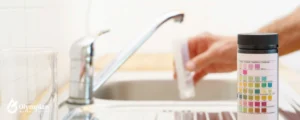
To ensure accurate results, water testing should be performed by certified laboratories. DIY test strips for lead are not recommended due to their inability to accurately quantify contaminant concentrations. By regularly testing your water and taking appropriate actions based on the results, you can help protect your household from the harmful effects of lead exposure.
pb in water: A Persistent Problem in Pennsylvania
Lead contamination in drinking water is a major concern in Pennsylvania. The state’s aging infrastructure and corrosive water sources make this issue hard to solve. It affects both private wells and public water systems.
Pennsylvania’s water quality is challenged by lead in various sources. Private wells, common in rural areas, are at high risk of lead contamination. About 12% of these wells have lead levels above the Environmental Protection Agency’s (EPA) recommended 15 μg/L.
Prevalence of Lead Contamination in Private Water Supplies
Private water sources, like wells and springs, face less regulation than public systems. This means homeowners must monitor and maintain their water quality. Pennsylvania’s corrosive water can cause lead to leach from plumbing, increasing drinking water levels. Homeowners should test their water for lead regularly and consider using certified filters or replacing lead-containing parts.

Lead in Public Water Systems
Public water systems in Pennsylvania also deal with lead contamination. Many older communities have lead service lines that can release lead into the water. Corrosive water can also cause lead to leach from older plumbing and solder in homes and buildings.
| Regulatory Agency | Lead Guideline Value | Recommended Action Level |
|---|---|---|
| World Health Organization (WHO) | 10 μg/L | – |
| Environmental Protection Agency (EPA) | 0 μg/L (maximum contaminant level goal) | 15 μg/L (requires preventive measures) |
To tackle this issue, public water systems must monitor lead levels and take action when necessary. Homeowners also have a role to play by identifying and replacing lead service lines and plumbing components.
Addressing lead contamination requires a joint effort from government agencies, water utilities, and residents. By working together, Pennsylvanians can ensure safe, clean drinking water for everyone.
Federal and State Regulations on Lead in Drinking Water
The U.S. Environmental Protection Agency (EPA) enforces strict rules to limit lead in drinking water. These EPA regulations mandate public water systems to test for lead and act swiftly if levels exceed the maximum contaminant level.
The Lead and Copper Rule (LCR), established in 1991, sets action levels for lead and copper. These levels are based on the 90th percentile of compliance monitoring values. If more than 10% of samples surpass these levels, water systems must take steps to lower lead and copper concentrations.
Safe Drinking Water Act and Lead and Copper Rule
Under the LCR, water systems must provide an initial service line inventory to the Primacy Agency by October 16, 2024. They must categorize service lines as "Lead", "Galvanized Requiring Replacement (GRR)", "Non-lead", or "Lead Status Unknown". The rule has seen several updates, with the latest Lead and Copper Rule Revisions (LCRR) published in January 2021. These revisions introduce new compliance standards.
| Compliance Requirement | Effective Date |
|---|---|
| Tier 1 public notification following a lead Action Level Exceedance (ALE) | October 16, 2024 |
| Water systems required to replace lead service lines | Within 10 years, starting from October 2027 |
| Reduced action level for lead | From 15 ppb to 10 ppb |
Pennsylvania Plumbing System Lead Ban and Notification Act
Pennsylvania has enacted the Plumbing System Lead Ban and Notification Act. This law bans the sale and use of lead-free plumbing materials. It also requires disclosure requirements for lead plumbing in property sales. The goal is to minimize lead exposure from drinking water by ensuring new installations are lead-free and informing buyers about existing lead plumbing.
Despite these regulations, lead exposure from drinking water remains a concern. This is true for older homes and buildings with lead service lines or plumbing. Efforts to replace lead infrastructure, monitor water quality, and educate the public about lead hazards are critical to safeguarding public health.
Reducing Lead Exposure from Drinking Water
Protecting your family from lead in drinking water is a top priority, more so in older homes or areas with outdated infrastructure. With millions of lead service lines (LSLs) in use, proactive steps are essential. Here are key strategies to minimize lead in your water:
Using Certified Filters for Lead Removal
Using certified water filters is a simple yet effective way to cut down lead in your water. Opt for filters that meet NSF/ANSI standards 53 and 42, which are made to remove lead and other pollutants. These filters can be attached to your faucet or used in pitcher systems, adding an extra safeguard.
Replacing Lead-Containing Plumbing Components
Older homes often have lead service lines, fixtures, or solder. While plumbing replacement is expensive, it’s the most effective way to remove lead. Focus on replacing visible lead pipes and consider switching to lead-free fixtures and solder.
Flushing Pipes Before Drinking or Cooking
Flushing your pipes by running water for a few minutes before use can lower lead levels, mainly if the water has been stagnant. Yet, this method is not a long-term fix and should complement other lead reduction strategies. If water has been sitting for 6 hours or more, flush for at least 5 minutes before use.
| Risk Factor | Description |
|---|---|
| Homes built before 1952 | Likely to have lead water service lines |
| Plumbing installed or renovated prior to 1990 | Likely used lead-based solder |
| Visible portion of lead pipe | 50 cm section between concrete floor and water meter |
Remember, there’s no safe level of lead in drinking water, posing serious health risks, most to children and pregnant women. By adopting these lead reduction strategies and staying informed, you can significantly protect your family’s health.
Water Treatment Methods for Lead Removal
Several water treatment methods can effectively reduce or eliminate lead from drinking water, ensuring the safety and health of households and communities. The Environmental Protection Agency (EPA) sets the maximum contaminant level goal (MCLG) for lead in drinking water at zero. This indicates that no level of lead exposure is considered safe. To achieve this goal, various water treatment techniques can be employed, each with its own advantages and considerations.
Acid-Neutralizing Filters
Acid-neutralizing filters work by increasing the water’s pH and adding minerals to reduce its corrosivity. This process prevents lead from leaching into the water from pipes and plumbing components. These filters typically cost over $1,000 but provide a long-term solution for lead prevention. Groundwater with a pH level below 6.5 is more susceptible to lead leaching, making acid-neutralizing filters an important consideration for homes with private wells.
Reverse Osmosis Units and Activated Alumina Filters
Reverse osmosis units and activated alumina filters are effective at removing lead from water at the point of use. These methods utilize specialized membranes or media to filter out lead particles, providing clean and safe drinking water. They may have limited capacity and can be costly, with prices ranging from $300 to over $1,000. Also, reverse osmosis units typically produce only a few gallons of treated water per day, which may be a consideration for larger households.

Distillation Units
Distillation units are another option for lead removal, using heat to vaporize water and leave behind contaminants like lead. While effective, distillation units are energy-intensive and produce limited quantities of treated water, typically around one gallon per day. They can also be relatively expensive to operate, making them a less popular choice for many households.
| Water Treatment Method | Lead Removal Efficiency | Cost | Considerations |
|---|---|---|---|
| Acid-Neutralizing Filters | High | Over $1,000 | Prevents lead leaching, long-term solution |
| Reverse Osmosis Units | High | $300 – $1,000+ | Limited capacity, few gallons per day |
| Activated Alumina Filters | High | $300 – $1,000+ | Effective at point of use |
| Distillation Units | High | Varies | Energy-intensive, ~1 gallon per day, expensive to operate |
When selecting a water treatment method for lead removal, it is essential to consider factors such as cost, efficiency, and the specific needs of your household. Regular water testing, specially for private well owners, can help assess lead contamination risks and guide decision-making. By investing in effective water treatment solutions and staying informed about water quality issues, individuals and communities can take proactive steps to protect their health and well-being from the harmful effects of lead exposure.
Monitoring Compliance with Lead Regulations
Ensuring the safety of drinking water is a top priority. Monitoring compliance with lead regulations is a key part of this effort. Public water systems, like the Johnson County Special Utility District (JCSUD), must regularly test for lead. They also report these results to agencies like the Environmental Protection Agency (EPA). This process helps identify and address lead contamination issues, protecting public health.
The EPA has recently updated its lead regulations under the Lead and Copper Rule Improvements (LCRI). The new action level for lead is now 10 parts per billion (ppb), down from 15 ppb. Water systems must test both the first and fifth liter of water from the tap. These changes aim to enhance oversight and detect lead contamination earlier.
As part of the LCRI, water systems must submit initial lead service line inventories by October 16, 2024. They must update these inventories annually. JCSUD has already conducted a thorough lead service line inventory (LSLI). It found no lead service lines in its system. This shows JCSUD’s dedication to compliance monitoring and ensuring safe drinking water for its customers.
| Requirement | Deadline |
|---|---|
| Submit initial lead service line inventory | October 16, 2024 |
| Replace lead service lines | Within 10 years, starting from October 2027 |
| Test both first and fifth liter of water from tap | Starting in three years |
Water system oversight is critical to ensure compliance with lead regulations. If a system exceeds the lead action level three times in five years, it must provide in-home filters. Enforcement actions, like fines or corrective orders, may be taken against non-compliant systems.
Despite limited resources, collaboration between water systems, regulatory agencies, and the public is vital. By focusing on compliance monitoring, oversight, and timely enforcement, we can safeguard drinking water. This collective effort helps mitigate lead contamination risks and protects public health.
EPA’s Enforcement Obligations and Actions
The Environmental Protection Agency (EPA) is key in protecting public health. It enforces the Safe Drinking Water Act and the Lead and Copper Rule. As the main authority, the EPA ensures water systems follow lead regulations. This is to safeguard consumers from lead exposure.
EPA’s Role as Primary Enforcement Authority
The EPA can take action against water systems that break lead rules. This might include administrative orders, civil penalties, or corrective measures. The EPA’s actions are vital for ensuring safe drinking water and public health.
In New York State, schools and childcare facilities must test water for lead. If levels exceed 5 micrograms/liter, they must report it to the Local Health Department quickly. Schools also have to inform staff and parents of high lead levels and post results online within six weeks.
| Requirement | Deadline |
|---|---|
| Submitting Lead Service Line Inventories (LSLI) to the state | October 16, 2024 |
| Compiling and submitting a list of schools and childcare facilities constructed prior to January 1, 2014 (for community water systems) | October 16, 2024 |
| Initial compliance date for the revised Lead and Copper Rule Revisions (LCRR) | October 16, 2024 |
Coordination with States, Tribes, and Territories
The EPA works with states, tribes, and territories to enforce drinking water rules. Many states have been given primacy, meaning they lead in enforcing the Safe Drinking Water Act. The EPA offers oversight, technical help, and funding to support these efforts.
Effective enforcement of lead rules requires teamwork. The EPA works with other agencies to share information and coordinate actions. This helps address lead contamination in schools and childcare facilities.
Upcoming Deadlines for Lead and Copper Rule Revisions
The U.S. Environmental Protection Agency (EPA) has introduced significant changes to the Lead and Copper Rule (LCR). This rule aims to protect public health by reducing lead and copper levels in drinking water. The revisions bring new requirements and compliance deadlines for water systems nationwide.
One key deadline is October 16, 2024. By then, water systems must submit an initial service line inventory or prove they have no lead service lines. As of January 2024, the EPA estimates 9.2 million lead service lines (LSLs) in use. A 2021 National Resource Defense Council (NRDC) survey suggests this number could be over 12 million.
Initial Service Line Inventory Requirements
The initial inventory must count all lead, galvanized requiring replacement (GRR), unknown, and non-lead service lines and connectors. Water systems must validate non-lead service lines by December 31, 2034. They must use random sampling to achieve a 95% confidence level. For systems with less than 1,500 non-lead service connections, 20% must be validated. Those with more than 1,500 connections must validate between 322 and 384 sites.
Public Education for Known or Potentially Lead Service Lines
Within 30 days of submitting the inventory, water systems must notify residents of known or potentially lead service lines. They must also make the inventory publicly accessible. Letters to customers with unknown service line materials must be sent by November 15, 2024. Public notification within 24 hours is required if the lead action level is exceeded.
Other notable deadlines include:
- November 1, 2027: Compliance deadline for service line replacement plans
- December 31, 2037: Full lead service line and GRR replacement deadline
- 2028: Lead action level reduction from 0.015 mg/L to 0.010 mg/L
Water systems must prioritize lead service line replacement for disadvantaged consumers and sensitive populations. They must achieve an average annual replacement rate of 10% for LSLs and GRR. They must also make a minimum of 4 attempts to engage property owners for full service line replacement. Failure to meet these deadlines can result in violations and enforcement actions.
As the nation works towards ensuring safe drinking water for all, understanding and complying with the revised Lead and Copper Rule is critical. It is essential for water systems and the communities they serve.
Addressing Lead Action Level Exceedances
Exceeding the lead action level of 15 parts per billion (ppb) in water systems requires immediate action. This is to safeguard public health and maintain trust in the water supply. The Lead and Copper Rule Revisions (LCRR), finalized by the Environmental Protection Agency (EPA) on December 16, 2021, set stricter standards for lead contamination in drinking water.
Under the LCRR, water systems must notify customers within 3 days if lead concentrations surpass the action level. This is a significant reduction from the previous 30-day timeline. The upcoming Lead and Copper Rule Improvements (LCRI) will further tighten this notification window to just 24 hours for lead levels above 15 ppb. This highlights the urgency of prompt communication during water system violations.
Tier 1 Public Notification Requirements
Starting October 16, 2024, water systems will be obligated to issue Tier 1 public notifications within 24 hours of discovering a lead action level exceedance. These notifications must include:
- Information about the health risks associated with lead exposure
- Steps consumers can take to minimize their exposure
- Details on the water system’s plans to address the issue
The LCRI aims to lower the lead action level from 15 ppb to 10 ppb and requires the replacement of most lead service lines nationwide within the next decade. These stringent measures reflect the growing urgency to tackle lead contamination and rebuild public confidence in water quality.
| Regulation | Action Level | Trigger Level | Notification Timeline |
|---|---|---|---|
| Current LCR | 15 ppb | N/A | 30 days |
| LCRR (Effective Oct. 16, 2024) | 15 ppb | 10 ppb | 3 days |
| Proposed LCRI | 10 ppb | TBD | 24 hours |
As water systems work to meet these heightened standards, collaboration among utilities, regulators, and the public will be essential. This collaboration is key in addressing lead action level exceedances promptly and effectively. It ensures safe drinking water for all.
Importance of Prompt and Meaningful Enforcement Actions
Timely and effective enforcement actions are vital for ensuring regulatory compliance and safeguarding public health from lead contamination in drinking water. When water systems breach lead regulations, swift and fitting enforcement is key to rectifying the situation and preventing further exposure.
Delayed or insufficient enforcement can enable lead issues to linger, potentially exposing more individuals to its harmful effects. The CDC notes that no safe blood lead level exists for children, and even minimal levels can hinder their learning and academic performance. The updated blood lead reference value (BLRV) of 3.5 μg/dL, derived from the 2015–2018 National Health and Nutrition Examination Survey (NHANES) cycles, emphasizes the urgency for immediate action to reduce health risks.
| Year | Blood Lead Reference Value (BLRV) | Percentile of U.S. Children (Ages 1-5) |
|---|---|---|
| 2012 | 5.0 μg/dL | 97.5th |
| 2021 | 3.5 μg/dL | 97.5th |
Effective enforcement actions not only tackle specific violations but also convey that noncompliance is unacceptable. This motivates water systems to focus on lead reduction and invest in necessary infrastructure upgrades. By showing the effectiveness of enforcement, regulatory bodies can promote a culture of compliance and proactive measures to guarantee safe drinking water.
Collaborative efforts among federal, state, and local authorities are critical for achieving thorough public health protection. Prompt enforcement, combined with public education and support for water systems, can significantly reduce lead exposure. This protects the well-being of communities, with a special focus on vulnerable groups like children and low-income households.
Protecting Public Health through Collaborative Efforts
Protecting public health from lead in drinking water requires a team effort. This includes government agencies, water systems, public health groups, and community members. In FY 2024, the EPA gave $1.08 billion to disadvantaged areas for lead reduction projects. They also funded 89,000 lead service line replacements. The Bipartisan Infrastructure Law provided $2.6 billion for lead pipe inventory and replacement.
Collaboration is key in tackling lead contamination. The EPA made two agreements with HUD to tackle lead in underserved areas. In FY 2024, 30,000 healthcare professionals learned about lead exposure. The EPA also finished 63 Superfund cleanup projects and focused on environmental justice in each EPA Region.
Engaging stakeholders is critical for lead reduction success. Water utilities are essential in replacing lead lines and educating customers. The Louisville Water Company has replaced about 76,000 lead service lines. Denver Water started its lead replacement program in 2008, aiming for 100,000 households. Tools like the AWWA Lead Communications Guide help build trust and partnerships. Together, we can significantly reduce lead exposure and protect our communities’ health.
FAQ
What are the health risks associated with lead exposure from drinking water?
Lead in drinking water poses serious health risks, mainly to children. It can lead to lower IQs, attention span issues, and learning problems. Adults may face increased heart disease, high blood pressure, and kidney issues. There’s no safe level of lead, and even small amounts can be harmful.
How does lead enter drinking water?
Lead gets into water through corroded pipes and plumbing materials. Corrosion is influenced by water acidity, temperature, and mineral content. Galvanized steel pipes can also release lead into the water.
How can I tell if my home has lead service lines or plumbing components?
Homes built before 1986 often have lead lines or pipes. Brass fixtures may also contain lead. Contact your water utility or a plumber to check for lead in your home.
Why is it important to test my water for lead?
Testing is the only way to confirm lead presence. It’s critical for homes with lead lines or older plumbing. Testing involves collecting samples to check against the EPA’s 15 ppb action level. If levels exceed this, you need to take action to reduce exposure.
What can I do to reduce lead exposure from drinking water?
Use certified water filters and replace lead-containing parts with lead-free ones. Flushing pipes before use can also help. Regular maintenance and testing are key to minimizing lead risks.
What are the upcoming deadlines for the EPA’s Lead and Copper Rule Revisions?
Water systems must submit lead line inventories by October 16, 2024. They must notify residents and make the inventory public within 30 days. Starting October 16, 2024, they must notify the public within 24 hours of a lead exceedance.
What happens when a water system exceeds the lead action level?
Exceeding the lead level requires immediate public notification and action. This includes providing detailed information on lead risks and exposure reduction steps. Failure to comply can lead to violations and enforcement actions.