

Understanding Lead Contamination in Drinking Water
Lead contamination in drinking water poses a significant threat to public health, affecting young children and pregnant individuals the most. Lead is tasteless, odorless, and invisible, yet it can enter the water supply through corroded lead-containing pipes and fixtures. It’s vital to understand the sources of lead and how it contaminates tap water to ensure drinking water safety and protect public health.
Several factors contribute to the corrosion process that allows lead to leach into drinking water. These include water acidity, dissolved materials, temperature, and stagnation time. When water sits in lead-containing pipes for extended periods, like overnight or during the day, lead levels can rise. Regular testing is critical for detecting lead, as it cannot be identified by taste, smell, or appearance alone.
Sources of Lead in Water Supply
The primary sources of lead in drinking water are lead-containing plumbing materials, such as:
- Lead service lines connecting homes to main water pipes
- Lead-soldered copper pipes, mainly in homes built or plumbed before 1987
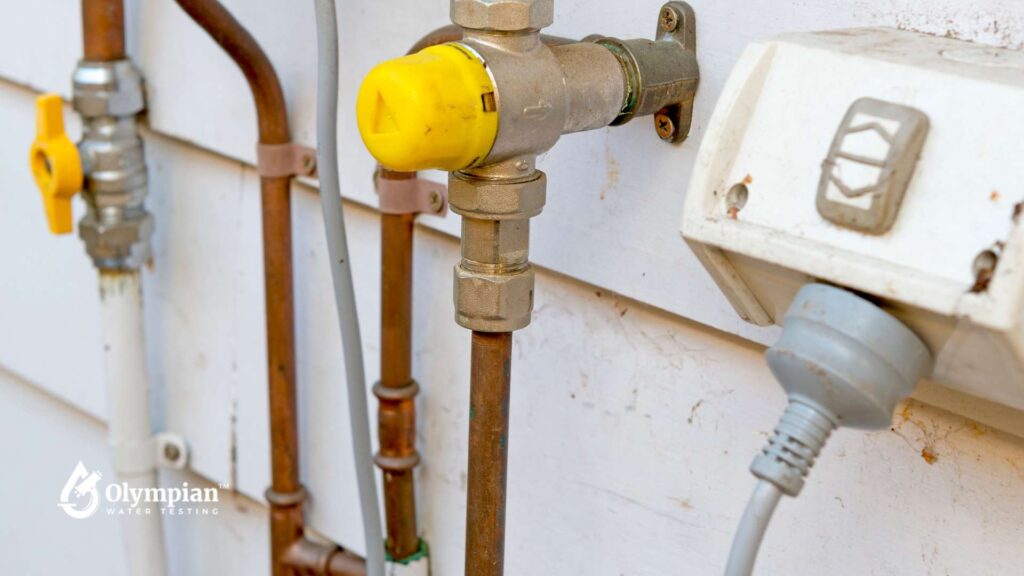
- Brass or chrome-plated brass faucets and fixtures
Lead can also enter the water supply after construction work disturbs lead service lines, potentially raising lead levels for up to three months. It’s worth noting that while lead regulations have tightened over time, older homes and infrastructure may contain lead-based plumbing components.
How Lead Enters Tap Water
Lead enters tap water mainly through the corrosion of lead-containing plumbing materials. Corrosion happens when water interacts with the lead surface, causing the metal to dissolve and release lead particles into the water. The following table outlines the factors that influence lead corrosion in pipes:
| Factor | Impact on Lead Corrosion |
|---|---|
| Water Acidity | Acidic water (low pH) can accelerate lead corrosion |
| Dissolved Materials | Certain dissolved substances can increase or decrease corrosion rates |
| Temperature | Higher water temperatures can speed up lead corrosion |
| Stagnation Time | Prolonged contact between water and lead surfaces allows more lead to dissolve |
To minimize lead exposure, it’s recommended to flush pipes for 3 to 5 minutes before using water for cooking or drinking, if the water has been sitting in the pipes for more than six hours. Using cold water for cooking and drinking can also help reduce lead levels, as hot water tends to contain higher concentrations of lead.
Common Sources of Lead Plumbing
Lead contamination in drinking water poses a significant health risk, with severe effects on young children. In the United States, homes constructed before 1986 are more prone to having lead in their plumbing. This includes lead service lines, lead solder, and outdated plumbing fixtures.
Lead Service Lines
Lead service lines, connecting homes to the main water supply, are a major source of contamination. Installed before the 1960s, many older homes retain these lines. Replacing them with safer options like copper pipes is essential to reduce lead exposure.
Lead-Soldered Joints
Before 1986, lead solder was commonly used in plumbing systems. Over time, lead from these soldered joints can leach into the water, posing a risk. Homes built before 1986 are more likely to have these joints, contributing to lead exposure.
| Year | Maximum Lead Content Allowed |
|---|---|
| Before 1986 | 50% lead in solder |
| 1986-2014 | 0.2% lead in solder |
| 2014-present | 0.25% lead in solder and fixtures |
Plumbing Fixtures
Older plumbing fixtures, like faucets and valves, can also contain lead. Even fixtures labeled as "lead-free" under current lead-free regulations may contain up to 0.25% lead. Homeowners should be aware of their fixtures’ age and composition. Replacing them with certified lead-free alternatives is advisable.
To minimize lead exposure from drinking water, consider the following:
- Run cold water for at least 30 seconds before drinking or cooking, if the water has been sitting in the pipes for several hours.
- Use cold water for cooking and preparing baby formula, as hot water is more likely to contain lead from plumbing materials.
- Regularly clean faucet aerators to remove any debris that may contain lead particles.
Factors Influencing Lead Corrosion in Pipes
Lead pipe corrosion is a complex issue, influenced by water chemistry, pipe age, and corrosion inhibitors. Grasping these factors is key to reducing heavy metal pollution and ensuring safe drinking water. This is essential for communities worldwide.
Water chemistry significantly impacts lead corrosion. Acidic water with low pH levels can speed up lead leaching. On the other hand, water rich in minerals may form protective scales, reducing corrosion. Temperature also plays a role, with warmer water leading to more lead leaching. In Pennsylvania, about 67% of over 6,000 water samples tested showed signs of corrosion, underlining the need for water chemistry monitoring.
Pipe age is another critical factor. Pipes installed before 1986, when lead solder was common, are more prone to corrosion. The EPA notes that over 15% of U.S. community water systems have lead levels above 15 ppb. In Washington, D.C., lead levels spiked to 13,200 ppb after a water crisis, highlighting the urgency to address aging infrastructure.
| Statistic | Value |
|---|---|
| Homes with lead service lines in the U.S. | 6.1 million |
| Homes with lead pipes in some cities | Up to 50% |
| Homes built before 1986 with lead solder in plumbing | Approximately 70% |
| Community water systems with lead levels exceeding 15 ppb | Over 15% |
Corrosion inhibitors, like zinc orthophosphate, can greatly reduce lead leaching. These chemicals form a protective layer inside lead pipes, reducing water contact with lead. Studies show that using these inhibitors can cut lead leaching by up to 90%, making them a vital strategy against lead contamination.
To tackle lead corrosion effectively, a holistic approach is needed. This involves understanding water chemistry, pipe age, and the use of corrosion inhibitors. By addressing these factors and taking proactive steps, communities can significantly reduce heavy metal pollution. This ensures safe drinking water for all residents.
The Role of Municipal Water Treatment in Lead Contamination
Municipal water treatment is vital in preventing lead contamination in our drinking water. The methods and chemicals used by water utilities can greatly affect lead release from pipes and fixtures. Inadequate or inappropriate treatment can inadvertently increase the risk of lead leaching, posing a threat to public health.
Inadequate or Inappropriate Water Treatment Methods
In Washington, D.C., a water crisis in 2001 highlighted the impact of water treatment decisions on lead levels. The city switched from chlorine to chloramines without thorough study, leading to increased water corrosivity. This resulted in drinking water lead levels reaching up to 13,200 parts per billion (ppb), exceeding the EPA’s action level of 15 ppb. This incident emphasizes the need for careful consideration and testing when altering water treatment processes.

Importance of Anti-Corrosion Chemicals
To combat lead contamination, many water utilities use corrosion control treatment (CCT). Anti-corrosion chemicals, such as zinc orthophosphate, are added to the water to create a protective coating inside pipes and fixtures. This reduces lead leaching into the water. The effectiveness of CCT depends on factors like pipe age and water chemistry, making regular monitoring and adjustments critical for utilities.
| Statistic | Value |
|---|---|
| Homes with lead service lines in the U.S. | 6.1 million |
| Water systems with lead levels exceeding EPA action level | 15% |
| Homes with lead service lines having lead levels above EPA action level | 1 in 5 |
| Cost to replace a lead service line | $4,000 to $12,000 |
These statistics show lead contamination remains a major concern for many Americans. Investing in proper water treatment and corrosion control is essential. It is necessary to protect public health and ensure safe drinking water for all communities.
Exposure to Lead in Drinking Water
Lead in drinking water poses a significant public health risk, mainly for children and pregnant individuals. The EPA has found no safe level of lead exposure. It’s vital to know where lead comes from in our water and how to reduce exposure.
The EPA estimates 9.2 million lead service lines (LSLs) in the U.S. as of January 2024. Yet, a 2021 National Resource Defense Council (NRDC) survey suggests this number could be over 12 million. Homes built before 1988 are more likely to have lead service lines and fixtures, increasing the risk of lead exposure.
High-Risk Plumbing Materials
Several plumbing materials are more likely to cause lead exposure, including:
- Lead service lines
- Brass or chrome-plated brass faucets
- Galvanized iron pipes
- Lead-soldered plumbing
These materials can release lead into the water, more so when water sits in pipes for a long time or has a low pH level. This makes the water more corrosive.
Drinking Water Fountains with Lead-Lined Tanks
Drinking water fountains and other non-drinking water fixtures, like lab faucets and hand washing sinks, can also be sources of lead. If not maintained or replaced, they can contribute to lead exposure.
| Fixture Type | Potential Lead Content | Recommended Action |
|---|---|---|
| Drinking Water Fountains (pre-1988) | High | Replace with lead-free models |
| Lab Faucets | Moderate | Test and replace if necessary |
| Hand Washing Sinks | Low to Moderate | Test and replace if necessary |
To lower the risk of lead exposure from drinking water, it’s key to identify and tackle lead sources in your home or workplace. Regular water testing, replacing high-risk materials, and using certified filters can significantly reduce lead exposure risks. This protects public health.
Health Impact of Lead in Water
Drinking water contaminated with lead poses severe health risks, mainly to children and pregnant women. Even small amounts can build up in the body, causing chronic health problems. It’s vital to grasp the dangers of lead exposure and take steps to safeguard public health.
Young children, under six, are highly vulnerable to lead poisoning. Exposure during critical development stages can lead to developmental delays, learning issues, and behavioral problems. Pregnant women are also at risk, as lead can pass through the placenta, harming the fetus.

No Safe Blood Lead Level for Children
There is no safe blood lead level for kids. Even tiny amounts can harm their health and development. The CDC advises two blood lead tests for children by 36 months. This early detection allows for timely intervention and treatment.
Lead Toxicity and Accumulation in the Body
Lead is a toxic substance that builds up in the body over time. The body cannot effectively remove lead, leading to its accumulation in tissues and organs. This can cause long-term damage to the nervous, cardiovascular, and reproductive systems.
| Blood Lead Level (μg/dL) | Potential Health Effects |
|---|---|
| 5-9 | Decreased academic achievement, IQ deficits, behavioral problems |
| 10-19 | Delayed puberty, reduced postnatal growth, decreased hearing |
| 20-39 | Decreased cognitive performance, delayed puberty, reduced postnatal growth |
| 40-79 | Decreased cognitive performance, delayed puberty, reduced postnatal growth, anemia, abdominal pain |
| 80+ | Encephalopathy, seizures, coma, death |
The table shows the health risks associated with different blood lead levels in children. It’s clear that even low levels can significantly affect their health, academic performance, and development.
Addressing lead in drinking water is a critical public health issue. It requires a joint effort from individuals, communities, and government agencies. By increasing awareness, implementing preventive measures, and ensuring regular testing, we can reduce lead exposure and protect vulnerable populations.
Risk Factors for Lead Exposure through Drinking Water
Lead exposure through drinking water poses a risk to everyone, but some groups face a higher danger. It’s vital to grasp these risk factors to safeguard vulnerable individuals and maintain the safety of our water.
Infants and young children are highly susceptible to lead due to their developing bodies and high water intake. The Environmental Protection Agency (EPA) has set a drinking water "action level" for lead at 0.015 mg/L or 15 ppb. Yet, even minimal lead exposure can harm children, potentially stalling their physical or mental development.
Vulnerable Populations
Beyond infants and young children, other groups are also at risk. These include:
- Pregnant women
- Individuals with chronic health conditions
- Elderly individuals
- People living in homes built before 1986, which are more likely to have lead pipes, fixtures, and solder
Water Chemistry and Individual Susceptibility
The risk of lead exposure through drinking water hinges on several factors, including water chemistry and individual susceptibility. Lead pipes and fixtures corrode more easily in water with a lower pH or low mineral content. This can elevate lead levels in tap water, raising exposure risks.
| Factor | Impact on Lead Exposure |
|---|---|
| pH Level | Lower pH increases lead corrosion |
| Mineral Content | Low mineral content promotes lead leaching |
| Water Consumption | Higher water consumption increases exposure |
| Formula Preparation | Using contaminated water for formula raises risks for infants |
By grasping these risk factors and taking necessary precautions, we can collectively reduce lead exposure through drinking water. This effort will protect the health of our communities, focusing on our most vulnerable populations.
Identifying Sources of Lead in Your Home
To reduce lead exposure, it’s vital to find where lead might be in your home’s plumbing. A home lead assessment looks at your home’s age, does a detailed plumbing inspection, and checks for a lead service line. Homes built before 1988 often have lead pipes or solder. Those from before 1930 face an even greater risk.
The EPA says 10% to 20% of lead exposure comes from drinking water. Infants who drink formula mixed with water get 40% to 60% of their lead from it. To gauge your home’s lead risk, consider these factors:
- Age of your home (homes built before 1988 are at higher risk)
- Presence of lead pipes, fittings, and fixtures
- Lead solder used in plumbing
- Lead service line connecting your home to the main water supply
Talking to your local water authority can give you info on lead service lines in your area. They can also help with testing your water for lead and suggest ways to reduce it. Professional plumbers can do a detailed plumbing inspection to find lead sources in your home’s plumbing.
Even though lead pipes were banned in the U.S. in 1986, leftover lead was used until 1988. Also, the law lets pipes, fittings, and fixtures with up to 0.25 percent lead be called "lead-free." This means newer plumbing can also have lead.
Testing for Lead in Tap Water
If you suspect lead contamination in your tap water, immediate action is necessary. Lead exposure can lead to serious health issues, most concerning for infants and young children. Homes built before 1988 are more likely to have lead plumbing or solder, making water testing critical.
Start by contacting your local water authority for water testing. Many public water systems offer free or low-cost tests for residents. These tests can reveal lead levels in your water supply. Note that public water system tests may not reflect your home’s specific conditions.
Contacting Local Water Authorities
When contacting your local water authority, provide details about your home, including its age and any recent plumbing work. In states like New Jersey, you can access public water system sampling results online through NJ Drinking Water Watch. This resource allows you to review the lead analysis for your water system.
Certified Laboratories for Lead Testing
You can also test your water with a certified laboratory. These labs use proper water sampling and analysis to ensure accurate results. Choose a laboratory certified by your state or the Environmental Protection Agency (EPA). Additionally, many certified labs offer specialized tests that can detect contaminants specific to your region, providing a comprehensive overview of your water quality. For residents in the northeastern United States, services such as "olympian water testing in ny, nj, ct" are available to help you identify any potential risks. By utilizing these professional testing options, you can make informed decisions about your water safety and any necessary treatment measures.
| Laboratory Name | Certification | Contact Information |
|---|---|---|
| ABC Water Testing Labs | EPA Certified | 123-456-7890 |
| XYZ Environmental Services | State Certified | 987-654-3210 |
When collecting water samples, follow the laboratory’s instructions carefully. The time of day, season, sampling method, and water flow can affect results. By using a certified laboratory and following proper sampling techniques, you can get reliable information about lead in your tap water.
Reducing Exposure to Lead in Tap Water
Portland’s tap water is mostly lead-free at the source. Yet, lead can enter your water through old plumbing in homes and buildings. To lower your risk of lead exposure, several effective strategies are available.

Using Certified Point-of-Use Filters
Certified point-of-use filters are a reliable way to cut down lead in your drinking water. Look for filters that meet NSF/ANSI standards 53 and 42 for lead and particulate removal. These filters, when maintained properly, can greatly reduce lead levels in your tap water. Always replace filter cartridges as recommended by the manufacturer to ensure maximum lead reduction.
Drinking Cold Tap Water
Always use cold tap water for drinking, cooking, and making baby formula. Hot water can have higher lead levels because it dissolves the metal more easily. Using only cold water for consumption helps minimize lead exposure from plumbing.
| Action | Effect on Lead Levels |
|---|---|
| Running tap water for 30 seconds to 2 minutes | Can reduce lead levels by up to 90% |
| Using only cold tap water for drinking and cooking | Minimizes lead exposure from plumbing sources |
Flushing Pipes
If your tap has been unused for several hours, such as overnight or during work hours, running the water for a few minutes before use is beneficial. This process, known as flushing, removes water that may contain higher lead levels. Studies indicate that flushing can lower lead levels in water by up to 90%.
"Running your water to flush out lead is a simple and inexpensive measure you can take to protect your health. It usually uses less than one gallon of water."
Regularly cleaning aerators and screens on faucets every 3-6 months can also help remove accumulated lead particles. If you’ve recently had a lead service line replaced, consider cleaning your aerators monthly for the first six months after replacement.

Bottled Water as an Alternative
In some cases, bottled water can be a temporary alternative to tap water. It’s important to ensure the bottled water you choose has been tested and certified for lead content. While bottled water can offer a short-term solution, addressing the source of lead in your home’s plumbing is the most effective long-term approach.
By implementing these strategies and staying informed about your drinking water quality, you can significantly reduce your exposure to lead and protect your health.
Testing Children for Lead Exposure
Lead exposure poses serious health risks to children, even at low levels. The Centers for Disease Control and Prevention (CDC) has set the blood lead reference value (BLRV) at 3.5 μg/dL. This indicates the threshold for identifying children with elevated blood lead levels. The CDC based this value on the 97.5th percentile of blood lead values among U.S. children aged 1-5. This data comes from the 2015-2016 and 2017-2018 National Health and Nutrition Examination Survey (NHANES) cycles.
If you suspect your child has been exposed to lead, it is essential to contact their healthcare provider. Most children and adults with lead exposure show no symptoms. This makes child lead testing the best way to assess exposure. Healthcare providers can determine if a blood lead test is needed. They will also recommend appropriate follow-up actions based on the results.
When to Contact a Healthcare Provider
Children enrolled in Medicaid must be tested for lead at ages 12 and 24 months. They also need to be tested again between 24-72 months if they have no prior testing record. The CDC recommends testing for children living in high-risk neighborhoods and those not enrolled in Medicaid. If you are concerned about your child’s lead exposure, consult with their healthcare provider. They will determine if a blood lead test is necessary.
Blood Lead Tests
The blood lead testing process involves either a capillary test (finger-prick) or a venous test. Venous samples are more reliable for identifying lower blood lead levels. Capillary blood lead levels are categorized with specific timeframes for confirmation testing:
- Levels ≥3.5–9 μg/dL require confirmation within 3 months.
- Levels 10–19 μg/dL require confirmation within 1 month.
- Levels 20–44 μg/dL require confirmation within 2 weeks.
- Levels ≥45 μg/dL require confirmation within 48 hours.
Many private insurance policies cover the cost of blood lead testing. The cost is also covered for children enrolled in Medicaid by the Centers for Medicare & Medicaid Services.
Even low levels of lead in the blood are concerning, as no safe level of lead exposure has been identified for children.
Importance of Addressing Lead in Drinking Water
Addressing lead in drinking water is vital for safeguarding public health and ensuring access to clean water. The EPA has set an action level of 15 parts per billion (ppb) for lead in public water systems. Yet, there is no safe level of lead exposure. Infants, young children, and pregnant women are most at risk due to lead’s harmful effects. These include decreased IQ, attention span, and developmental issues.
Even low levels of lead exposure can severely impact children’s health. Mitigating lead in drinking water demands a multi-faceted approach. This includes infrastructure investments, improved water treatment, regular testing, and community education. Homes built before 1986 may have lead-containing plumbing, while those before 1940 may have lead service lines.
Identifying and replacing these sources is critical to reduce exposure risks. Primary prevention is the most effective way to prevent lead exposure’s long-term effects. Secondary prevention, like blood lead testing, is essential for children already exposed. Through infrastructure investments, lead mitigation strategies, and community awareness, we can minimize lead exposure.
This effort safeguards our communities’ health. Eliminating lead hazards could generate approximately $84 billion in long-term benefits per birth cohort. This makes it a wise investment in public health and our collective future.
FAQ
What are the health effects of lead exposure through drinking water?
Lead exposure can severely harm human health, most critically in children. Even small amounts can build up in the body, causing developmental delays, learning issues, and behavioral problems. Adults may face kidney issues and high blood pressure due to chronic exposure.
How does lead enter drinking water?
Lead enters drinking water through corroded pipes and fixtures containing lead. Water acidity, dissolved materials, temperature, and stagnation time all play roles in this corrosion. This process allows lead to leach into the water supply.
What are common sources of lead in plumbing systems?
Lead sources in plumbing include lead service lines, lead-soldered joints in older pipes, and older fixtures. Even newer fixtures labeled "lead-free" may contain trace amounts of lead.
How can I identify potentially lead-contaminated plumbing in my home?
To identify lead in your plumbing, assess your home’s age and inspect fixtures and pipes. Check for lead service lines. Contacting your local water authority can provide information on your home’s lead risk.
How can I test my tap water for lead contamination?
If you suspect lead in your tap water, contact your local water authority for testing. Many public systems offer free or low-cost testing. You can also have your water tested by a certified lab following proper procedures.
What can I do to reduce lead exposure from tap water?
Use certified filters that meet NSF/ANSI standards 53 and 42 for lead and particulate removal. Drink or cook with cold tap water, as hot water may have higher lead levels. Flushing pipes until the water is cold can also reduce exposure.
When should I contact a healthcare provider about lead exposure?
If you think your child has been exposed to lead, contact their healthcare provider. Many exposed individuals show no symptoms, making blood tests essential. Healthcare providers can determine if a blood test is needed and guide follow-up actions based on results.
What is being done to address lead in drinking water?
Addressing lead in drinking water requires a multi-faceted approach. This includes replacing lead service lines, improving water treatment, regular testing, and community education. By working together, we can reduce lead exposure and protect our communities’ health.