The Fight Against Heavy Metals in Drinking Water: Progress and Challenges
- Published:
- Updated: January 4, 2025
Listen to this article
Summary
The battle against heavy metals in drinking water is ongoing, with significant progress but persistent challenges. Heavy metals like lead and arsenic pose serious health risks, necessitating stringent regulations and monitoring. Detection technologies are evolving for quicker and more accurate testing, while removal methods like reverse osmosis and nano-filtration show promise. Governmental and NGO efforts are crucial in combating contamination, but infrastructure and awareness gaps remain, highlighting the need for continued innovation and international cooperation.
- Health risks: Heavy metals accumulation in water poses long-term health threats
- Sources of contamination: Industrial waste, agricultural runoff, and aging infrastructure contribute
- Regulations and standards: EPA and WHO set limits for heavy metal levels in drinking water

Heavy metals in drinking water represent a war for public health and the delivery of safe and clean water. In the past few decades, much work has been done on locating, monitoring and reducing heavy metal contamination in water bodies. But so many issues remain, from obsolete infrastructure to emerging pollutants, and we need continued innovation and work to overcome this ongoing threat and safeguard the wellbeing of people all over the world.
What Happens If You Drink Water with Metals in It?
Drinking water with metals in it, particularly heavy metals, can pose serious health risks. Heavy metals in drinking water, such as lead, arsenic, mercury, and cadmium, can accumulate in the body over time, potentially leading to a variety of health problems. Short-term exposure may cause symptoms like nausea, vomiting, and abdominal pain, while long-term exposure can result in more severe issues, such as kidney damage, neurological problems, and developmental delays in children. For instance, lead contamination can cause developmental delays and learning difficulties, especially in young children.
Metals in water can also lead to other health problems, including cancer, organ toxicity, and immune system disruption. The severity of these health problems depends on the concentration of metals in the water, the duration of exposure, and individual susceptibility. It’s important to regularly test your drinking water, especially if you have a private well, and install appropriate filtration systems if heavy metals are detected to ensure the water is safe for consumption.
The Sources of Heavy Metal Contamination
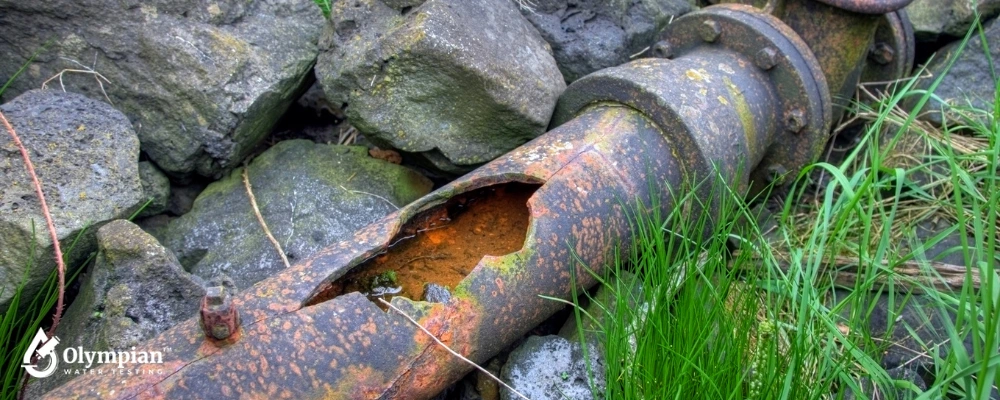
Metals can come into our water supply from anywhere. Heavy metals get spewed out as waste products in industrial operations (mining, production). These contaminants then get into groundwater or get dumped into surface waters.
The same goes for the farming industry and heavy metal pollution. Heavy metals in pesticides and fertilisers can easily leach into waterways. Even we ourselves are contaminated with lead pipes or fittings in old plumbing.
What are the regulations and standards in place for controlling and monitoring heavy metals in drinking water?
The Environmental Protection Agency (EPA) in the US and the World Health Organization (WHO) both have policies and standards for monitoring levels of heavy metals in water. This is a summary of what’s currently required by the rules and regulations:
The Environmental Protection Agency (EPA): The EPA makes and enforces the Drinking Water regulations in the US via the Safe Drinking Water Act (SDWA). The EPA has established Maximum Contaminant Levels (MCLs) and Action Levels (ALs) for many heavy metals. Some key examples include:
Lead: Lead MCL (Minimal Contamination Limit) is 15 g/L for drinking water and AL 15 g/L. AL – This is the number at which additional measures must be taken to decrease lead exposure.
Arsenic: arsenic’s MCL is 10 g/L. This is the level that the EPA calculated based on the health dangers of long-term drinking water arsenic exposure.
Mercury: The MCL for all mercury is 2 g/L. The EPA regulates mercury in water so that it does not pose risks to humans – especially to small children and pregnant women.
Cadmium, Chromium Copper Nickel Other Heavy Metals: The EPA has MCLs for other heavy metals. The MCL of cadmium, for instance, is 5 g/L, of chromium is 100 g/L, of copper is 1.3 mg/L, and of nickel is 100 g/L.
World Health Organization (WHO): WHO creates international drinking water quality standards. )WHO guidelines offer guidelines and guidelines that countries can refer to. Voici quelques-uns of the WHO recommendations for heavy metals in water:
Lead: The WHO limit for lead in water is 10 g/L. The rule is meant to help maintain public health and prevent lead related diseases in the elderly and disadvantaged people.
Arsenic: WHO limit for arsenic in drinking water is 10 g/L. The rule considers short-term and long-term health hazards associated with arsenic use.
Mercury: The WHO recommendation for mercury in drinking water is 6 g/L. It gives an index above which adverse health effects will not result when one has exposure over the lifetime.
Cadmium, Chromium, Copper, Nickel and Others: The WHO recommends value of other heavy metals too. The limit is for cadmium, for instance, of 3 g/L, chromium of 50 g/L, copper of 2 mg/L, and nickel of 70 g/L.
We also want to mention that these rules and recommendations are regularly updated according to the latest science and awareness of the potential health hazards of heavy metals in drinking water. Through adherence to these standards and regulations, water is safely used for drinking and public health is protected from harmful levels of heavy metals.
Technologies for Detecting Heavy Metals in Water
A big part of water safety involves detecting heavy metals in water. It’s often done by the traditional laboratory test methods, like atomic absorption spectroscopy or mass spectrometry. But these are expensive techniques that require advanced machinery.
This has recently been made easier by developing a simpler detection protocol. Portable test kit and sensors to test on the spot so as to have an immediate reaction and detection. Those technologies would still need to be improved in order to be more sensitive and precise.
Methods for Removing Heavy Metals from Drinking Water
The techniques to detoxify drinking water of heavy metals differ, each has its pros and cons. Activated carbon filters do get rid of most heavy metals, but they need to be replaced frequently.
A more comprehensive option is reverse osmosis machines, which are able to detach nearly all heavy metals. But these can be expensive and heavy-duty systems. There’s also ion exchange technologies, but these tend to be more suitable for industrial-scale water treatment and are very complicated and expensive.
Innovations in Heavy Metal Removal Technologies
The heavy metal contamination battle is an ongoing one and new technology and practices are emerging. Nano-filtration techniques, for example, concentrate heavy metals out of water through nanoparticles. So too bio-sorption, which uses natural or modified biological substrates to take up heavy metals and might be both economical and environmentally benign.
These innovations may be transformative, but more work and development are required before they can be used at scale on a commercial level. They also need to evaluate their sustainability and environmental effects, so that they don’t just go on to make other ecological harms.
The Role of Government and NGOs in Combating Heavy Metal Contamination
Government departments and nongovernmental organizations (NGOs) are the major forces fighting heavy metal contamination. They help with the regulation and enforcement, research, education and provide materials for pollution prevention and control.
Diverse projects, including the EPA’s Lead and Copper Rule and the Safe Drinking Water Act in the US, show that the government is on board. NGOs, on the other hand, tend to do the rest, from the bottom up to protect safe drinking water in vulnerable populations, and from the top down to demand policy changes.
Challenges and Future Directions in the Fight Against Heavy Metals in Drinking Water
Yet there are many obstacles still remaining in the battle against heavy metals in drinking water. Among them, lack of infrastructure and funds in most places, a lack of enforcement of rules, and an absence of knowledge and education.
The next few years should be aimed more at more efficient, cost-effective and universal detection and removal solutions. Also need stronger laws and more global cooperation on this global phenomenon. It’s not a done deal but if we keep trying and continue innovating, the days of safe, clean water for all aren’t so far away.
Share this on social media:
Facebook
Twitter
LinkedIn

Related Posts