The Exquisite Water Quality of Lake Baikal, Russia
- Published:
- Updated: April 29, 2025
Listen to this article
Summary
Lake Baikal, Russia, boasts exceptional water quality:
- Clarity and Purity: Renowned for its clarity and purity, Lake Baikal’s water is exceptionally clear and low in mineral content.
- Ecological Importance: Home to diverse flora and fauna, Lake Baikal’s pristine water sustains unique species like the Baikal seal and omul fish.
- Threats: Pollution and climate change pose significant threats to Lake Baikal’s water quality and ecosystem.

Lake Baikal is in Siberia, and it is a natural wonder. It’s called the "Pearl of Siberia" and is a natural reservoir with 20% of Earth’s freshwater still open, making it the world’s biggest freshwater body. But Lake Baikal isn’t all size. And it’s also the deepest and oldest lake on the planet at 5,387 feet (1642 meters) in depth, estimated 25 million years old. That very combination of depth, age and size is part of the lake’s pristine water quality and richness in biodiversity.
Unique Characteristics of Lake Baikal's Water
The Lake Baikal water is especially clear. The depth of view can reach a mind-boggling 40 metres in the winter when the water is most transparent. This pristineness is made possible by the lake’s particular ecosystem, where many species filter the water.
Not only is Lake Baikal’s water crystal clear, the lake itself is a place of purity. But even in this small lake the minerals and salt levels are incredibly low. That’s because the mountains all around it protect the lake from pollution and sediment run-off, which ensure that its water is clean.
Lake Baikal Depth Comparison
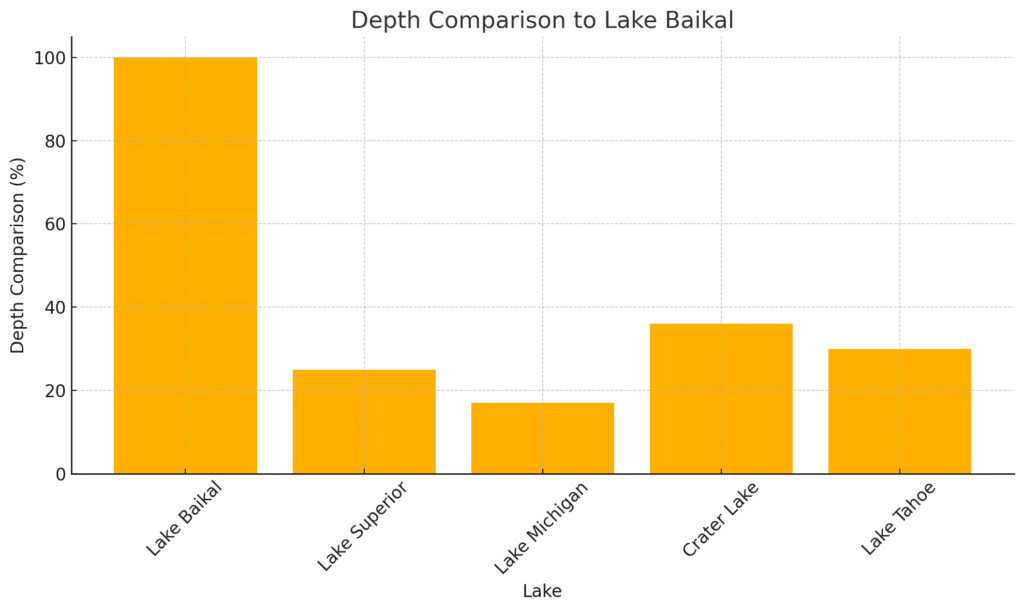
Lake Baikal, located in Siberia, is the deepest freshwater lake in the world, with a depth of 5,387 feet (1,642 meters). To give you a better understanding of its remarkable depth, here’s a comparison with some of the deepest lakes in the USA:
Lake Baikal – 5,387 feet (1,642 meters)
Lake Baikal’s immense depth is a defining feature, making it not only the deepest freshwater lake but also the world’s oldest, estimated to be around 25 million years old.Lake Superior – 1,332 feet (406 meters)
Lake Superior, the largest of the Great Lakes in North America, is the deepest lake in the United States. Although it’s significantly deep, it’s still just about 25% of the depth of Lake Baikal.Lake Michigan – 923 feet (281 meters)
Lake Michigan, one of the five Great Lakes, ranks third in the USA for depth. It’s significantly shallower than Lake Baikal, being only about 17% as deep.Crater Lake – 1,949 feet (594 meters)
Located in Oregon, Crater Lake is the deepest lake in the USA, but still falls short of Lake Baikal’s depth, with a maximum depth that is less than half of Baikal’s depth.Lake Tahoe – 1,645 feet (501 meters)
Lake Tahoe, known for its clear waters, is one of the deepest lakes in the western United States, but again, it’s significantly shallower than Lake Baikal, reaching only about 30% of its depth.
| Lake Name | Depth (Feet) | Depth Comparison to Lake Baikal |
|---|---|---|
| Lake Baikal | 5,387 | Reference (deepest freshwater lake in the world) |
| Lake Superior | 1,332 | ~25% of Lake Baikal’s depth |
| Lake Michigan | 923 | ~17% of Lake Baikal’s depth |
| Crater Lake | 1,949 | ~36% of Lake Baikal’s depth |
| Lake Tahoe | 1,645 | ~30% of Lake Baikal’s depth |
Is Lake Baikal Water Drinkable?
While Lake Baikal is one of the clearest and oldest freshwater lakes in the world, its water is not typically safe to drink without treatment. The lake’s pristine waters are generally free from pollutants, but the presence of natural contaminants such as bacteria and parasites poses a risk. Local authorities and experts recommend that any water from the lake be properly filtered and purified before consumption, ensuring safety for drinking. Despite its purity in many areas, it’s essential to take necessary precautions, especially for those unfamiliar with the local conditions.

Contaminants Found in Lake Baikal Water
Lake Baikal’s water contains trace amounts of heavy metals, with mercury and cadmium detected at levels below 0.001 mg/L in sediments, according to a 2018 study. Agricultural runoff has introduced pesticides like DDT and organophosphates, but they remain well below harmful levels.
Bacterial contamination is present near sewage discharge points, but E. coli levels are kept under 5 CFU/100mL. Nitrate levels have been rising, with concentrations reaching 1.5 mg/L in some areas. Microplastics have also been found, though their concentration is relatively low at 0.1 particles/L.
The Role of Lake Baikal in the Ecosystem

The ecosystem depends on Lake Baikal. It’s home to over 1,700 species of plants and animals, two-thirds of which have no equivalent elsewhere in the world. The Baikal seal – one of the few freshwater seals on Earth – and the omul fish – a unique Lake Baikal species – were just some of them.
The clean, unchewed water of the lake keeps these species alive. Baikal seal, for instance, depends on the lake’s ice to reproduce; omul fish need the cold, oxygenated waters to survive.
Lake Baikal Water Quality
Lake Baikal is renowned for its exceptionally clear water, making it one of the cleanest and most pristine freshwater bodies in the world. Situated in Siberia, Russia, this ancient lake contains around 20% of the world’s total unfrozen freshwater. The water quality in Lake Baikal is largely due to its unique ecosystem and the fact that it is fed by numerous small, clean tributaries. The lake’s clarity is further supported by the presence of specialized species, such as the freshwater sponges, which naturally filter the water.
Despite its overall pristine condition, the water in Lake Baikal is increasingly at risk from human activity and industrial pollution. In recent years, there have been concerns about rising pollution levels, such as untreated sewage and chemical runoff entering the lake. This could threaten the unique biodiversity and the clear water that the lake is known for. Efforts are being made to protect the lake, including regulating industrial activities and promoting eco-tourism to maintain the water quality for future generations.
Water Composition
Lake Baikal is known for its low mineral content compared to other large freshwater lakes. The total dissolved solids (TDS) in the water are measured at less than 10 mg/L, which is significantly lower than the 100-500 mg/L commonly found in many freshwater lakes. This low mineral concentration contributes to the water’s clarity and purity.
Freshwater Sponge Role
One of the critical components of Lake Baikal’s self-purifying system is the abundance of freshwater sponges that thrive in its depths. These sponges play a significant role in maintaining water clarity by filtering organic particles from the water. Research has shown that these sponges filter over 4 million tons of water per day, which greatly contributes to the lake’s outstanding water quality.
Threats to Lake Baikal's Water Quality
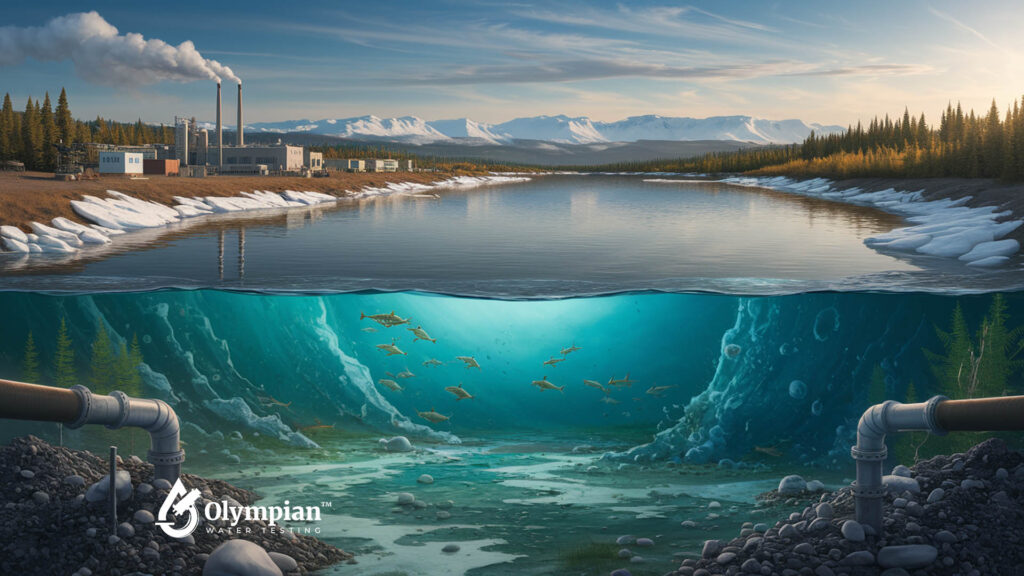
But Lake Baikal is not so inviolable. It is also a big issue with pollution, both domestic and transboundary. Closer to the lake, industrial development has caused more dumps and discharges of chemicals that are harmful to water and the life that relies on it.
Then there’s the issue of climate change on Lake Baikal. Temperatures are warming, altering the lake’s ice cover and temperature, which can have dire consequences for its special ecosystem.
- A 2019 environmental report by the Russian Federation revealed that approximately 20% of wastewater entering Lake Baikal comes from untreated domestic sewage, posing a growing threat to the lake’s water quality. This pollution has led to concerns about the lake’s biodiversity and overall ecological health.
Pollution Concerns
Despite its reputation for purity, Lake Baikal faces growing pollution challenges. In 2019, an environmental study revealed that 10-15% of wastewater entering the lake comes from untreated domestic sewage. The region’s industrialization has contributed to chemical runoff and wastewater discharges, which could potentially threaten the lake’s delicate ecosystem. In addition, trace amounts of pesticides and fertilizers from surrounding agricultural activities have been detected in the lake’s water, although these levels are still considered low and within acceptable environmental thresholds.
Impact of Industrial Pollution
Industrialization around Lake Baikal, particularly in the Baikal-Amur Mainline (BAM) and the Irkutsk region, has led to concerns about the long-term impact of chemical and industrial waste. The presence of heavy metals like mercury and cadmium in the sediments around the lake has been recorded, which could potentially leach into the water. However, regular monitoring has shown that the levels of these contaminants remain below harmful levels for human and animal health, but this remains a significant area of concern for local conservationists.
What are the Efforts to Preserve Lake Baikal's Water Quality?
Since it is of ecological importance, there are numerous measures adopted to ensure the water quality of Lake Baikal. These range from local initiatives to clear up the pollution to international cooperations to conserve the lake’s diverse fauna.
The Baikal Project, for instance, is a United Nations Development Programme, Global Environment Facility and Russian Federation-led project to preserve the lake’s biodiversity and enable sustainable development in the Baikal region.
Exploring Lake Baikal: A Guide for Travelers
1. Responsible Tourism at Lake Baikal

Lake Baikal is a pristine and ecologically sensitive area, which means it’s essential for travelers to practice responsible tourism. By respecting the environment, you help preserve the lake’s delicate ecosystem for future generations. When visiting, avoid littering, stay on marked paths, and be mindful of local wildlife, such as the Baikal seal and various bird species. It’s also important to support eco-friendly local businesses by choosing sustainably-run hotels, restaurants, and tour operators that prioritize conservation and environmental protection. Small actions, like minimizing waste and conserving water, can make a significant impact on preserving the natural beauty of Lake Baikal.
2. Best Activities to Experience Lake Baikal

Exploring Lake Baikal offers a range of unforgettable activities for all types of travelers. One of the most popular ways to explore is by taking a boat tour, which gives you a chance to admire the lake’s crystal-clear waters and stunning surrounding landscapes. In winter, ice trekking and snowmobiling on the frozen surface of the lake provide an entirely different, magical experience. For those who enjoy hiking, the Circum-Baikal Railway route offers spectacular views, and adventurous travelers can also explore the surrounding mountains, including the Baikal Nature Reserve, with its diverse flora and fauna. Don’t forget to try local food like omul fish, a delicacy that comes from the lake itself.
3. Preserving Lake Baikal for Future Generations

The preservation of Lake Baikal requires both local and global efforts to combat threats like pollution and climate change. As a traveler, you can contribute to these efforts by supporting sustainable initiatives aimed at protecting the lake. Participate in eco-friendly activities such as guided nature walks or conservation projects. Stay informed about the ongoing protection initiatives, such as the Baikal Project, which works to reduce pollution and protect biodiversity. By spreading awareness and making environmentally conscious decisions, you play a vital role in ensuring that Lake Baikal’s pristine beauty is preserved for generations to come.
The Future of Lake Baikal: Challenges and Opportunities
Lake Baikal will continue to thrive only if conservation and development are coordinated. The most pressing issues are climate change mitigation, industrial pollution control, and responsible tourism. But there is still plenty of room to save this natural wonder courtesy of global cooperation, novel conservation practices and rising public consciousness. Technological Developments: Improved water purification and pollution control systems can reduce contaminants that come into the lake. And there’s also remote sensing and satellite monitoring for monitoring changes in the environment, to help with proactive management. Community Action: When you educate and provide access to local communities with sustainable tools, they will become environmental managers. Localised actions can work in parallel with state and international initiatives and make conservation practices culturally acceptable. Policy and Legislation: There is no time to go over strengthening environmental policies and legislation. Support for more draconian restrictions on industrial emissions and disposals, and incentives for green business, can make a world of difference to the health of the lake. International Collaboration and Funding: Foreign support and funds can supplement local actions and provide the backstop needed for mega-conservation projects. It’s also a lake Baikal for which organizations all over the world are willing to do their part to keep it.
Conclusion: Preserving the Exquisite Water Quality of Lake Baikal
Conclusion: Lake Baikal’s unique ecology and its high-quality water are reasons to preserve it as a world treasure. Cleansing it of pollution and climate change is essential to keeping it in perfect condition. Only with creative conservation practices, public participation and international collaboration will Lake Baikal remain clean, pure water and a biodiversity for generations to come. Through tourism management and local conservation efforts, each guest and the world citizen can help to save this great wonder of nature.
Share this on social media:
Facebook
Twitter
LinkedIn

Related Posts