The Essential Nature of Water Quality Monitoring
- Published:
- Updated: May 27, 2025
Summary
Water quality monitoring is essential for safeguarding public health and environmental integrity. It detects contaminants, evaluates treatment effectiveness, and ensures compliance with standards. Benefits include protecting public health, preserving ecosystems, and supporting sustainable water use. Despite challenges like limited resources and technical complexity, methods such as chemical, physical, and biological analyses are employed. Government and community involvement are crucial, with citizens contributing through citizen science initiatives. International cooperation is also vital for addressing transboundary water quality issues and ensuring sustainable water management globally.
Water quality monitoring is a critical part of providing clean drinking water for citizens. It can be used to monitor for possible contaminants, test water treatment systems, and make sure that the water source complies with requirements and standards. Monitoring needs to happen constantly to ensure public health, environmental quality and sustainable water supply.
Importance of Clean Water
We all need clean water to keep our health and welfare, and that of the Earth, at bay. You need clean water to drink, bathe, cook and farm. It is also needed for the maintenance of aquatic ecosystems and the maintenance of biodiversity. More than 2 billion people, according to the World Health Organization (WHO), don’t have access to adequate water, and water-borne disease and other health problems affect them.
But water can be tainted from all types of sources: agricultural drainage, industrial discharge and sewer discharge. Getting contaminated water can be dangerous for the health, with the spread of waterborne disease like cholera, typhoid fever, and dysentery. It can also destroy aquatic life and the food web, where fish and other aquatic animals die.
The Benefits of Water Quality Monitoring
Water quality monitoring provides a number of important benefits, including:
- Protecting public health: By regularly monitoring water quality, public health officials can quickly identify and respond to potential health hazards in the water supply. This helps to prevent the spread of waterborne diseases and protect public health. For example, if elevated levels of lead are detected in a water supply, public health officials can take immediate action to ensure that the water is safe for consumption.
- Maintaining environmental quality: Water quality monitoring helps to ensure that water resources remain clean and healthy, supporting aquatic ecosystems and preserving biodiversity. By monitoring water quality, it is possible to detect and address water pollution, preserving the health of aquatic ecosystems and supporting the survival of fish and other aquatic species.
- Supporting sustainable use: Water quality monitoring helps to ensure that water resources are used sustainably, protecting them for future generations. By regularly monitoring water quality, it is possible to identify and address unsustainable practices, such as over-extraction or pollution, ensuring that water resources are used in a way that is sustainable and safe for both humans and the environment.
- Improving water management: By regularly monitoring water quality, water managers can make informed decisions about how to best allocate and manage water resources. For example, if water quality is declining in a particular area, water managers can take steps to address the problem, such as investing in treatment technologies or changing water management practices.
Water quality monitoring is an essential tool for ensuring the quality and sustainability of water resources, and it is a critical component of effective water management.
The Challenges of Water Quality Monitoring
But water quality monitoring is not always possible, for various reasons such as lack of resources, technical knowledge, or equipment. In most parts of the world, monitoring of water quality is underfunded, meaning there’s very little water quality monitoring and data collection. Moreover, water quality monitoring is often technically demanding, and requires advanced tools and training. And lastly, there may not be access to water in some areas and thus monitoring and water quality testing is not possible.
What are the Methods of Water Quality Monitoring?
You can do chemical, physical, biological, or any of the methods to track water quality. Here are some of the most typical ways:
Chemical analysis: Chemical analysis is used to quantify and determine the quantity and content of chemical contaminants including heavy metals, pesticides, pollutants, etc. Whether it is spectrophotometry or gas chromatography, this analysis is feasible. Chemical results can tell us if there are contaminants in the water so that we can take action.
Physical analysis: Physical analysis consists of physical parameters of water (temperature, pH, conductivity). You can do physical analysis with some tools, like a thermometer or pH tester, and it tells you something very important about the physical characteristics of water, like its acidity or temperature. Physico-chemical testing can also be used to determine a change in water quality that is potentially contaminated or other, like temperature or pH.
Biological analysis: The biological analysis determines the quality and quantity of the aquatic environment through the measurements of aquatic animals, fish, algae and other aquatic vegetation. This kind of analysis can also identify whether aquatic ecosystems are in general well-balanced – whether toxic chemicals are present, or the quality of water changes might affect the life of aquatic animals.
All these techniques tell us something about the water quality, and they are often combined to make a complete water quality evaluation. For instance, in a water quality monitoring programme, chemical testing for contaminants can be performed, physical testing for temperature and pH, and biological testing for the health of water ecosystems.
The Role of Government and Communities in Water Quality Monitoring
Water monitoring is the job of government agencies and communities. Water quality standards are defined and enforced by government agencies and regular inspections and measurements of water quality are done. They can also fund water quality monitoring schemes, formulate rules to prevent water pollution, and penalise people who violate water quality regulations.
Communities can also be active water quality monitors by reporting suspected contamination and advocating for better water quality controls. If a community has a strange odour or taste to their water, for instance, it can report it to the relevant authorities who can investigate and take appropriate steps to safeguard the public’s health and the environment.
Water assets can be secured and repurposed with collective action by governments, communities and others. These include effective water quality monitoring programs, water quality regulations and prevention and treatment of water pollution.
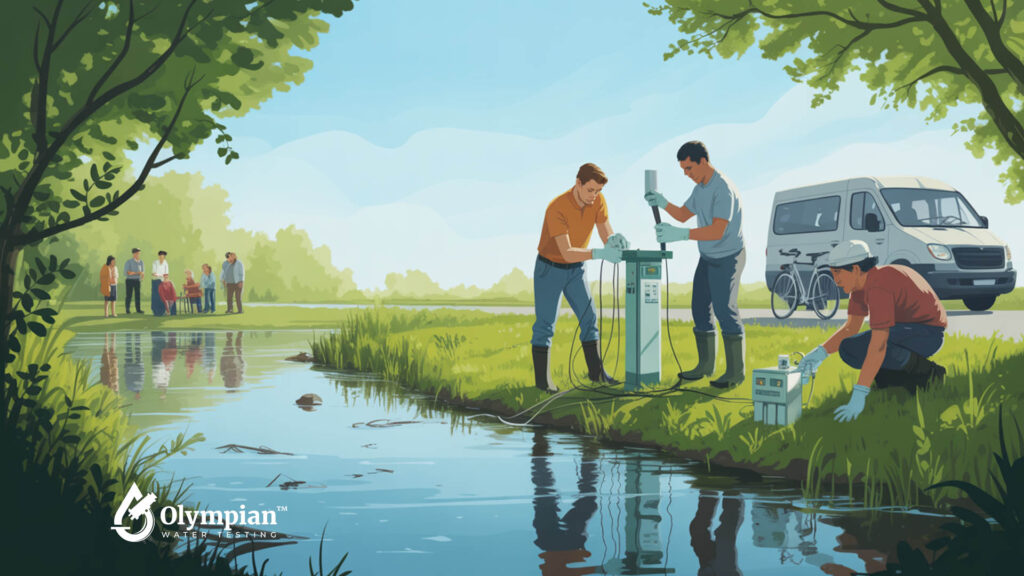
The Future of Water Quality Monitoring
The future of water quality monitoring will be determined by technological advances and more cooperation among government agencies, communities and others. Water quality monitoring should become more affordable thanks to the technology (with low-cost sensors and mobile monitoring systems). Furthermore, more coordination between government agencies, local communities and others can ensure that water quality monitoring programmes are well-funded, well-equipped and well-staffed.
We can all cooperate to make sure that water is not only abused but sustainable, and that water quality monitoring continues to be the primary means to the health and well-being of communities and the planet.
The Importance of Citizen Science in Water Quality Monitoring
Water quality monitoring can benefit from the involvement of citizen science by getting communities to participate in monitoring. Public participation in citizen science programmes involves a public taking water samples and testing water for water quality. That can help extend water quality monitoring programs and increase the quantity of water quality data.
Citizen science campaigns can also inform the public on water quality and get people involved in water policy. Citizen science projects can also empower communities to participate more actively in water quality monitoring, which means the voices and interests of communities can be heard when water management is decided.
The Importance of International Cooperation in Water Quality Monitoring
International collaboration is required for water sustainability and transnational water quality. Water supplies tend to be mutual, and water quality can be transboundary – threatening the health and wellbeing of communities on either side of a border.
The world can come together to help fund, outfit and staff water quality monitoring programmes and to exchange water quality data in order to make decisions on how to manage water. Further, cross-border water quality issues like transboundary pollution or overwater extraction can be managed by international cooperation.
We can collectively and at a global level ensure that water is kept safe and effectively used, and that water quality monitoring remains essential to communities’ and environments’ health and wellbeing.
Share this on social media: