
Overview of Water Quality Challenges Nationwide
Across the nation, towns and cities face significant public health threats due to unchecked water contamination. Pollutants such as arsenic, lead, and PFAS have infiltrated many water systems. This affects daily life in diverse climates and populations. Ensuring safe drinking water becomes a challenge due to surveillance gaps, allowing violations to go unnoticed at local levels.
Inadequate monitoring often leads to health alerts and restricts community resources. Both natural and industrial elements exacerbate these issues, creating a complex web of challenges for residents. Federal regulations aim to establish minimum standards. Yet, state compliance varies, raising questions about funding and accountability.
Key factors behind water contamination include:
- Industrial discharge in manufacturing hubs
- Aging pipes that leach metals into supply lines
- Agricultural runoff seeping into rivers and wells
- Climate shifts leading to drought or flooding
Progress hinges on consistent enforcement, public awareness, and strategies to ensure safe drinking water for all communities.
Which States Have the Worst Water Quality in America?
Concerns about contamination are on the rise in areas with outdated pipelines and limited resources. Pennsylvania, Texas, and West Virginia often see high violations under the Safe Drinking Water Act. This poses significant challenges for local communities.
High Population Density and Pollutants
Heavy urban growth can overwhelm public water systems, leading to increased contamination. Texas and Pennsylvania face these challenges, where industrial runoff and residential waste combine. New York’s older infrastructure and dense populations also demand immediate attention.
Climate and Water Scarcity
Drought conditions significantly impact water quality. In the southwestern states, like Arizona, contaminants concentrate when rainfall is scarce. This creates a heavy burden for those reliant on groundwater. Excessive pumping depletes aquifers, leaving some wells dry.
Economic Impact on Infrastructure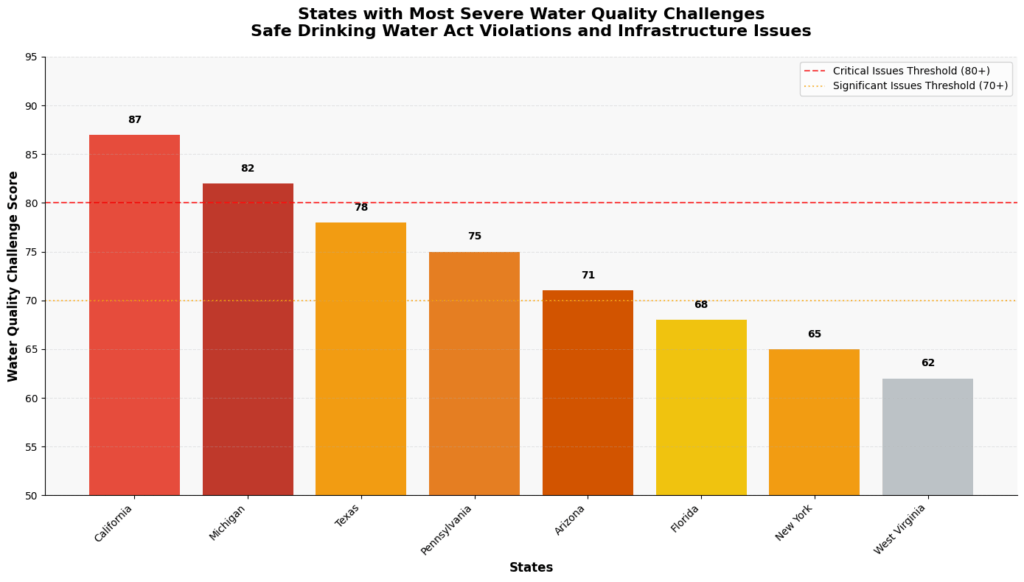
Insufficient funding and aging pipelines lead to high repair costs for local authorities. The American Society of Civil Engineers reports a 27 percent increase in water main breaks from 2012 to 2018. Underestimating or inaccurately reporting lead pipe data can divert resources from states in greater need.
State | Key Challenge | Infrastructure Concern |
Pennsylvania | Frequent SDWA Violations | Aging Pipelines |
Texas | Lead Pipe Data Discrepancies | Rapid Population Growth |
Arizona | Groundwater Depletion | Land Subsidence |
California’s Water Crisis
California is grappling with severe challenges in ensuring a safe and reliable water supply. Experts have identified violations related to contaminants like arsenic, nitrates, and industrial chemicals. These pollutants pose significant risks to both households and businesses, raising concerns about the state’s ability to safeguard its water resources.
The heavy use of fertilizers in agriculture is a major contributor to water pollution. Urban expansion and outdated infrastructure further strain local water systems, making it increasingly difficult to maintain clean water. The drought exacerbates these issues by reducing water levels, leading to tough decisions on supply and conservation.
Efforts to combat water pollution are underway, guided by EPA guidelines. California has some of the toughest regulations in the country. Yet, the state’s large population makes it a constant battle to adhere to these standards. Investing in advanced treatment facilities and detection technologies could be a beacon of hope for public health.
Funding initiatives underscore the need to address water pollution, given the arid conditions. Many believe that modern tracking systems will help create safer rivers and reservoirs for everyone.
Michigan’s Struggles With Legacy Pollution
Michigan’s waterways bear scars from historic production plants and heavy manufacturing. Old pipelines and unremoved waste pose threats to communities aiming to safeguard their drinking water. The state saw thousands of SDWA violations in 2023, sparking widespread concern.
Factories shut down decades ago, yet buried objects continue to release harmful substances. Ecological surveys have uncovered soil and groundwater issues in various counties. These findings highlight the need for enhanced oversight. The Flint water crisis, with its lead contamination, has brought national attention, calling for immediate infrastructure upgrades.
Industrial Contamination Hotspots
Residents near abandoned facilities face ongoing industrial contamination. Unfiltered discharge flows into local rivers, impacting wildlife habitats and public recreation areas. Some officials blame outdated regulations for hindering cleanup efforts.
- Lingering pollutants in soil
- Higher levels of toxins in groundwater
- Strain on municipal water treatment
Health Implications for Residents
Widespread lead contamination poses risks to families with corroded pipes. Children in affected communities face developmental delays due to lack of modern testing or filtration. Medical professionals recommend routine checkups and home inspections to mitigate exposure.
City | Main Pollutant | Key Focus |
Flint | Lead | Pipe Replacement |
Detroit | Industrial Contamination | Water Treatment Upgrades |
Kalamazoo | Various Toxins | Federal Grants for Cleanup |
Arizona’s Battle Against Limited Water Supplies
Arizona frequently ranks low in surveys about tap water quality, with concerns over drought conditions. These conditions put a strain on regional resources. Officials are exploring new water treatment strategies to meet the needs of growing communities.
Reliance on the Colorado River
A large part of Arizona’s water comes from the Colorado River. As droughts persist, the importance of each drop grows. Local agencies are working to improve water treatment, aiming to reduce mineral content. They also monitor reservoir levels and advocate for fair water allocations.
Impact on Agricultural Sectors
Farmers face significant challenges due to limited groundwater, leading to deeper wells and careful irrigation. They are adopting drip irrigation and more resilient crops. Many are also seeking partnerships to support water treatment innovation, aiming for reliable irrigation for the future.
Water Characteristic | Main Concern |
Taste | Mineral aftertaste |
Odor | Frequent sulfur-like smell |
Hardness | High calcium and magnesium |
Texas: Rapid Growth and Water Demand
Texas is known for its poor water quality, with numerous Safe Drinking Water Act violations. The state’s population is growing rapidly, driven by thriving business sectors. This growth puts a strain on local water infrastructure, which often cannot keep up.
Rural communities face significant threats from oil and gas operations, leading to water contamination. This situation pushes smaller treatment facilities to their limits. The demand for water is increasing, but the infrastructure is struggling to meet it.
The Texas Commission on Environmental Quality is actively addressing these concerns. Some cities are turning to the Environmental Protection Agency for assistance. They aim to test and upgrade their aging systems.
The expansion of pipelines is not happening fast enough to support the growth of major cities. This adds extra pressure on reservoirs and groundwater reserves. The infrastructure is facing significant challenges.
“Protecting public water supplies demands active oversight and ongoing investment in upgraded treatment systems.”
Industrial development and urban growth are putting a strain on rivers and aquifers. Residents in these areas face higher utility costs and health concerns due to pollutants in their water. Local officials are exploring ways to reduce waste, improve water storage, and invest in technology.
Florida’s Challenges With Agricultural Runoff
Florida’s coasts are under constant pressure from rising tides and waters rich in fertilizers. The influx of nutrients into rivers disrupts the delicate balance of marine habitats. This disruption can lead to serious threats for local communities.
Algal Blooms in Coastal Areas
Algal blooms occur when waters become overloaded with nutrients from agricultural runoff and untreated waste. These blooms can turn the shoreline colors, block sunlight, and release toxins. Such toxins pose health risks to swimmers and anglers. Local authorities closely monitor oxygen levels and promote responsible fertilizer use to mitigate these issues.
Threats to Tourism and Wildlife
Coastal algal outbreaks deter visitors from engaging in water activities near affected areas. Marine life either migrates or dies off due to the lack of oxygen and harmful substances in the water. This decline in beach activities severely impacts industries reliant on tourism, leading to revenue losses. Conservation efforts focus on stricter controls over agricultural runoff to safeguard critical habitats.
New York: Aging Water Systems and Urban Pollution
In a bustling metropolis, the reliability of public water systems is critical. New York, with its fourth-highest number of SDWA violations, shows the strain of old infrastructure and urban sprawl. Residents worry about the need for modernizing aging pipelines. The presence of PFAS in some water supplies complicates matters further.
Keeping up with maintenance in a densely populated state is a significant challenge. It requires substantial budgets, skilled workers, and ongoing monitoring to combat infrastructure wear. Northeastern states, with their aging systems, face a constant battle to safeguard clean water for millions.
Lead Contamination Concerns
Lead from outdated pipes poses a risk to some areas, prompting calls for swift action. Authorities recommend regular checks on pipes and water tests to reduce exposure.
Ongoing Infrastructure Upgrades
Upgrades span from replacing corroded mains to installing new filtration systems to tackle PFAS. The focus is on ensuring long-term water quality and public health. Yet, securing funding and overcoming logistical hurdles demands meticulous planning.
Key Challenge | Example |
Lead Risks | Old Service Lines |
PFAS Detection | Industrial Discharges |
Rural Communities and the Hidden Water Crisis
Rural residents face numerous challenges in accessing safe drinking water. Private wells are the primary source in many areas, yet they often lack rigorous inspections. This oversight can hide health risks until contaminants reach harmful levels. Communities struggle with limited funds for necessary upgrades, exacerbating the crisis.
Water pollution from agricultural chemicals and runoff is a common issue. It can contaminate groundwater, posing health risks for years without detection. Residents may suffer from health problems due to chemicals, bacteria, or toxins. The lack of large treatment facilities in remote areas makes consistent testing a significant challenge. Without proper oversight, families remain unaware of the dangers in their water.
State and federal agencies advocate for regular monitoring to prevent emergencies. Experts emphasize the need for better support for rural water systems, including grants for well rehabilitation and infrastructure improvements. Local partnerships can educate property owners about threats. Regular checks and shared resources alleviate the burden on smaller towns. Strengthening safeguards reduces water pollution risks, protecting each community’s quality of life.
Federal Guidelines and State Compliance Efforts
The Safe Drinking Water Act establishes strict rules for water monitoring. Some regions excel in meeting these standards. Yet, others face financial hurdles that hinder full compliance.
How the EPA Regulates Contaminants
The Environmental Protection Agency (EPA) sets maximum safety levels for harmful chemicals. It tracks pollutants like arsenic and lead contamination using EPA guidelines. States must regularly report their findings to ensure public safety and prevent health crises.
State-Level Initiatives and Funding
Many states introduce new testing protocols for rural areas and enhance treatment systems. Local leaders pursue grants to bridge funding gaps. Community groups advocate for stricter renovation standards. Special focus is given to older pipes, which pose significant health risks and escalating costs.
State | Focus | Funding Approach |
California | PFAS Remediation | Bond Proposals |
Michigan | Lead Contamination | Federal Grants |
New York | Aging Pipelines | Infrastructure Upgrades |
Economic and Social Implications of Water Scarcity
Water scarcity weighs heavily on many communities. Some areas find it challenging to keep a steady drinking water supply, exacerbated by droughts or rapid population growth. This strain impacts residents’ daily lives and strains local resources.
Water and sewer bills have increased by 54.8% over the last decade in some parts of the U.S. This rise is due to growing demand and dwindling natural sources. Such increases burden low-income families, limiting their financial stability and job opportunities. Businesses are also cautious about expansion, fearing the uncertainty of critical resources, which hampers job creation in these areas.
Where water scarcity is persistent, rationing and permanent restrictions become common. Households reliant on a consistent drinking water supply face sudden cuts, straining their budgets and causing anxiety. This economic crisis can also affect real estate, with properties in high-risk zones potentially losing value. Local governments and nonprofits are working to find solutions that protect jobs and livelihoods, aiming to alleviate the stress caused by scarce resources.
- Larger water bills for families already on tight budgets
- Reduced funding for community projects
- Potential conflict between urban and rural areas over shared supplies
Alternative Water Sources and Innovations
Across the nation, communities are exploring innovative ways to ensure access to safe water. These efforts aim to combat threats like PFAS and provide solutions for arid or densely populated areas. Leaders see these strategies as transformative, capable of meeting the increasing demand for water.
“Cutting-edge measures are helping many states rethink how they achieve a sustainable future.”
Desalination Plants
Coastal states are turning to desalination plants to convert seawater into drinkable water. California is leading with pilot projects to enhance water reserves during dry seasons. While promising, these initiatives require careful management to optimize energy efficiency.
Water Recycling and Reuse
Texas is pioneering advanced wastewater treatment and reuse programs. This approach is seen as a sustainable way to protect local ecosystems. The best-management-practice for alternative water sources provides guidelines for such initiatives.
Public-Private Partnerships
In Florida, public funds and private investment are being combined for large-scale water projects. These partnerships focus on building new infrastructure and implementing targeted water treatment to reduce PFAS contamination. This collaboration aims to bridge funding gaps and ensure equitable access to clean water.
Approach | Main Location | Key Outcome |
Desalination | California | Turns seawater into potable sources |
Recycling | Texas | Conserves natural reserves |
PPPs | Florida | Brings new funding and technology |
Grassroots Efforts to Improve Water Quality
Local groups mobilize neighbors to fundraise, start petitions, and push for stricter pollution controls. They organize clean-up events along rivers and lakes, aiming to lessen pollution and safeguard health. Seeking support from groups like the Sierra Club, they bolster their advocacy efforts.
These initiatives reach beyond city limits. Volunteers in distant towns tackle pollution sources often overlooked. They collaborate with churches and local businesses on specific projects, addressing critical needs. Each project enhances water safety and fosters a deeper appreciation for water resources.
Local Activism and Nonprofits
Organizations like Clean Water Action train volunteers to monitor harmful runoff. They engage residents in public forums, presenting new data and urging action. Grants from these groups often fund essential projects in under-resourced areas.
Community Water Testing Programs
Grassroots leaders host workshops on DIY water testing kits. Participants learn to test local wells and spot issues before they escalate. This hands-on method empowers citizens to identify and alert others to water quality concerns.
- Sampling days at schools and parks
- Free or low-cost test kit distribution
- Data-sharing through neighborhood forums
Initiative | Key Activity |
Regional River Sweep | Clear debris to limit runoff |
Well Quality Drive | Offer regular testing to rural families |
How Citizens Can Advocate for Cleaner Water
Local voices are key in driving progress against environmental concerns. In states with the worst water quality, people’s voices can prompt immediate action from decision-makers. They push for policy reviews, expose infrastructure shortcomings, and share personal stories of water pollution.
There are formal channels for those who wish to improve public water systems. Some residents comment during reviews of new treatment facilities. Others reach out to their elected representatives, demanding upgrades and stricter regulations. Community groups come together to amplify their efforts and highlight ongoing risks in contaminated neighborhoods.
Citizen science projects play a significant role in these efforts. Community members collect water samples, document test results, and share critical data with health departments. This data fuels new discussions and encourages local councils to invest in clean water initiatives.
Staying engaged leads to increased awareness in states with the worst water quality. When a critical mass of voices demands change, local authorities often commit to stronger protections for public water systems.
Action | Possible Outcome |
Join Town Halls | Amplifies resident concerns to officials |
Submit Written Comments | Influences regulatory reviews and treatment plans |
Conduct Water Testing | Builds credible evidence for improved standards |
Collaborate With Nonprofits | Boosts advocacy reach through organized campaigns |
Promising Projects and Future Outlook
Across the United States, leaders are focusing on innovative solutions to tackle water scarcity and protect rural water systems. These initiatives aim to safeguard waterways and ensure reliable supplies for homes, businesses, and farms. By combining environmental care with cutting-edge engineering, they promote sustainable practices. This helps local communities preserve essential resources.
Green Infrastructure Implementation
Urban and rural areas are investing in significant infrastructure upgrades, like wetland restoration and permeable pavement. These approaches naturally filter pollutants and reduce stormwater runoff. Planners are also looking into eco-friendly drainage systems that support native plants and prevent erosion. These models aim to balance human activities with environmental protection.
Public Education Campaigns
In areas facing ongoing water challenges, public outreach programs are making a difference. They encourage people to adopt water-saving habits. Water-saving tips are shared online, and hands-on workshops teach families how to monitor their water use. This education helps residents see the connection between their daily actions and the health of water resources for generations to come.
Looking Ahead to Safer Water for All
Safe water is a critical goal for communities aiming for a healthier future. Federal guidelines guide oversight efforts, and states enhance their infrastructure to lessen risks. Advances in water treatment open up new avenues for resilience, ensuring a safer drinking water supply over time.
New strategies emerge to combat contamination in water bodies. Public and private entities drive innovation, from advanced testing techniques to automated sensors. The journey forward relies on innovative ideas, community volunteers, and support from all societal levels.
Advancements are fueled when citizens can monitor their water and support research-backed reforms. Advocacy efforts connect with policymakers, pushing for stricter regulations. This collective effort seeks to safeguard current and future generations, ensuring they have access to safe, abundant water.
FAQ
Which states are commonly cited for having the worst water quality?
States like California, Michigan, Arizona, Texas, Florida, and parts of New York often rank poorly. Issues include PFAS, lead contamination, and nitrate pollution from agriculture. These problems stem from federal data, customer satisfaction surveys, and Safe Drinking Water Act (SDWA) reports.
Why do densely populated areas struggle with higher pollution levels?
Dense urban populations strain public water systems. Heavy usage, industrial runoff, and aging infrastructure allow contaminants to infiltrate. Cities growing too quickly often lag in upgrading their water systems.
How does climate change worsen water scarcity in certain states?
Climate change causes prolonged droughts, affecting states like Arizona. Lower rainfall and higher temperatures reduce water levels, concentrating contaminants. This scarcity leads to over-reliance on limited resources like the Colorado River, straining water systems further.
What role does economic investment play in maintaining water infrastructure?
Underfunded or outdated systems often allow contaminants to slip through. States or municipalities with limited resources struggle to upgrade. This leaves communities prone to issues like lead corrosion and bacterial contamination.
Why is California’s water crisis so severe despite strict environmental regulations?
California’s crisis stems from industrial runoff, agricultural demands, and urban sprawl. Strict environmental rules are in place, but the sheer number of users and frequent droughts make consistent water quality challenging.
How does Michigan’s industrial history affect its current water quality?
Michigan’s soil and waterways are polluted from decades of factory operations and mining. This legacy pollution, combined with aging infrastructure, poses serious health risks. The intersection of industrial leftovers and infrastructure creates significant health concerns.
What challenges does Arizona face regarding water supplies?
Arizona relies heavily on the Colorado River, which faces reduced flow during droughts. Farmers also over-pump groundwater, causing subsidence and pollutant concentration. Balancing a growing population with decreasing water is a major challenge.
In what ways does water scarcity impact local economies and communities?
Water scarcity increases utility bills, deters investors, and leads to job losses. It can also prompt rationing or permanent restrictions, affecting low-income households. This widens socioeconomic gaps.
Why does Florida frequently experience algal blooms?
Nutrient pollution from agriculture and urban development causes algal blooms in Florida. These blooms produce toxins harmful to marine life and humans. Health advisories harm tourism and fishing industries.
Are old lead pipes a problem in parts of New York?
Yes. New York has made strides in infrastructure upgrades, but some neighborhoods have old lead pipes. Corrosion can leach lead into the system, posing health risks, mainly for children and pregnant women.
Why do rural communities often remain under the radar for water problems?
Rural areas often rely on private wells or small systems without consistent oversight. Agricultural runoff, septic leaks, or natural leaching may go undetected, increasing contamination risks.
How does the EPA regulate contaminants under the SDWA?
The EPA sets limits for substances like lead, arsenic, and PFAS under the Safe Drinking Water Act. States enforce these guidelines, but adherence varies based on local policies, funding, and site-specific challenges.
What are some emerging solutions to water scarcity and contamination?
Solutions include desalination plants, water recycling, and public-private partnerships. Green infrastructure, like constructed wetlands, can naturally filter pollutants. These innovations help increase supplies and improve treatment systems.
How can residents advocate for cleaner water in their communities?
Citizens can attend council meetings, contact officials, and participate in water testing programs. Grassroots projects and nonprofit collaborations can uncover contamination early. This encourages authorities to implement effective solutions.
Which trends offer hope for a cleaner water future?
Trends like green infrastructure, water conservation, and public education show promise. As communities adopt these efforts, regulatory reforms and technological advancements may reduce contaminants. This will protect public health for future generations.