Science Behind Water Purification
- Published:
- Updated: November 22, 2024
Listen to this article
Summary
Water purification is crucial for human health. Learn about its science and methods:
- Water purification aims to remove impurities, chemicals, and harmful substances.
- Methods include filtration, reverse osmosis, UV light purification, chlorination, and distillation.
- Each method has its pros and cons, affecting effectiveness, cost, and environmental impact.

The water is the one resource we cannot live without. You need to make sure it is pure and free from contaminants in order to stay healthy. Water purification is the purification of water, by filtering impurities, chemicals and other contaminants from the water and then making it tastier for drinking.
Basic Principles of Water Purification
Purifying water has a single main goal – it is to cleanse the water of unwanted chemicals that are not fit for human consumption. It is a multistep process of water purification: from pre-treatment to filtration to disinfection. How exactly and how it purifies the water depends on the quality of the water source and the contaminants.
Bacteria, viruses, chemicals, heavy metals, and organics are the most common contaminants of water. Filtration, reverse osmosis, ultraviolet light purification, chlorination, and distillation are all ways of treating these contaminants. These approaches are based on what kind of and concentration of contaminants are in the water.
Filtration in Water Purification

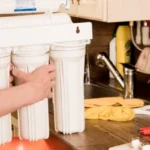
This is one of the most common ways of filtering water. This works by forcing water through a filter, flushing out contaminants and contaminants. It may be sand, gravel, activated carbon or ceramic filter which is made to catch different size of particles and impurities.
Filtration works for sand, sediment, sand, and dirt, but also for organics like leaves and algae. Filtration works best according to the size of the filter and particles. : A filter with less pores is better for smaller particles, but the water flow rate can be decreased. Alternatively, a filter with more pores will also have a higher flow but won’t be as good at filtering smaller particles.
Reverse Osmosis in Water Purification
Reverse osmosis: Reverse osmosis makes use of pressure to push water through a semi-permeable membrane to draw out impurities and contaminants. Only water molecules get through the membrane and smaller ones (salts, heavy metals, organics) can’t.
Reverse osmosis can be used to clean all kinds of contaminants such as salts, heavy metals and dissolved solids. The process is sometimes combined with other techniques (like filtration) to achieve a powerful cleanse. Reverse osmosis system normally has a pre-filter, reverse osmosis membrane, and post-filter. Pre-filter: It removes bigger particles, like sediment, sand, dirt, to help preserve the reverse osmosis membrane. Reverse osmosis membrane washes away the contaminants and post-filter ishes away the contaminants.
Ultraviolet Light Purification
Purification with UV (ultraviolet) light — ultraviolet light destroys bacteria, viruses, and other microorganisms. It works by exposing water to ultraviolet light, which breaks the DNA of microbes so they can’t reproduce, and die.
UV light disinfection kills bacteria, viruses and algae of all kinds. It can also be combined with other processes like filtration for very intense purification. The UV light purification apparatus usually consists of a UV lamp, quartz sleeve and controller. The water goes through the UV lamp, and then it is put under UV light. Quartz Sleeve: It shields the UV lamp from damage and helps keep the UV intensity constant. Control system keeps water moving in and out of the system and checks that the UV lamp is operating correctly.
UV light purification is a chemical-free water purification process, so it is a good option for anyone who does not want their drinking water treated with chemicals. NOTE: UV light purification doesn’t get rid of the dissolved solids or chemicals from water, and so is generally combined with other purification steps (filtration, reverse osmosis) to achieve full-blown purification.
Chlorination in Water Purification
Chlorination: Chlorine kills bacteria, viruses and microorganisms. The process works by mixing chlorine with water, which breaks down the microbes’ cell walls, and makes them unattractive.
Chlorination kills almost any kind of microorganism — bacteria, viruses, algae. It is a common technique in public water systems, and often used in tandem with other methods like filtration for the maximum level of purification. Water purification by chlorination is a simple and cheap water purification process but it comes with disadvantages. When chlorine is used to disinfect water, the process can leave behind disinfection by-products (such as THMs), which can be toxic to humans in large quantities.
Distillation in Water Purification
Distillation: distillation involves heating water, leaving behind contaminants and dirt. The water vapour is condensed and stored to create distilled water.
Distillation removes almost any kind of contaminants like salts, heavy metals and organics. It involves boiling water to evaporate it, and the particles are left behind. The vapour of water is then evaporated and gathered, giving us pure water.
Distillation is a quick and easy water purification process but also quite time and energy-consuming. It does not get rid of volatile organic compounds (VOCs) by distillation — the VOCs go away with the water. It is for this reason that distillation is often combined with other processes (eg carbon filtration) to achieve the full purification.
Common Contaminants Found in Water and Their Removal
In water, contaminants come from various places: from agricultural runoff, industrial effluent and sewage. Among the contaminants in water are bacteria, viruses, chemicals, heavy metals, and organics.
Filtration, reverse osmosis, UV light purification, chlorination and distillation are some of the technologies and methods to clean up these pollutants. The exact process will vary based on what and how much contaminant is in the water. Reverse osmosis works for dissolved solids and heavy metals, and UV purification for bacteria and viruses.
Advantages and Disadvantages of Different Purification Methods
There are pros and cons to all the water purification methods. The filter is an easy and economical solution to remove the solids and organic contaminants, but it’s less efficient for dissolved solids and heavy metals. Reverse osmosis removes the dissolved solids and heavy metals efficiently but it is costly and needs frequent servicing.
While ultraviolet light purification kills bacteria and viruses without using chemicals, it doesn’t bind dissolved solids or chemicals to water. The disinfection process for bacteria and viruses is straightforward and inexpensive, but the end-products produced by chlorination can be toxic to human beings. Distillation can get rid of almost anything but it is time-consuming and energy-intensive.
To decide on the right water purification process, the type of contaminants in the water, the cost, convenience, and environmental impact of each should be weighed. Reverse osmosis is ideal if the water source has dissolved solids and heavy metals. : If the water source has bacteria and viruses, ultraviolet light purification or chlorination is an ideal procedure.
Importance of Regular Maintenance and Testing
Water purification systems must be regularly maintained and tested to make sure that they are in working order and are purifying at a maximum. Filters used in filtration system should be changed frequently to make sure they are operating well and removing the contaminants effectively. Reverse osmosis filters need to be cleaned and maintained on a frequent basis so that the reverse osmosis membrane is working properly and removing impurities.
Also the water purity should be checked frequently to make sure the water is not unsafe to drink. You can measure dissolved solids, acidity or alkalinity, conductivity and the like by regularly checking the water using TDS meters, pH meters, etc. When a more thorough testing of the water purity is needed, you can also have the water tested in a laboratory.
It is easy to keep water purification systems and water quality up-to-date with maintenance and testing to make sure that the water is contaminate free for drinking. This way, people and businesses can preserve their own and communities’ health and the water they drink with integrity.
Measuring Water Purity
Taking water tests is also an essential part of water purification. You can count the water purity using a number of different methods like total dissolved solids (TDS) meters, pH meters, and conductivity meters.
TDS meter measures the total dissolved solids content of water — salts, minerals, etc. pH scales are pH meters that count the acidity or alkalinity of water: pH 7 = neutral. Conductivity meters are based on water’s conductivity (how well it flows electricity), and that’s directly proportional to the levels of dissolved solids in water.
These are methods of water purity that give you a general idea of water quality but don’t always catch all the pollutants. TDS & conductivity meters cannot distinguish between lethal and inert dissolved solids. pH meters can’t tell us about chemicals, like heavy metals, that are potentially hazardous to the human body.
You can always test the water in a laboratory if you need a more detailed report of the purity of the water. For bacterial, viral, chemical and heavy metal contaminants, you can test for them in the lab. Which tests are performed will be based on what contaminants you suspect may be in the water.
It is a messy science of purifying water with various processes and technologies to clean contaminants and render water safe for drinking. How this is done will be based on the nature and level of contaminants in the water. Health requires clean water and the best method for it should be taken.
Share this on social media:
Facebook
Twitter
LinkedIn

Related Posts