Why Drinking Water Quality Matters in the United States
Safe drinking water is a fundamental aspect of our daily lives. People expect a consistent, refreshing taste from their taps. Yet, contaminants can disrupt this trust, affecting both public and private water systems.
Geological formations and industrial activities are among the culprits that introduce unwanted substances into our water. Water quality testing plays a vital role, alerting communities to emerging threats. This early warning system is essential for preventing more severe issues.
Public agencies and scientists meticulously monitor water at various stages, from its source to our taps. Their collaborative efforts help detect subtle changes in taste or color. These signs often indicate more significant problems. It’s imperative to stay vigilant, as even trace amounts of certain substances can impact our health.
Through regular testing, communities become more aware of the need for improvement. Upgrades to water systems aim to filter out impurities and conserve resources. An educated public is a key ally in protecting our water from unseen dangers.
Key Findings About Radium in US Drinking Water
Research shows radium can unexpectedly appear in tap water. High concentrations may threaten health. This has led to increased testing and awareness. The Environmental Protection Agency provides guidance to communities on these risks.
How Radium Enters Water Sources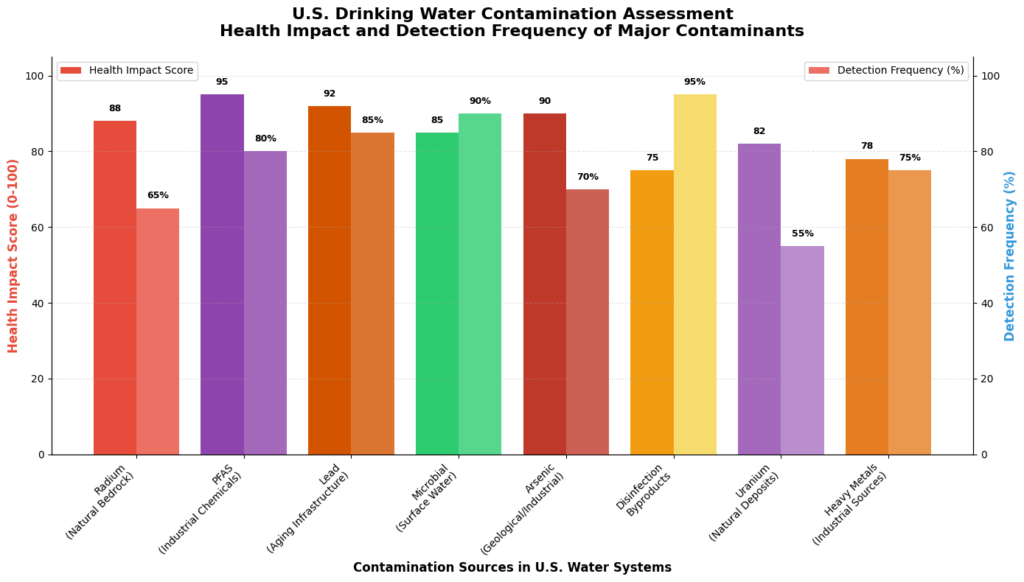
Experts say radium escapes from underground rock into aquifers. Tiny cracks allow radioactive contamination to mix with groundwater. Health officials stress the need for regular testing and treatment when levels exceed standards.
The Role of Geological Formations
Granite-like rock layers often lead to higher radium levels in certain areas. Regions with uranium-bearing stone are prime for radium release. Knowing these geological formations helps water utilities address risks effectively.
Key Insight | Implication |
Natural seepage | Possible radioactive contamination in wells |
Regional geology | Predicts radium occurrence |
Regular monitoring | Reduces uncertainty for households |
Understanding Federal Safety Regulations
The Environmental Protection Agency sets and enforces EPA guidelines to prevent radioactive contaminants from causing long-term health risks. The Safe Drinking Water Act mandates legal limits on radionuclides in drinking water for all community systems. These limits are based on lifetime exposure models to ensure contamination stays below harmful levels.
On December 7, 2000, the Agency released the Radionuclides Final Rule. This updated standards, adding new monitoring requirements. Community systems must now test for radium, uranium, gross alpha particles, and beta emitters. If levels exceed the maximum contaminant limits (MCL), operators must take corrective actions. These actions include increased sampling, public alerts, and new treatments to reduce contamination.
Many public systems use filtration and other methods to meet EPA guidelines and protect consumers from health risks. Officials regularly check that the total combined radium level is under 5 pCi/L and alpha sources are below 15 pCi/L. These efforts reflect a legal framework aimed at minimizing radiation exposure and ensuring drinking water safety for all.
Expert Opinions on Effective Treatment Options
Addressing radium in drinking water requires a thorough evaluation of treatment options. Experts from the American Water Works Association emphasize the need to balance efficiency with practicality. For more on emerging strategies, readers can visit this resource.
Ion Exchange Methods
Ion exchange is a favored approach due to its effectiveness in replacing radium ions with safer alternatives. This method uses specialized resin in household or municipal tanks to filter out contaminants. Experts praise its precision and ease of maintenance.
Reverse Osmosis Considerations
Reverse osmosis systems use semi-permeable membranes to remove radioactive particles from water. Facilities nationwide commend its high removal efficiency. It’s advised to include pre-filtration steps and regular maintenance. While costs and complexities vary, many confirm its ability to meet radium standards.
Method | Top Advantage |
Ion Exchange | Direct radium extraction |
Reverse Osmosis | Broad contaminant removal |
Source Locations with Elevated Levels
In southwestern Pueblo County, Colorado, radium levels in 37 wells range from 0.3 to 420 picocuries per liter (pCi/L). The median radium reading is 8.8 pCi/L. This wide range necessitates thorough water quality testing.
The Hickory aquifer in Texas also shows high radium levels, exceeding U.S. Environmental Protection Agency limits. The Ogallala Aquifer and the northern Gulf Coast Aquifer face similar issues. These areas pose health risks to nearby communities. Continuous monitoring is essential to address these concerns.
Studies in the eastern and central United States show that over 20% of wells in the Mid-Continent and Ozark Plateau Cambro-Ordovician aquifer system have radium levels above the maximum contaminant level. Factors like oxygen-poor water and acidic conditions increase exposure risks. Regular water quality testing is critical to protect communities and ensure a safe drinking water supply.
Community Case Studies on Monitoring
Many communities invest time and effort to keep radium levels in check. This step is vital for reducing health risks in local water supplies. It allows residents to feel safer about what flows from their faucets.
Challenges Faced by Small Towns
Small towns often deal with aging infrastructure that complicates regular testing. Budgets run thin, making advanced detection tools harder to acquire. Residents rely on consistent oversight to keep contamination at bay, but progress moves slowly without outside support.
Collaborations with Local Health Departments
Partnerships with public water utilities and state-level agencies can help lighten the load. Experts share guidance on best practices and offer access to specialized equipment. This united approach strengthens early detection strategies and safeguards neighborhoods from unexpected spikes in radium exposure.
The synergy between health departments and neighborhoods limits health risks through prompt water testing. This united front shields families from hidden threats. They work together to address possible contamination swiftly and protect vital water sources.
Approaches from Public Water Utilities
Public water utilities are the backbone for many communities, providing safe and reliable water. They employ a mix of infrastructure enhancements and community outreach. The goal is to reduce contamination and maintain high public health standards.
At the heart of these efforts are scientists and engineers at major facilities. They test and refine various treatment methods. This work is based on research from labs, addressing new challenges. It ensures the water is safe for everyone.
Upgrading Filtration Systems
These facilities are installing advanced filters to combat specific contaminants. New membranes and ion exchange units catch tiny particles before they reach homes. Veolia Water Technologies experts lead these upgrades, aiming for maximum efficiency.
Public Awareness Campaigns
Public water utilities share water quality reports with local media and host forums. This builds trust and informs residents about risks. They also provide insights on home treatment options, empowering families to make informed choices.
Filtration Method | Key Benefits | Implementation Notes |
Reverse Osmosis | Removes a wide range of impurities | Requires stable pressure and maintenance |
Ion Exchange | Targets radium and heavy metals | Periodically regenerates resin beads |
Granular Activated Carbon | Reduces organic compounds | Regular replacement can extend filter life |
Common Misconceptions
Many believe radium comes only from big industrial sites. Yet, radioactive contamination can also arise from natural bedrock shifts. This means even areas with few factories might struggle with contaminated drinking water.
Some think radium in water always means disaster. But, experts say the danger depends on the amount and exposure time. Regular testing by groups like the United States Geological Survey (USGS) helps spot risks early.
The USGS confirms that traces of radium can be found even in remote regions, posing risks when left unmonitored.
Not all bottled water is safe. The Food and Drug Administration has standards, but quality checks vary. To tackle radioactive contamination, we need ongoing assessments and effective treatments nationwide.
Health Risk Perspectives
Communities face concerns when radium is found in their water. Short exposure periods usually pose little risk to most people. Yet, prolonged consumption can significantly increase the risk of health issues.
Understanding radium’s effects is critical. It highlights the importance of regular monitoring. By testing water frequently, communities can better understand the impact of different radium levels on their health.
Short-Term vs Long-Term Exposure
Initial exposure to slightly higher radium levels is generally not a cause for immediate concern. Over time, though, it can lead to serious health problems, including cancer. Regularly checking radium levels is essential for water providers to stay proactive.
Precautionary steps include:
- Testing local water sources every year
- Consulting medical experts if symptoms appear
EPA Guidelines in Action
Some water utilities adhere to EPA guidelines for radium levels. These guidelines help determine safe ranges for radium over a year. This framework ensures water quality standards are met until better methods are developed.
Addressing Variations in State Regulations
States across the country have different thresholds for radium in drinking water. These differences often arise from geological factors and public risk assessments. Multistate water systems face challenges in aligning with each region’s unique guidelines.
In some areas, strict oversight necessitates frequent water quality testing. Other jurisdictions adopt less stringent standards, yet remain within federal limits. This variety underlines the need for consistent monitoring efforts. It ensures communities are safeguarded, regardless of their location.
Disparate rules can cause confusion for utilities serving customers in multiple states. Coordination among agencies is key to developing shared strategies. This unity fosters public trust and minimizes gaps in essential water safety protocols.
State | Regulatory Variation | Key Consideration |
California | Stricter permissible limits | Frequent sampling cycles |
Texas | Higher allowable levels | Extended compliance oversight |
Wisconsin | Mid-range thresholds | Combined local testing data |
Florida | Mixed adoption of guidelines | Varying regional enforcement |
Perspectives from Environmental Organizations
Environmental alliances are vital in shaping water safety efforts. They gather new data, launch awareness campaigns, and support communities hit by radium exposure.
These groups work closely with public water utilities to assess health risks and push for solutions. Their research guides local leaders and industries toward improved filtration standards.
Highlighting Philanthropic Partnerships
Major philanthropies like the Ford Foundation and the Gates Foundation back these initiatives with grants and advocacy. Their support funds better testing and new treatment technologies.
Volunteer networks and ecological advocacy teams organize public events, create educational materials, and connect people with experts. Their efforts promote safer water habits and tackle systemic issues.
Pushing for Stricter Legislative Standards
Environmental organizations team up with policymakers to enhance oversight and keep radium levels low. They push for stricter enforcement and guidelines to safeguard water supplies.
They foster discussions that link responsible regulations to daily well-being. This helps communities strive for healthier tap water and long-term peace of mind.
Comparing Global Best Practices
Experts globally examine water policies to find ways to lower radium risks. By looking at different regions, they uncover unique strategies for managing radioactive contamination. This research aims to balance costs and benefits, ensuring safety for communities worldwide.
European Case Studies
In the European Union, strict radium monitoring standards are common. Some countries implement targeted testing schedules and upgrade technologies. The use of modern filtration systems has proven effective for many public utilities.
The International Atomic Energy Agency promotes coordinated plans. These plans unite regional agencies, enabling residents to explore sustainable treatment options. Local operators focus on data collection, using it to enhance health policies.
Lessons from Emerging Markets
Resource constraints can lead to innovative solutions. Countries with limited funding often partner with global organizations. These partnerships share research and technical support.
In some areas, local governments train community leaders. This allows them to run testing programs at lower costs. The effort to reduce radium levels fosters shared knowledge and practical guidance for those seeking advanced solutions.
Innovative Technologies Emerging in Water Filtration
New breakthroughs are transforming how we tackle radium in drinking water. Innovators are pushing the boundaries of traditional methods, aiming for more precise contaminant removal. These new systems aim for better efficiency and tackle emerging waste management issues.
Specialized media use targeted resins to capture unwanted particles. Advanced oxidation processes break down contaminants at a molecular level. These advanced methods require intense monitoring to ensure waste by-products are safe to handle and discard.
Researchers identify three key filtration methods that are shaping the future of water management:
Technology | Key Advantage | Note |
Advanced Oxidation | Targets stubborn compounds | Requires careful oversight |
Specialized Media | Binds specific contaminants | Suitable for radium in drinking water |
Nanofiltration | Removes microscopic particles | Can be costly |
The widespread adoption of these solutions hinges on resource availability and scalable infrastructure. Experts advocate for ongoing research to balance effectiveness, affordability, and human health safeguards. By embracing next-generation technology, local utilities can find new treatment options. These options will protect individuals from radium in drinking water and build public trust.
Where This Leaves the Future of US Drinking Water
New policies and practical steps are reshaping the landscape for public utilities. Stakeholders are now focusing on advanced treatment methods and aligning with EPA guidelines. This synergy enhances oversight and outreach, making it easier to identify risks before they harm communities.
Emerging techniques, such as HMO injection or refined ion exchange, show how filtration systems can be more effective. Utility managers are adopting methods that balance performance with cost, all while prioritizing public health.
Local leaders are teaming up with research institutions to monitor deeper wells, as some areas face higher contaminant levels. A report from Wisconsin Watch highlighted this issue, sparking broader expert involvement. These efforts fuel discussions on limiting unsafe exposure levels.
Collaborations between city officials, environmental groups, and residents signal a future of informed decision-making. Many advocate for continued investment in monitoring and infrastructure. This proactive approach can lead to better health outcomes across the nation, ensuring safe drinking water for future generations.
FAQ
What is radium, and how does it get into drinking water?
Radium is a naturally occurring radioactive element. It enters water supplies through uranium deposits in geological formations. Over time, it seeps into groundwater through rock cracks, often in areas with granite or uranium-rich soil.
Why is maintaining consistent testing for radium levels so important?
Regular water quality testing is vital for early detection of radium. It prevents chronic exposure risks. By following guidelines, communities can ensure compliance and take necessary actions if levels exceed safe thresholds.
What are some recommended methods for reducing radium in drinking water?
Ion exchange or reverse osmosis systems are recommended for radium filtration. Ion exchange resins capture radium particles. Reverse osmosis removes a wide range of contaminants, including radioactive elements and heavy metals.
Do certain regions face higher radium risks than others?
Yes. Regions like Colorado and Texas have higher radium concentrations due to uranium-rich bedrock. These areas collaborate with health departments and USGS surveys for targeted monitoring and mitigation.
How do federal regulations protect public health from radioactive contaminants?
The EPA sets maximum contaminant levels for radium. Water providers must conduct routine monitoring. If levels exceed limits, they must take corrective actions to ensure long-term safety.
What challenges do smaller communities face in addressing radium contamination?
Smaller towns face budget, infrastructure, and technical challenges. They often rely on state health agencies or environmental nonprofits for upgrades and safe water maintenance.
Are public water utilities proactive in removing radium from water supplies?
Yes. Utilities upgrade filtration systems and adjust chemical feed rates to reduce radium. They also educate residents on testing and maintenance to sustain water quality.
Is bottled water automatically safer than tap water regarding radium?
Not necessarily. While some bottled water brands test rigorously, others may not meet municipal standards. Consumers should review labels and testing data to ensure safety.
What health effects can radium exposure have?
Short-term exposure to slightly elevated radium levels might not harm immediately. But long-term exposure increases cancer risks. The EPA’s annual averaging method helps mitigate these risks by triggering mitigation measures if levels exceed limits over time.
Why do some states have stricter radium regulations than others?
Hydrogeology, population densities, and local risk assessments vary. States with granite bedrock or radium hotspots may have stricter standards to protect public health.
How do environmental organizations assist communities with radium issues?
Organizations like the American Water Works Association provide grants, technical guidance, and advocacy. They help localities tackle radium contamination through stricter legislation, best practices, and treatment installations in underserved areas.
What can be learned from global best practices for radium removal?
European examples show rigorous radium thresholds and advanced technologies. Emerging markets offer cost-effective solutions. Both approaches can refine radium management in the United States, bolstering public health protections.
What new technologies show promise for removing radium from water sources?
New filtration media and advanced oxidation processes improve removal efficiency. They reduce radioactive waste by-products. Yet, they may be costly and require specialized expertise, affecting their adoption by utilities.
How do current trends shape the future of radium management in the United States?
Evolving policies, new filtration methods, and collaboration between utilities, communities, and governing bodies ensure safer drinking water. Proactive management and adherence to EPA guidelines are key to protecting public health for future generations.