PFAS in Drinking Water: A Public Health Perspective
- Published:
- Updated: January 2, 2025
Listen to this article
Summary
PFAS contamination in drinking water poses global public health concerns, necessitating comprehensive management strategies.
- Global contamination: PFAS presence worldwide, impacting millions, highlighting the need for improved management.
- Sources of contamination: Industrial sites, landfills, and wastewater treatment plants contribute to PFAS contamination of water sources.
- Health risks: PFAS exposure linked to cancer, developmental issues, hormonal disruptions, and immune system weakening.

Per- and polyfluoroalkyl substances (PFAS) are chemical compounds, used in industry and consumer products since the 1940s. PFOA, PFOS, GenX and other chemicals, are a range of chemicals all of which have some things in common: they are waterproof and lubricant, impervious to oil. All these capabilities make them an all-purpose device in the textile, aviation, food packaging and other sectors.
But these virtuous virtues don’t come without their bad side. PFAS are so durable that they have the grim name ‘forever chemicals’ because they don’t break down in nature and can build up over time, which presents a real environmental and public health threat.
PFAS in Drinking Water: A Global Overview
PFAS contamination of drinking water is no small issue and no country or region is exempt. In the US, for example, the Environmental Working Group says more than 200 million Americans could have PFAS in their water at levels that go beyond some health guidelines. But that is not just an issue in the United States.
PFAS pollution is a global problem – in both the developed and developing worlds. From Australia’s fire-fighting foam to dangerous levels in groundwater near factory sites in China, PFAS are being seen the world over. Such general contamination calls for better management methods.
How Does PFAS Get Into Our Drinking Water?

How PFAS gets into our water is important to design the right policies to prevent contamination. Factories, airports and bases operating with PFAS-containing firefighting foams are also big sources. Chemicals can percolate into soil and soil water, reaching our taps.
Landfills are another PFAS source. Even products containing PFAS that are disposed and deposited in landfills leach these chemicals into the soil and water. Even treatment facilities that get PFAS from industry and homes could be contaminated too if they aren’t treated properly.
Health Risks Associated with PFAS Exposure
The health consequences of PFAS are scary. Exposition to these chemicals has been known to:
Risque for some forms of cancer — kidney and testicular cancers especially.
Baby/Old child Developmental problems, especially growth, learning, and behavior.
Abrupt interference with the body’s own natural hormones.
Changes in cholesterol levels.
Impairment of the immune system, the ability of the body to resist infections and diseases.
This is worth noting, however, because those risks are based on available research and we don’t know yet all the possible health effects of PFAS.
Monitoring and Detection of PFAS in Drinking Water
Finding PFAS in NYC water, anywhere in the world, is no easy task. These chemicals are usually not detectable by standard water testing, so it is necessary to use specific equipment. One method of this kind is high performance liquid chromatography with tandem mass spectrometry (HPLC-MS/MS).
But the interpretation is so detailed and expensive that it is not very widely used. And with all the PFAS in play, it’s impossible to count every one of them. Thus, developing better detection techniques is still the way forward to fix the PFAS problem.
Regulation and Standards for PFAS in Drinking Water
Solving PFAS pollution also requires strict regulations and standards. National guidelines and requirements differ among countries as does understanding of the effects of PFAS.
The U.S. Environmental Protection Agency, for example, has set the health advisory level for PFOA and PFOS in water to 70 parts per trillion. But that is not an effective limit and states have their own, often higher, limits. The European Union, however, has called for a multi-PFAS total limit as the public starts to see the synergy of these chemicals.
Regulators have made only a slow move, partly because these substances are so complicated and it is hard to know how they will impact your long-term health. The cross-national variability in the standard makes it clear that there needs to be a global, united way of dealing with this.
Effective Methods for Removing PFAS from Drinking Water
A number of different methods are available for the removal of PFAS from drinking water, and each is better than the other. Some of the most common methods are here:
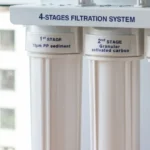
Granular Activated Carbon (GAC): Most popular due to the economical nature and PFAS adsorption ability. But maybe less effective for shorter chain PFAS, which could pierce the GAC faster.
Ion Exchange Resins: This process can work really well for shorter chain PFAS. It could still be replaced more often than GAC though due to its smaller capacity.
Reverse Osmosis: You can actually remove most PFAS with this technique. But it’s more expensive and leaves a concentrated PFAS effluent stream to be disposed of.
Which method is optimal for what PFAS are being dissolved in the water, how high they are and where they are placed in the water system?
Preventing PFAS Contamination: Measures and Initiatives
The best medicine is always the prevention. There are multiple levels of action that can be taken to avoid PFAS pollution in the first place. Companies can move to alternatives to PFAS where possible, and consumers can choose products free of the chemicals.
Lower emissions can be restricted at the level of government, by tighter restrictions on how PFAS is released to the atmosphere. The public can also fund research and development for better treatments and PFAS alternatives.
There are already encouraging moves in this direction. The ‘Green Science Policy Institute’, for example, has already set up a ‘PFAS Central’ initiative to eliminate unnecessary use of PFAS. And ‘Silent Spring Institute’ is also investigating pathways of PFAS exposure to guide better regulation.
Share this on social media:
Facebook
Twitter
LinkedIn

Related Posts