Nassau County's Water Treatment Facilities: Meeting the Needs of a Growing Population
- Published:
- Updated: January 12, 2025
Listen to this article
Summary
Nassau County’s water treatment facilities rise to the challenge of meeting the needs of a growing population: One of the key treatment processes is the filtration of the water to remove impurities, such as sediment and organic matter. This is followed by disinfection to kill any remaining bacteria, viruses, and parasites. In addition, regular water testing services are conducted to monitor the quality of the water and ensure that it meets safety standards for consumption and use.
- Origin and Distribution: Water primarily sourced from underground aquifers undergoes sophisticated treatment before distribution.
- Evolution: Facilities have evolved with technological advancements to ensure safety and efficiency.
- Innovation: Incorporation of advanced filtration and disinfection technologies improves water quality and operational efficiency.

Nassau County’s water treatment plants are getting up to the task of accommodating an increasing population. The more residents and businesses in the county come to live and do business in the county, the more important safe and reliable water becomes. Nassau County’s water treatment facilities are committed to planning, upgrading infrastructure and delivering quality water in ways that preserve the future for its residents and help to promote health and wellness for decades to come.
Understanding Nassau County's Water Supply: Origins and Distribution
There can be no discussion of water treatment without first talking about water supply. Water in Nassau County comes mostly from a series of subsurface aquifers. These natural, underground waterbodies are fed by rain running down into the ground, which itself naturally filtration the water and dispersing all impurities.
Water from these aquifers is run up through wells and into the county’s water treatment plants. Once cleaned, it’s sent out through a convoluted system of pipes, pumps and reservoirs to homes, businesses and parks throughout the county.
The Evolution of Water Treatment Facilities in Nassau County

Nassau County’s water treatment plants have unfolded almost precisely in the same trajectory as its population. As villages have developed and swelled, so too have water supplies.
These centres have since been built and expanded, as technology advanced and requirements changed. The buildings are transformed from humble filtration and disinfection systems, which were introduced at the beginning, to advanced treatment technologies that comply with the most stringent safety regulations today.
What are effective filtration systems for reducing aluminum exposure in drinking water?
At the heart of Nassau County’s water treatment facilities are several key treatment processes. These include:
- Filtration to remove sediment and larger impurities
- Disinfection, often through chlorination, to kill harmful bacteria and other pathogens
- pH adjustment to prevent pipe corrosion and maintain water stability
- Fluoridation to help prevent tooth decay in the community
Each of these steps plays a critical role in ensuring that the water delivered to Nassau County residents is clean, safe, and of the highest quality.
The Role of Innovation in Enhancing Nassau County's Water Treatment
Innovation has shaped Nassau County’s water treatment plants. As new technologies were developed, they’ve been integrated to make the plants more efficient, clean water, and make them capable of keeping up with the population.
Advanced membrane filters and ultraviolet (UV) disinfection devices have, for instance, made water treatment more efficient, while smart meters and digital monitoring technologies have streamlined operations and allowed continuous water quality monitoring.
Challenges and Solutions: Ensuring a Sustainable Water Supply in Nassau County
Nassau County has no easy water, like many communities. Growth, the climate, and industrialization all strain water resources in the county.
In response to these issues, the county has employed various plans, such as water conservation measures, upgrades to water treatment plants, and construction of water alternative projects. These investments will make sure the county’s residents have a sustainable, affordable water source now and in the future.
Water Quality in Nassau County: Monitoring and Standards
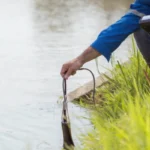
Water quality is one of the Nassau County water treatment plants’ major concerns. Water tests are repeated regularly at multiple points during treatment to make sure that the water complies with, or exceeds, all federal and state drinking water regulations.
There are also water quality reports that are sent out each year, and the report is used to inform the public about how the county’s water is performing in terms of tests and breaches of water quality. These reports are an ongoing source of transparency and trust between water treatment plants and the people they treat.
What is the environmental impact of water treatment processes in Nassau County?
Water purification has public health consequences but it also is environmental. Power, chemicals and waste are just a few of the considerations Nassau County’s water treatment plants make.
To lessen this effect, the facilities have put in place a number of sustainability initiatives. These include energy-efficiency improvements, treatment techniques that are eco-friendly, and environmentally sound disposal methods. Furthermore, regular monitoring and evaluation helps identify new areas for environmental improvements.
Looking Ahead: The Future of Water Treatment Facilities in Nassau County
In the long term, it remains Nassau County’s expanding population that remains at the forefront. Plans call for improvements and expansions at some of the county’s water treatment facilities so that they can meet these demands as well.
These enhancements will be the most recent treatment technologies and efficiency enhancements. We are also planning on further water conservation and further reducing the environmental footprint of water treatment operations.
The task of meeting a rising population with water is not trivial, but with Nassau County’s dedicated and invested water treatment facilities we believe it is doable. As long as quality, safety and sustainability remain top priorities, people will be able to expect a reliable and safe water supply into the future.
Share this on social media:
Facebook
Twitter
LinkedIn

Related Posts