
Seoul’s Stringent Water Quality Standards
Seoul, the capital of South Korea, is known for its strict water quality testing regimen. Its municipal water treatment system now tests for 357 substances. This sets a high benchmark for water supply infrastructure and guarantees the best quality of Seoul tap water.
The city’s testing program is extensive:
- 60 legally mandated drinking water quality standards
- 185 unregulated substances, including five newly added this year
- Testing for more than twice the 166 substances recommended by the World Health Organization (WHO)
- Six times the legally required drinking water standards
Expansion of Water Quality Test Items to 357
Seoul’s commitment to safe drinking water is clear through its water quality testing program. It tests for 357 substances, the most in Korea. This includes:
Category | Number of Substances Tested |
Legally mandated drinking water quality standards | 60 |
Unregulated substances (including 5 newly added) | 185 |
Total substances tested | 357 |
Twice the WHO Recommendations and Six Times the Drinking Water Quality Standards
Seoul’s dedication to water quality testing goes beyond international and national standards. It tests for more than twice the WHO’s 166 substances and six times the legal drinking water standards. This ensures Seoul’s municipal water treatment system consistently provides high-quality tap water.
By investing in advanced water supply infrastructure and rigorous testing, Seoul leads the world in municipal water treatment and water quality testing. This makes residents confident in the safety and purity of their Seoul tap water.
Ensuring Safe-to-Drink Water Quality in Seoul
Seoul, the vibrant capital of South Korea, prides itself on delivering safe, high-quality tap water to its residents. The city’s water authorities employ a multi-faceted strategy to ensure tap water is free from contaminants and pleasant to drink. Seoul’s focus on tap water safety and advanced water purification systems makes it a model for cities globally.
Seoul’s water management strategy includes a detailed water quality monitoring program. The city closely monitors water sources for contaminants and issues alerts for enhanced purification. This proactive approach has helped Seoul maintain a 99.9% achievement rate in producing high-quality tap water over the past five years.
Year | Achievement Rate |
2019 | 99.9% |
2020 | 99.9% |
2021 | 99.9% |
2022 | 99.9% |
2023 | 99.9% |
Taste and Odor Control
Seoul also focuses on maintaining the pleasant taste and odor of its tap water. Regular taste and odor control tests ensure the water is safe and appealing. This attention to detail has earned Seoul the trust and satisfaction of its residents regarding tap water quality.
Tap Water Inspections and Strict Management
To uphold tap water safety standards, Seoul conducts strict water quality tests and monitors tap water quality at 521 locations in real-time. This extensive monitoring system allows the city to quickly detect and address any issues, ensuring water remains safe for consumption.
"Seoul’s commitment to providing safe and high-quality tap water is evident in its rigorous monitoring and management practices. The city’s approach serves as an example for other urban centers around the world."
Seoul’s leadership in tap water safety stems from its advanced water purification systems, thorough water quality monitoring, and emphasis on taste and odor control. The city’s dedication to clean, safe, and pleasant-tasting tap water reflects its commitment to public health and well-being.
Seoul’s Proactive Approach to Water Testing
In Seoul, a city dedicated to public health and safety, the focus on water quality testing is unmatched. The city goes beyond the minimum to ensure its residents have access to clean drinking water. It tests for unregulated substances based on public concerns and emerging issues, showing a strong commitment to proactive water management.
Seoul updates its testing list annually, aligning with the latest research on contaminants. This year, it added five new substances, including pharmaceuticals and industrial chemicals, to its testing program. This approach ensures that even unregulated substances are monitored and addressed.
The city’s water testing strategy is driven by cutting-edge research and collaborations with top institutions. Seoul’s involvement in the Micropol & Ecohazard conference, with over 250 experts from 40 countries, showcases its commitment to water quality research. By working with global experts, Seoul can quickly adapt its testing protocols to address new concerns.
Seoul’s commitment to water safety goes beyond its borders, as seen in its work with the World Health Organization (WHO). The WHO has approved 23 household water treatment systems, which Seoul promotes and implements. This empowers citizens to maintain the quality of their drinking water.
Seoul stays vigilant as new research emerges, such as the risks of Legionella or micro- and nanoplastics in water sources. The city’s water management team closely monitors these developments and updates its testing methods as necessary. This ensures that Seoul’s water quality testing remains effective and up-to-date.
Seoul’s proactive water testing sets a global example. By focusing on public health, collaborating with experts, and adapting to new challenges, Seoul shows the value of a forward-thinking, data-driven approach to water management. The city’s ongoing investment in research, infrastructure, and public outreach sets a high standard for clean, safe drinking water for all.
Monitoring the Hangang River: The Source of Arisu
The Hangang River is the main source of Seoul’s tap water, known as Arisu. To maintain quality and safety, the city has a detailed monitoring and testing program. This program covers the river and its tributaries.
Rigorous Testing at Intake Stations
Raw water from five intake stations along the Hangang River is tested extensively. The water source monitoring includes testing for 335 substances. This is eight times more than the 38 legally required tests. Seoul’s commitment to safe and clean tap water is evident in this effort.
Comprehensive Tests Covering Main River and Tributaries

Tests are also conducted at 16 locations, including the main Hangang River and its tributaries. These tests check for 31 substances, ensuring a detailed water source assessment. By testing beyond the main river, Seoul can tackle issues from tributaries, protecting the water supply.
The extensive water source monitoring program, along with the detailed intake station testing and river water quality assessments, is key to Seoul’s tap water safety. This approach showcases the city’s dedication to its residents’ well-being.
Advanced Water Purification Process in Seoul
Seoul’s advanced water treatment process ensures top-notch drinking water for its residents. This system surpasses traditional methods, effectively removing foul tastes and odors. Such contaminants are hard to eliminate with conventional techniques.
The purification process in Seoul includes two critical stages: ozonation and granular activated carbon (GAC) filtration. Ozonation uses oxidation to break down organic compounds and kill microorganisms. This step improves the water’s taste and smell. Next, the water is filtered through GAC, which adsorbs remaining impurities. This enhances the water’s clarity and taste.
The success of Seoul’s water treatment is clear in the city’s water quality statistics:
Parameter | Seoul’s Water | WHO Guidelines |
Turbidity (NTU) | 0.05 | 5 |
Total Coliforms (CFU/100mL) | 0 | 0 |
Chlorine Residual (mg/L) | 0.1 – 0.3 | 0.2 – 0.5 |
pH | 7.0 – 7.5 | 6.5 – 8.5 |
Seoul’s use of ozonation and GAC filtration ensures its water meets and exceeds quality standards. This dedication to advanced water treatment guarantees Seoul’s residents have access to safe, clean, and delicious tap water.
Real-Time Water Quality Monitoring and Public Access to Information
In Seoul, the government has set up a real-time water quality monitoring system. This system checks the water quality at 521 locations across the city. It ensures the water is safe and transparent for everyone.
The Seoul Waterworks Authority makes this data easily available to the public. They use their website (arisu.seoul.go.kr) and the innovative Arisu Map (arisu.seoul.go.kr/arisumap/). These platforms let citizens see the current water quality data. This helps them make better choices about their drinking water.
Online Access to Water Quality Data
The Seoul Waterworks Authority website is a key place for public access to water quality data. Citizens can easily find information on various water quality parameters. This includes:
- pH levels
- Turbidity
- Residual chlorine
- Total Dissolved Solids (TDS)
This openness builds trust between the government and the public. It shows Seoul’s dedication to safe and reliable drinking water.
Arisu Map: Real-Time Water Quality Information
The Arisu Map is an interactive platform that shows real-time water quality information across Seoul. Users can zoom in on specific areas to see detailed data. The map uses colors to show water quality levels, making it easy to understand.
Color | Water Quality Level | TDS Range (mg/dL) |
Green | Excellent | 50-150 |
Blue | Good | 150-300 |
Yellow | Acceptable | 300-500 |
Red | Poor | 500+ |
The Arisu Map provides detailed and transparent information about drinking water quality. It empowers Seoul’s residents to stay informed. This innovative approach sets a new standard for cities worldwide, showing how technology can improve public health and well-being.
Free Tap Water Testing Service for Seoul Residents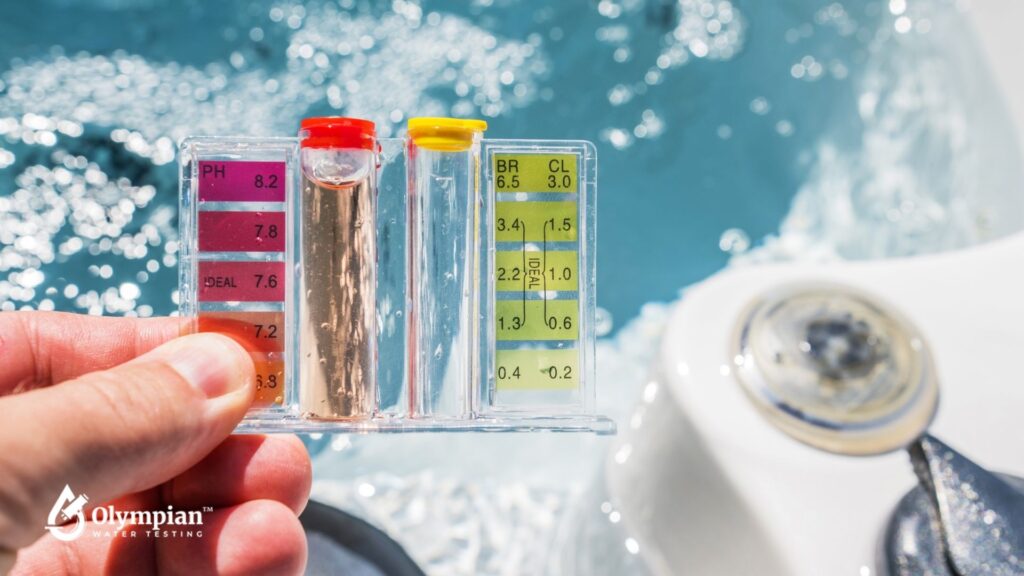
The Seoul Metropolitan Government is dedicated to providing safe drinking water for all residents. The Seoul Waterworks Authority offers a free tap water testing service for homes and businesses across the city. This service is a key part of their commitment to public health.
Residents can apply for this service by phone or online. To apply by phone, call the Dasan Call Center at 02-120 or reach out to your local waterworks office. For online applications, visit the Seoul Waterworks Authority’s official website and follow the instructions.
After receiving an application, a team of certified experts will collect samples from the applicant’s tap. These samples are then tested at advanced laboratories. They check for a variety of contaminants, including:
- Microorganisms such as bacteria and viruses
- Heavy metals like lead, mercury, and arsenic
- Organic compounds, including pesticides and herbicides
- Chlorine levels and other disinfection byproducts
Test results are usually ready in 7 to 10 business days. They are sent to the applicant via mail or email. If contaminants are found above safe levels, the Seoul Waterworks Authority will advise on necessary actions. This might include installing water filtration systems or flushing pipes.
This free tap water testing service shows the Seoul Metropolitan Government’s strong commitment to public health and safety. Residents are encouraged to use this service. It helps ensure the water they drink is of the highest quality and purity.
South Korea Tap Water Quality: Among the Best in the World
South Korea, with Seoul at its heart, is renowned for its safest drinking water and superior tap water quality. This distinction stems from rigorous water quality standards, cutting-edge treatment methods, and vigilant monitoring. These efforts ensure the water supplied to homes meets or surpasses international benchmarks for safe drinking water.
Statistics reveal that about 80% of South Korea’s population lives in urban settings, where they receive water from centralized treatment plants. These facilities are equipped with advanced technology. They guarantee that the water reaching households meets the highest standards for safe drinking water.
Yet, many regions worldwide struggle with accessing clean water. Over two billion people lack access to safe drinking water, and 3.5 billion are without safely managed sanitation facilities. Unsafe water leads to at least 1.4 million deaths annually. It also contributes to 50% of global malnutrition due to lack of access to safe water and sanitation.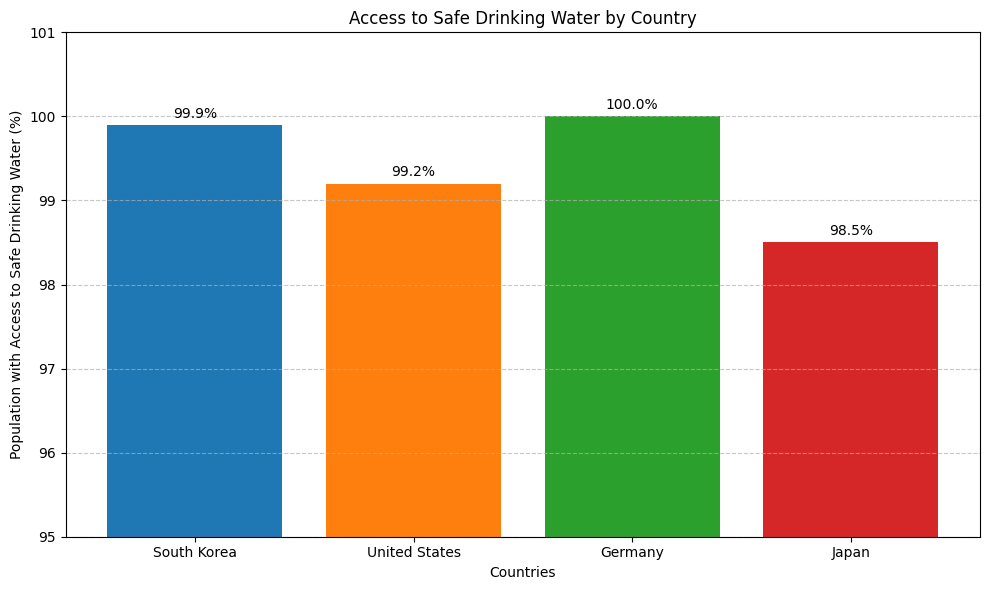
Country | Population with Access to Safe Drinking Water |
South Korea | 99.9% |
United States | 99.2% |
Germany | 100% |
Japan | 98.5% |
The table highlights South Korea’s outstanding performance in ensuring safe drinking water for its citizens. It ranks among the best tap water in the world, alongside other developed nations. This achievement reflects the country’s dedication to public health and well-being through clean water access.
South Korea’s success in maintaining exceptional tap water quality sets a precedent for other nations. By focusing on water safety and investing in advanced treatment technologies, countries can strive to provide safe drinking water to all. This effort will contribute to better health outcomes and enhanced quality of life.
Health Risks Associated with Unsafe Tap Water
Drinking contaminated tap water can lead to serious health issues. Many cities and countries have strict water quality standards. Yet, tap water can sometimes be unsafe. It’s vital to know the risks and take steps to protect your health.
A 2019 study found that toxic contaminants in U.S. drinking water could cause over 100,000 cancer cases. EWG’s analysis found 324 contaminants in U.S. drinking water from nearly 50,000 water systems between 2021 and 2023. Common health risks from unsafe tap water include:
Gastrointestinal Infections
Drinking water with E. coli and Salmonella can cause severe gastrointestinal infections. Symptoms include diarrhea, vomiting, stomach cramps, and fever. These infections are dangerous for young children, the elderly, and those with weakened immune systems.
Parasitic Diseases
Parasites like Giardia and Cryptosporidium can be in contaminated water, causing serious illnesses. These infections lead to prolonged diarrhea, dehydration, and complications. Proper water treatment and filtration are key to preventing these diseases.
Exposure to Harmful Chemicals
Unsafe tap water may contain harmful chemicals like heavy metals, pesticides, and industrial pollutants. Long-term exposure can cause chronic health problems, including cancer, reproductive issues, and developmental disorders. Examples of harmful chemicals in tap water include:
Contaminant | Federal Legal Limit | EWG-Recommended Health Guideline |
Atrazine | 3 parts per billion (ppb) | 0.1 ppb |
Glyphosate | 700 ppb | 5 ppb |
Nitrate | 10 parts per million (ppm) | 0.14 ppm |
PFOS | 4 parts per trillion (ppt) | 0.03 ppt |
PFOA | 4 ppt | 0.09 ppt |
Many contaminants have been found at levels higher than the EWG-recommended health guidelines. These guidelines are often lower than federal legal limits. This shows the need for stricter water quality regulations and awareness of tap water health risks.
Importance of Research and Preparation When Traveling
Planning a trip to South Korea requires thorough water safety research and careful travel preparation. This ensures a healthy and enjoyable experience. South Korea has a high standard of living and advanced infrastructure. Yet, it’s vital to remember that vaccines can’t protect against all diseases. Personal behavior is key to maintaining health and safety.
Food and water safety standards can vary, affecting activities like hiking or business trips. To stay safe, travelers should adopt safe drinking practices. This includes carrying portable water purification tools and avoiding tap water in areas with questionable quality. By being proactive and well-prepared, visitors can greatly reduce water-related health risks.
Travelers should also consider other health aspects, like protection against insect-borne illnesses and sun exposure. Insect repellents with 20% DEET or more offer several hours of protection against ticks and mosquitoes. Sunscreen with at least SPF 15 is recommended to protect against UV radiation, mainly during peak hours from 10 a.m. to 4 p.m.
Being aware of heat-related illnesses, such as heat stroke, is also critical. These can be life-threatening. To prevent them, stay hydrated by drinking water and consuming salty snacks during extended outdoor activities in hot weather. By taking these precautions and researching thoroughly, travelers can have a safer and more enjoyable trip to South Korea.
Water Filtration and Purification Methods
Traveling to areas with uncertain water quality demands more than just water filtration. While filters can remove sediment, chlorine, and some bacteria, they fall short against viruses. This is a critical gap in protection.
To ensure safe drinking water, combining filtration with purification techniques is essential. This strategy covers a broader spectrum of contaminants, adding an extra layer of safety for those concerned about water quality.
Limitations of Filters Alone
Water filters, like activated carbon or ceramic types, have their boundaries. They excel at removing certain contaminants but are not effective against all. Viruses, being tiny, can slip through many filters, posing health risks if ingested.
Filters also have a limited lifespan and need regular replacement to work well. If not replaced, they can become clogged, reducing their effectiveness. This can compromise the water’s quality.
Combining Filtration and Purification for Safer Drinking Water
To overcome the limitations of filters, combining them with purification methods is wise. Portable filters paired with purification tablets or drops can effectively kill viruses. These tablets or drops, often containing iodine or chlorine dioxide, are a powerful addition to filtration.
UV light purifiers are another effective method. They use ultraviolet light to inactivate harmful microorganisms, including viruses. These devices are compact, easy to use, and don’t change the water’s taste or smell. They complement filtration methods, providing additional protection against pathogens.
Choosing the right combination of filtration and purification is key. Opt for high-quality, tested products from trusted brands. Look for portable filters certified by NSF/ANSI 42 and 53. Also, select purification tablets or drops from reputable manufacturers and follow the instructions carefully.
By integrating filtration with purification, travelers can feel more secure when drinking water in uncertain areas. This proactive approach minimizes the risk of waterborne illnesses, ensuring a safer and more enjoyable journey.
Tap Water Safety in Major South Korean Cities
In Seoul, tap water safety is a priority, with a drinking rate of 49.6% from a recent survey. Other major South Korean cities also ensure high tap water standards. K-water, the national water utility, supplies drinking water to 22.3 million people daily, providing 17.6 million m³ of clean water.
K-water manages water systems for 23 local governments across South Korea. This ensures safe, quality tap water for residents and visitors. Their integrated water management system, iWater, is used in South Korea and countries like Algeria, Indonesia, and Thailand. It showcases the reliability of their water treatment.
In Seoul, 78.2% of citizens are satisfied with tap water quality. This satisfaction is due to strict water quality standards and regular testing by local authorities and K-water. When it comes to drinking or cooking, satisfaction rises to 87%.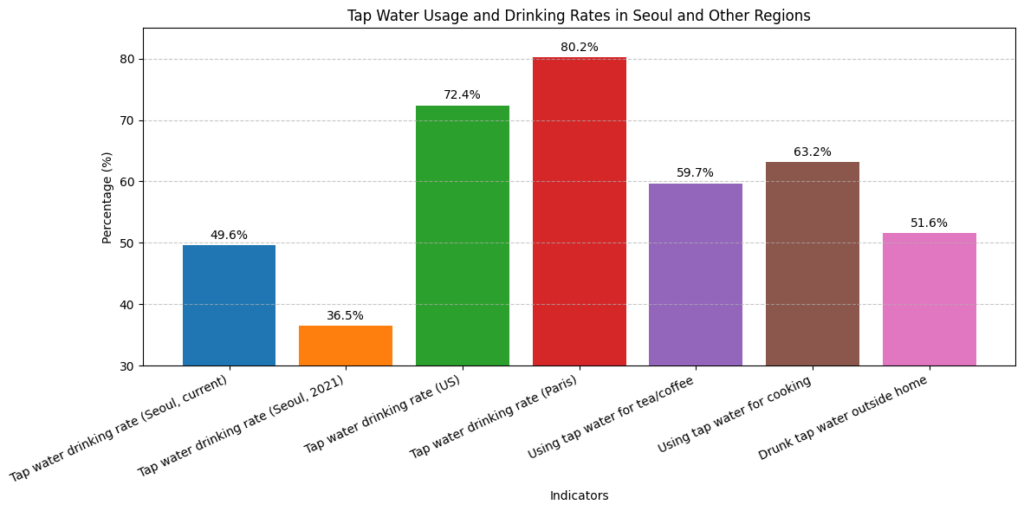
Indicator | Value |
Tap water drinking rate in Seoul (current) | 49.6% |
Tap water drinking rate in Seoul (2021 survey) | 36.5% |
Tap water drinking rate (US indicator) | 72.4% |
Tap water drinking rate (Paris indicator) | 80.2% |
Respondents using tap water for tea and coffee | 59.7% |
Respondents using tap water for cooking | 63.2% |
Respondents who have drunk tap water outside home | 51.6% |
K-water operates in three regions based on major rivers: Hangang, Nakdonggang, and Geumgang, Yeongsangang & Seomjingang. This regional focus allows for targeted water management. K-water aims to provide the safest, best-tasting tap water, ensuring equal water benefits for all in major South Korean cities.
Government Efforts to Ensure Safe Drinking Water in South Korea
The South Korean government has set strict water quality standards to keep tap water safe. These rules are enforced by the Ministry of Environment. They aim to safeguard public health by limiting contaminants in drinking water. Regular testing of water sources and systems ensures these standards are met.
Strict Water Quality Regulations
South Korea’s water quality rules are among the toughest globally. They often surpass World Health Organization (WHO) guidelines. The government has set limits for various contaminants, including microorganisms and heavy metals. These standards are updated with the latest scientific findings and best practices.
Regular Water Quality Testing and Monitoring
To maintain high water quality, the South Korean government conducts frequent tests. Water samples are analyzed for a wide range of parameters. In Seoul, daily tests are done at purification centers, and monthly tests at 860 faucet points. This transparency builds public trust in the safety of tap water.
South Korea’s proactive water management has earned it a top spot for tap water quality. Strict regulations and regular monitoring show the government’s dedication to public health. This ensures all citizens have access to safe, clean drinking water.
FAQ
Is it safe to drink tap water in South Korea, particularlly in Seoul?
Yes, South Korea, and Seoul in particular, has some of the safest tap water globally. The city adheres to strict water quality standards. It tests for 357 substances, exceeding WHO recommendations and six times the drinking water quality standards.
How does Seoul ensure safe-to-drink water for its residents?
Seoul ensures safe tap water through rigorous testing and management. It monitors the water source for contaminants and issues alerts for advanced purification. This includes taste and odor control and regular tap water inspections.
What is Seoul’s approach to water testing?
Seoul tests for unregulated substances annually, based on public concerns. It has expanded its testing to cover 357 substances. This includes 60 legally mandated standards and 185 unregulated substances.
How does Seoul monitor the Hangang River, the source of its tap water?
Raw water from the Hangang River undergoes extensive testing for 335 substances. This is eight times more than the legally required tests. Tests are conducted at 16 locations, covering the main river and its tributaries for 31 substances.
What kind of water purification process does Seoul employ?
Seoul uses an advanced purification process to remove foul-tasting substances. This involves ozonation followed by granular activated carbon (GAC) filtration. This method is effective against substances standard treatments can’t eliminate.
Can residents access real-time water quality information in Seoul?
Yes, Seoul provides real-time water quality monitoring results online. The information is available on the Seoul Waterworks Authority website (arisu.seoul.go.kr) and Arisu Map (arisu.seoul.go.kr/arisumap/).
Does Seoul offer a tap water testing service for residents?
Yes, Seoul offers a free testing service for residents. They can apply online or by phone. Contact Dasan Call Center (02-120) or the local waterworks office for more information.
What are the health risks associated with drinking unsafe tap water?
Unsafe tap water can cause gastrointestinal infections and parasitic infections. It can also expose individuals to harmful chemicals like heavy metals and pollutants.
What should travelers do to ensure safe drinking water in regions with questionable water quality?
Travelers should research water safety and pack purification tools. Avoiding tap water in risky regions is also advisable. Using portable filters, purification tablets, or UV light purifiers ensures safer drinking water.
Is tap water safe to drink in other major cities in South Korea?
While Seoul has some of the safest tap water, other major cities in South Korea also maintain high standards. This ensures that residents and visitors can safely drink tap water in these cities.