

Ottawa’s Water Quality Standards
In Ottawa, residents can trust that their tap water meets stringent water quality standards set by national and provincial regulations. The City of Ottawa diligently monitors and tests the water supply to ensure compliance with these guidelines. This prioritizes the health and safety of its citizens.
Compliance with National and Provincial Regulations

Ottawa’s water system adheres to the standards outlined in the Ontario Safe Drinking Water Act, 2002, and Ontario Regulation 170/03. These regulations establish clear requirements for water quality, testing procedures, and monitoring frequency. They guarantee the delivery of safe, clean drinking water to the city’s residents.
Regular Testing and Monitoring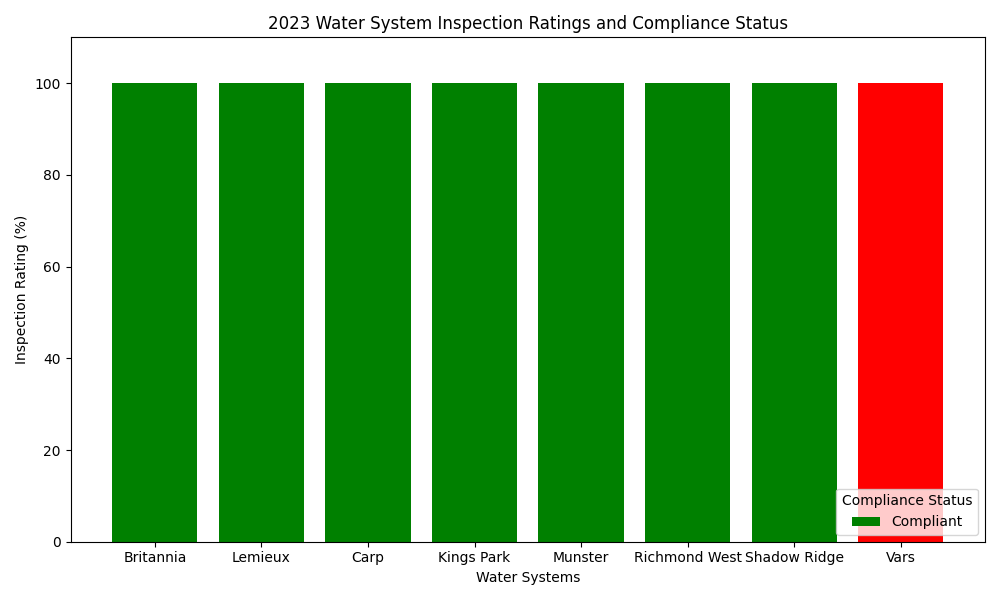
To maintain the highest water quality standards, the City of Ottawa conducts over 100,000 water quality tests each year. This includes more than 75 continuous analyzers and eight laboratories analyzing over 300 test parameters. In 2023, the city’s monitoring program yielded the following results:
Water System | Inspection Rating | Compliance Status |
Britannia | 100% | Compliant |
Lemieux | 100% | Compliant |
Carp | 100% | Compliant |
Kings Park | 100% | Compliant |
Munster | 100% | Compliant |
Richmond West | 100% | Compliant |
Shadow Ridge | 100% | Compliant |
Vars | 100%* | Non-compliant |
*Some ratings pending for 2023
Non-compliance due to insufficient monthly distribution samples in two well systems
The city’s water treatment plants process an impressive 275 million liters of water per day. This serves approximately 981,000 residents, businesses, and institutions. Ottawa Public Health closely monitors the water supply. They promptly issue public health advisories if any issues arise. This ensures that citizens are well-informed and equipped with the necessary precautionary measures.
Sources of Ottawa’s Drinking Water
Ottawa’s drinking water comes from the Ottawa River and municipal groundwater well systems. The Ottawa River, which starts in a forested area, is the main source. It can sometimes have an "earthy" smell due to natural organic matter. To complement the river water, Ottawa has six groundwater well systems.
The Ottawa River
The Ottawa River is the primary source of drinking water for the city. It has two main treatment plants: the Lemieux Island Water Treatment Plant and the Britannia Water Treatment Plant. The Lemieux Island plant, along with the Fleet Street Pumping Station, can deliver up to 400 million litres of water per day. The Britannia plant adds another 360 million litres of daily capacity.
On average, Ottawa uses about 300 million litres of water per day. This shows the current infrastructure can meet demand even when one plant is under maintenance.
Water Treatment Plant | Daily Capacity (Million Litres) |
Lemieux Island Water Treatment Plant (with Fleet Street Pumping Station) | 400 |
Britannia Water Treatment Plant | 360 |
Municipal Groundwater Wells
Aside from the Ottawa River, Ottawa also uses six groundwater well systems. These wells have higher mineral content and varying water hardness levels compared to river water. The groundwater is treated to meet drinking water standards before being distributed to residents.
Both Ottawa River water and groundwater from municipal wells are monitored and treated. The treatment process includes coagulation, flocculation, filtration, sedimentation, and disinfection. These steps remove contaminants and ensure safe, clean water for Ottawa residents.
Ottawa’s Water Treatment Process
Ottawa is dedicated to providing safe, high-quality drinking water to its residents. The city’s two treatment plants manage a 10-step, eight-hour process. This ensures the water meets strict safety standards. These plants handle an impressive 275 million liters daily, using various techniques to remove impurities.
Coagulation and Flocculation
The first step in Ottawa’s water treatment is coagulation and flocculation. Chemicals called coagulants are added to the water, causing small particles to clump into larger flocs. Aluminum sulfate, or alum, is commonly used. As the water is stirred, these flocs grow, making them easier to remove in the next stages.
Filtration and Sedimentation
After flocs form, the water undergoes filtration and sedimentation. In sedimentation, the water settles in basins, allowing flocs to sink. The clear water then passes through filters, removing sediments and contaminants. This ensures the water is clear and free of particles.
Disinfection and pH Correction
The final steps involve disinfection and pH adjustment. Chlorination is the primary disinfection method, killing harmful bacteria and viruses. The chlorine level is carefully controlled to eliminate pathogens without affecting taste or odor. The pH is then adjusted to ensure the water is safe for consumption and protects the distribution system.
Treatment Stage | Purpose |
Coagulation and Flocculation | Removes small particles by clumping them together |
Filtration and Sedimentation | Removes sediments and contaminants |
Disinfection (Chlorination) | Kills harmful bacteria and viruses |
pH Adjustment | Ensures water is safe for consumption and distribution |
Ottawa’s commitment to safe, clean drinking water is clear in its water treatment process. The city uses a multi-stage approach, including coagulation, flocculation, filtration, sedimentation, chlorination, disinfection, and pH adjustment. This ensures Ottawa’s tap water meets or exceeds all safety standards, giving residents peace of mind.
Potential Contaminants in Ottawa’s Tap Water
Ottawa’s tap water is treated rigorously to meet safety standards and regulations. Yet, trace amounts of contaminants can exist. These contaminants come from various sources, including aging infrastructure and the treatment process itself.
Lead from Older Pipes and Service Lines
Older homes in Ottawa face a significant concern: lead pipes. Even though the water is lead-free at the treatment plant, it can pick up lead along the way. Homes built before 1958 are more likely to have lead pipes, leading to higher lead levels in the water. The City of Ottawa offers free lead testing and has programs to replace these lines.
Chlorine and Trihalomethanes (THMs)
Chlorine is used in water treatment to kill harmful bacteria. While effective, it can form trihalomethanes (THMs) when reacting with organic matter. Though THMs are present in small amounts and within limits, some prefer to use filters to reduce exposure.
Hardness Levels Varying by Water Source
The hardness of Ottawa’s tap water varies by source. Groundwater wells have higher mineral content, making the water harder than the Ottawa River’s supply. Hard water, with its calcium and magnesium, can cause mineral deposits. While not harmful, some opt for water softeners to combat these deposits.
Water Source | Hardness Level (mg/L as CaCO₃) |
Ottawa River (Central Supply) | 30-50 (Soft) |
Municipal Groundwater Wells | 80-180 (Moderately Hard to Hard) |
Knowing about Ottawa’s tap water contaminants helps residents make better choices. Regular testing by the City ensures tap water remains safe and compliant with regulations.
Ottawa Tap Water Quality
Ottawa’s tap water quality is deemed high and safe for drinking, as confirmed by the City of Ottawa and Ottawa Public Health. The city’s water treatment plants and distribution system follow strict provincial and federal standards. This ensures clean drinking water is delivered to residents.
Regular water testing is done to check contaminant levels and ensure tap water safety. Yet, some contaminants have been found in Ottawa’s tap water between 2021 and 2023. These exceed health guidelines set by the Environmental Working Group (EWG) and other health authorities.
Contaminant Group | Specific Contaminants |
HAA5 | Monochloroacetic acid, Dichloroacetic acid, Trichloroacetic acid, Monobromoacetic acid, Dibromoacetic acid |
HAA9 | All HAA5 contaminants, plus Bromochloroacetic acid, Bromodichloroacetic acid, Chlorodibromoacetic acid, Tribromoacetic acid |
TTHM | Bromodichloromethane, Bromoform, Chloroform, Dibromochloromethane |
The presence of these contaminants is a concern for health risks. Yet, it’s worth noting the city also tests for a wide range of substances. This includes 78 specific contaminants not detected, such as benzene, mercury, and various perfluorinated compounds.
For those with health concerns or taste preferences, using a water filter can be beneficial. It can remove minerals, contaminants like nitrates and THMs, and enhance water taste. By staying informed about drinking water quality and taking precautions, Ottawa residents can ensure access to safe, clean tap water.
Fluoride in Ottawa’s Drinking Water
The City of Ottawa ensures its drinking water’s fluoride levels are optimal for dental health. It maintains a fluoride concentration of about 0.7 mg/L. This meets the guidelines set by provincial and federal health authorities.
Introduced in 2001, Ottawa’s fluoridation program benefits about 70% of its residents. It has effectively reduced dental cavities, mainly among children. Research indicates a 25% decrease in tooth decay in fluoridated communities compared to non-fluoridated ones.
Optimal Fluoride Levels for Dental Health
The Ontario Ministry of Health suggests fluoride levels between 0.5 mg/L and 0.8 mg/L. Ottawa’s 0.7 mg/L concentration is within this range. This ensures residents get the right amount of fluoride for cavity prevention.
Health Canada supports these guidelines, noting a 40-60% reduction in dental caries among children with optimal fluoride levels. The Canadian Dental Association also backs water fluoridation, citing numerous studies on its effectiveness.
Varying Concentrations by Water Source
While most Ottawa residents get fluoridated water, concentrations can differ by source. The City tests its water facilities monthly to ensure safety and optimal fluoride levels.
Water Source | Fluoride Concentration |
Municipal Water Supply | 0.7 mg/L |
Private Wells | Varies (typically lower) |
Despite its benefits, some prefer fluoride from dental products. Yet, 80% of Ottawa residents support fluoridation. This shows most people see its public health benefits.
Addressing Lead Concerns in Ottawa’s Water
The City of Ottawa is proactive in addressing lead contamination in its drinking water. It maintains the water’s pH levels between 9.2 and 9.4. This prevents lead from dissolving from older pipes and lead service lines. This adjustment is key to ensuring Ottawa’s tap water is safe.
Regular water testing monitors lead levels and other contaminants. Residents concerned about lead in their water can get a free test by calling 3-1-1. This is vital for homes with older plumbing, where lead dissolution risk is higher.
In older homes, tap water lead levels can be between 1 to 5 parts per billion (ppb). Some cases may reach up to 10 ppb, the Ontario limit. By keeping pH levels optimal and encouraging water testing, Ottawa aims to reduce lead exposure risks.
Lead Concentration (ppb) | Potential Source | City’s Action |
1-5 | Older pipes and service lines | Maintain pH levels between 9.2-9.4 |
Up to 10 | Homes with older plumbing systems | Offer free water testing for residents |
While Ottawa strives to provide safe drinking water, residents must be aware of risks from older plumbing. By working together and using available resources like free water testing, residents can ensure their tap water is safe.
Private Wells and Small Drinking Water Systems
In Ottawa, many residents depend on private wells or small drinking water systems for their water. Unlike the city’s municipal supply, these sources are not maintained by the city. Owners must take full responsibility for the water quality and safety.
Private well owners need to be aware of contaminants that can pollute their water. Common contaminants include:
- Bacteria, viruses, and parasites
- Nitrates and nitrites
- High levels of sodium, chloride, or sulfates
- Heavy metals such as arsenic, lead, mercury, cadmium, and chromium
The Ministry of Public Health offers free bacterial testing for private well owners. But, licensed labs are needed for other contaminants. It’s advised to test the water annually or immediately if there are taste, color, or corrosion changes.
Heavy Metal | Maximum Acceptable Concentration (MAC) |
Arsenic | 0.010 mg/L (10 ppb) |
Lead | 0.005 mg/L (5 ppb) |
Mercury | 0.001 mg/L (1 ppb) |
Cadmium | 0.005 mg/L (5 ppb) |
Chromium | 0.05 mg/L (50 ppb) |
Regular maintenance is key for safe and quality well water. Inspect the well cap and casing for damage. Keep the area clean and seal any abandoned wells.
By focusing on regular testing and maintenance, Ottawa’s private well owners can safeguard their health. They ensure access to safe drinking water for their homes.
Swimming Safety in the Ottawa River
Swimming in the Ottawa River is generally safe, but it’s important to be aware of health risks. Ottawa Public Health monitors bacteria levels in the river during summer. They collect water samples from public beaches to test for E. coli and other harmful bacteria.
While the river is usually safe, high bacteria levels can occur. This often happens after heavy rainfall, causing wastewater and stormwater to enter the river. When E. coli levels are high, Ottawa Public Health issues swim advisories to protect public health.
Monitoring Bacteria Levels During Summer Months
To ensure ottawa river swimming safety, a minimum of five water samples are taken at each public beach for testing. The results from the Ontario Public Health Lab take three days to be reported back to the health unit. If E. coli levels exceed Ontario Guidelines for Water Quality, a risk assessment is conducted.
Common causes of poor water quality testing results include:
- Heavy rainfall
- Wind action
- Warm water temperatures
- Waterfowl presence
- Stormwater outflows
- Septic system discharges
To mitigate the risk of high bacteria levels, the health unit advises avoiding swimming for 48 hours after heavy rainfall or high winds. Beaches found to have contaminated water will remain closed until water quality has recovered, with immediate re-sampling conducted post-closure.
Advisories for High E. coli Counts and Algae Blooms
In addition to high E. coli levels, the Ottawa River can also be unsafe for swimming during blue-green algae bloom advisories. These blooms produce toxins that can be harmful to people and pets, even in small doses. Exposure to as little as one or two mouthfuls of contaminated water can result in serious health problems, including liver damage.
Toxin | Health Effects |
Microcystins | Vomiting, diarrhea, jaundice |
Anatoxins | Seizures, respiratory failure |
While Ottawa’s beaches are located on flowing rivers, making blue-green algae blooms uncommon, it’s important to be aware of the risks. In July 2022, Ottawa Public Health advised against water exposure at Long Island Locks along the Rideau River due to the presence of blue-green algae.
By staying informed about bacteria monitoring results and algae bloom advisories, swimmers can help ensure their safety and enjoyment of the Ottawa River during the summer months.
Residential Water Filtration Options
In Ottawa, homeowners looking to enhance their tap water’s taste and safety have various options. Residential water filtration systems can effectively remove contaminants like chlorine, lead, and more. This ensures cleaner, healthier drinking water for your family.
Removing Chlorine, Lead, and Other Contaminants
Water filtration systems vary in their ability to target specific contaminants. Reverse osmosis systems, for instance, excel at removing heavy metals such as lead and arsenic. These systems boast a pore size of about 0.0001 microns, achieving a contaminant rejection rate of 97.5% or higher. Activated carbon filters, on the other hand, focus on eliminating chemicals like chlorine and disinfection byproducts. These substances can cause unpleasant odors and tastes in water.
In Ottawa, common contaminants in tap water include:
- Chlorine
- Fluoride
- Turbidity
- Barium
- Boron
- Chromium
- Sodium
- Nitrate
- Haloacetic acids
- Trihalomethanes
- Chloramine
Choosing the Right Filter for Your Needs
Choosing the right water filtration system for your Ottawa home requires careful consideration. Professional water testing can identify contaminants specific to your water. This information is vital in selecting the most suitable filtration solution. Consider the system’s effectiveness, maintenance needs, and costs when making your decision.
System Type | Filter Replacement Schedule |
Tanked Reverse Osmosis |
- Pre-Filter: 1 year
- Carbon Filter #1: 1 year
- Reverse Osmosis Membrane: 3 years
- Carbon Filter #2: 3 years
Tankless Reverse Osmosis |
- Pre-Filter: 1 year
- Reverse Osmosis Membrane: 3 years
Investing in a suitable water filtration system and regular maintenance can provide Ottawa residents with peace of mind. They can enjoy clean, safe, and great-tasting drinking water directly from their taps.
Reporting Water Quality Issues and Concerns
Ottawa residents have several options for reporting water quality issues and concerns. If you notice discolored water, experience low water pressure, or have other water quality complaints, it’s essential to contact city services promptly. The City of Ottawa’s customer support team is available to assist with any water-related problems you may encounter.
To report issues or request a site visit for concerns like discolored water, residents can call 3-1-1. This dedicated helpline is staffed by knowledgeable representatives who can provide guidance and dispatch technicians if necessary. For general water quality information, you can reach out to the City of Ottawa at 613-580-2424, ext. 22300.
If you have questions about your water bill or need to update your account information, the Revenue Office is available to help. You can contact them directly at 613-580-2444 or send an email to revenue@ottawa.ca.
Contact | Purpose | Phone Number | |
City of Ottawa | General water quality information | 613-580-2424, ext. 22300 | – |
3-1-1 | Reporting water problems, requesting site visits | 3-1-1 | – |
Revenue Office | Billing inquiries, account updates | 613-580-2444 | revenue@ottawa.ca |
The City of Ottawa takes water quality seriously, performing over 100,000 tests each year and maintaining more than 3,000 kilometers of water mains. By promptly reporting any issues, residents can help ensure that Ottawa’s tap water remains safe and reliable for the nearly 1 million customers served by the city’s water system.
Accessing Ottawa Water Quality Reports
The City of Ottawa is dedicated to ensuring its residents have access to safe drinking water. To achieve this, the city publishes annual water quality reports for each purification plant and well system. These reports detail the quality of the drinking water, the treatment processes, and compliance with provincial and national regulations.
Ottawa residents can find these reports on the City of Ottawa website. In the 2023-2024 reporting period, 99.9% of over 524,000 drinking water tests in Ontario met strict standards. Also, 74% of municipal residential systems received a perfect 100% inspection rating, with 99.8% scoring over 80%.
Purification Plant Data
The annual reports provide detailed data on Ottawa’s purification plants. This includes:
- Source water quality
- Treatment processes employed
- Disinfection methods and residuals
- Microbiological, chemical, and radiological test results
- Compliance with regulatory standards
In the 2023-2024 period, Ottawa’s purification plants showed outstanding performance. They met or exceeded provincial standards in 99.9% of tests.
Well System Information
For those getting water from municipal wells, the reports offer detailed well system information. This includes:
- Well locations and depths
- Aquifer characteristics
- Water quality parameters
- Treatment processes, if applicable
- Monitoring and testing schedules
Ottawa’s well systems have consistently provided safe drinking water. In the latest reporting period, 99.8% of tests met provincial standards.
Reporting Period | Tests Conducted | Tests Meeting Standards | Compliance Rate |
2023-2024 | 524,000 | 523,476 | 99.9% |
2022-2023 | 512,000 | 511,488 | 99.9% |
2021-2022 | 498,000 | 497,502 | 99.9% |
By accessing Ottawa water quality reports, residents can stay informed about their drinking water’s safety and quality. The City of Ottawa is committed to maintaining high water treatment and distribution standards. This ensures Ottawa’s tap water is safe, reliable, and meets or exceeds all regulatory requirements.
Ensuring Safe and High-Quality Tap Water in Ottawa
The City of Ottawa is committed to ensuring water quality and delivering safe tap water. It does this through continuous monitoring, regular testing, and strict adherence to standards. In 2023, Ottawa County tested over 39,000 water samples. This was to meet Ohio EPA drinking water requirements and maintain its water system license.
The city invests in its water network, with 3,000 kilometers of mains, 14 reservoirs, and 32 pumping stations. These upgrades are essential for delivering clean water. Ottawa also researches new water treatment technologies to improve water safety and quality.
Ottawa’s water quality meets or exceeds provincial and federal standards. In 2023, the highest turbidity was 0.16 NTU, far below the EPA limit. The city also checks for fluoride, nitrates, and other contaminants, keeping them within safe levels. Ottawa County has tested for PFAS, finding no detectable levels in 2020.
Ottawa’s dedication to water quality is evident in its ongoing efforts. Through monitoring, infrastructure upgrades, and research, it aims to provide safe tap water. This commitment ensures public health is protected for future generations.
FAQ
Is Ottawa tap water safe to drink?
Yes, Ottawa’s tap water is safe to drink, adhering to national and provincial standards. The city conducts over 100,000 tests annually. It continuously monitors its water supply to ensure compliance with strict regulations. Water quality can vary due to factors like private wells, older lead pipes, or specific contaminants in certain areas.
Where does Ottawa’s drinking water come from?
Ottawa’s drinking water mainly comes from the Ottawa River, known for its "earthy" smell. The city also has six groundwater well systems with higher mineral content. These sources undergo a 10-step treatment process to meet drinking water standards.
How does Ottawa treat its drinking water?
Ottawa’s two treatment plants process 275 million liters of water daily in an eight-hour process. This includes coagulation and flocculation to remove particles, filtration and sedimentation to remove sediments and contaminants. Disinfection with chlorine kills bacteria and viruses, and pH correction adjusts acidity or alkalinity.
Can Ottawa’s tap water contain lead?
Ottawa’s drinking water is lead-free when it leaves the treatment plant. It can pick up trace amounts from old lead pipes and water mains. The City of Ottawa maintains pH levels of 9.2-9.4 to prevent lead from dissolving into the water. Residents can call 3-1-1 for free lead testing.
What about fluoride in Ottawa’s drinking water?
Ottawa maintains a fluoride concentration of 0.70 mg/L in its central water supply, as recommended by Health Canada. Water from municipal wells has naturally occurring fluoride levels ranging from 0.05 mg/L to 0.65 mg/L.
How can I find out about water quality in my area of Ottawa?
Ottawa residents can access annual water quality reports on the City of Ottawa website. These reports detail the city’s drinking water quality, treatment processes, and compliance with regulations.
What should I do if I have concerns about my tap water quality?
Ottawa residents can report water quality issues and concerns to the City of Ottawa. For general information, call 613-580-2424, ext. 22300. To report problems or request a site visit, call 3-1-1. Billing inquiries can be directed to the Revenue Office at 613-580-2444 or revenue@ottawa.ca.
Can water filters improve Ottawa’s tap water?
Residential water filtration can remove minerals, chemicals, and contaminants like chlorine, lead, nitrates, and trihalomethanes (THMs). This improves water taste and addresses specific health concerns. The right filter depends on the contaminants present in the water, determined through testing.